 Ashigrain
Colour negative · Vintage
ORWOCOLOR NC 3
East Germany's first masked cine colour negative.
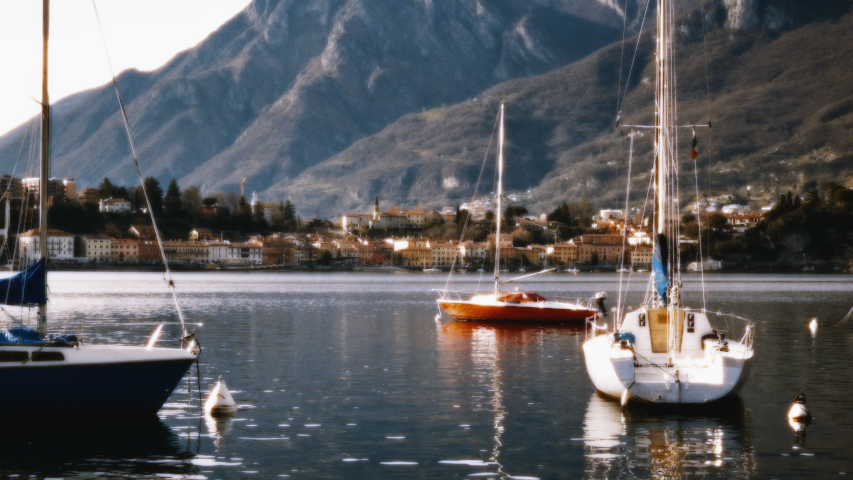
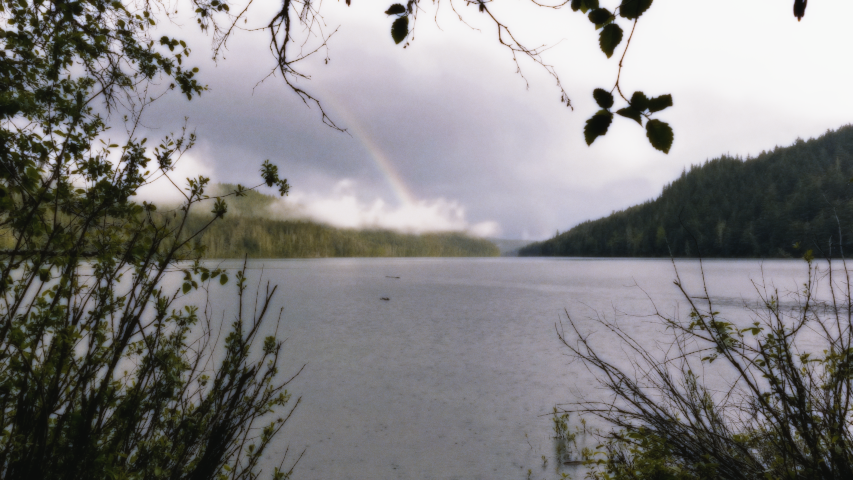
ORWOCOLOR NC 3, East Germany's first masked cine negative, at its tungsten design light, printed on its default Technicolor Dye Transfer (1997 revival) surrogate. Original vs Ashigrain.
At a glance
- Exposure index
- 64
- Tungsten
- Introduced
- by 1972
- Discontinued
- Process
- ORWO 5186
About the film
ORWOCOLOR NC 3 was a tungsten-balanced colour negative for professional motion-picture work, made by VEB Filmfabrik Wolfen – Fotochemisches Kombinat in the GDR. Johann Tamm and Joachim Weisflog of the Wolfen factory presented it as a new colour negative film in issue 11 of Bild und Ton in 1972, the earliest dated evidence for it.
According to their article, it was the first masked ORWO cine negative, with coloured masking couplers. Rated 19 DIN (EI 64) in 3200 K light, it was used at 17 DIN in daylight with the ORWO K 14 conversion filter, and it was developed in ORWO process 5186 with six to seven minutes of colour development. An undercoat of blue colloidal silver under the emulsions guarded against halation, on a triacetate base. The article gives RMS granularity of 28, 25 and 28 for the blue, green and red layers through a 24 µm aperture, and a resolving power of 85 lines per millimetre. The Wolfen factory, whose films went back to the Agfa company founded in 1909, held the GDR's film-manufacturing monopoly after 1945 and adopted the ORWO brand, for Original Wolfen, in 1964. Its present successor at the site, FilmoTec, makes black-and-white films, and its range lists no colour negative.
Sources for this history
- NC 3 – ein neuer Color-Negativfilm (Bild und Ton 25, 11/1972, pp. 341–344), Johann Tamm and Joachim Weisflog (VEB Filmfabrik Wolfen)
- Orwocolor, Timeline of Historical Film Colors
- Geschichte, FilmoTec GmbH
- Filme, FilmoTec GmbH
The look
ORWOCOLOR NC 3 is a 1970s tungsten colour negative from the Wolfen film factory in East Germany, the first masked ORWO cine negative. Rated EI 64 under 3200 K light, it prints on Technicolor Dye Transfer (1997 revival) by default.




Best for
- Eastern-bloc 1970s cinema looks
- Tungsten-lit interiors
- Period drama with a European palette
Compare camera films
Science & sources

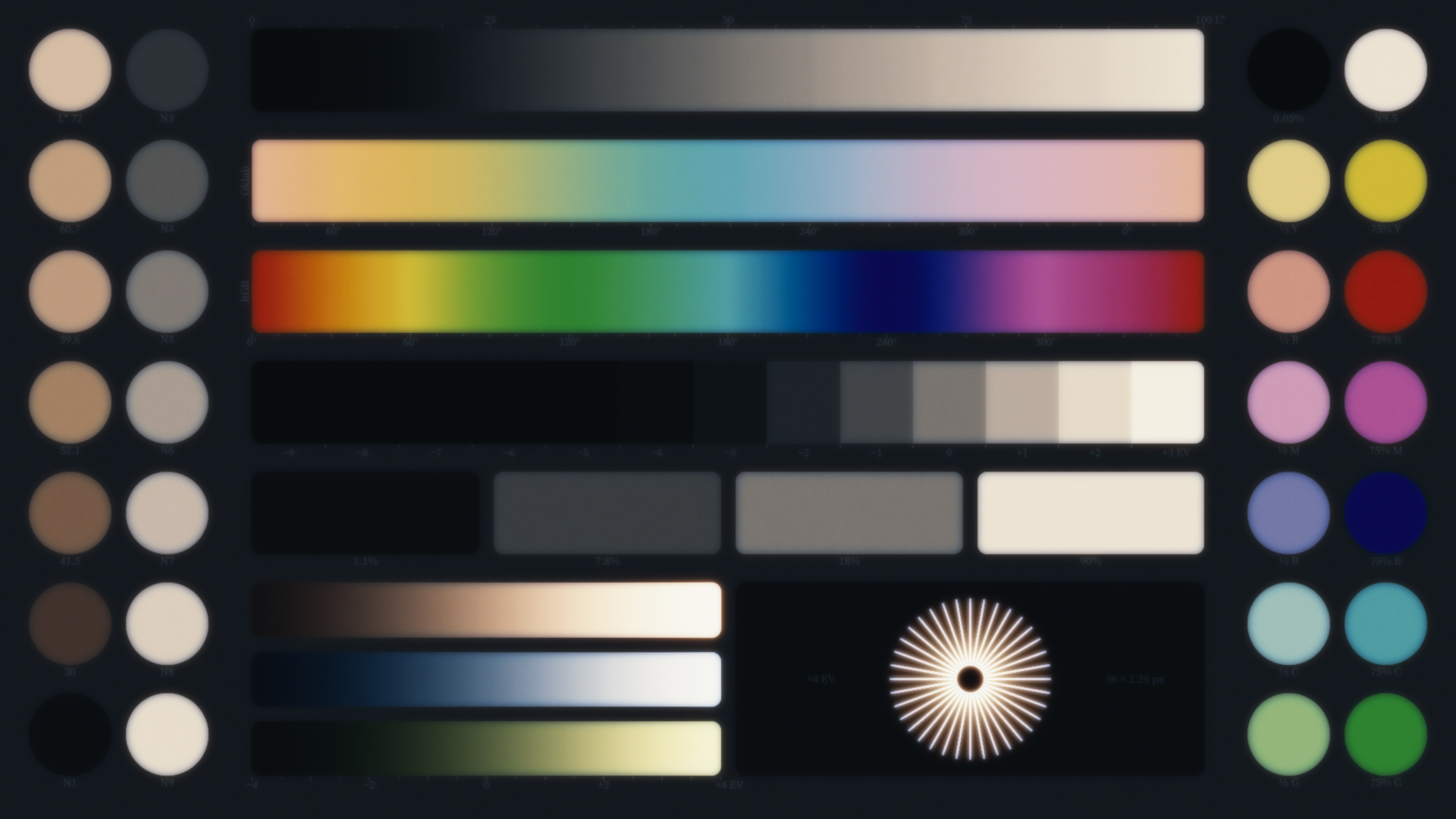
A tungsten-balanced motion-picture colour negative with an exposure index of 64. It prints on Technicolor Dye Transfer (1997 revival) by default. Its curves, dyes and MTF are traced from the 1972 article, with its printing-density curves and relative sensitivity as named approximations; its grain is borrowed from Kodak Vision3 200T, because the article gives only single RMS values at a 24 µm aperture.
Response curves and the evidence behind the model
Compare manufacturer data with Ashigrain’s response on the same axes. These curves show how the model is calibrated to its sources; they do not establish a match to photographed film.
Characteristic response
RMS granularity
Density variation (σD) measured through a 24 µm aperture. Where the datasheet gives a single grain value, the response away from that point is an approximation.
| Channel | Density | Datasheet-based σD | Model σD |
|---|---|---|---|
| R | 0.3 | 0.008277 | 0.008263 |
| G | 0.3 | 0.008129 | 0.008105 |
| B | 0.3 | 0.01833 | 0.018181 |
| R | 0.6 | 0.006123 | 0.006113 |
| G | 0.6 | 0.006653 | 0.006633 |
| B | 0.6 | 0.014479 | 0.01436 |
| R | 1 | 0.005202 | 0.005193 |
| G | 1 | 0.006697 | 0.006677 |
| B | 1 | 0.015747 | 0.015618 |
| R | 1.5 | 0.004932 | 0.004924 |
| G | 1.5 | 0.005226 | 0.00521 |
| B | 1.5 | 0.014366 | 0.014249 |
Model limits
These images show the film model in use. Spectral response, lighting and viewing conditions include approximations. Halation, bloom, grain size, weave and flicker are not fully measured for each film. The look of real film also depends on development and print timing.
- Custom lighting spectra, camera metering and the spectral reflectance inferred from fixed-white-balance footage are assumptions used by the model, not measurements of this film.
- Colour-print timing and scan balance under arbitrary lighting are modelled. Scanner colour balance has no standard physical unit.
- The source specifies a 3200 K tungsten design light, not its spectrum. The design-light spectrum is an approximation.
- The source rates the film for daylight with the ORWO K 14 conversion filter but publishes no spectrum for it; the filter transmission is modelled.
- The characteristic curves are printing densities measured by the Behrendt method, not Status M densities, on a relative exposure axis; the model treats both as named approximations.
- The spectral sensitivity is printed as relative log sensitivity with an arbitrary origin; its absolute level is aligned by assumption.
- Each dye curve is normalised to a peak of about 1.0, so the dye scales are fitted assumptions.
- The source gives RMS granularity only as single values of 28, 25 and 28 for the blue, green and red layers through a 24 µm aperture. Grain is proxied from Kodak Vision3 200T (5213), so the granularity values shown are that film's.
- The MTF is measured with a square-wave radial target, not as a sine-wave MTF.
- The antihalation undercoat of blue colloidal silver is printed, but halation strength, radius, layer weights and bloom are not measured.
- Individual dye amounts, layer interactions and push/pull behaviour are approximated where the datasheet provides no calibration. Grain size is assumed; published RMS granularity does not specify dye-cloud size.
- Characteristic response outside the published exposure range is an extrapolation, not measured film data.
- The printer lamp and filter spectra and the Status A grey aim used in this preview are approximated; the source does not publish the required spectral or laboratory aim data.
Reciprocity: not modelled. Exposure time has no effect on this film.
Film guide: assumptions and practical choices
Sources
- Exposure index: Tamm, J. and Weisflog, J.: NC 3 - ein neuer Color-Negativfilm. Bild und Ton 25 (11/1972), pp. 341-344, Bild und Ton, Heft 11/1972, 25. Jahrgang, pp. 341-344; filmcolors.org scan uploaded 2015-01, p. 1
- Diffuse RMS granularity: Tamm, J. and Weisflog, J.: NC 3 - ein neuer Color-Negativfilm. Bild und Ton 25 (11/1972), pp. 341-344, Bild und Ton, Heft 11/1972, 25. Jahrgang, pp. 341-344; filmcolors.org scan uploaded 2015-01, p. 2
- Exposure index: Tamm, J. and Weisflog, J.: NC 3 - ein neuer Color-Negativfilm. Bild und Ton 25 (11/1972), pp. 341-344, Bild und Ton, Heft 11/1972, 25. Jahrgang, pp. 341-344; filmcolors.org scan uploaded 2015-01, p. 2
- Characteristic curves: Tamm, J. and Weisflog, J.: NC 3 - ein neuer Color-Negativfilm. Bild und Ton 25 (11/1972), pp. 341-344, Bild und Ton, Heft 11/1972, 25. Jahrgang, pp. 341-344; filmcolors.org scan uploaded 2015-01, p. 3
- Process: Tamm, J. and Weisflog, J.: NC 3 - ein neuer Color-Negativfilm. Bild und Ton 25 (11/1972), pp. 341-344, Bild und Ton, Heft 11/1972, 25. Jahrgang, pp. 341-344; filmcolors.org scan uploaded 2015-01, p. 3