 Ashigrain
Black-and-white negative · Black & white
Eastman Double-X 5222
Same code from Raging Bull to The Lighthouse.
Classic cine black-and-white printed on 2302: deep blacks, hard-edged light and visible silver grain. Original vs Ashigrain.
At a glance
- Exposure index
- 250
- EI 250 daylight / EI 200 tungsten
- Introduced
- 1960
- In production
- Process
- KODAK D-96 developer, to control gamma 0.65-0.70
About the film
Eastman Kodak unveiled Double-X at the SMPTE convention in Hollywood in May 1960, selling it as two to three times faster than Plus-X without visibly grainier prints.
More than six decades on, it is still made under the same codes, 5222 in 35 mm and 7222 in 16 mm. Gordon Willis chose it for Manhattan because it was Kodak's fastest black-and-white negative, fast enough to hold f/5.6 on interiors, and he had the release prints made on Agfa stock. Michael Chapman shot Raging Bull on it in a high-contrast style modelled on Weegee's newspaper photographs, and Janusz Kamiński paired it with Plus-X on Schindler's List, calling the black-and-white emulsions dated. Testing it against colour film and digital for The Lighthouse, Jarin Blaschke found it coarser in grain and stronger in local contrast, then filtered it to imitate early orthochromatic film. The production paid to ship the negative every day from Nova Scotia to FotoKem in Burbank, the only lab Blaschke trusted with it. Robert Yeoman and Wes Anderson liked it so much on The French Dispatch that about half the film ended up in black and white, more than they had planned. For Oppenheimer, Kodak made the first-ever 65 mm run of Double-X for the black-and-white sequences.
Sources for this history
- EASTMAN DOUBLE-X Negative Film 5222 / 7222 Technical Data, Eastman Kodak Company
- EASTMAN DOUBLE-X Negative Film 5222 / 7222, Eastman Kodak Company
- Motion Picture Daily, 2 May 1960, Media History Digital Library
- A High-Speed Black-and-White Negative Film, Society of Motion Picture and Television Engineers
- Chronology of Film, Eastman Kodak Company
- Kodak B&W film delivers a unique visual signature to Robert Eggers' 'The Lighthouse', Eastman Kodak Company
- Stormy Isle: The Lighthouse, American Society of Cinematographers
- The Essential Reference Guide for Filmmakers, Eastman Kodak Company
- Dreaming in Black-and-White, American Society of Cinematographers
- Schindler's List Finds Heroism Amidst Holocaust, American Society of Cinematographers
- Manhattan: Black-and-White Romantic Realism, American Society of Cinematographers
- DP Robert Yeoman used Kodak color and B&W 35mm filmstocks for director Wes Anderson's 'The French Dispatch', Eastman Kodak Company
- The French Dispatch: La Vie Littéraire, American Society of Cinematographers
- Cinematographer Hoyte van Hoytema NSC FSF ASC gets up-close & personal using Kodak 65MM large-format film on Christopher Nolan's 'Oppenheimer', Eastman Kodak Company
- Christopher Nolan on Oppenheimer, American Society of Cinematographers
Shot on Eastman Double-X 5222
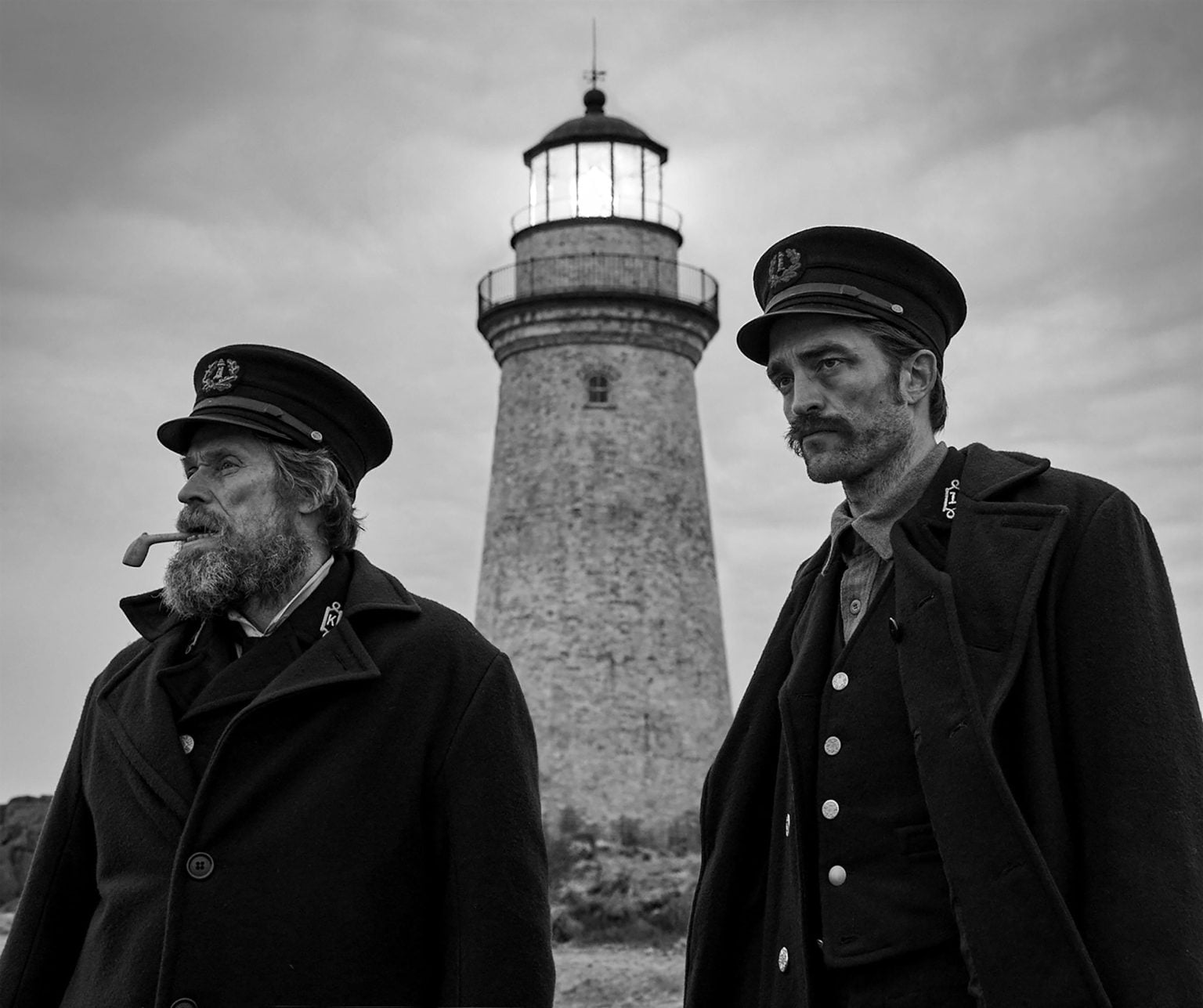
Shot entirely on 35mm Double-X 5222, with custom filtration imitating orthochromatic film.
Raging Bull
Shot on Eastman Double-X in a high-contrast style modelled on Weegee's newspaper photographs.
Schindler's List
Partly: the black-and-white was shot on Double-X 5222 together with Plus-X 5231; the colour moments on colour negative.
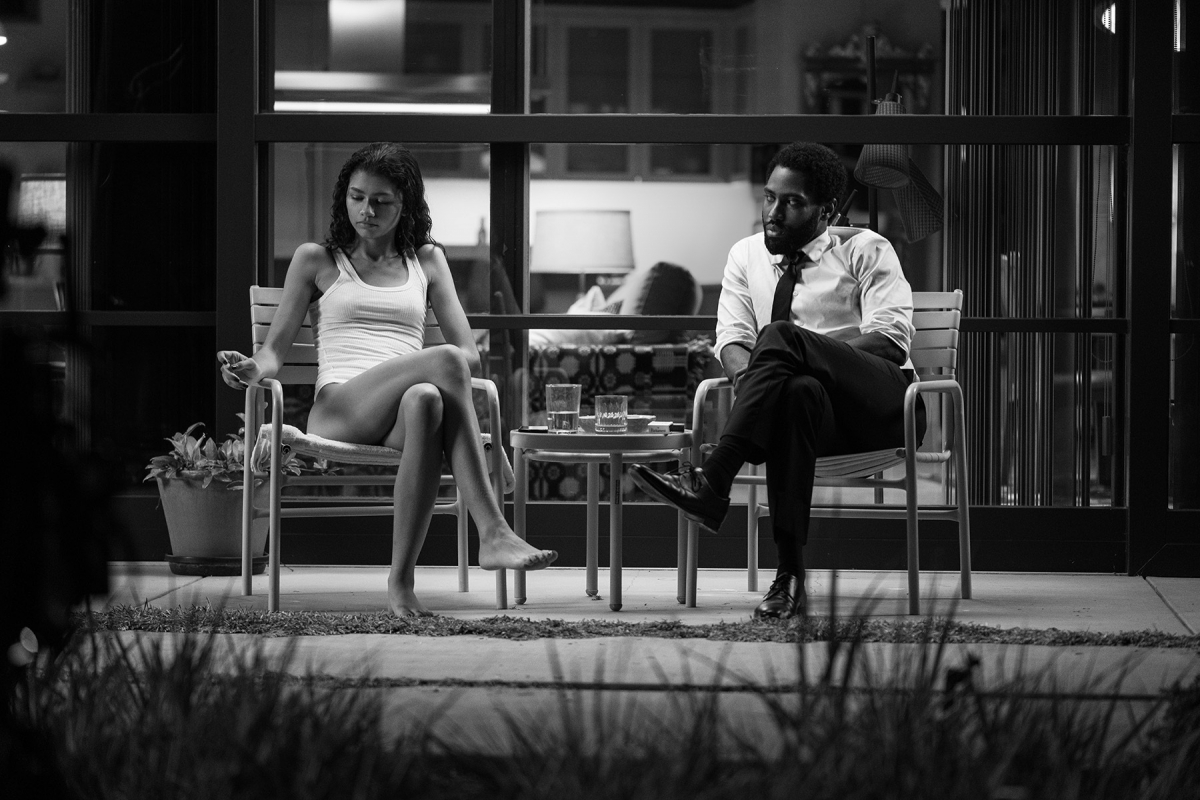
Shot entirely on 3-perf 35mm Double-X 5222.
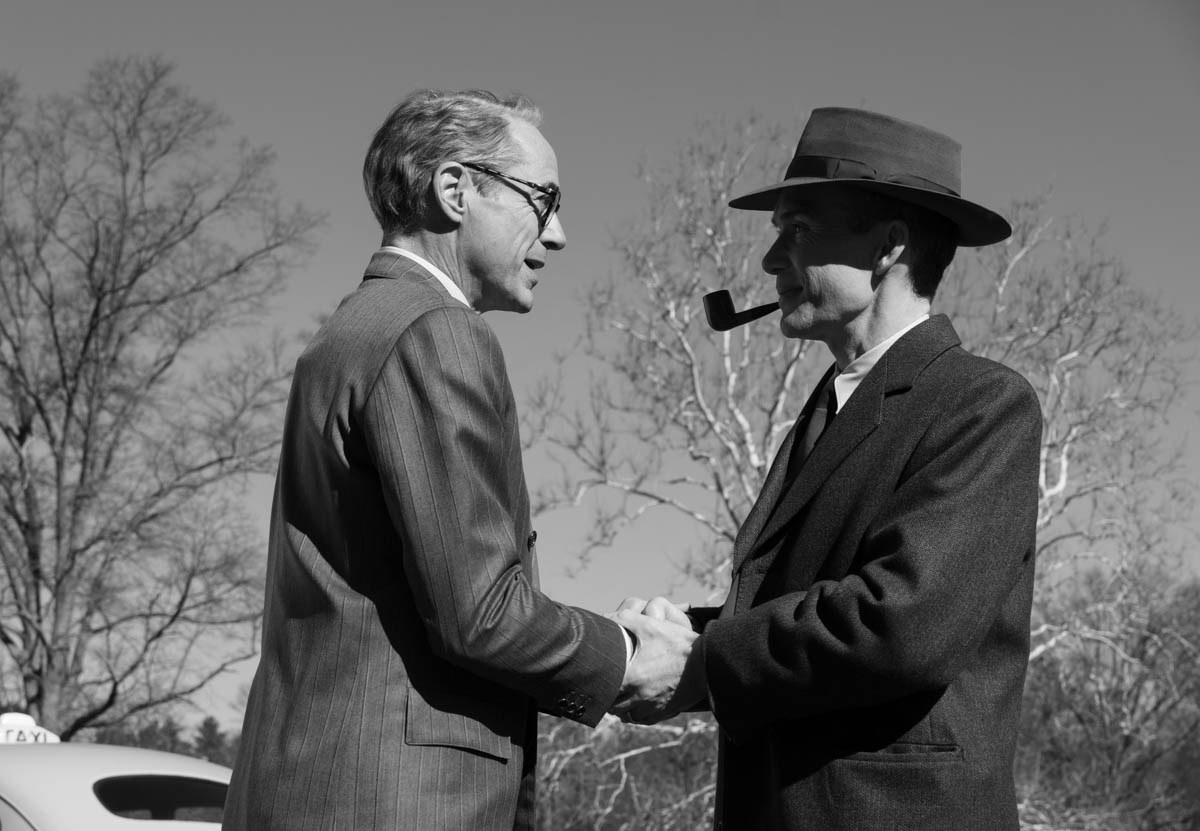
Partly: the black-and-white sequences, on the first 65mm Double-X 5222, which Kodak made for the film. The colour was shot on VISION3.
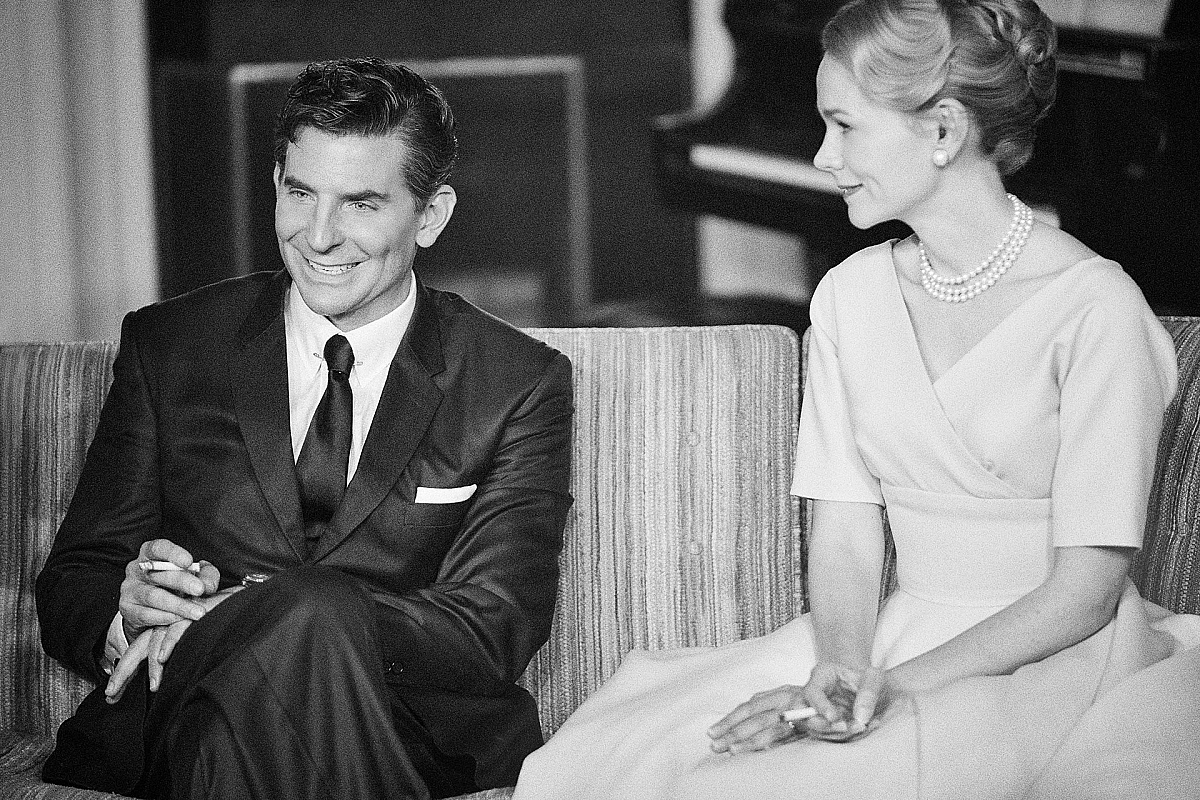
Partly: all the black-and-white sequences, on 35mm Double-X 5222 at 1.33:1. The colour section was shot on VISION3.
Killers of the Flower Moon
Partly: the simulated newsreel footage, shot on Double-X 5222 with Scorsese's own 1917 Bell & Howell 2709.
The look
Eastman Double-X 5222 is Kodak's fast panchromatic black-and-white cine negative: coarse, visible silver grain and strong local contrast, on a grey base that lets halation bloom around lights. It prints on Kodak B&W Print Film 2302 by default, or near-neutral on a colour print film with that print's own tint.
Side light shaping a face in black-and-white, with silver grain in the midtones.
Light sources with a soft halation glow: the grey base gives an assumed twice the rem-jet strength.
Best for
- Hard-light noir and night exteriors
- Weathered faces in side light
- Period pieces that need visible grain
Among the films
Science & sources


A panchromatic black-and-white negative. It prints on Kodak B&W Print Film 2302 by default.
Response curves and the evidence behind the model
Compare manufacturer data with the Ashigrain model on the same axes. This shows the calibration to source curves; comparison with photographed film is a separate question.
Characteristic response
RMS granularity
Density variation (σD) measured through a 48 µm aperture. Where the datasheet gives a single grain value, the response away from that point is an approximation.
| Channel | Density | Datasheet-based σD | Model σD |
|---|---|---|---|
| N | 0.3 | 0.007668 | 0.007949 |
| N | 0.6 | 0.010844 | 0.011241 |
| N | 1 | 0.014 | 0.014513 |
Model limits
These images show the film model in use. Spectral response, lighting and viewing conditions include approximations, while halation, bloom, grain size, weave and flicker are not fully measured for each film. A real film capture also depends on development and print timing.
- The model assumes custom lighting spectra, camera metering and the spectral reflectance inferred from fixed-white-balance footage. These inputs are not measurements of the film.
- The source gives daylight and tungsten exposure indices but no colour balance. Daylight calibration, silver-clump size and spectrally neutral silver density are assumptions; the single-layer halation response is not measured.
- The source gives only RMS granularity 14 × 10⁻³ at net density 1.0 with a 48 µm aperture. The granularity-versus-density curve away from that point is modelled.
- In the print branch it prints on Kodak B&W Print Film 2302 by default. Black-and-white print timing, which places the metered grey at visual density 1.0, is modelled rather than taken from a laboratory aim.
Film guide: assumptions and practical choices
Sources
- Exposure index: EASTMAN DOUBLE-X Negative Film 5222 / 7222 Technical Data, H-1-5222, Revised 7-15, p. 1
- Characteristic curves: EASTMAN DOUBLE-X Negative Film 5222 / 7222 Technical Data, H-1-5222, Revised 7-15, p. 2
- Diffuse RMS granularity: EASTMAN DOUBLE-X Negative Film 5222 / 7222 Technical Data, H-1-5222, Revised 7-15, p. 2
- Process: EASTMAN DOUBLE-X Negative Film 5222 / 7222 Technical Data, H-1-5222, Revised 7-15, p. 2