 Ashigrain
Colour negative · Natural
Kodak Vision3 500T
Night stock of La La Land and Anora.
The modern cinema night look on Ashigrain's default film: warm practicals with a thin red halation rim, saturated neon and organic grain in the dark areas. Original vs Ashigrain.
At a glance
- Exposure index
- 500
- Tungsten
- Introduced
- 2007
- In production
- Process
- ECN-2
About the film
Vision3 500T was the first film of Kodak's Vision3 family, introduced by Kodak in 2007, and the family later added 250D, 200T and 50D. It followed the Vision2 generation, and Kodak says it developed the Vision line with advice from cinematographers who wanted finer grain and more exposure latitude.
Kodak credits dye-layering technology with lower shadow grain and sub-micron grains with about two extra stops of highlight latitude, and designed the film for scanning as well as printing. Cinematographers bend it both ways: Linus Sandgren rated it at EI 200 and had it pulled a stop for La La Land (2016), while Darius Khondji pushed it a stop as the only film stock of Uncut Gems (2019). Robbie Ryan pushed it by up to two stops for the night scenes of The Favourite (2018), some lit by about half a dozen candles in a large hall. Sandgren later shot the lunar surface of First Man (2018) on 65 mm IMAX 5219 and most of No Time to Die (2021) on it, and Drew Daniels paired it with 200T on Anora (2024). It is coded 5219 in 35 mm and 65 mm and 7219 in 16 mm and Super 8, made in Rochester, New York, and processed in ECN-2. In August 2025 Kodak announced a structure without rem-jet for all Vision3 negatives, using an anti-halation undercoat beneath the emulsion, with sensitometry and processing unchanged.
Sources for this history
- KODAK VISION3 500T Color Negative Film 5219 / 7219 Technical Data, Eastman Kodak Company
- Chronology of Film, Eastman Kodak Company
- Kodak Expands Palette Of New Generation Films, Widescreen Review
- The Essential Reference Guide for Filmmakers, Eastman Kodak Company
- KODAK VISION3 AHU Camera Negative Films: Talking points for Filmmakers, Eastman Kodak Company
- Kodak Enhances Vision3, American Society of Cinematographers
- Introducing KODAK VISION3 Color Negative Films with AHU Technology, Eastman Kodak Company
Shot on Kodak Vision3 500T
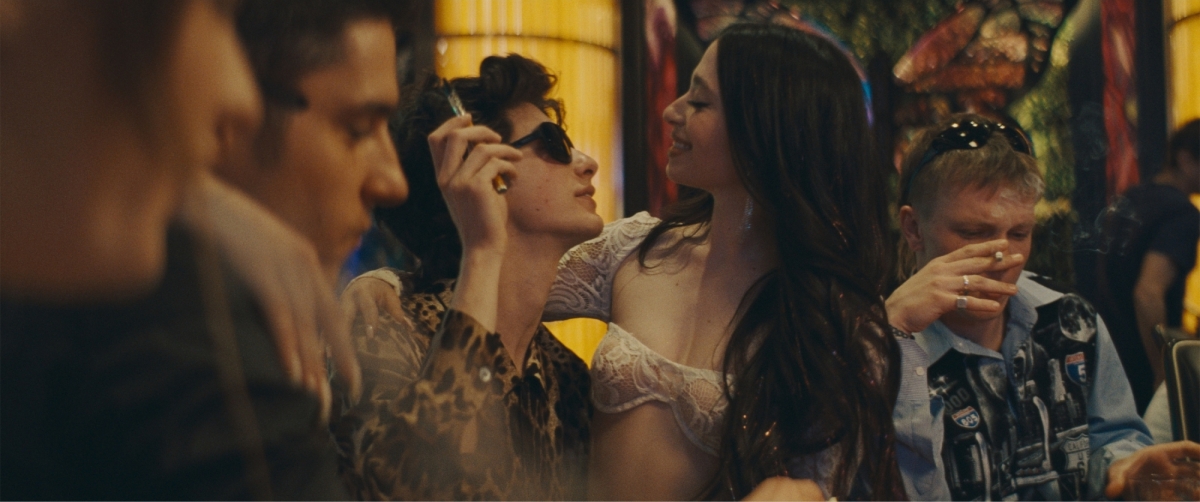
The principal stock, with 200T 5213: 35mm 4-perf anamorphic, the 500T often pushed and underexposed for the grainy night look.
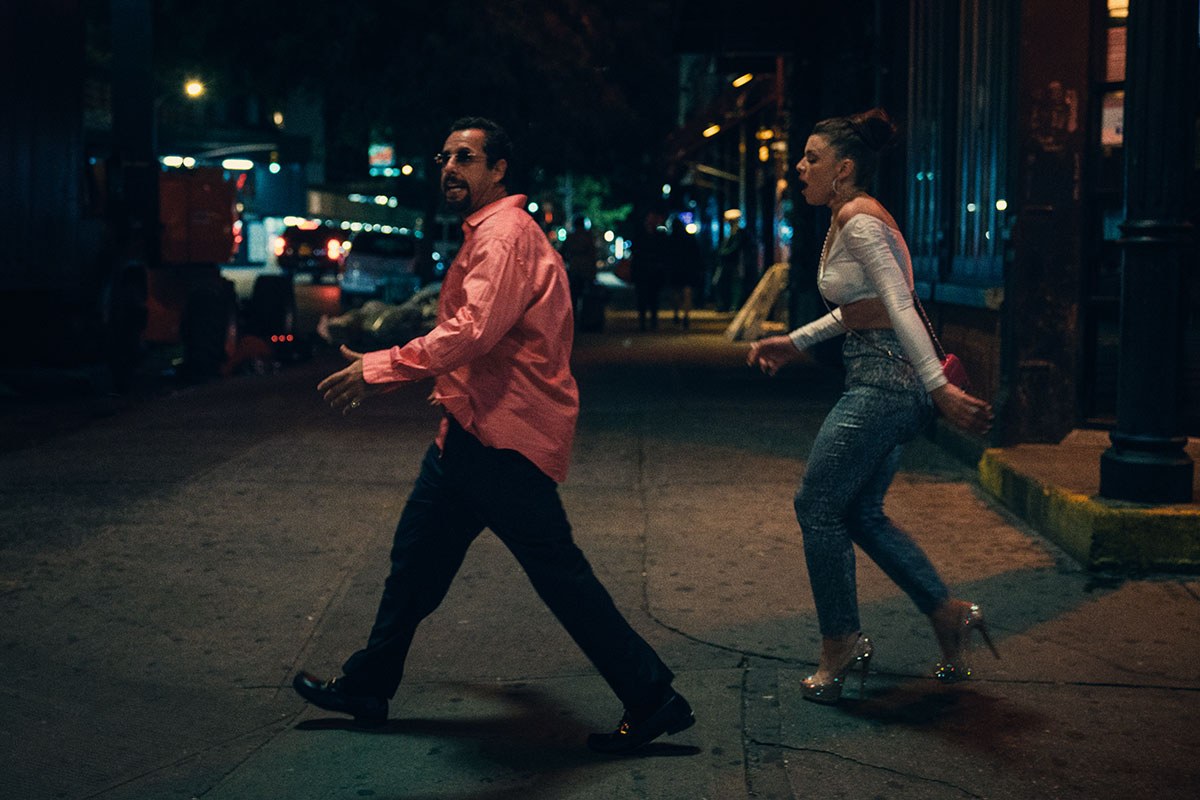
The production's one film stock, pushed one stop; some night scenes were shot digitally.

The principal stock, for the night interiors and exteriors; 200T 5213 and 50D 5203 for some day scenes.
La La Land
The principal stock, every night scene included, rated EI 200 and pulled one stop; 250D only for the few midday exteriors.
No Time to Die
The main stock, in IMAX 65 mm and 35 mm, with 250D and 50D also used.
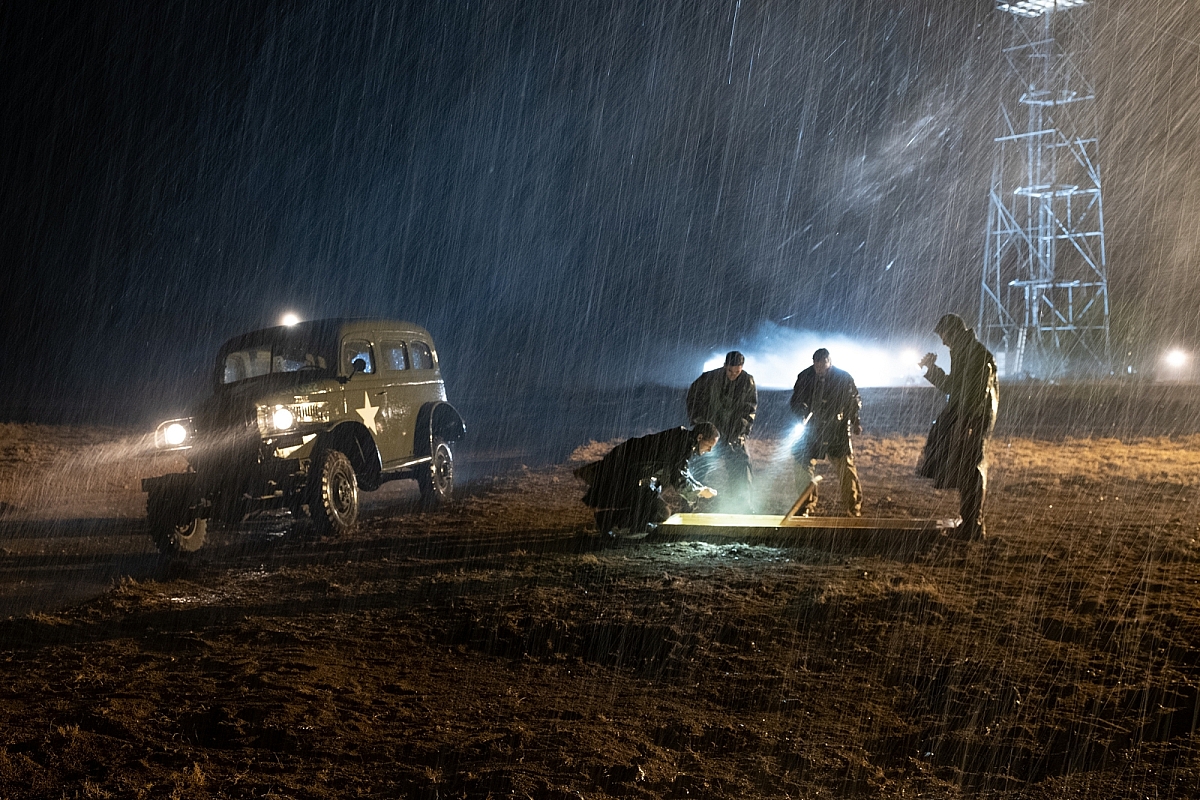
Partly: the 65mm colour stock for low-light and night scenes, with 250D 5207 for exteriors and Double-X 5222 for the black-and-white material.
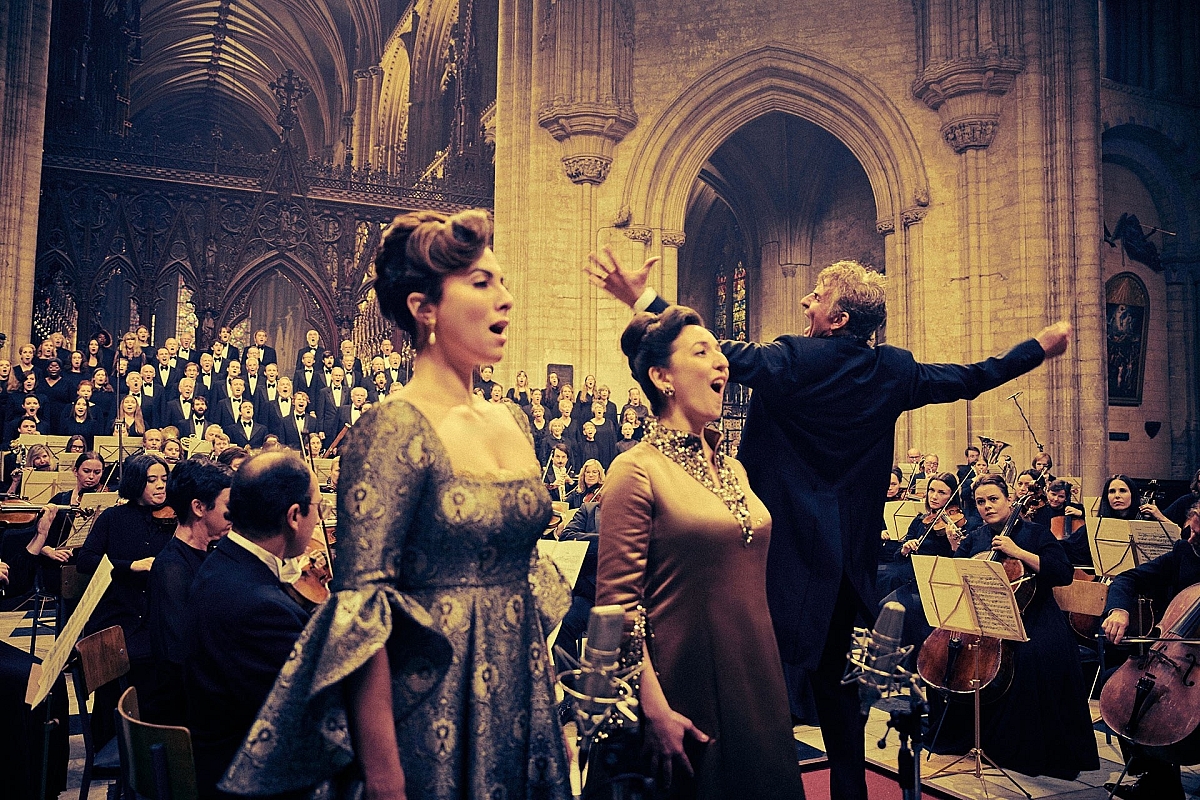
Partly: the colour section's night and low-light stock, with 200T 5213. The black-and-white part was Double-X 5222.
The look
Kodak Vision3 500T is a tungsten-balanced colour negative rated EI 500, and Ashigrain's default film. It shows visibly more grain than the slower Vision3 films, with a thin red halation rim around hard highlights. It prints on Kodak 2383 by default.
Lamps in frame get a thin red halation rim, and skin under tungsten stays warm and natural.
Grain visible in the shadows but fine and organic, never like digital noise.
Best for
- Night streets lit by practicals
- Tungsten-lit interiors
- Candle- and lamp-lit close-ups
Among the films
Science & sources


A tungsten-balanced colour negative with an exposure index of 500. Compare its response through the Kodak 2383 print stage.
Response curves and the evidence behind the model
Compare manufacturer data with the Ashigrain model on the same axes. This shows the calibration to source curves; comparison with photographed film is a separate question.
Characteristic response
RMS granularity
Density variation (σD) measured through a 48 µm aperture. Where the datasheet gives a single grain value, the response away from that point is an approximation.
| Channel | Density | Datasheet-based σD | Model σD |
|---|---|---|---|
| R | 0.3 | 0.009149 | 0.009441 |
| G | 0.3 | 0.012336 | 0.012743 |
| B | 0.3 | 0.030237 | 0.031261 |
| R | 0.6 | 0.006986 | 0.007209 |
| G | 0.6 | 0.009091 | 0.009391 |
| B | 0.6 | 0.022193 | 0.022945 |
| R | 1 | 0.006413 | 0.006617 |
| G | 1 | 0.007091 | 0.007325 |
| B | 1 | 0.019192 | 0.019842 |
| R | 1.5 | 0.005686 | 0.005867 |
| G | 1.5 | 0.008241 | 0.008513 |
| B | 1.5 | 0.01986 | 0.020533 |
| G | 2 | 0.006582 | 0.006799 |
| B | 2 | 0.011834 | 0.012234 |
Model limits
These images show the film model in use. Spectral response, lighting and viewing conditions include approximations, while halation, bloom, grain size, weave and flicker are not fully measured for each film. A real film capture also depends on development and print timing.
- The model assumes custom lighting spectra, camera metering and the spectral reflectance inferred from fixed-white-balance footage. These inputs are not measurements of the film.
- The model calculates colour-print timing and scan balance for arbitrary lighting. Scanner colour balance is expressed without a standard physical unit.
- A 3200 K tungsten source is specified as the design light. Its spectrum and the conversion filter’s transmission are approximated because the source supplies no spectrum.
- The model supplies the 85 conversion filter’s spectral transmission. Dye curves normalised to their peaks describe spectral shape, but do not determine dye amounts per unit of layer density.
- Where calibration data is missing, the model approximates dye amounts, interactions between layers and push/pull behaviour. Grain size is an assumption: published RMS granularity does not determine dye-cloud size.
- Outside log H −4.00 to 1.00, the model extends the characteristic response by extrapolation.
- Halation strength, radius and layer weights use modelled values because the datasheet does not quantify them. Removing the antihalation layer and adding bloom also rely on approximations.
- Gate weave, exposure flicker and the defaults for each format are modelling choices, without measurements for this stock.
- This preview approximates the printer lamp and filter spectra and the Status A grey target. The source does not provide the spectral data or laboratory target needed to calibrate them.
Film guide: assumptions and practical choices
Sources
- Exposure index: KODAK VISION3 500T Color Negative Film 5219 / 7219 Technical Data, H-1-5219t, Revised 7-15, p. 1
- Process: KODAK VISION3 500T Color Negative Film 5219 / 7219 Technical Data, H-1-5219t, Revised 7-15, p. 2
- Characteristic curves: KODAK VISION3 500T Color Negative Film 5219 / 7219 Technical Data, H-1-5219t, Revised 7-15, p. 4
- Diffuse RMS granularity: KODAK VISION3 500T Color Negative Film 5219 / 7219 Technical Data, H-1-5219t, Revised 7-15, p. 4
- Granularity density: KODAK VISION3 500T Color Negative Film 5219 / 7219 Technical Data, H-1-5219t, Revised 7-15, p. 4