 Ashigrain
Colour negative · 2006 onward
ORWO Wolfen NC500
ORWO's cinema-born colour negative, without rem-jet.
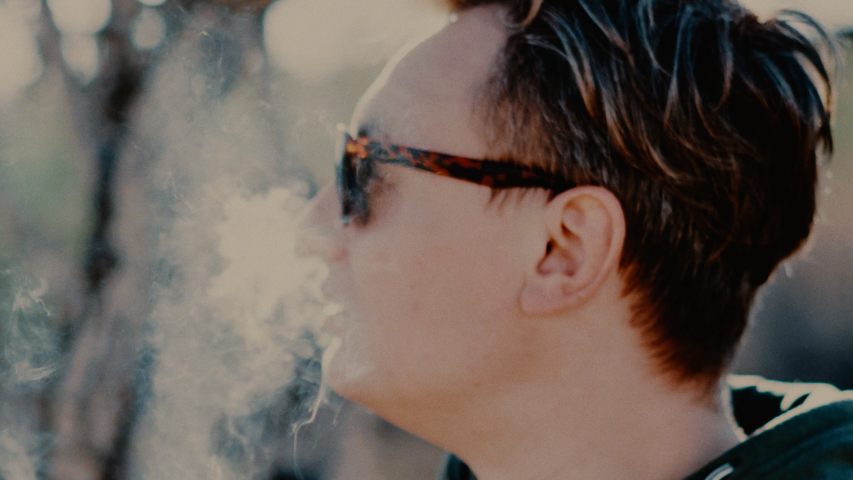
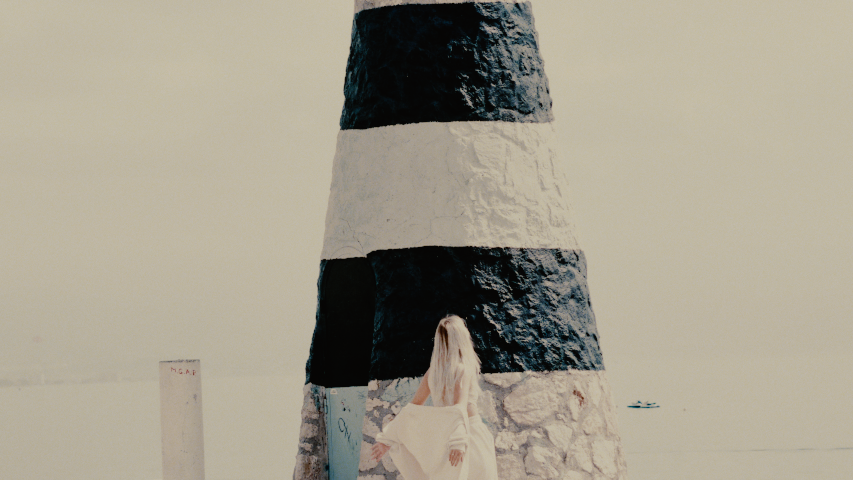
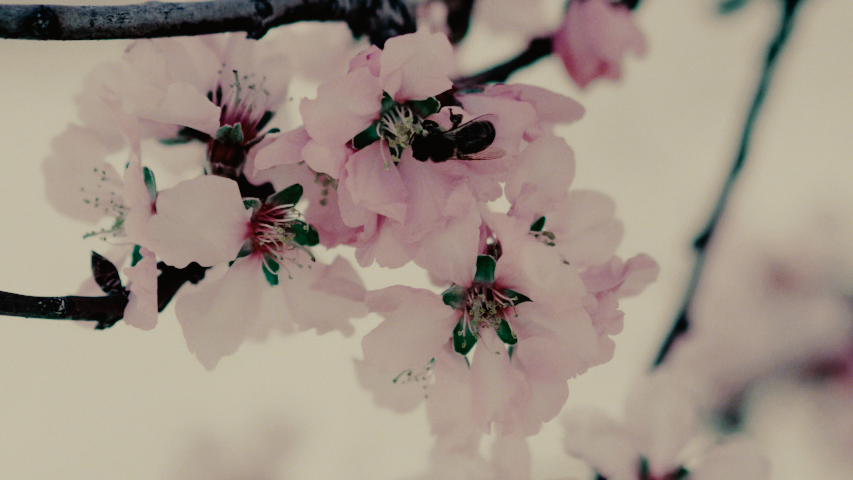
ORWO Wolfen NC500 scanned flat: how the reconstructed film renders greens, skin and shadows in one daylight frame. Original vs Ashigrain.
At a glance
- Exposure index
- 400
- Daylight
- Introduced
- 2022
- Process
- C-41
- Prints on
- Scan
About the film
ORWO unveiled Wolfen NC500 on 27 May 2022, its first new colour film for decades, weeks after announcing the black-and-white Wolfen NP100.
The relaunch followed the merger earlier that year of ORWO's parent FilmoTec with InovisCoat, and ORWO said the film is made at Bitterfeld-Wolfen, on the site where film has been made since 1910. ORWO called it a limited edition and presented it as an alternative look rather than an imitation of existing films, with pronounced greens, desaturated shadows and stronger grain. Trade press reported that it is based on Agfa's XT320 colour cinema negative. Unlike cinema films it has no rem-jet backing, so it goes through ordinary C-41, and its sheet notes a flatter gradation when it is processed in ECN-2. Pre-orders opened on 1 June with shipping planned for July, but in September ORWO said production had been delayed by the assembly of its DX-coded cassettes at its Shanghai facility, and expected delivery in November. The InovisCoat data sheet, created that November, rates it ISO 400/27° on a 125 µm grey triacetate base. Kosmo Foto later described NC500 and NC400 as sharing a subdued palette that leans towards green.
Sources for this history
The look
ORWO Wolfen NC500 is a colour negative from a cinema emulsion, made for 35 mm stills without a rem-jet backing, so it goes through ordinary C-41. ORWO promised pronounced greens, desaturated shadows and stronger grain. Ashigrain renders it as a scan for your grade.



Best for
- Green-heavy, desaturated colour looks
- Gritty street and travel frames
- A cinema-negative feel from C-41
Compare camera films
Science & sources

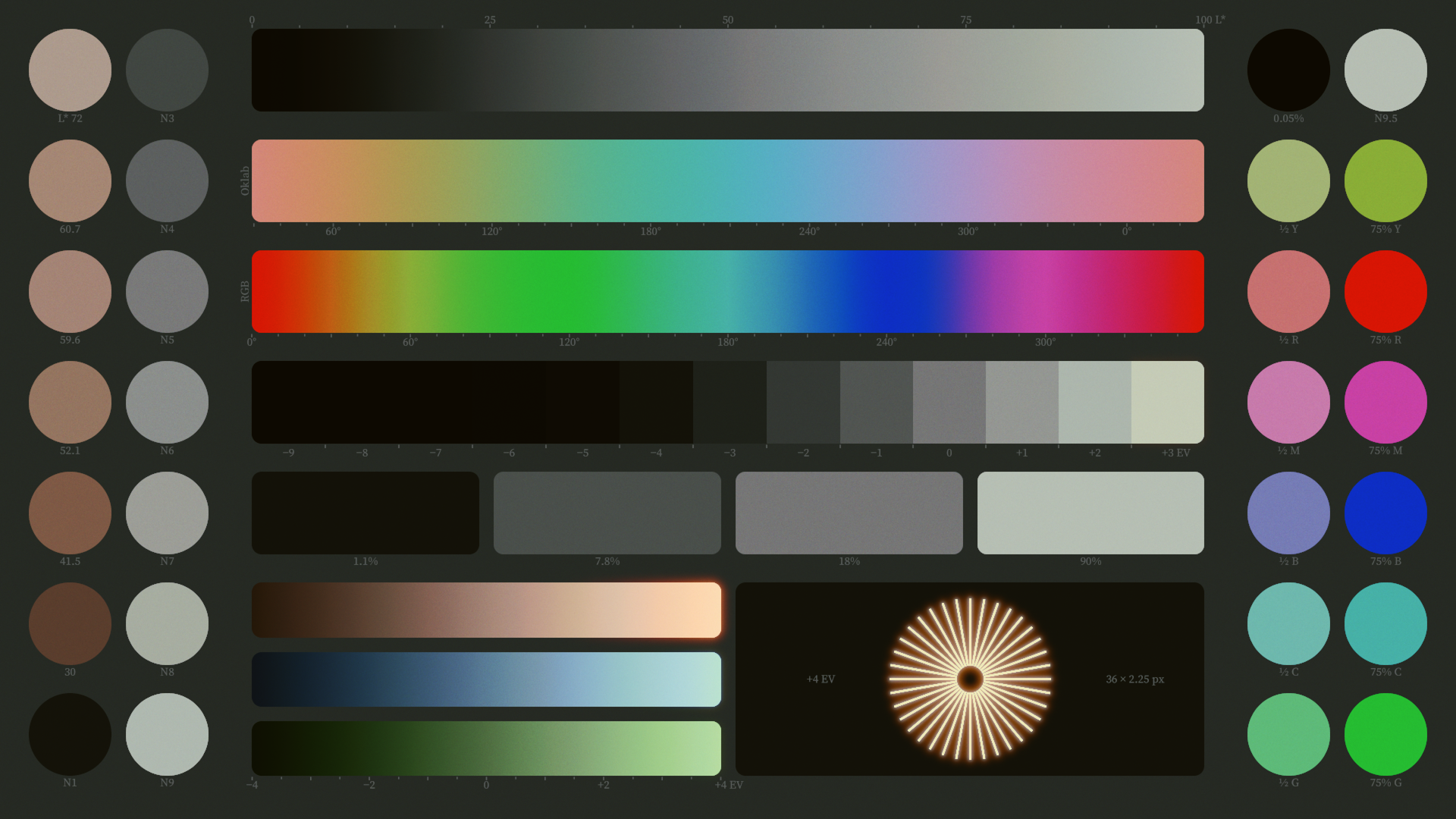
A daylight colour negative rated at EI 400 on its sheet. It defaults to a scan. The model is reconstructed: its characteristic curves are the sheet's own, but its spectral sensitivity is rebuilt from Agfa Optima II 100, its dye shapes are borrowed from Kodak Vision3 250D, and its grain and MTF come from Fujifilm Pro 400H, because the sheet does not publish them.
Response curves and the evidence behind the model
Compare manufacturer data with Ashigrain’s response on the same axes. These curves show how the model is calibrated to its sources; they do not establish a match to photographed film.
Characteristic response
RMS granularity
Density variation (σD). Where the datasheet gives a single grain value, the response away from that point is an approximation.
| Channel | Density | Datasheet-based σD | Model σD |
|---|---|---|---|
| R | 0.3 | 0.005503 | 0.005418 |
| G | 0.3 | 0.00695 | 0.006853 |
| B | 0.3 | 0.018382 | 0.0181 |
| R | 0.6 | 0.004203 | 0.004138 |
| G | 0.6 | 0.005167 | 0.005095 |
| B | 0.6 | 0.013233 | 0.013029 |
| R | 1 | 0.004133 | 0.004069 |
| G | 1 | 0.005719 | 0.00564 |
| B | 1 | 0.01376 | 0.013548 |
Model limits
These images show the film model in use. Spectral response, lighting and viewing conditions include approximations. Halation, bloom, grain size, weave and flicker are not fully measured for each film. The look of real film also depends on development and print timing.
- Custom lighting spectra, camera metering and the spectral reflectance inferred from fixed-white-balance footage are assumptions used by the model, not measurements of this film.
- Colour-print timing and scan balance under arbitrary lighting are modelled. Scanner colour balance has no standard physical unit.
- The sheet rates the film for daylight only and gives no tungsten exposure index. The optional conversion filters use separate measured spectra; the source does not calibrate their effect on this film.
- The characteristic curves are the sheet's own, but no spectral sensitivity is printed. It is reconstructed from the peaks and edges of Agfa Optima II 100, a proxy rather than this film's sensitivity.
- The sheet prints no separate cyan, magenta and yellow dye spectra. The individual dye shapes are borrowed from Kodak Vision3 250D (5207), a proxy rather than this film's dyes.
- The sheet prints no granularity or MTF. Both are proxied from Fujifilm Pro 400H, so the granularity values shown are that film's model, not measurements of NC500.
- The sheet prints a grey base and says no rem-jet is needed, so the grey base is taken as the antihalation.
- The sheet notes a flatter gradation when the film is processed in ECN-2. Only C-41 processing is modelled.
- Individual dye amounts, layer interactions and push/pull behaviour are approximated where the datasheet provides no calibration. Grain size is assumed; published RMS granularity does not specify dye-cloud size.
- Characteristic response outside the published exposure range is an extrapolation, not measured film data.
- Halation strength, radius and layer weights are not quantified by the datasheet. The effect of removing antihalation and the bloom response are also approximations.
- The default output is a scan. Scan balance has no standard unit and is modelled.
- The printer lamp and filter spectra and the Status A grey aim used in this preview are approximated; the source does not publish the required spectral or laboratory aim data.
Reciprocity: not modelled. Exposure time has no effect on this film.
Film guide: assumptions and practical choices
Sources
- Exposure index: Data sheet WOLFEN NC500 (ORWO / InovisCoat colour negative film), 'Datenblatt NC500 - Kopie.docx', PDF created 2022-11-18 (English text), p. 1
- Characteristic curves: Data sheet WOLFEN NC500 (ORWO / InovisCoat colour negative film), 'Datenblatt NC500 - Kopie.docx', PDF created 2022-11-18 (English text), p. 2
- Process: Data sheet WOLFEN NC500 (ORWO / InovisCoat colour negative film), 'Datenblatt NC500 - Kopie.docx', PDF created 2022-11-18 (English text), p. 2