 Ashigrain
Colour negative · Vintage
Ansco Color Negative 843
Ansco's 1950s daylight negative for feature films.
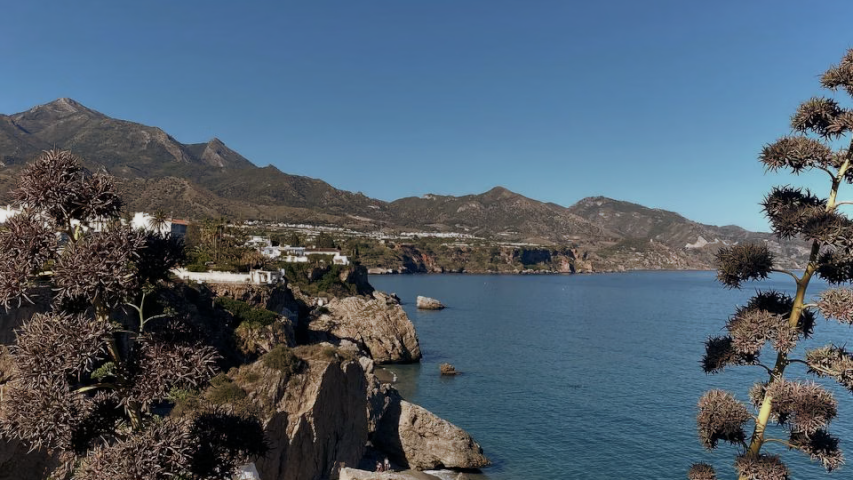
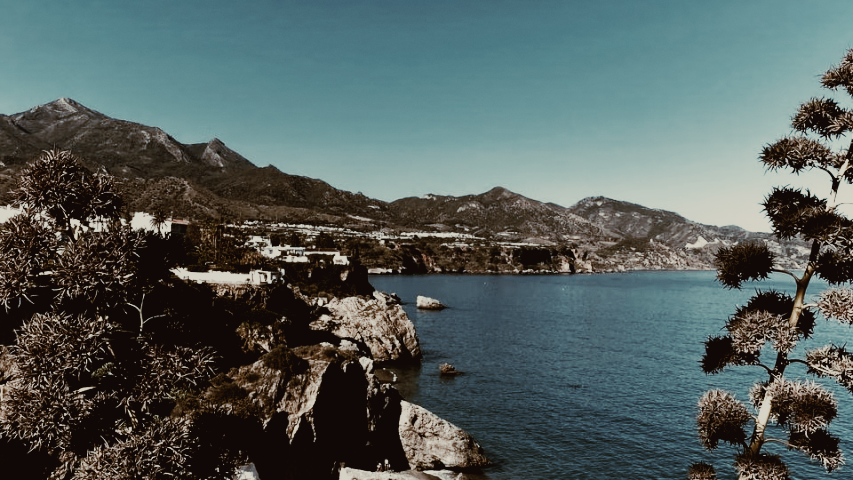
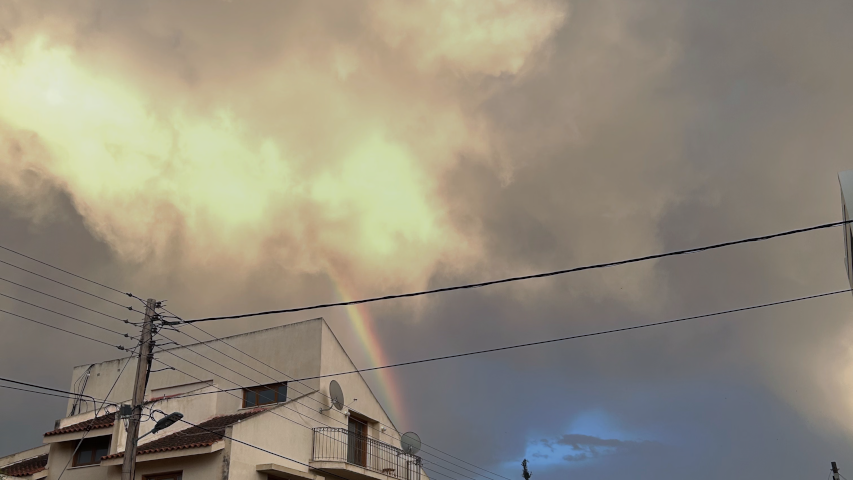
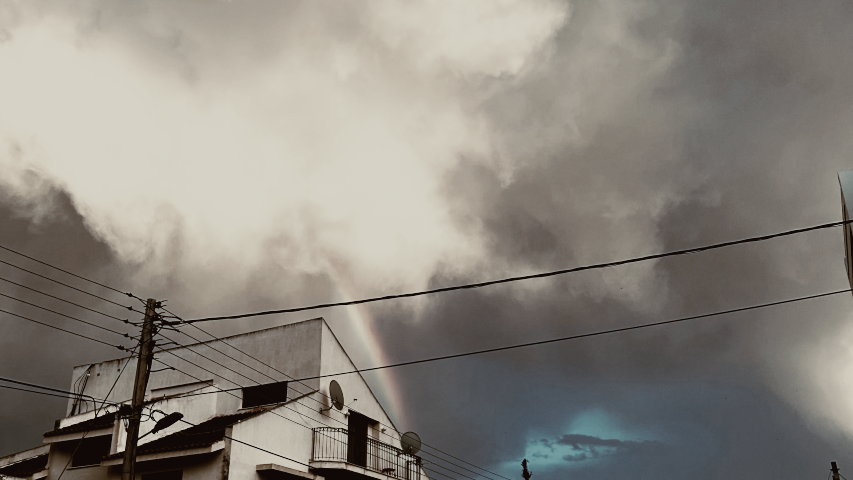
Ansco's 1950s negative-positive system, Color Negative 843 printed on its companion Color Print 848, on a period daylight scene. Original vs Ashigrain.
At a glance
- Exposure index
- 16
- Daylight
- Introduced
- by 1951
- Process
- Ansco color negative process (Ansco Type 843 color developer)
About the film
Ansco, a division of General Aniline & Film Corp. in Binghamton, New York, had proposed a reversal Ansco Color process for professional motion pictures in 1945, on reversal films 735 and 732.
Ansco judged that a negative-positive system would follow black-and-white studio practice more closely, with higher speed and more latitude in exposure, processing and printing. Ansco's Herman Duerr presented the new process to the Society's convention in Hollywood on 18 October 1951, with Type 843 as its camera negative, Type 848 for release prints and Type 846 for colour dupe negatives. Once dupes, protection masters and other studio needs were solved, the negative-positive process was to replace the reversal one. Duerr said Ansco was then producing only a daylight-type negative, balanced at about 5400 K, and that a tungsten-balanced one was expected later. His paper, printed in the Journal of the SMPTE in June 1952, describes a three-layer chromogenic monopack that needs its own colour developer. The Timeline of Historical Film Colors dates its 843 entry 1952 to 1956, gives it a speed of 16 ASA in daylight and lists Arch Oboler's Bwana Devil (1952) on that entry.
Sources for this history
- The Ansco Color Negative-Positive Process (Journal of the SMPTE 58(6), June 1952, pp. 465–479), Herman H. Duerr (Ansco), Internet Archive
- Ansco Color Negative, type 843, Timeline of Historical Film Colors
The look
Ansco Color Negative 843 is a 1950s daylight colour camera negative, rated exposure index 16 and coated on a grey base for antihalation. It was the camera film of Ansco's negative-positive process for feature films. Ashigrain prints it on its companion positive, Ansco Color Print 848.


Best for
- Period colour for 1950s settings
- Daylight exteriors with a vintage palette
- Studying an early negative-positive system
Compare camera films
Science & sources


A daylight colour camera negative rated at EI 16, shown through its companion print, Ansco Color Print 848. Its curves, spectral sensitivity and dyes are traced from Duerr's 1952 paper. Its grain and MTF come from Kodak Vision3 50D, because the paper gives only a resolving power.
Response curves and the evidence behind the model
Compare manufacturer data with Ashigrain’s response on the same axes. These curves show how the model is calibrated to its sources; they do not establish a match to photographed film.
Characteristic response
RMS granularity
Density variation (σD). Where the datasheet gives a single grain value, the response away from that point is an approximation.
| Channel | Density | Datasheet-based σD | Model σD |
|---|---|---|---|
| R | 0.3 | 0.005557 | 0.005501 |
| G | 0.3 | 0.005402 | 0.005339 |
| B | 0.3 | 0.010235 | 0.010105 |
| R | 0.6 | 0.004731 | 0.004684 |
| G | 0.6 | 0.004721 | 0.004666 |
| B | 0.6 | 0.010343 | 0.010211 |
| R | 1 | 0.004683 | 0.004636 |
| G | 1 | 0.004507 | 0.004454 |
| B | 1 | 0.008915 | 0.008802 |
| R | 1.5 | 0.003527 | 0.003492 |
| G | 1.5 | 0.004781 | 0.004725 |
| B | 1.5 | 0.008445 | 0.008338 |
| B | 2 | 0.006696 | 0.006611 |
Model limits
These images show the film model in use. Spectral response, lighting and viewing conditions include approximations. Halation, bloom, grain size, weave and flicker are not fully measured for each film. The look of real film also depends on development and print timing.
- Custom lighting spectra, camera metering and the spectral reflectance inferred from fixed-white-balance footage are assumptions used by the model, not measurements of this film.
- Colour-print timing and scan balance under arbitrary lighting are modelled. Scanner colour balance has no standard physical unit.
- The paper rates the film for daylight only and gives no tungsten exposure index. The optional conversion filters use separate measured spectra; the source does not calibrate their effect on this film.
- The paper's curves are Macbeth-Ansco integral densities, not Status M densities. Reading them on the model's Status M scale is an approximation.
- The paper gives only a resolving power, 44–48 lines/mm, and no MTF or granularity. MTF and grain are proxied from Kodak Vision3 50D (5203), so the granularity values shown are that film's.
- The film is supplied on a grey base for antihalation. Halation strength, radius, layer weights and bloom are not measured.
- Individual dye amounts, layer interactions and push/pull behaviour are approximated where the datasheet provides no calibration. Grain size is assumed; published RMS granularity does not specify dye-cloud size.
- Characteristic response outside the published exposure range is an extrapolation, not measured film data.
- It prints on Ansco Color Print 848 by default. That print's dye spectra are taken from Type 843, because the paper prints no dye curve for 848.
- The printer lamp and filter spectra and the Status A grey aim used in this preview are approximated; the source does not publish the required spectral or laboratory aim data.
Reciprocity: not modelled. Exposure time has no effect on this film.
Film guide: assumptions and practical choices
Sources
- Characteristic curves: Duerr, H. H.: The Ansco Color Negative-Positive Process. J. SMPTE 58(6), June 1952, pp. 465-479 (volume 58 scan), archive.org item journalofsociety58socirich (Prelinger Library, Journal of the SMPTE Vol. 58, Jan-Jun 1952), derivative file journalofsociety58socirich.pdf, p. 478
- Exposure index: Duerr, H. H.: The Ansco Color Negative-Positive Process. J. SMPTE 58(6), June 1952, pp. 465-479 (volume 58 scan), archive.org item journalofsociety58socirich (Prelinger Library, Journal of the SMPTE Vol. 58, Jan-Jun 1952), derivative file journalofsociety58socirich.pdf, p. 479
- Process: Duerr, H. H.: The Ansco Color Negative-Positive Process. J. SMPTE 58(6), June 1952, pp. 465-479 (volume 58 scan), archive.org item journalofsociety58socirich (Prelinger Library, Journal of the SMPTE Vol. 58, Jan-Jun 1952), derivative file journalofsociety58socirich.pdf, p. 480