 Ashigrain
Black-and-white negative · Black & white
Ilford HP5 Plus
Ilford's fast all-rounder for action and available light.
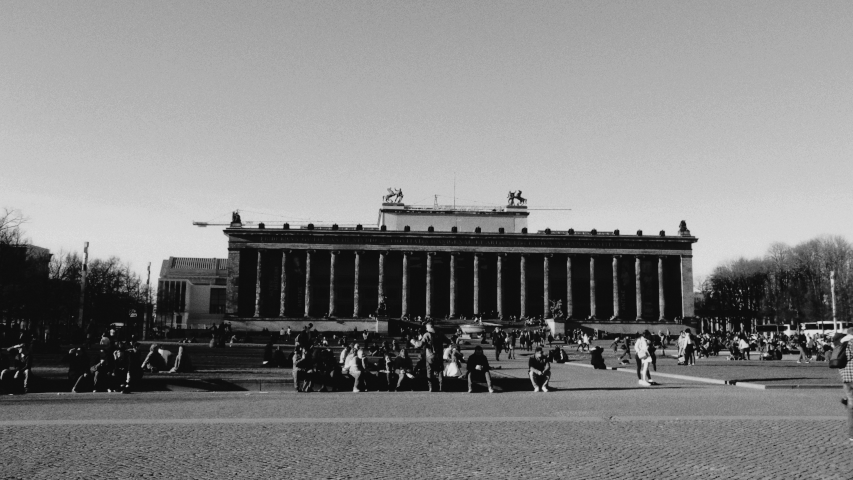
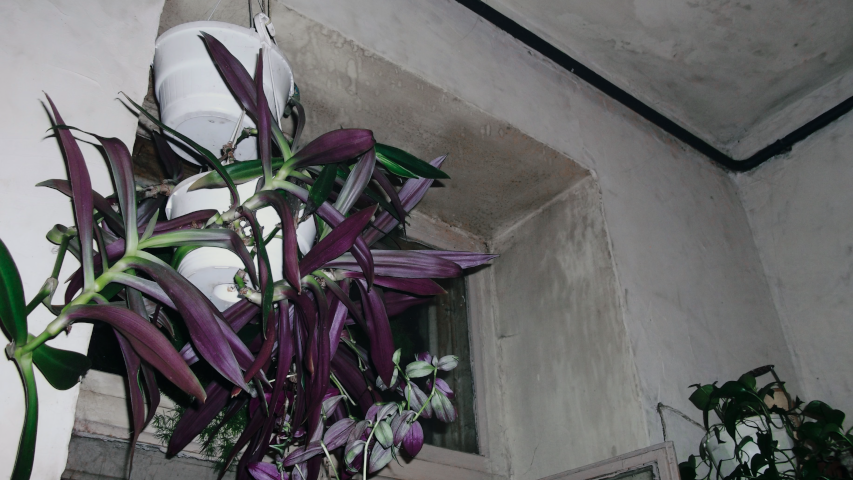
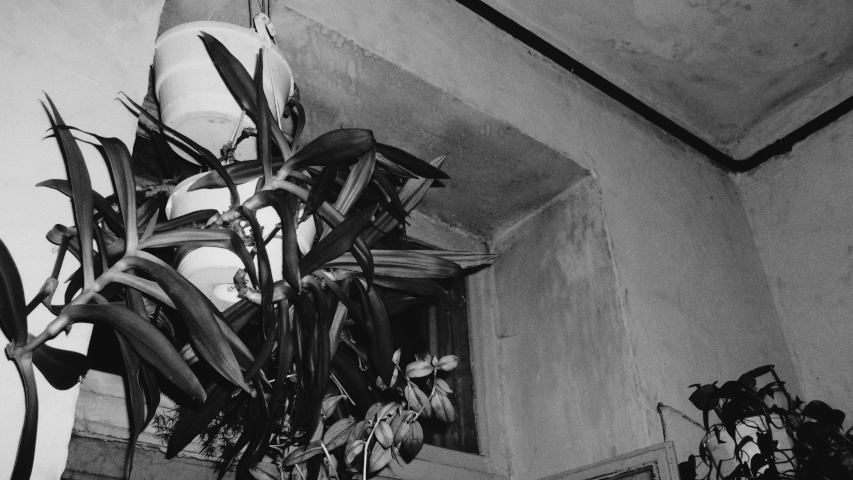
Ilford HP5 Plus printed on Kodak 2302: a classic 400-speed black-and-white film. Original vs Ashigrain.
At a glance
- Exposure index
- 400
- Introduced
- 1989
- In production
- Process
- ILFORD ILFOTEC HC (1+31)
About the film
Ilford HP5 Plus is a fast panchromatic black-and-white negative rated ISO 400/27°. Ilford dates it to 1989: the company's own timeline lists HP5 Plus that year, following an earlier HP5 film.
The earliest dated data sheet found, of July 2004, was published by Ilford Imaging UK at Town Lane, Mobberley. Ilford's timeline says a management buy-out in 2005 formed HARMAN technology Limited, which trades as Ilford Photo in Mobberley, Cheshire. HARMAN technology publishes the current sheet, dated November 2018. Ilford recommends the film for action, available light and general photography, and says it prints well at meter settings up to EI 3200 with extended development. It works in all the major processing systems, including those with short fixing and washing times. It comes in 135 on acetate base, in 120 on clear acetate and as sheet film on polyester, the roll and sheet films with an anti-halation backing that clears in development.
Sources for this history
- ILFORD PHOTO History, HARMAN technology Limited
- ILFORD HP5 PLUS fact sheet (July 2004), ILFORD Imaging UK Limited
- ILFORD HP5 PLUS technical information (November 2018), HARMAN technology Limited
The look
Ilford HP5 Plus is a fast ISO 400 panchromatic black-and-white negative for action, available light and everyday work, with a long, gentle toe. It prints on Kodak B&W Print Film 2302 by default, or on a colour print film for a near-neutral image with the print's own tint.



Best for
- Street and documentary photography
- Available-light interiors and events
- Everyday black-and-white work
Compare camera films
Science & sources

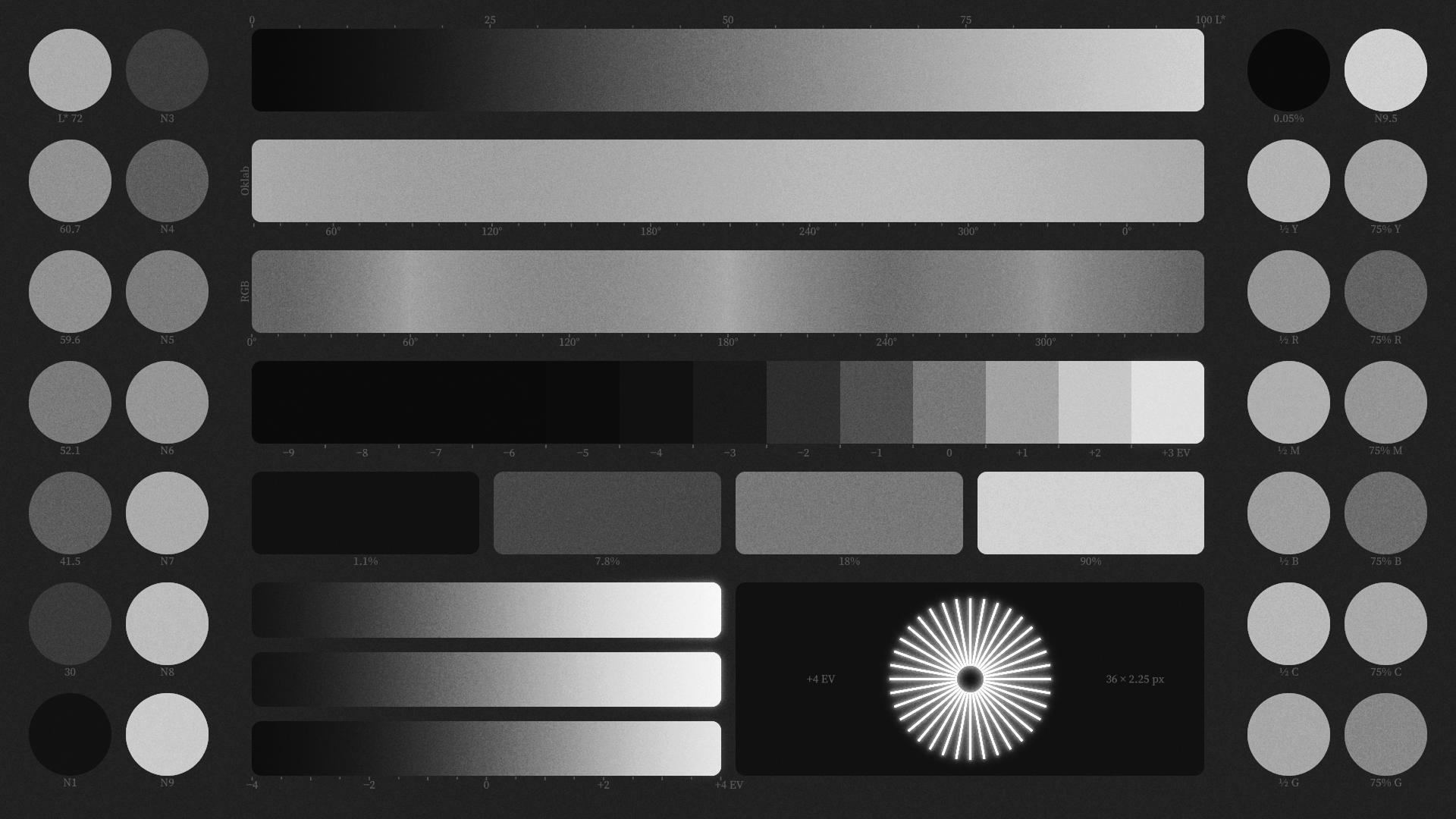
A fast panchromatic black-and-white negative rated at ISO 400. Its curve and spectral sensitivity are digitised from Ilford's 2004 sheet; the spectral shape is relative, read from a spectrogram made with 2850 K tungsten light. Ilford prints no MTF or granularity, so its sharpness and grain are proxied from Kodak Tri-X 400. It prints on Kodak B&W Print Film 2302 by default.
Response curves and the evidence behind the model
Compare manufacturer data with Ashigrain’s response on the same axes. These curves show how the model is calibrated to its sources; they do not establish a match to photographed film.
Characteristic response
RMS granularity
Density variation (σD). Where the datasheet gives a single grain value, the response away from that point is an approximation.
| Channel | Density | Datasheet-based σD | Model σD |
|---|---|---|---|
| N | 0.3 | 0.008867 | 0.008737 |
| N | 0.6 | 0.012551 | 0.012368 |
| N | 1 | 0.016204 | 0.015968 |
| N | 1.5 | 0.019846 | 0.019557 |
Model limits
These images show the film model in use. Spectral response, lighting and viewing conditions include approximations. Halation, bloom, grain size, weave and flicker are not fully measured for each film. The look of real film also depends on development and print timing.
- Custom lighting spectra, camera metering and the spectral reflectance inferred from fixed-white-balance footage are assumptions used by the model, not measurements of this film.
- The source gives a daylight ISO speed but no colour balance. Daylight calibration and spectrally neutral silver density are assumptions.
- The characteristic curve uses a relative log exposure axis with no lux-second scale and no marked normal exposure; its normal-exposure point is assumed.
- The spectral sensitivity is the envelope of a wedge spectrogram made with 2850 K tungsten light, used relative to its own printed scale. The spectrogram-to-sensitivity conversion is not printed, and the 2850 K light is not divided out.
- The sheet prints no MTF or granularity. Both are proxied from Kodak Tri-X 400, the Kodak black-and-white negative of the same speed and grain class, so the sharpness and granularity shown are that film's, not measurements of HP5 Plus.
- No push curves are published; push and pull use a generic model.
- The sheet's reciprocity power law starts at ½ s; the model applies it from 1 s, so exposures between ½ s and 1 s get no correction. The sheet gives no upper limit to the law's validity.
- The anti-halation backing is described only for roll and sheet film, not 135, so halation is off by default. Its strength, radius and bloom are not measured.
- Characteristic response outside the published exposure range is an extrapolation, not measured film data.
- In the print branch it prints on Kodak B&W Print Film 2302 by default. Black-and-white print timing is modelled.
Reciprocity: modelled from 1/10000 s to 100 s, following the datasheet's corrections for long and short exposures. Exposure time stops at the ends of that range.
Film guide: assumptions and practical choices
Sources
- Exposure index: ILFORD HP5 PLUS fact sheet, July 2004, p. 1
- Characteristic curves: ILFORD HP5 PLUS fact sheet, July 2004, p. 5
- Process: ILFORD HP5 PLUS fact sheet, July 2004, p. 5