 Ashigrain
Colour negative · 2006 onward
Kodak 500T 5230
Tungsten cinema colour, close to Vision3 500T.
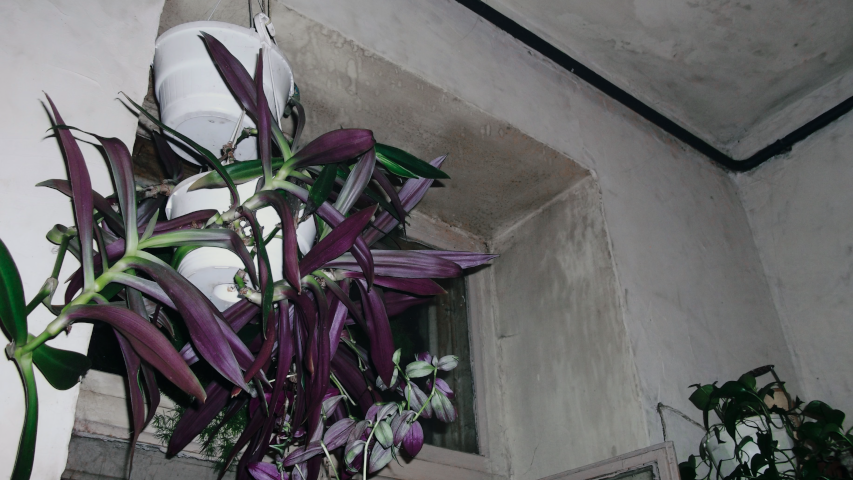
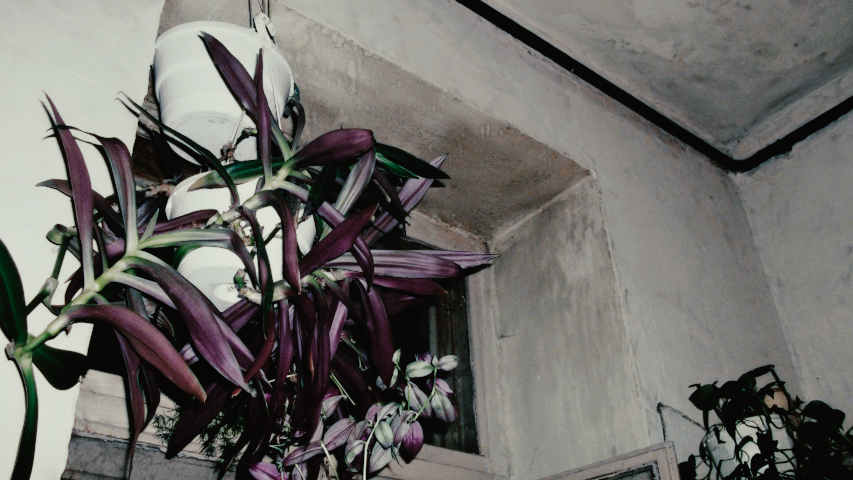
Kodak 500T 5230 printed on Kodak Vision Color Print Film 2383. Original vs Ashigrain.
At a glance
- Exposure index
- 500
- Tungsten
- Introduced
- 2011
- Discontinued
- Process
- ECN-2
About the film
Kodak's chronology places the colour negative Kodak 500T 5230/7230 in 2011, and its technical sheet is dated March of that year.
The code 5230 identifies the 35 mm version and 7230 the 16 mm version. It is distinct from the earlier black-and-white Background X film that also used the number 5230. The film was documented by Eastman Kodak Company and is discontinued, but the sources read do not independently verify its final production year.
Sources for this history
- KODAK 500T Color Negative Film 5230/7230 Technical Data, Eastman Kodak Company
- Eastman Kodak: Chronology of Film (History of Film), Eastman Kodak Company
The look
Kodak 500T 5230 is a tungsten-balanced colour camera negative rated EI 500, or EI 320 in daylight with an 85 filter. Kodak described its contrast and colour balance as very similar to Vision3 500T, with the same dye spectra. It prints on Kodak 2383 by default.




Best for
- Tungsten-lit motion-picture interiors
- Daylight filming with an 85 filter
- Comparing 5230 with Vision3 500T
Compare camera films
Science & sources

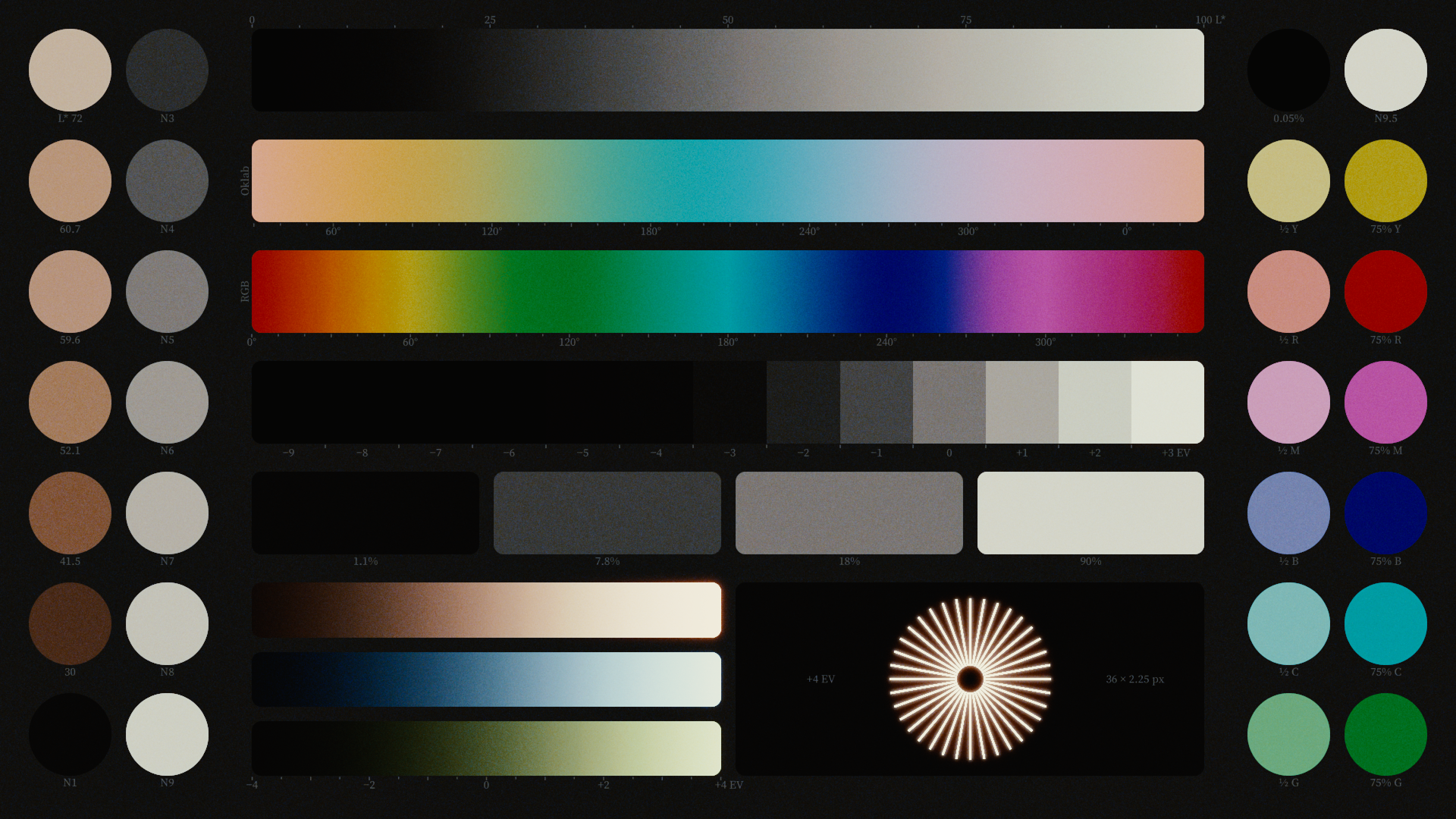
Its tone, spectral sensitivity, individual dyes, MTF and granularity are digitised from Kodak's March 2011 sheet. Although Kodak compares it with Vision3 500T, this model uses 5230's own curves, not a stock proxy. Relative grain-axis alignment and several printed axis labels require interpretation; it prints on Kodak 2383 by default.
Response curves and the evidence behind the model
Compare manufacturer data with Ashigrain’s response on the same axes. These curves show how the model is calibrated to its sources; they do not establish a match to photographed film.
Characteristic response
RMS granularity
Density variation (σD) measured through a 48 µm aperture. Where the datasheet gives a single grain value, the response away from that point is an approximation.
| Channel | Density | Datasheet-based σD | Model σD |
|---|---|---|---|
| R | 0.3 | 0.009265 | 0.009071 |
| G | 0.3 | 0.011833 | 0.011573 |
| B | 0.3 | 0.032186 | 0.031591 |
| R | 0.6 | 0.006537 | 0.0064 |
| G | 0.6 | 0.008907 | 0.008712 |
| B | 0.6 | 0.022964 | 0.02254 |
| R | 1 | 0.005981 | 0.005855 |
| G | 1 | 0.008708 | 0.008517 |
| B | 1 | 0.018383 | 0.018043 |
| R | 1.5 | 0.003897 | 0.003815 |
| G | 1.5 | 0.006052 | 0.005919 |
| B | 1.5 | 0.016935 | 0.016622 |
Model limits
These images show the film model in use. Spectral response, lighting and viewing conditions include approximations. Halation, bloom, grain size, weave and flicker are not fully measured for each film. The look of real film also depends on development and print timing.
- Custom lighting spectra, camera metering and the spectral reflectance inferred from fixed-white-balance footage are assumptions used by the model, not measurements of this film.
- Colour-print timing and scan balance under arbitrary lighting are modelled. Scanner colour balance has no standard physical unit.
- The source specifies a 3200 K tungsten design light, not its spectrum. The design-light spectrum is an approximation.
- Conversion-filter spectra (80A for daylight films under tungsten, 85 for tungsten films in daylight) come from separate measured filter data, not from this film’s source. Applying those filters to this film remains modelled.
- Individual dye amounts, layer interactions and push/pull behaviour are approximated where the datasheet provides no calibration. Grain size is assumed; published RMS granularity does not specify dye-cloud size.
- The physical dye-cloud or grain-clump size is inferred from the film's speed class, not measured for this film.
- The exposure axis has irregular printed tick spacing and a conflicting Camera Stops scale. The model follows the calibrated log H axis; the sheet's 3200 K Daylight exposure legend is ambiguous.
- The granularity chart uses a relative exposure axis, aligned through its accompanying density curves. Its absolute exposure is not supplied by the chart.
- The magenta dye curve dips to −0.058 near 445 nm and is retained as drawn. Ambiguous dye-density and sigma D axis labels require interpretation during calibration.
- The source names an acetate safety base but prints no thickness; the physical thickness used by the model is assumed.
- The source records no reciprocity correction from 1/1000 s to 1 s and gives no correction beyond that range. Reciprocity is not modelled for this film.
- The characteristic response beyond log H −3.98 to 1.02 is extrapolated.
- The printed MTF rises above 100 %, which the model renders as a development adjacency effect. Its width, amplitude and dependence on density and development are not published and are approximated.
- The adjacency fit uses two parameters per layer and cannot follow every printed MTF sample. Its dependence on local density differences is also assumed.
- The only technical source is a mirror of Kodak's March 2011 sheet. The digitisation check compares sampling densities from the same PDF, not a second source.
- The source names rem-jet, but halation strength, radius, layer weights, removal effects and bloom are not quantified.
- When printing on Kodak B&W Print Film 2302, silver density is treated as spectrally neutral rather than taken from a measured spectrum.
- The printer lamp and filter spectra and the Status A grey aim used in this preview are approximated; the source does not publish the required spectral or laboratory aim data.
- The source gives no printer lamp or filter spectra. Their spectral response is approximated.
- The available sources do not measure veiling flare during projection. The model approximates its contribution to lifted blacks on screen, so the result is not a measured projection contrast.
Reciprocity: not modelled. Exposure time has no effect on this film.
Film guide: assumptions and practical choices
Sources
- Exposure index: KODAK 500T Color Negative Film 5230/7230 Technical Data, H-1-5230t, March 2011, p. 1
- Process: KODAK 500T Color Negative Film 5230/7230 Technical Data, H-1-5230t, March 2011, p. 2
- Characteristic curves: KODAK 500T Color Negative Film 5230/7230 Technical Data, H-1-5230t, March 2011, p. 4
- Diffuse RMS granularity: KODAK 500T Color Negative Film 5230/7230 Technical Data, H-1-5230t, March 2011, p. 4
- Granularity density: KODAK 500T Color Negative Film 5230/7230 Technical Data, H-1-5230t, March 2011, p. 4