 Ashigrain
Colour negative · Vintage
Agfacolor Typ 432
Wolfen's unmasked tungsten negative of the early 1960s.
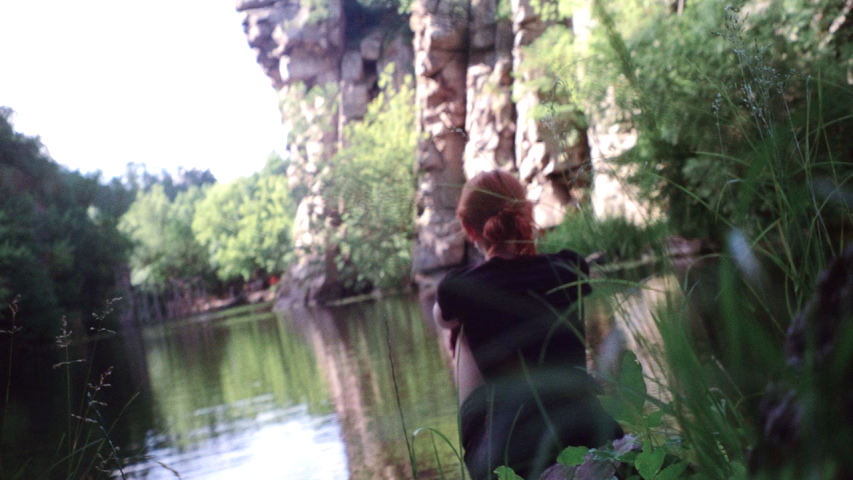
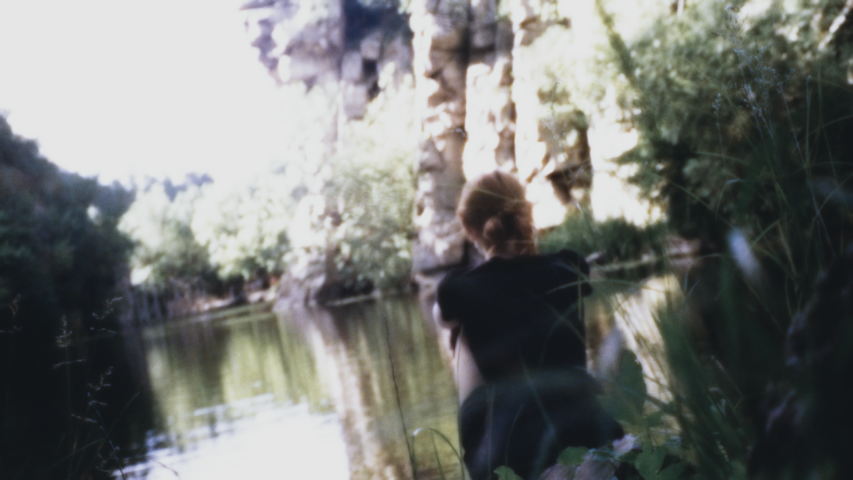
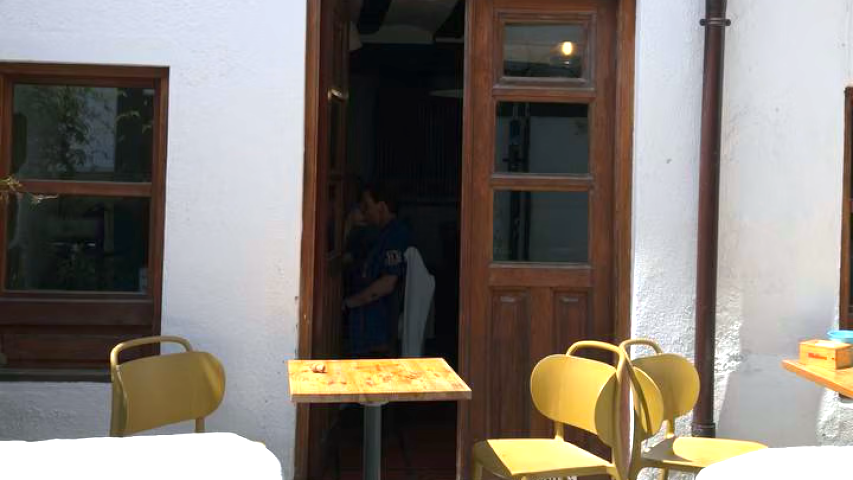
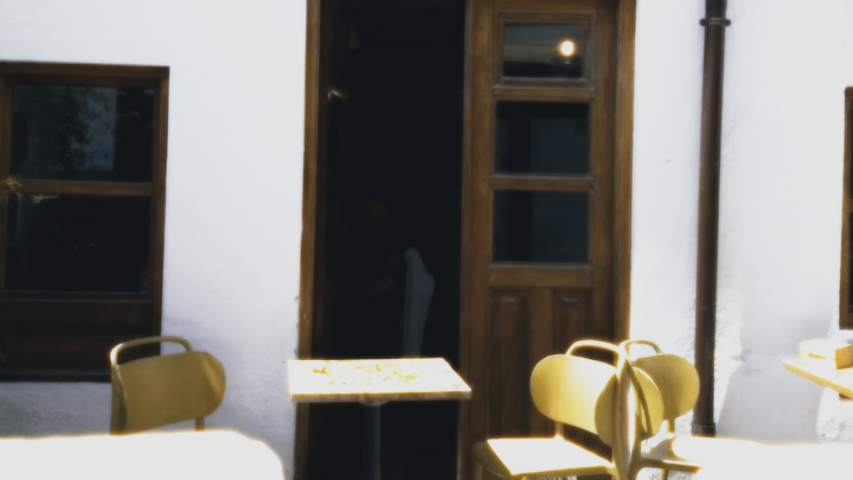
The reconstructed Agfacolor Typ 432, an unmasked Wolfen tungsten negative, on its default Gasparcolor Print surrogate. Original vs Ashigrain.
At a glance
- Exposure index
- 32
- Tungsten
- Introduced
- c. 1962
- Discontinued
- Process
- ORWO-Vorschrift 5186 (colour development 5 min for NC 1)
About the film
The filmportal.de table of Wolfen colour cine negatives gives Agfacolor Typ 432 a production period of 1962 to 1964, following the factory's Typ 333 and 334 negatives of 1954 to 1962.
It was made by VEB Filmfabrik Agfa Wolfen, the factory's name from 1954, after it had belonged to IG Farbenindustrie's Agfa and then been a department of the Soviet joint-stock company Photoplenka. Like every Wolfen and Leverkusen Agfacolor cine negative in the table, it worked with Agfa's incorporated couplers and was not yet colour-masked, unlike Eastman Color. In 1964 it was renamed ORWOCOLOR NC 1, and the ORWO catalogue of that year lists it in 70, 35 and 16 mm for tungsten light and, with the ORWO K 14 filter, for daylight. The catalogue promised long, straight colour gradation curves, wide exposure latitude and high sharpness, with gradation adjustable by development time from 0.5 to 0.9. Its successor NC 3 was presented in 1972 as a development of NC 1 and as Wolfen's first masked cine negative. The same article called NC 1 the only unmasked colour negative still on the world market, and gave it a resolving power of 72 lines/mm.
Sources for this history
- Kine-Farbnegativfilme (Tabelle 3: Kine-Farbnegativfilme von Agfa Wolfen 1939–1964), filmportal.de
- ORWO Gesamtkatalog 1964, VEB Filmfabrik Wolfen, Internet Archive
- NC 3 – ein neuer Color-Negativfilm (Bild und Ton 25, 11/1972, pp. 341–344), Johann Tamm and Joachim Weisflog (VEB Filmfabrik Wolfen)
The look
Agfacolor Typ 432 is a tungsten-balanced, unmasked colour cine negative from VEB Filmfabrik Agfa Wolfen, renamed ORWOCOLOR NC 1 in 1964. Its catalogue promised long, straight gradation, wide latitude and high sharpness. No curve of it survives, so Ashigrain reconstructs it and prints it on Gasparcolor Print by default.


Best for
- East German cinema of the 1960s
- Unmasked colour with uncorrected dye casts
- Tungsten-lit interiors and studio sets
Compare camera films
Science & sources

A tungsten-balanced colour negative without an orange mask, rated at EI 32 in tungsten light. It prints on Gasparcolor Print by default. The model is reconstructed: no curve of Typ 432 is published, so its curves and spectral sensitivity are rebuilt from 1964 catalogue values on the shapes of its successor ORWOCOLOR NC 3 with the mask removed, its dyes and MTF are NC 3's, and its grain is NC 3's scaled to the published RMS granularity.
Response curves and the evidence behind the model
Compare manufacturer data with Ashigrain’s response on the same axes. These curves show how the model is calibrated to its sources; they do not establish a match to photographed film.
Characteristic response
RMS granularity
Density variation (σD). Where the datasheet gives a single grain value, the response away from that point is an approximation.
| Channel | Density | Datasheet-based σD | Model σD |
|---|---|---|---|
| R | 0.3 | 0.008401 | 0.008387 |
| G | 0.3 | 0.008378 | 0.008353 |
| B | 0.3 | 0.018324 | 0.018174 |
| R | 0.6 | 0.006182 | 0.006172 |
| G | 0.6 | 0.007033 | 0.007012 |
| B | 0.6 | 0.014479 | 0.014361 |
| R | 1 | 0.005206 | 0.005198 |
| G | 1 | 0.006701 | 0.006681 |
| B | 1 | 0.015748 | 0.015619 |
| R | 1.5 | 0.004991 | 0.004983 |
| G | 1.5 | 0.005765 | 0.005747 |
| B | 1.5 | 0.014356 | 0.014239 |
Model limits
These images show the film model in use. Spectral response, lighting and viewing conditions include approximations. Halation, bloom, grain size, weave and flicker are not fully measured for each film. The look of real film also depends on development and print timing.
- Custom lighting spectra, camera metering and the spectral reflectance inferred from fixed-white-balance footage are assumptions used by the model, not measurements of this film.
- Colour-print timing and scan balance under arbitrary lighting are modelled. Scanner colour balance has no standard physical unit.
- The source specifies a 3200 K tungsten design light, not its spectrum. The design-light spectrum is an approximation.
- The 1964 catalogue prescribes the ORWO K 14 filter for daylight. Its spectral transmission is modelled, not supplied by the source.
- No characteristic curve or spectral sensitivity of Typ 432 or ORWOCOLOR NC 1 is published. Both are rebuilt from the 1964 catalogue's values on the shapes of its successor ORWOCOLOR NC 3, with NC 3's mask removed.
- The model uses the 1964 catalogue's speed, 16 DIN in tungsten light and 15 DIN in daylight with the filter. The filmportal.de table prints a different speed.
- The dye spectra are ORWOCOLOR NC 3's, a proxy rather than this film's dyes. Without a mask, the dyes' side absorptions stay uncorrected.
- Grain follows ORWOCOLOR NC 3, scaled to the RMS granularity Tamm and Weisflog give for NC 1 (24 / 25 / 34, blue / green / red, 24 µm aperture). The MTF is NC 3's; only a resolving power, 72 lines/mm, is published for NC 1.
- Individual dye amounts, layer interactions and push/pull behaviour are approximated where the datasheet provides no calibration. Grain size is assumed; published RMS granularity does not specify dye-cloud size.
- Characteristic response outside the published exposure range is an extrapolation, not measured film data.
- Halation strength, radius and layer weights are not quantified by the datasheet. The effect of removing antihalation and the bloom response are also approximations.
- Under custom lights the fast rendering path follows the full spectral calculation less closely for this film than for most others.
- It prints on Gasparcolor Print by default, chosen for its fit in the print comparison rather than as a print of its own period.
- The printer lamp and filter spectra and the Status A grey aim used in this preview are approximated; the source does not publish the required spectral or laboratory aim data.
Reciprocity: not modelled. Exposure time has no effect on this film.
Film guide: assumptions and practical choices
Sources
- Exposure index: ORWO Gesamtkatalog 1964 (archive.org OCR text), 1964 edition, p. 48
- Reconstructed: ORWO Gesamtkatalog 1964 (archive.org OCR text), 1964 edition, p. 48
- Diffuse RMS granularity: Tamm, J. and Weisflog, J.: NC 3 - ein neuer Color-Negativfilm. Bild und Ton 25 (11/1972), pp. 341-344, Bild und Ton, Heft 11/1972, 25. Jahrgang, pp. 341-344; filmcolors.org scan uploaded 2015-01, p. 2