 Ashigrain
Colour reversal · Vintage
Anscochrome D/500
Fast 1960s colour reversal for marginal light.
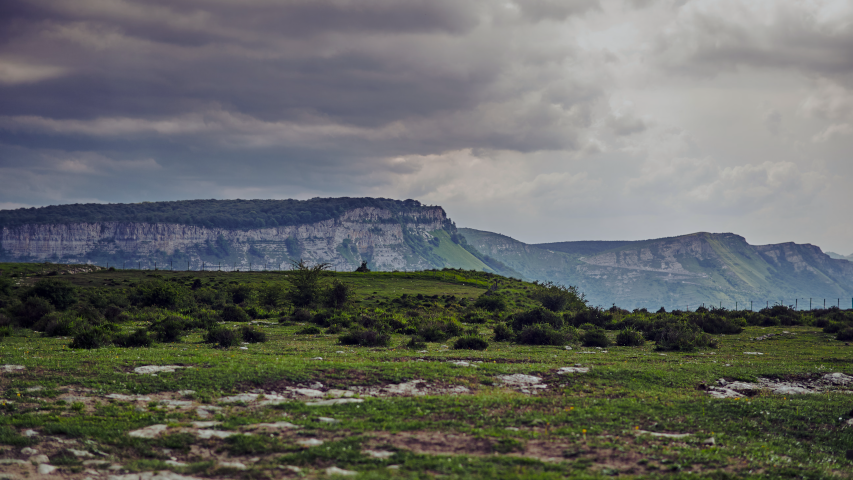
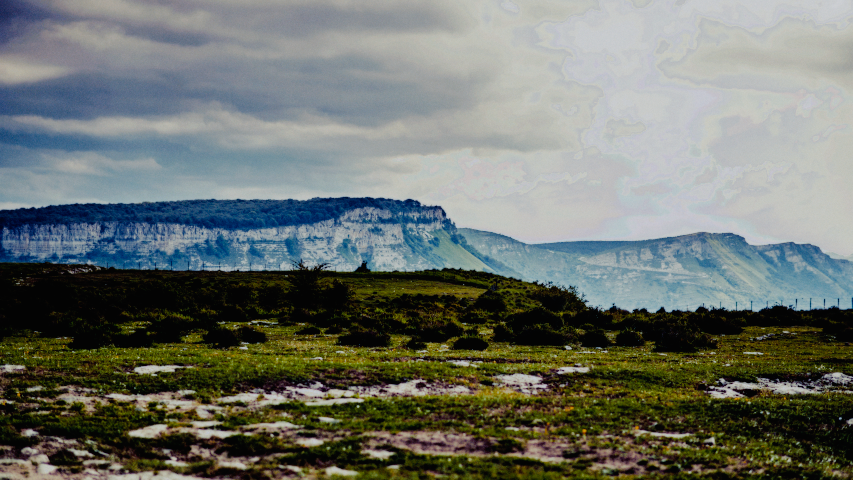
What D/500 was made for: aerial views in the marginal light of early morning or late day, on a fast daylight reversal film viewed directly. Original vs Ashigrain.
At a glance
- Exposure index
- 500
- Daylight
- Introduced
- by 1967
- Process
- AR-1
- Prints on
- Reversal, viewed directly
About the film
Engineers of General Aniline and Film Corp. in Binghamton, New York, presented Anscochrome D/500 at the technical conference of the Society of Motion Picture and Television Engineers in Chicago on 21 September 1967, and their paper was printed in October 1968.
They described a high-speed daylight colour reversal film with an exposure index of 500, or 1000 with forced processing, available on acetate or on Gafstar polyester base. Its intended uses were information photography in poor light: the space programme, oceanography and industry, aerial photography early and late in the day, and instrumentation and high-speed cameras. The authors also saw a consumer market for it as a reversal film in low available light, and press and aerial uses that needed both prints and transparencies. It shared the spectral sensitivity of Anscochrome D/50, T/100 and D/200 and the dyes of all Anscochrome camera films, so it could be intercut with them; its emulsion technology was different, but its processing tolerances were no tighter. It ran in Ansco's AR-1 process or the shorter AR-2, and could also be developed as a colour negative at exposure indexes from 125 to 1000. Compared with D/200 it was slightly coarser in grain, with similar colour saturation and reproduction. The Timeline of Historical Film Colors lists a 500 ASA daylight Anscochrome reversal film of 1967 to 1969 as type 5550, citing only this paper, so that code is not confirmed for D/500.
Sources for this history
- Characteristics and Applications of a New High-Speed Color Film — Anscochrome D/500 (Journal of the SMPTE 77(10), October 1968, pp. 1150–1152), Society of Motion Picture and Television Engineers
- Anscochrome, type 5550, Timeline of Historical Film Colors, University of Zurich
The look
Anscochrome D/500 is a high-speed daylight colour reversal film of the late 1960s, rated exposure index 500 and viewed directly with no print. It was made for low-light information work, from space and ocean research to aerial photography at dawn and dusk, and is slightly grainier than Anscochrome D/200.


Best for
- Aerial views at dawn and dusk
- Dim interiors in available light
- Grainy late-1960s colour
Compare camera films
Science & sources

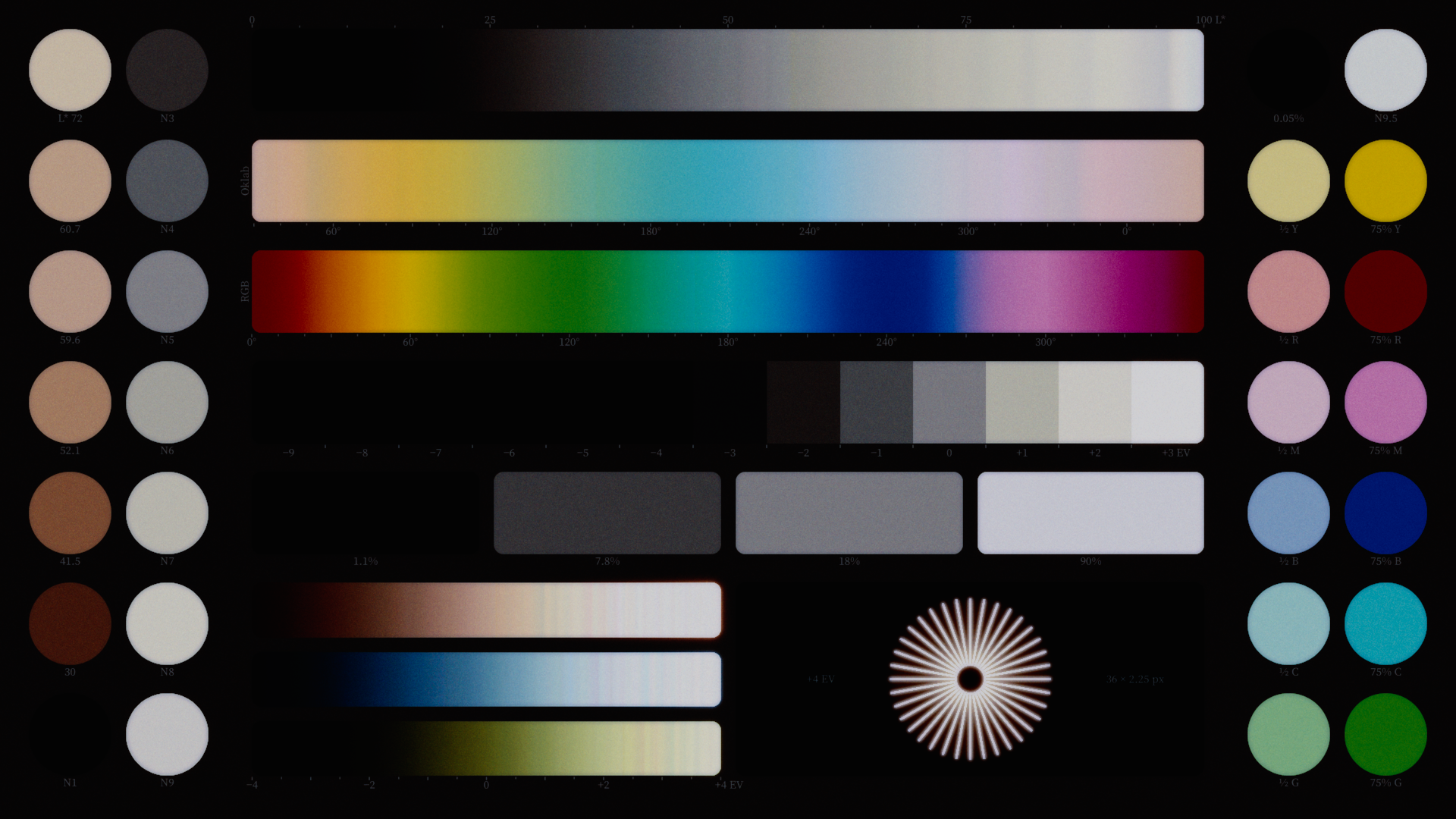
A daylight colour reversal film rated at EI 500, shown directly without a print stage. Its curves, spectral sensitivity and dyes are traced from the 1968 SMPTE paper, with normal exposure placed on its relative log-exposure axis by an ISO 2240 speed-point approximation. Its grain is borrowed from Kodak Ektachrome P1600 and its MTF from Kodak Ektachrome 100D, because the paper gives only an RMS granularity, resolving power and acutance.
Response curves and the evidence behind the model
Compare manufacturer data with Ashigrain’s response on the same axes. These curves show how the model is calibrated to its sources; they do not establish a match to photographed film.
Characteristic response
RMS granularity
Density variation (σD). Where the datasheet gives a single grain value, the response away from that point is an approximation.
| Channel | Density | Datasheet-based σD | Model σD |
|---|---|---|---|
| R | 0.3 | 0.016887 | 0.016599 |
| G | 0.3 | 0.012047 | 0.011798 |
| B | 0.3 | 0.017837 | 0.017601 |
| R | 0.6 | 0.033799 | 0.033223 |
| G | 0.6 | 0.024309 | 0.023805 |
| B | 0.6 | 0.043404 | 0.042831 |
| R | 1 | 0.052542 | 0.051647 |
| G | 1 | 0.038835 | 0.038031 |
| B | 1 | 0.075021 | 0.074031 |
| R | 1.5 | 0.076254 | 0.074955 |
| G | 1.5 | 0.062613 | 0.061316 |
| B | 1.5 | 0.108264 | 0.106836 |
| R | 2 | 0.090417 | 0.088877 |
| G | 2 | 0.084951 | 0.083191 |
| B | 2 | 0.166485 | 0.164288 |
Model limits
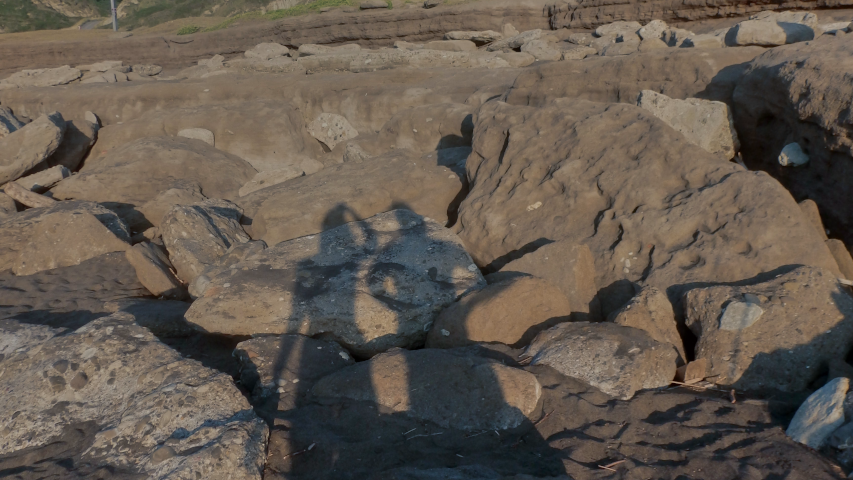
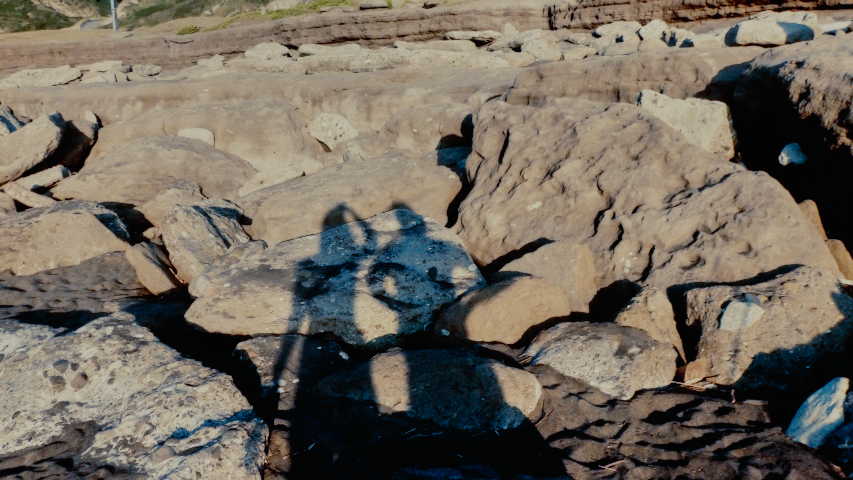
These images show the film model in use. Spectral response, lighting and viewing conditions include approximations. Halation, bloom, grain size, weave and flicker are not fully measured for each film. The look of real film also depends on development and print timing.
- Custom lighting spectra, camera metering and the spectral reflectance inferred from fixed-white-balance footage are assumptions used by the model, not measurements of this film.
- The paper's curves are integral densities for blue, green and red filtration, not Status M densities. Reading them on the model's Status M scale is an approximation.
- The curves are printed on a relative log-exposure axis without a normal-exposure point. The model places normal exposure at the ISO 2240 speed point of the traced curves, taken as EI 500; this anchor is an approximation.
- The paper gives RMS granularity 0.048, resolving power and acutance, but no MTF. MTF is proxied from Kodak Ektachrome 100D (5294) and grain from Kodak Ektachrome P1600, so the granularity values shown are P1600's.
- The antihalation layer is not described. An undercoat is assumed; halation strength, radius, layer weights and bloom are not measured.
- Forced processing to EI 1000, processing as a colour negative and reciprocity are described in the paper but not modelled.
- Push and pull have no published curves for this film and use a generic model.
- Characteristic response outside the published exposure range is an extrapolation, not measured film data.
- The available sources do not measure veiling flare during projection. The model approximates its contribution to lifted blacks on screen, so the result is not a measured projection contrast.
Reciprocity: not modelled. Exposure time has no effect on this film.
Film guide: assumptions and practical choices
Sources
- Characteristic curves: Characteristics and Applications of a New High-Speed Color Film — Anscochrome D/500, J. SMPTE 77(10), Oct. 1968, pp. 1150-1152; DOI 10.5594/J13658, p. 1
- Exposure index: Characteristics and Applications of a New High-Speed Color Film — Anscochrome D/500, J. SMPTE 77(10), Oct. 1968, pp. 1150-1152; DOI 10.5594/J13658, p. 1
- Diffuse RMS granularity: Characteristics and Applications of a New High-Speed Color Film — Anscochrome D/500, J. SMPTE 77(10), Oct. 1968, pp. 1150-1152; DOI 10.5594/J13658, p. 3
- Process: Characteristics and Applications of a New High-Speed Color Film — Anscochrome D/500, J. SMPTE 77(10), Oct. 1968, pp. 1150-1152; DOI 10.5594/J13658, p. 3