 Ashigrain
Colour negative · 2006 onward
Kodak Portra 400
Kodak's 400-speed portrait negative for changing light.
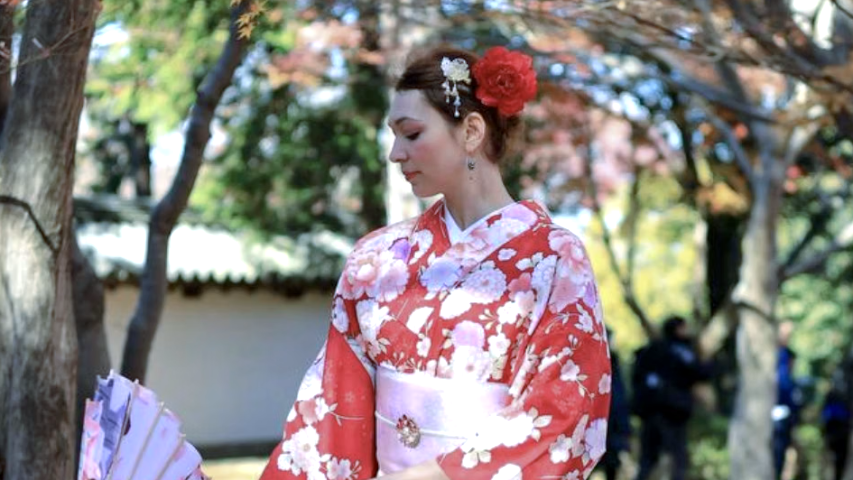
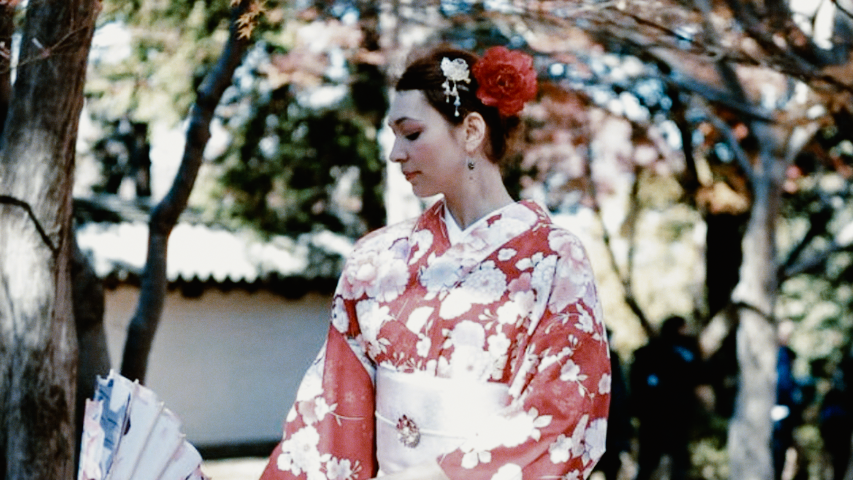
Kodak's 400-speed portrait negative; its tone curve and sharpness come from Portra 400NC. Original vs Ashigrain.
At a glance
- Exposure index
- 400
- Daylight
- Introduced
- 2010
- In production
- Process
- C-41
- Prints on
- Scan
About the film
Kodak Portra 400 is a daylight ISO 400 colour negative for Process C-41, and Kodak dates it to 2010: Eastman Kodak's release of 14 September that year introduced it and said it would ship from October in 35 mm, 120/220 and 4x5.
Before it, Kodak's 400-speed Portra films were 400NC and 400VC, sold in one family data sheet with 160NC, 160VC and Portra 800. The release said the new film replaced both 400NC and 400VC, which Kodak expected to sell out by the end of 2010. Kodak said it drew on the technology of its Vision motion-picture films and used antenna dye sensitisation in the cyan and magenta layers, among other changes, for finer grain. It was aimed at portrait and fashion work, and at nature, travel and outdoor photography where the action is fast or the light cannot be controlled, and Kodak planned to show it at Photokina in Cologne that September. In 2011 Portra 160 replaced 160NC and 160VC in the same way and shared the Vision technology of Portra 400. Kodak Alaris now publishes the data sheet, revised in January 2025, in 135, 120 and sheet sizes. Its characteristic-curve and MTF charts are the same drawings as those for 400NC in the 2009 family sheet.
Sources for this history
- KODAK PROFESSIONAL PORTRA 400 Film Technical Data (E-4050, January 2025), Kodak Alaris Inc.
- Kodak Continues to Enhance Award-Winning Professional Film Portfolio, Eastman Kodak Company
- KODAK PROFESSIONAL PORTRA 160NC, 160VC, 400NC, 400VC, and 800 Films Technical Data (E-4040, February 2009), Eastman Kodak Company
- Kodak Continues to Bring New Professional Films to Market with KODAK PROFESSIONAL PORTRA 160 Film, Eastman Kodak Company
The look
Kodak Portra 400 is a daylight colour negative rated ISO 400, made for portraits and fashion and for travel and outdoor work where the light cannot be controlled. Kodak built it with technology from its Vision motion-picture films for finer grain. Ashigrain renders it as a scan for your grade.




Best for
- Portraits and fashion on location
- Travel and outdoor work in changing light
- Fast action where the light cannot be controlled
Compare camera films
Science & sources

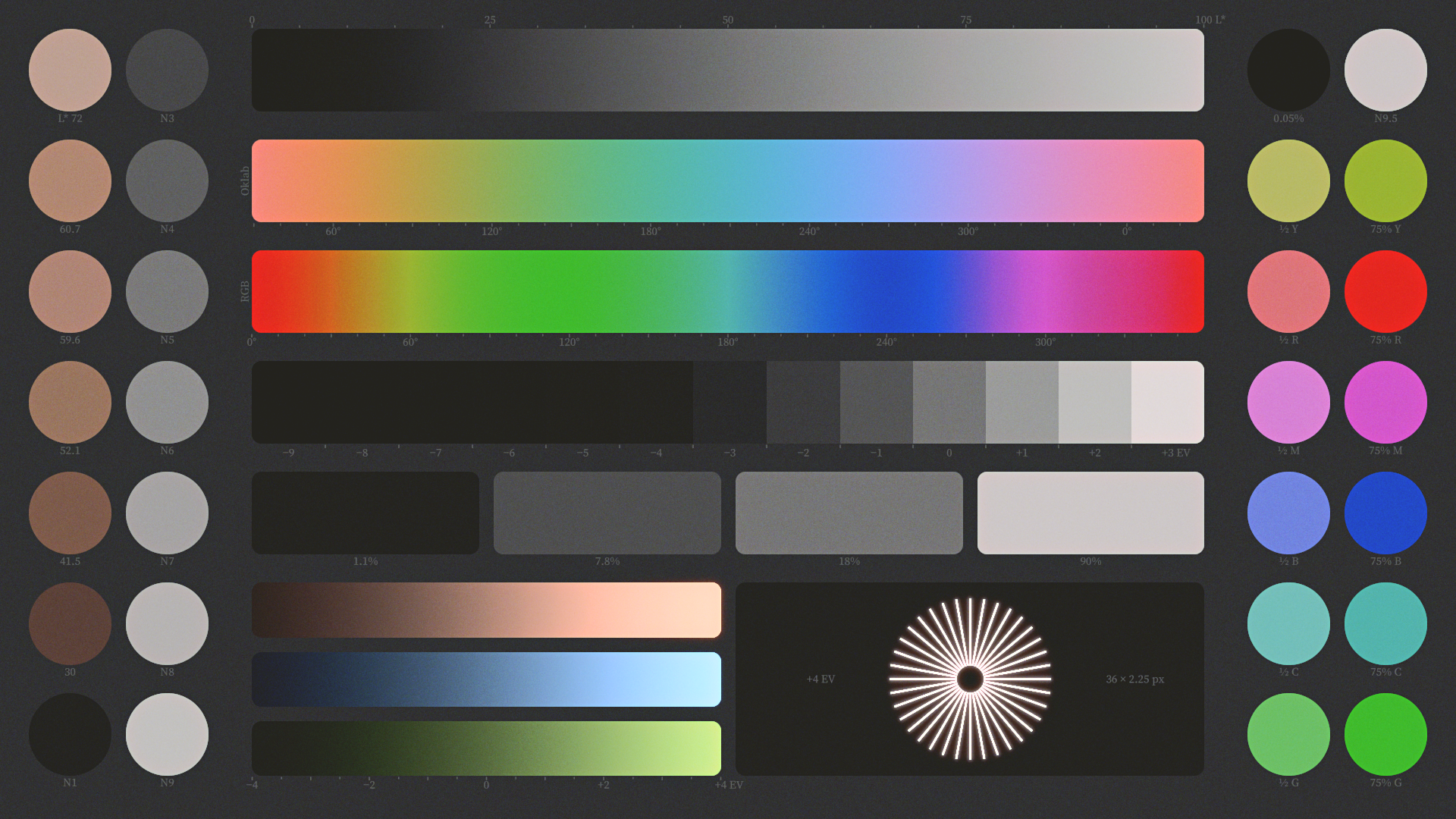
A daylight still-photo colour negative rated at ISO 400, shown as a scan. Its characteristic curves and MTF come from Kodak's current sheet, whose charts are the drawings Kodak printed for Portra 400NC in 2009. Its grain is borrowed from Kodak Vision3 500T (5219) and its individual dye shapes from Kodak Vision3 250D (5207), because the sheet publishes neither an RMS granularity nor separate dye curves.
Response curves and the evidence behind the model
Compare manufacturer data with Ashigrain’s response on the same axes. These curves show how the model is calibrated to its sources; they do not establish a match to photographed film.
Characteristic response
RMS granularity
Density variation (σD). Where the datasheet gives a single grain value, the response away from that point is an approximation.
| Channel | Density | Datasheet-based σD | Model σD |
|---|---|---|---|
| R | 0.3 | 0.009687 | 0.009544 |
| G | 0.3 | 0.011913 | 0.011682 |
| B | 0.3 | 0.030716 | 0.030055 |
| R | 0.6 | 0.006624 | 0.006526 |
| G | 0.6 | 0.009005 | 0.00883 |
| B | 0.6 | 0.024074 | 0.023556 |
| R | 1 | 0.006234 | 0.006141 |
| G | 1 | 0.007295 | 0.007154 |
| B | 1 | 0.019151 | 0.018739 |
| R | 1.5 | 0.005929 | 0.005841 |
| G | 1.5 | 0.007847 | 0.007695 |
| B | 1.5 | 0.020165 | 0.019732 |
| B | 2 | 0.016136 | 0.015789 |
Model limits
These images show the film model in use. Spectral response, lighting and viewing conditions include approximations. Halation, bloom, grain size, weave and flicker are not fully measured for each film. The look of real film also depends on development and print timing.
- Custom lighting spectra, camera metering and the spectral reflectance inferred from fixed-white-balance footage are assumptions used by the model, not measurements of this film.
- Colour-print timing and scan balance under arbitrary lighting are modelled. Scanner colour balance has no standard physical unit.
- Conversion-filter spectra (80A for daylight films under tungsten, 85 for tungsten films in daylight) come from separate measured filter data, not from this film’s source. Applying those filters to this film remains modelled.
- The sheet prints only a Print Grain Index, which Kodak says cannot be compared with RMS granularity. Grain is proxied from Kodak Vision3 500T (5219), so the granularity values shown are that film's, not measurements of Portra 400.
- Only a midscale neutral and a minimum-density spectrum are printed, not separate cyan, magenta and yellow dye spectra. The individual dye shapes are borrowed from Kodak Vision3 250D (5207), a proxy rather than this film's dyes.
- The characteristic-curve and MTF charts on the current sheet are the same drawings Kodak printed for Portra 400NC in 2009. The model takes them as printed for Portra 400.
- No push or pull data are published. Push amounts, interlayer effects and grain size are approximations.
- The characteristic response beyond log H −3.44 to 0.56 is extrapolated.
- No antihalation layer is named; an undercoat is assumed. Halation strength, radius, layer weights and bloom are not measured.
- The sheet's reciprocity guidance is recorded but not modelled.
- The default output is a scan. Scan balance has no standard unit and is modelled.
- The printer lamp and filter spectra and the Status A grey aim used in this preview are approximated; the source does not publish the required spectral or laboratory aim data.
Reciprocity: not modelled. Exposure time has no effect on this film.
Film guide: assumptions and practical choices
Sources
- Exposure index: KODAK PROFESSIONAL PORTRA 400 Film Technical Data, E-4050, Revised 1-25, p. 1
- Process: KODAK PROFESSIONAL PORTRA 400 Film Technical Data, E-4050, Revised 1-25, p. 2
- Characteristic curves: KODAK PROFESSIONAL PORTRA 400 Film Technical Data, E-4050, Revised 1-25, p. 4