 Ashigrain
Colour reversal · Vintage
Kodak Kodachrome 25
The slowest, finest-grained Kodachrome of all.
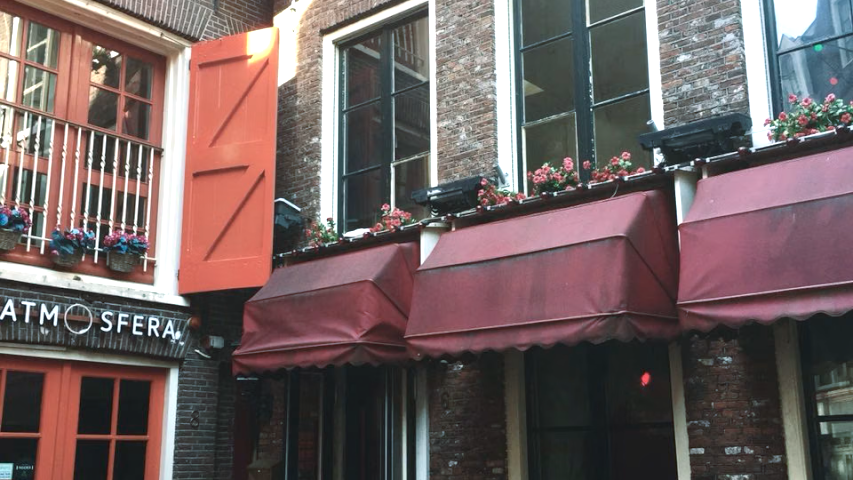
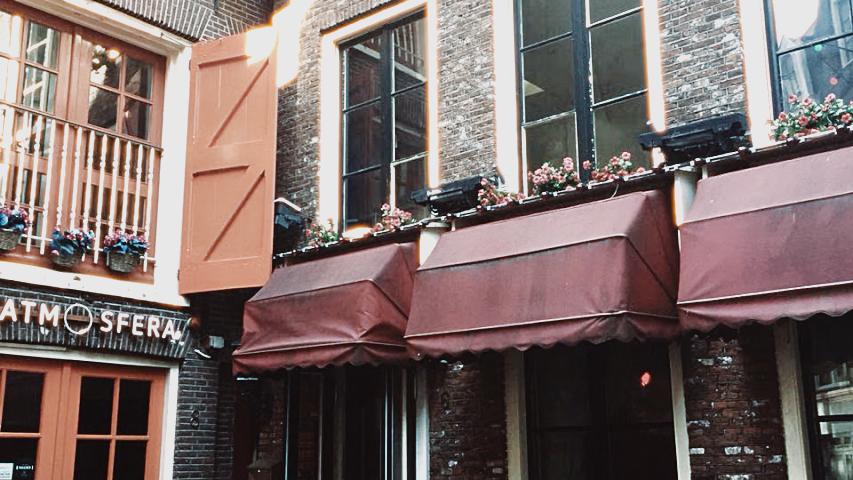
Kodachrome 25, the slow daylight Kodachrome, on a sunlit travel scene. Original vs Ashigrain.
At a glance
- Exposure index
- 25
- Daylight
- Introduced
- 1974
- Discontinued
- Process
- K-14
- Prints on
- Reversal, viewed directly
About the film
Kodachrome 25 is a daylight colour reversal film for Kodak's K-14 process, sold in its last years as Kodachrome 25 Professional, code PKM. Kodak dates it to 1974, when, its brochure says, Kodachrome 25 and 64 were released for the K-14 process, for more consistent colour and easier processing.
Kodachrome itself went back to 1935, an introduction the same brochure recalls. Kodak later added Professional versions of the 25 and 64 films, offering large lots of a single emulsion number with a predictable colour balance. In 1986 Kodak added Kodachrome 200 Professional and a 120-size Kodachrome 64 Professional. Kodak presented the 25 and 64 films as having extremely fine grain and very high sharpness, suited to a wide range of professional work. Kodak's June 2009 data sheet announced that Kodachrome film had been discontinued.
Sources for this history
- KODAK KODACHROME 25, 64, and 200 Professional Films Technical Data, Eastman Kodak Company
- KODACHROME Professional Films, Eastman Kodak Company
- The British Journal of Photography Annual 1976, British Journal of Photography
The look
Kodak Kodachrome 25 is a daylight colour reversal film for the K-14 process, viewed directly as the positive. The slowest Kodachrome pairs a long, steep scale and warm dense shadows with the finest grain of its family and very high sharpness.




Best for
- Landscapes and architecture in bright sun
- Fine detail for large projection
- Still life and copy work in daylight
Compare camera films
Science & sources

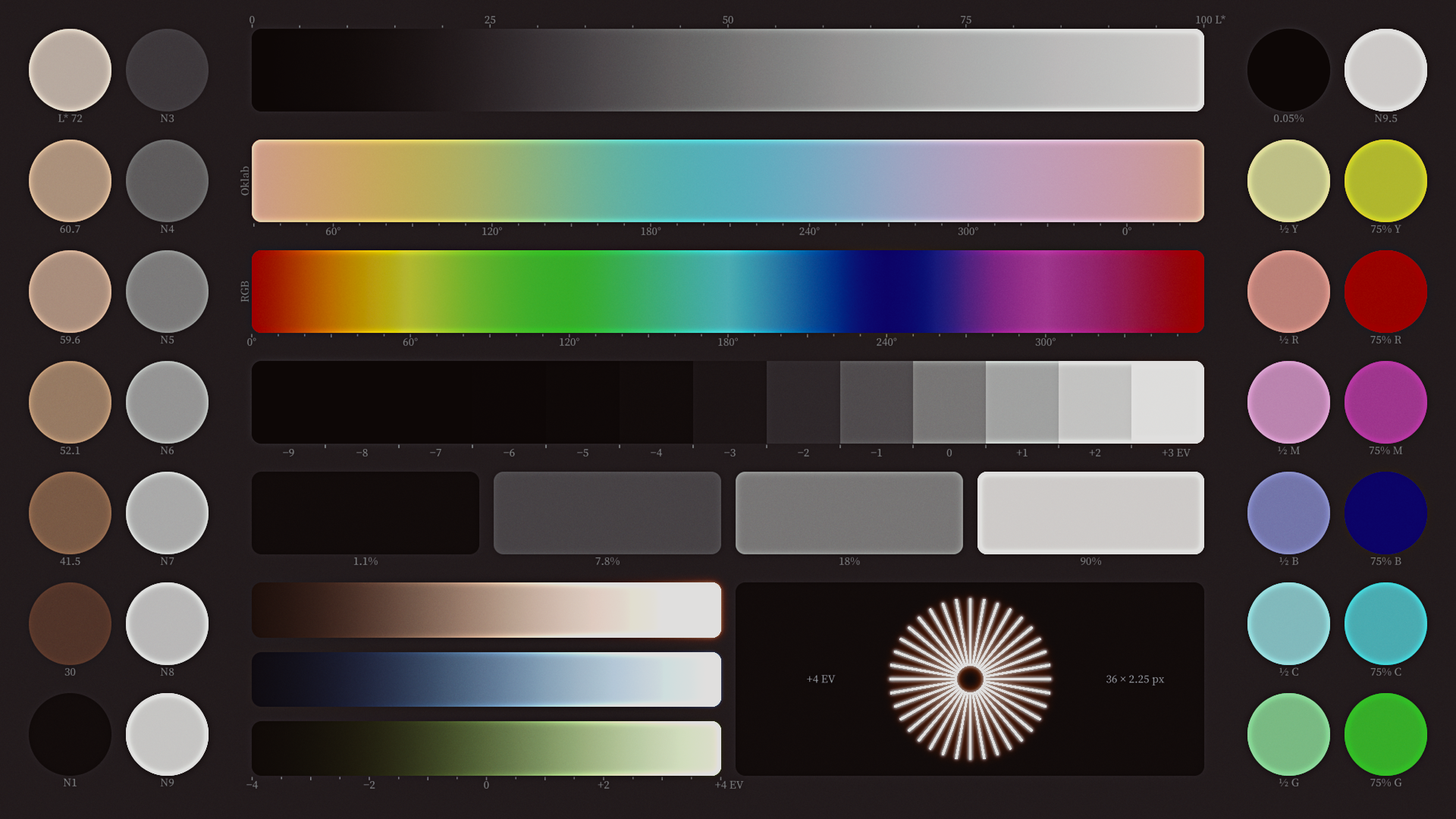
A daylight colour reversal film rated at ISO 25, shown directly without a print stage. Its curves, spectral sensitivity, dyes, single visual MTF and RMS granularity are digitised from Kodak's 2009 sheet; the one MTF curve is applied to all three layers, and the granularity, printed at a gross density, is converted to net density.
Response curves and the evidence behind the model
Compare manufacturer data with Ashigrain’s response on the same axes. These curves show how the model is calibrated to its sources; they do not establish a match to photographed film.
Characteristic response
RMS granularity
Density variation (σD) measured through a 48 µm aperture. Where the datasheet gives a single grain value, the response away from that point is an approximation.
| Channel | Density | Datasheet-based σD | Model σD |
|---|---|---|---|
| R | 0.3 | 0.005231 | 0.005177 |
| G | 0.3 | 0.004117 | 0.00407 |
| B | 0.3 | 0.007 | 0.006912 |
| R | 0.6 | 0.010452 | 0.010344 |
| G | 0.6 | 0.008496 | 0.0084 |
| B | 0.6 | 0.016525 | 0.016317 |
| R | 1 | 0.016154 | 0.015987 |
| G | 1 | 0.014267 | 0.014106 |
| B | 1 | 0.027873 | 0.027522 |
| R | 1.5 | 0.023566 | 0.023322 |
| G | 1.5 | 0.021823 | 0.021578 |
| B | 1.5 | 0.043836 | 0.043283 |
| R | 2 | 0.028927 | 0.028627 |
| G | 2 | 0.028647 | 0.028325 |
| B | 2 | 0.060894 | 0.060127 |
Model limits
These images show the film model in use. Spectral response, lighting and viewing conditions include approximations. Halation, bloom, grain size, weave and flicker are not fully measured for each film. The look of real film also depends on development and print timing.
- Custom lighting spectra, camera metering and the spectral reflectance inferred from fixed-white-balance footage are assumptions used by the model, not measurements of this film.
- Conversion-filter spectra (80A for daylight films under tungsten, 85 for tungsten films in daylight) come from separate measured filter data, not from this film’s source. Applying those filters to this film remains modelled.
- The source prints one visual MTF curve, not separate red, green and blue curves. The model applies it to all three layers.
- The only grain value is RMS granularity 9 × 10⁻³, read at a gross (not net) visual density of 1.0. Its conversion to net density and the response away from that point are modelled.
- Push and pull have no published curves for this film and use a generic model.
- The sheet prints reciprocity corrections at a few exposure times; the correction between them is interpolated.
- Individual dye amounts, layer interactions and push/pull behaviour are approximated where the datasheet provides no calibration. Grain size is assumed; published RMS granularity does not specify dye-cloud size.
- Characteristic response outside the published exposure range is an extrapolation, not measured film data.
- Halation strength, radius and layer weights are not quantified by the datasheet. The effect of removing antihalation and the bloom response are also approximations.
- The available sources do not measure veiling flare during projection. The model approximates its contribution to lifted blacks on screen, so the result is not a measured projection contrast.
Reciprocity: modelled from 1/10000 s to 1 s, following the datasheet's corrections for long and short exposures. Exposure time stops at the ends of that range.
Film guide: assumptions and practical choices
Sources
- Exposure index: KODAK KODACHROME 25, 64, and 200 Professional Films Technical Data, E-55, June 2009, p. 1
- Process: KODAK KODACHROME 25, 64, and 200 Professional Films Technical Data, E-55, June 2009, p. 2
- Characteristic curves: KODAK KODACHROME 25, 64, and 200 Professional Films Technical Data, E-55, June 2009, p. 3
- Diffuse RMS granularity: KODAK KODACHROME 25, 64, and 200 Professional Films Technical Data, E-55, June 2009, p. 3