 Ashigrain
Colour negative · Vintage
Gevacolor 682
Agfa-Gevaert's tungsten cine negative from 1979.
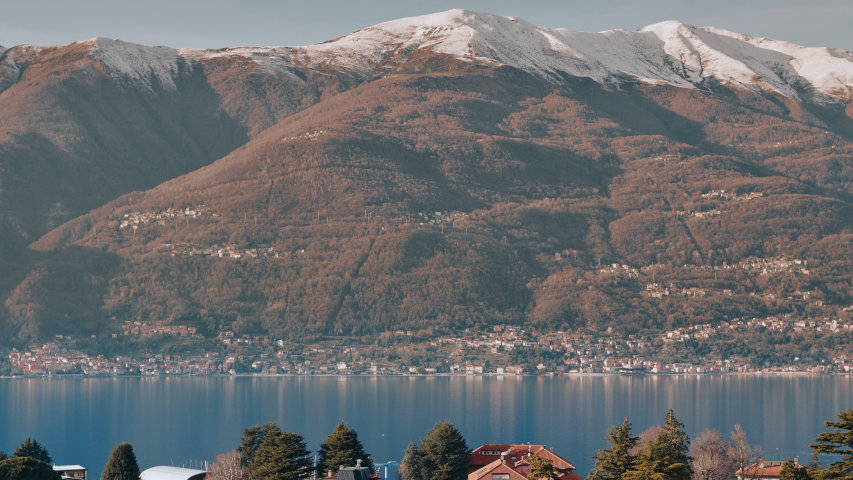
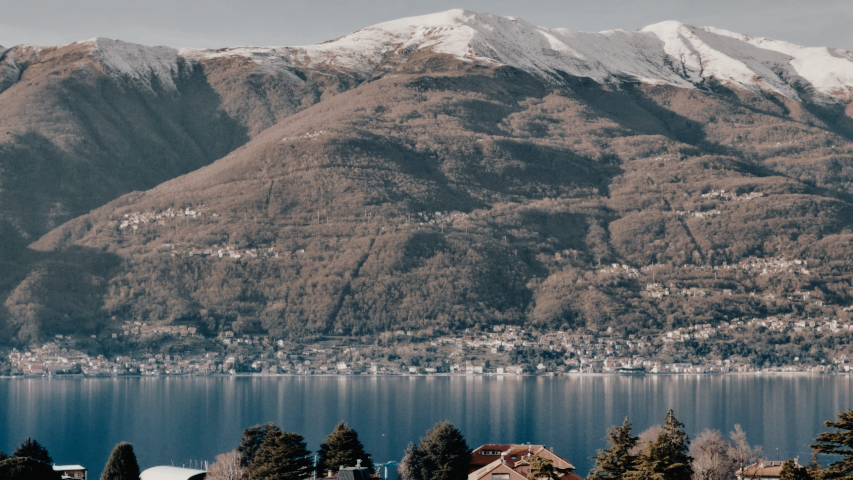
A late Agfa-Gevaert tungsten cine negative in its own light, printed on Gevacolor Print 982, a surrogate of the print it was paired with. Original vs Ashigrain.
At a glance
- Exposure index
- 100
- Tungsten
- Introduced
- by 1979
- Discontinued
- Process
- ECN-2
About the film
Gevacolor 682 was Agfa-Gevaert's tungsten-balanced colour negative camera film for professional 35 mm and 16 mm motion-picture work, rated 100 ASA in 3200 K light.
Agfa-Gevaert engineers Vervoort and Stappaerts presented it to the SMPTE Technical Conference in Los Angeles on 22 October 1979, and the SMPTE Journal printed their paper in September 1980. The paper presents the film as a versatile tool that widens the cinematographer's technical and artistic options, with sharpness and granularity as its main claims. It was announced for processing to the ECN-2 specifications, and the paper names Gevacolor print films Type 982 for ECP-2 and Type 986 for ECP-1 for its release prints. Its figures show a layer scheme with DIR couplers, and masked and unmasked negatives. An Agfa-Gevaert advertisement in the Canadian Film Digest Year Book 1980 announced it as a new Gevacolor negative. The Timeline of Historical Film Colors names Type 682 in its Gevacolor Negative entry only through the SMPTE paper. By December 2002, Agfa's motion-picture web page offered print and sound-recording films but no camera negative.
Sources for this history
- A New Gevacolor Negative Film Type 682 (SMPTE Journal 89, September 1980, pp. 650–652), A. Vervoort and H. Stappaerts (Agfa-Gevaert)
- A New Gevacolor Negative Film Type 682 (abstract), Society of Motion Picture and Television Engineers
- Gevacolor Negative, Timeline of Historical Film Colors
- Canadian Film Digest Year Book 1980: NEW Gevacolor Negative Film Type 682 (advertisement), Media History Digital Library
- Agfa Motion Picture page (3 December 2002 capture), Agfa-Gevaert
The look
Gevacolor 682 is Agfa-Gevaert's tungsten colour negative for 35 mm and 16 mm motion pictures, rated 100 ASA and processed in ECN-2. Its makers stressed sharpness and granularity. It prints by default on Gevacolor Print 982, a surrogate of the print film its source pairs with it.




Best for
- European cinema looks of the 1980s
- Tungsten-lit interiors and sets
- Comparing Agfa-Gevaert with Kodak negatives
Compare camera films
Science & sources

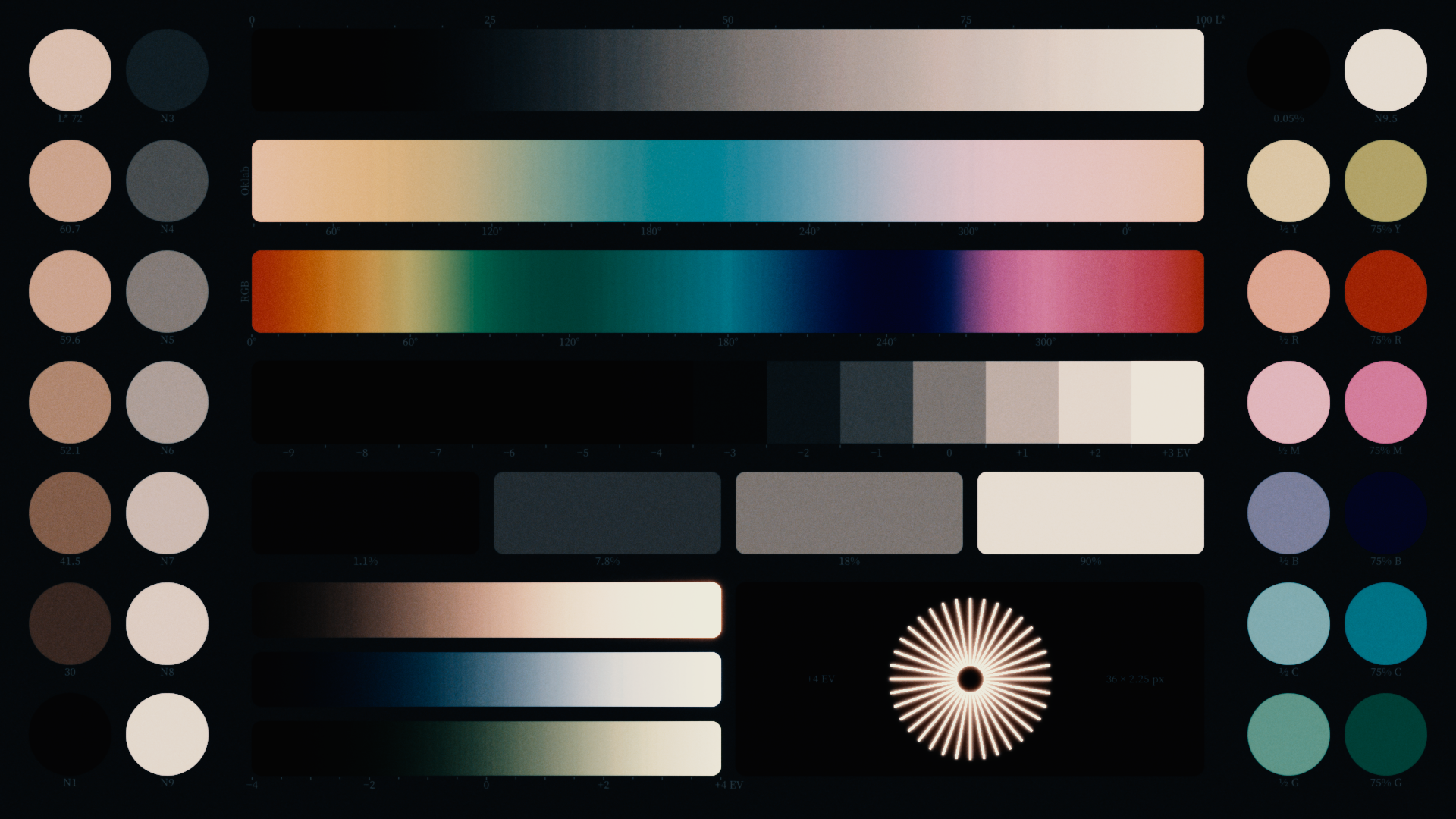
A tungsten-balanced motion-picture colour negative with an exposure index of 100. It prints by default on Gevacolor Print 982, a labelled surrogate of the print its source names. Its curves, dyes and per-layer MTF are traced from the 1980 SMPTE paper, with relative log exposure and relative sensitivity as named approximations; its grain is borrowed from Kodak Vision3 200T.
Response curves and the evidence behind the model
Compare manufacturer data with Ashigrain’s response on the same axes. These curves show how the model is calibrated to its sources; they do not establish a match to photographed film.
Characteristic response
RMS granularity
Density variation (σD). Where the datasheet gives a single grain value, the response away from that point is an approximation.
| Channel | Density | Datasheet-based σD | Model σD |
|---|---|---|---|
| R | 0.3 | 0.006804 | 0.006721 |
| G | 0.3 | 0.007858 | 0.007729 |
| B | 0.3 | 0.016673 | 0.016431 |
| R | 0.6 | 0.005199 | 0.005135 |
| G | 0.6 | 0.006265 | 0.006162 |
| B | 0.6 | 0.014824 | 0.014608 |
| R | 1 | 0.005332 | 0.005267 |
| G | 1 | 0.006601 | 0.006493 |
| B | 1 | 0.015989 | 0.015756 |
Model limits
These images show the film model in use. Spectral response, lighting and viewing conditions include approximations. Halation, bloom, grain size, weave and flicker are not fully measured for each film. The look of real film also depends on development and print timing.
- Custom lighting spectra, camera metering and the spectral reflectance inferred from fixed-white-balance footage are assumptions used by the model, not measurements of this film.
- Colour-print timing and scan balance under arbitrary lighting are modelled. Scanner colour balance has no standard physical unit.
- The source specifies a 3200 K tungsten design light, not its spectrum. The design-light spectrum is an approximation.
- The source gives no daylight rating. The optional conversion filters use separate measured spectra; the source does not calibrate their effect on this film.
- The characteristic curves use a relative log-exposure axis with an arbitrary origin; the normal-exposure point is aligned by assumption.
- The spectral sensitivity is printed as relative log sensitivity with an arbitrary origin.
- The three dye curves are printed without their normalisation, so the dye scales are fitted assumptions.
- The paper prints granularity as σD curves without an aperture. Grain is proxied from Kodak Vision3 200T (5213), so the granularity values shown are that film's.
- The paper describes DIR couplers, but the model does not simulate interimage effects for this film.
- The removable carbon backing (rem-jet) is described, but halation strength, radius, layer weights and bloom are not measured.
- The default print, Gevacolor Print 982 (ECP-2), is a labelled surrogate rather than a measured print; 986 (ECP-1), the other print film the paper names, is also available.
- Individual dye amounts, layer interactions and push/pull behaviour are approximated where the datasheet provides no calibration. Grain size is assumed; published RMS granularity does not specify dye-cloud size.
- Characteristic response outside the published exposure range is an extrapolation, not measured film data.
- The printer lamp and filter spectra and the Status A grey aim used in this preview are approximated; the source does not publish the required spectral or laboratory aim data.
Reciprocity: not modelled. Exposure time has no effect on this film.
Film guide: assumptions and practical choices
Sources
- Exposure index: Vervoort, A. and Stappaerts, H.: A New Gevacolor Negative Film Type 682. SMPTE Journal 89 (Sept. 1980), pp. 650-652, SMPTE Journal Vol. 89, September 1980, pp. 650-652 (presented 22 October 1979, SMPTE Technical Conference, Los Angeles); filmcolors.org scan uploaded 2014-03, p. 1
- Process: Vervoort, A. and Stappaerts, H.: A New Gevacolor Negative Film Type 682. SMPTE Journal 89 (Sept. 1980), pp. 650-652, SMPTE Journal Vol. 89, September 1980, pp. 650-652 (presented 22 October 1979, SMPTE Technical Conference, Los Angeles); filmcolors.org scan uploaded 2014-03, p. 1
- Characteristic curves: Vervoort, A. and Stappaerts, H.: A New Gevacolor Negative Film Type 682. SMPTE Journal 89 (Sept. 1980), pp. 650-652, SMPTE Journal Vol. 89, September 1980, pp. 650-652 (presented 22 October 1979, SMPTE Technical Conference, Los Angeles); filmcolors.org scan uploaded 2014-03, p. 3
- Diffuse RMS granularity: Vervoort, A. and Stappaerts, H.: A New Gevacolor Negative Film Type 682. SMPTE Journal 89 (Sept. 1980), pp. 650-652, SMPTE Journal Vol. 89, September 1980, pp. 650-652 (presented 22 October 1979, SMPTE Technical Conference, Los Angeles); filmcolors.org scan uploaded 2014-03, p. 3