 Ashigrain
Colour negative · 2006 onward
Fujifilm C200
Fujifilm's ISO 200 everyday negative for prints.
Fuji's consumer 200-speed negative on everyday daylight subjects: bright greens and clean skies. Original vs Ashigrain.
At a glance
- Exposure index
- 200
- Daylight
- Introduced
- by 2017
- Process
- C-41
- Prints on
- Scan
About the film
Fujicolor C200 is a daylight ISO 200 colour negative from Fujifilm for Process CN-16 or C-41, made in 135 on a cellulose triacetate base 122 µm thick.
Fujifilm made it as a general-purpose film for prints on Fujicolor papers. No source read dates its launch, but the data sheet modelled here carries a print code of May 2017, so the film existed by 2017. Its generation number, printed on the sheet, is CA24. Fujifilm's sheet compares it with the current Superia 200 and says their storage behaviour and their prints are almost the same. Fujifilm credits its image quality to its Super Uniform Fine Grain technology.
Sources for this history
- FUJICOLOR C200 Data Sheet (AF3-0249E), FUJIFILM Corporation
The look
Fujicolor C200 is a daylight colour negative rated ISO 200, a general-purpose film made for prints on Fujicolor papers. Fujifilm credits its image quality to its Super Uniform Fine Grain technology. Ashigrain renders it as a scan for your grade.






Best for
- Everyday snapshots in daylight
- Holiday and family photos
- Bright outdoor scenes
Compare camera films
Science & sources

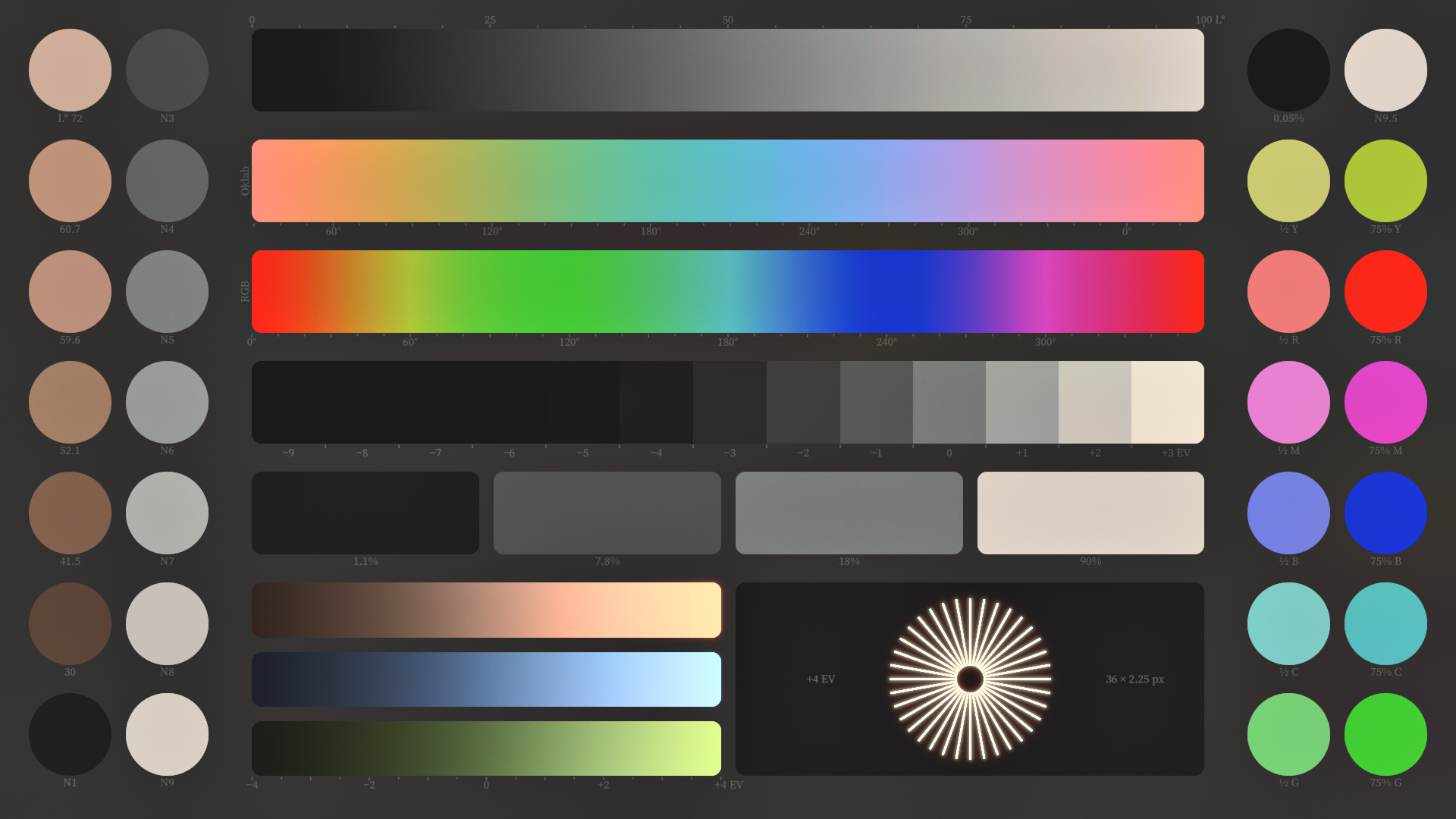
A daylight still-photo colour negative rated at ISO 200, shown as a scan. Its curves, spectral sensitivity, single visual MTF, RMS granularity and reciprocity corrections are taken from Fujifilm's 2017 sheet. Its individual dye shapes are borrowed from Kodak Vision3 250D (5207), because the sheet prints only neutral and minimum densities.
Response curves and the evidence behind the model
Compare manufacturer data with Ashigrain’s response on the same axes. These curves show how the model is calibrated to its sources; they do not establish a match to photographed film.
Characteristic response
RMS granularity
Density variation (σD) measured through a 48 µm aperture. Where the datasheet gives a single grain value, the response away from that point is an approximation.
| Channel | Density | Datasheet-based σD | Model σD |
|---|---|---|---|
| R | 0.3 | 0.007628 | 0.007536 |
| G | 0.3 | 0.007271 | 0.007127 |
| B | 0.3 | 0.013145 | 0.012985 |
| R | 0.6 | 0.005879 | 0.005808 |
| G | 0.6 | 0.005996 | 0.005877 |
| B | 0.6 | 0.010402 | 0.010276 |
| R | 1 | 0.004533 | 0.004478 |
| G | 1 | 0.005311 | 0.005205 |
| B | 1 | 0.011129 | 0.010994 |
| R | 1.5 | 0.003884 | 0.003837 |
| G | 1.5 | 0.005629 | 0.005517 |
| B | 1.5 | 0.009982 | 0.009861 |
| G | 2 | 0.004275 | 0.00419 |
| B | 2 | 0.005478 | 0.005412 |
Model limits
These images show the film model in use. Spectral response, lighting and viewing conditions include approximations. Halation, bloom, grain size, weave and flicker are not fully measured for each film. The look of real film also depends on development and print timing.
- Custom lighting spectra, camera metering and the spectral reflectance inferred from fixed-white-balance footage are assumptions used by the model, not measurements of this film.
- Colour-print timing and scan balance under arbitrary lighting are modelled. Scanner colour balance has no standard physical unit.
- Conversion-filter spectra (80A for daylight films under tungsten, 85 for tungsten films in daylight) come from separate measured filter data, not from this film’s source. Applying those filters to this film remains modelled.
- Only neutral and minimum spectral densities are published, not separate cyan, magenta and yellow dye spectra. Individual dye shapes are fitted assumptions.
- The individual dye shapes are borrowed from Kodak Vision3 250D (5207), a proxy rather than this film's dyes.
- The source prints one visual MTF curve, not separate red, green and blue curves. The model applies it to all three layers.
- The source publishes one RMS granularity value, 4 × 10⁻³. The granularity response away from that level is modelled, not a digitised grain curve.
- The sheet prints reciprocity corrections at a few exposure times; the correction between them is interpolated.
- Individual dye amounts, layer interactions and push/pull behaviour are approximated where the datasheet provides no calibration. Grain size is assumed; published RMS granularity does not specify dye-cloud size.
- Characteristic response outside the published exposure range is an extrapolation, not measured film data.
- The antihalation layer is printed, but halation strength, radius, layer weights and bloom are not measured.
- The default output is a scan. Scan balance has no standard unit and is modelled.
- The printer lamp and filter spectra and the Status A grey aim used in this preview are approximated; the source does not publish the required spectral or laboratory aim data.
Reciprocity: modelled from 1/4000 s to 64 s, following the datasheet's corrections for long and short exposures. Exposure time stops at the ends of that range.
Film guide: assumptions and practical choices
Sources
- Exposure index: FUJICOLOR C200 Data Sheet, AF3-0249E (17.05-BX), p. 1
- Process: FUJICOLOR C200 Data Sheet, AF3-0249E (17.05-BX), p. 3
- Diffuse RMS granularity: FUJICOLOR C200 Data Sheet, AF3-0249E (17.05-BX), p. 5
- Characteristic curves: FUJICOLOR C200 Data Sheet, AF3-0249E (17.05-BX), p. 6