 Ashigrain
Colour negative · Experimental
Lomography Redscale XR 50-200
Red, orange and yellow from Lomography's redscale film.
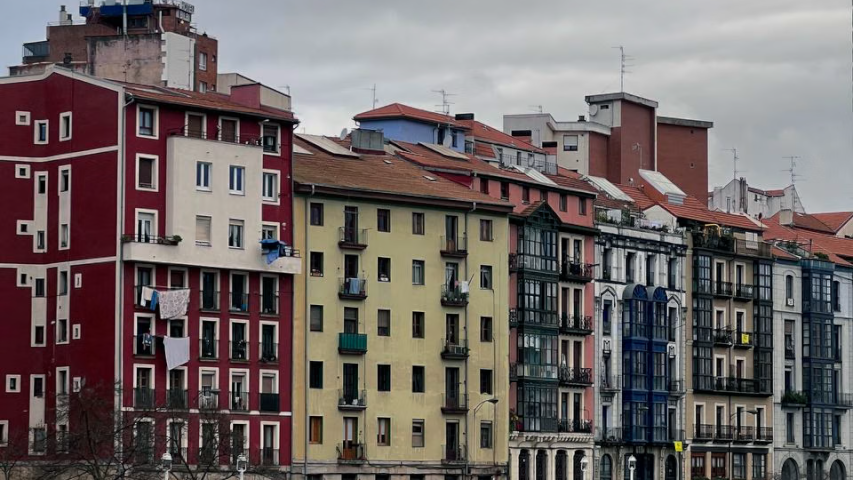
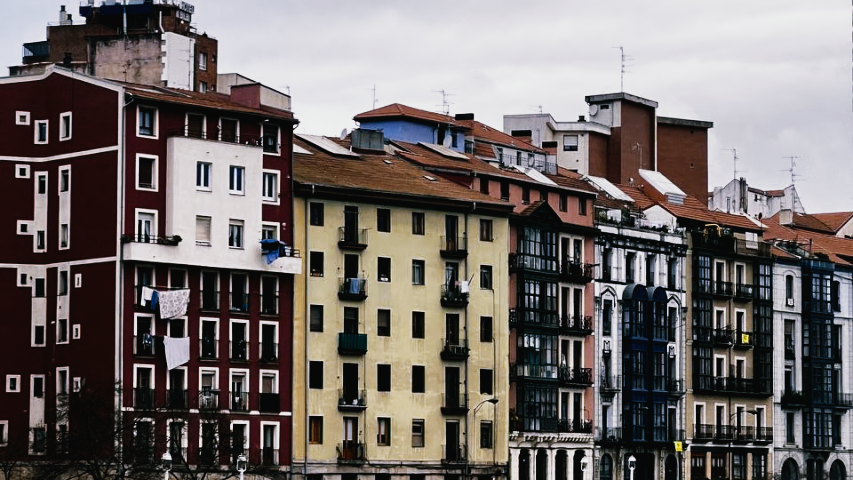
Red, orange and yellow redscale colour on a warm landscape, rendered as a scan. A surrogate built on a proxy film, not a reproduction. Original vs Ashigrain.
At a glance
- Exposure index
- 100
- Daylight
- Introduced
- by 2025
- Process
- C-41
- Prints on
- Scan
About the film
Lomography Redscale XR 50-200 is a colour negative film sold by Lomography, which lists it among its colour negative films.
Its shop sells it in 35 mm as Redscale XR 35 mm ISO 50–200, in packs of three, for ordinary C-41 processing. Lomography recommends rating it at ISO 200 for the most intense reds and oranges, or at ISO 50 for more blue and green. Grain grows with the rating, and the rating may change from shot to shot on one roll with no special instructions for the lab. The earliest dated evidence for the film is its shop page as the Wayback Machine captured it on 16 November 2025. Lomography's page gives no launch date and does not say how the redscale effect is made, so the base-side exposure in Ashigrain's model is an assumption, not a documented fact.
Sources for this history
The look
Lomography Redscale XR 50-200 is a C-41 colour negative rated from ISO 50 to 200, which Lomography describes as intense red and orange at ISO 200 and bluer and greener at ISO 50. Ashigrain's version is a labelled surrogate built on a proxy film, not a reproduction, rendered as a scan.




Best for
- Warm, otherworldly landscapes
- Experimental music-video looks
- Sunset and desert scenes
Compare camera films
Science & sources

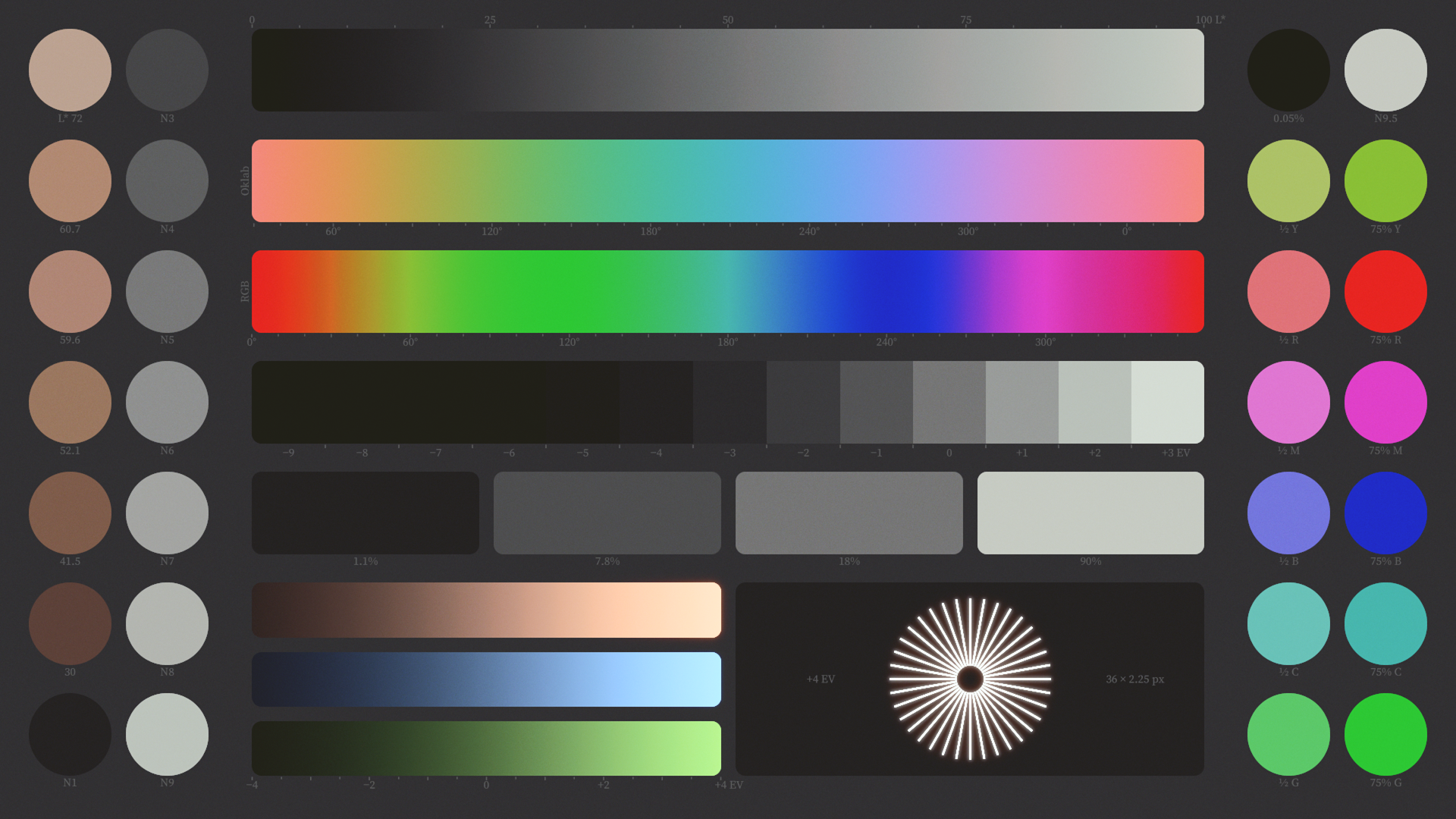
A labelled surrogate inspired by redscale, not a reproduction of Redscale XR: Lomography publishes no chart or measurement. Its curves, grain and MTF are borrowed from Agfacolor Optima II 100 and its dye shapes from Kodak Vision3 250D, with assumed filters standing in for light reaching the layers through the base. It defaults to a scan.
Response curves and the evidence behind the model
Compare manufacturer data with Ashigrain’s response on the same axes. These curves show how the model is calibrated to its sources; they do not establish a match to photographed film.
Characteristic response
RMS granularity
Density variation (σD). Where the datasheet gives a single grain value, the response away from that point is an approximation.
| Channel | Density | Datasheet-based σD | Model σD |
|---|---|---|---|
| R | 0.3 | 0.005721 | 0.005615 |
| G | 0.3 | 0.005356 | 0.005235 |
| B | 0.3 | 0.009939 | 0.009772 |
| R | 0.6 | 0.004743 | 0.004655 |
| G | 0.6 | 0.004711 | 0.004605 |
| B | 0.6 | 0.010368 | 0.010194 |
| R | 1 | 0.004775 | 0.004686 |
| G | 1 | 0.004604 | 0.004501 |
| B | 1 | 0.008734 | 0.008588 |
| R | 1.5 | 0.003652 | 0.003584 |
| G | 1.5 | 0.004639 | 0.004535 |
| B | 1.5 | 0.008332 | 0.008192 |
| B | 2 | 0.006242 | 0.006138 |
Model limits
These images show the film model in use. Spectral response, lighting and viewing conditions include approximations. Halation, bloom, grain size, weave and flicker are not fully measured for each film. The look of real film also depends on development and print timing.
- This is a labelled surrogate inspired by redscale film, rather than a reproduction of Lomography Redscale XR 50-200. Lomography publishes no chart or measurement of the film.
- The characteristic curves, grain and MTF are the named proxy Agfacolor Optima II 100; the dye shapes are borrowed from Kodak Vision3 250D (5207).
- The red-orange rendering is modelled as light reaching the layers through the base, an antihalation layer and the red, green and yellow filter layers; every filter density is an assumption, and how the real film makes its effect is not documented.
- In the current render each layer is calibrated on the film's own grey, so this per-layer filtering cancels for neutral tones and a mid-grey renders close to neutral rather than red-orange.
- The default exposure index of 100, the middle of the printed ISO 50–200 range, is an assumption; the model has no exposure-dependent colour shift beyond what the proxy's curves give.
- The default output is a scan. Scan balance has no standard unit and is modelled.
- Custom lighting spectra, camera metering and the spectral reflectance inferred from fixed-white-balance footage are assumptions used by the model, not measurements of this film.
- Individual dye amounts, layer interactions and push/pull behaviour are approximated where the datasheet provides no calibration. Grain size is assumed; published RMS granularity does not specify dye-cloud size.
- Characteristic response outside the published exposure range is an extrapolation, not measured film data.
Reciprocity: not modelled. Exposure time has no effect on this film.
Film guide: assumptions and practical choices
Sources
- Characteristic curves: Agfa Professional Films, Technical Data PF, Technical Data PF, 09/1998, 1st edition, p. 7
- Exposure index: Lomography Redscale XR 35 mm ISO 50-200, Pack of 3 (Lomography shop product page), Wayback capture 20251116002736 of shop.lomography.com/us/lomography-redscale-xr-35-mm-iso-50-200, p. 1
- Process: Lomography Redscale XR 35 mm ISO 50-200, Pack of 3 (Lomography shop product page), Wayback capture 20251116002736 of shop.lomography.com/us/lomography-redscale-xr-35-mm-iso-50-200, p. 1