 Ashigrain
Colour reversal · 1990s
Agfa Agfachrome RSX II 200
Agfa's faster slide colour for daylight.
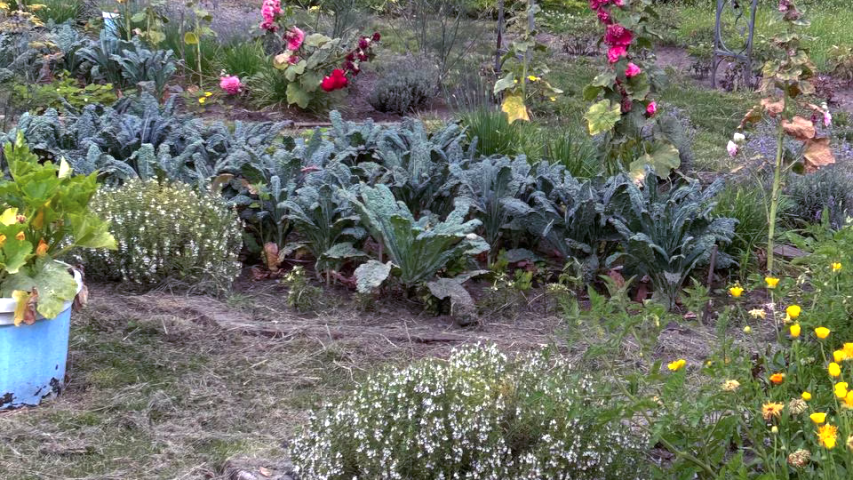
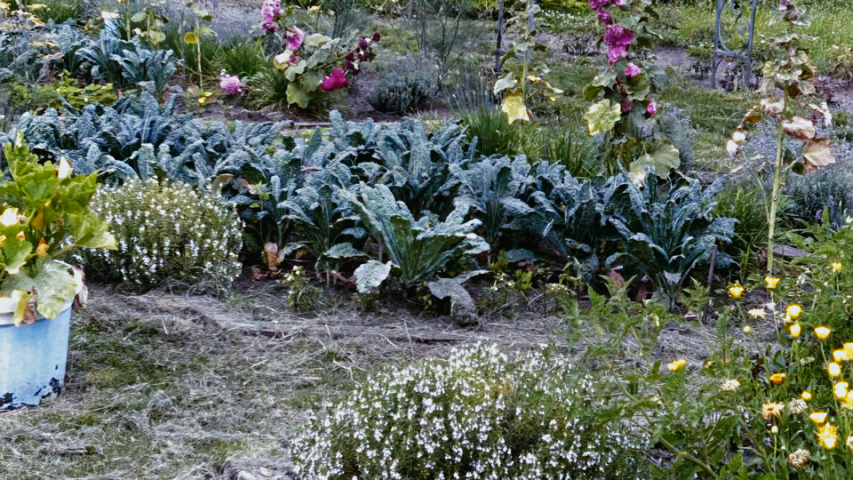
Agfa Agfachrome RSX II 200 in Reversal mode. Original vs Ashigrain.
At a glance
- Exposure index
- 200
- Daylight
- Introduced
- 1998
- Discontinued
- Process
- E-6
- Prints on
- Reversal, viewed directly
About the film
Agfa Agfachrome RSX II 200 Professional is the daylight ISO 200 member of the RSX II professional slide-film range.
Agfa presented the new RSX II family at photokina in 1998, and its September guide lists the 50, 100 and 200-speed versions. It was a development of the preceding RSX emulsions for professional daylight transparencies. Agfa's launch material described more linear upper curves and greater maximum density for projection and reproduction. The guide said the family retained neutral colour within one stop of push or pull, with only slight shifts at two stops. It specified Agfa AP 44 processing, compatible with E-6, and different support thicknesses for 135 and roll film. In April 2007 photoscala reported that the former professional Agfachrome RSX range was no longer available. The film is discontinued, but neither a later corporate closure nor that report independently establishes its last production year.
Sources for this history
- Agfa Professional Films, Technical Data PF, Agfa-Gevaert AG
- photokina 98: Agfachrome RSX II for precision down to the last detail, Agfa-Gevaert AG
- Agfa-Filme: Das derzeitige Sortiment, photoscala (mts)
The look
Agfa Agfachrome RSX II 200 is the daylight ISO 200 member of Agfa's professional slide range, for AP 44 or E-6 processing. Agfa promoted it for projection and reproduction with neutral colour through moderate push or pull. It defaults to Reversal mode; its grain is proxied from Kodak Ektachrome 100D.




Best for
- Daylight transparency work at ISO 200
- Projection with professional slide colour
- Reproduction needing more speed than RSX II 50
Compare camera films
Science & sources

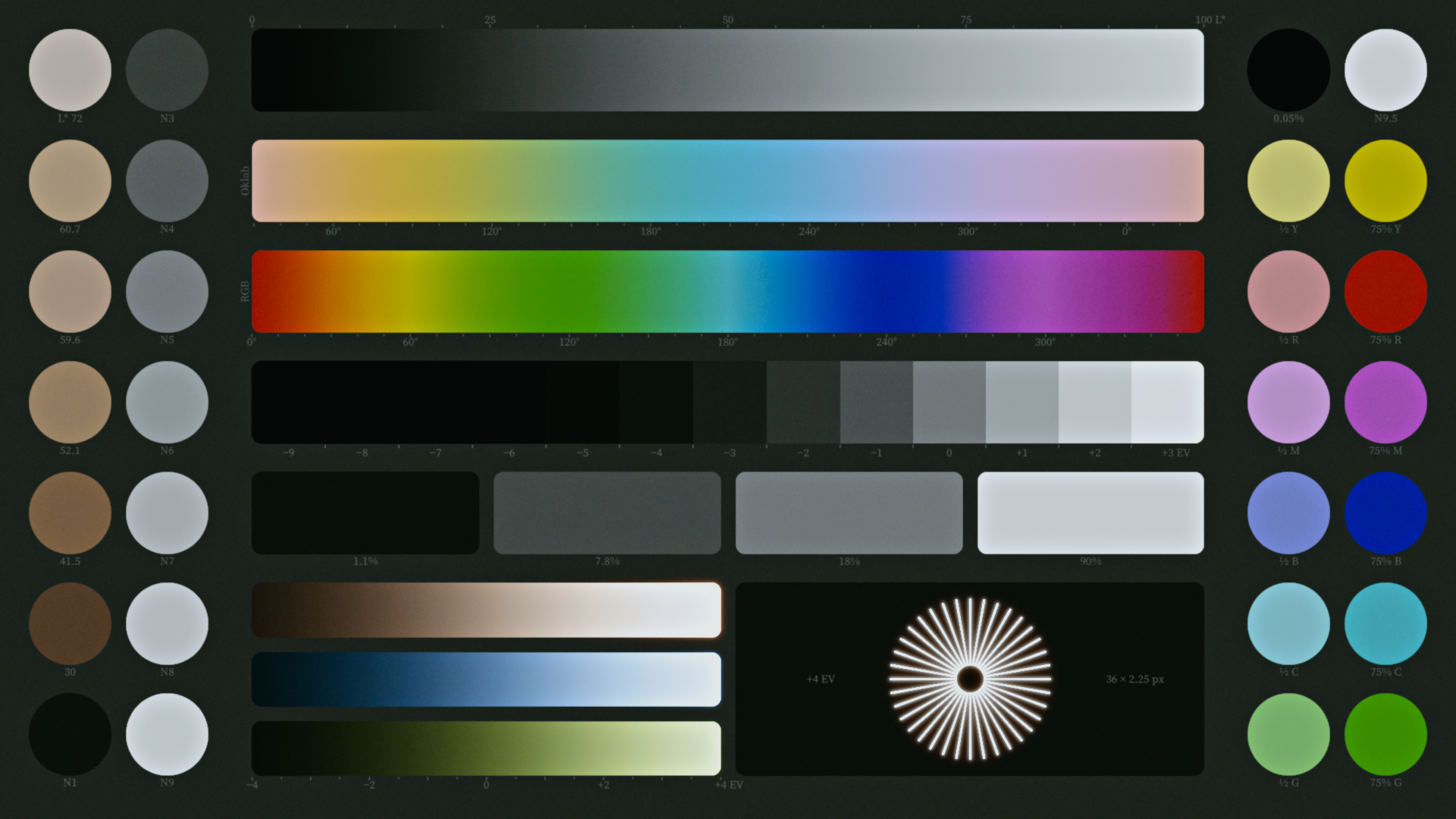
Its tone, spectral and dye data come from Agfa's September 1998 guide, with a single visual MTF shared across the layers. Its printed RMS 12.0 headline leaves the gross/net convention unresolved, so grain is proxied from Kodak Ektachrome 100D (5294). Push and pull use a generic model.
Response curves and the evidence behind the model
Compare manufacturer data with Ashigrain’s response on the same axes. These curves show how the model is calibrated to its sources; they do not establish a match to photographed film.
Characteristic response
RMS granularity
Density variation (σD) measured through a 48 µm aperture. Where the datasheet gives a single grain value, the response away from that point is an approximation.
| Channel | Density | Datasheet-based σD | Model σD |
|---|---|---|---|
| R | 0.3 | 0.005657 | 0.005625 |
| G | 0.3 | 0.004222 | 0.004164 |
| B | 0.3 | 0.006741 | 0.006696 |
| R | 0.6 | 0.011291 | 0.011227 |
| G | 0.6 | 0.008779 | 0.00866 |
| B | 0.6 | 0.016046 | 0.01594 |
| R | 1 | 0.017242 | 0.017145 |
| G | 1 | 0.014554 | 0.014357 |
| B | 1 | 0.02693 | 0.026752 |
| R | 1.5 | 0.025426 | 0.025282 |
| G | 1.5 | 0.023353 | 0.023036 |
| B | 1.5 | 0.041969 | 0.041692 |
| R | 2 | 0.029592 | 0.029424 |
| G | 2 | 0.028627 | 0.028239 |
| B | 2 | 0.059029 | 0.058639 |
Model limits
These images show the film model in use. Spectral response, lighting and viewing conditions include approximations. Halation, bloom, grain size, weave and flicker are not fully measured for each film. The look of real film also depends on development and print timing.
- Custom lighting spectra, camera metering and the spectral reflectance inferred from fixed-white-balance footage are assumptions used by the model, not measurements of this film.
- Conversion-filter spectra (80A for daylight films under tungsten, 85 for tungsten films in daylight) come from separate measured filter data, not from this film’s source. Applying those filters to this film remains modelled.
- Agfa prints an RMS granularity headline but does not state whether its density is gross or net. Grain is proxied from Kodak Ektachrome 100D (5294), so the granularity shown is that film's rather than a measured RSX II grain curve.
- The source prints one visual MTF curve, not separate red, green and blue curves. The model applies it to all three layers.
- Push and pull have no published curves for this film and use a generic model.
- The printed MTF rises above 100 %, which the model renders as a development adjacency effect. Its width, amplitude and dependence on density and development are not published and are approximated.
- The adjacency fit uses two parameters per layer and cannot follow every printed MTF sample. Its dependence on local density differences is also assumed.
- The sheet prints reciprocity corrections at a few exposure times; the correction between them is interpolated, and the colour-compensating filter it prescribes is taken at its nominal value.
- The density curves are calibrated to the printed grid lattice; the zero frame line sits 0.043 density below it. The guide's combined Status A and Status M statement leaves the plotted densitometry unresolved.
- The 1998 and 2003 editions reuse the same artwork, so their agreement is an extraction and calibration check, not independent film measurements.
- The 1998 primary gives resolving power of 110 lines/mm at chart contrast 1000:1; the later edition prints 120. The primary value is retained.
- The small D-min tail bows, 0.0020 density in green and 0.0027 in blue, are retained as drawn rather than smoothed. The flat red D-min span is bridged between its printed endpoints.
- The guide gives support thicknesses of 120 µm for 135 and 95 µm for roll film but does not name the base material. The physical model uses the 135-film thickness.
- The physical dye-cloud or grain-clump size is inferred from the film's speed class, not measured for this film.
- Individual dye amounts, layer interactions and push/pull behaviour are approximated where the datasheet provides no calibration. Grain size is assumed; published RMS granularity does not specify dye-cloud size.
- The source names no antihalation layer; an undercoat is inferred rather than documented.
- Characteristic response outside the published exposure range is an extrapolation, not measured film data.
- Halation strength, radius and layer weights are not quantified by the datasheet. The effect of removing antihalation and the bloom response are also approximations.
- The available sources do not measure veiling flare during projection. The model approximates its contribution to lifted blacks on screen, so the result is not a measured projection contrast.
Reciprocity: modelled from 1/10000 s to 100 s, following the datasheet's corrections for long and short exposures. Exposure time stops at the ends of that range.
Film guide: assumptions and practical choices
Sources
- Process: Agfa Professional Films, Technical Data PF, Technical Data PF, 09/1998, 1st edition, p. 4
- Characteristic curves: Agfa Professional Films, Technical Data PF, Technical Data PF, 09/1998, 1st edition, p. 9
- Diffuse RMS granularity: Agfa Professional Films, Technical Data PF, Technical Data PF, 09/1998, 1st edition, p. 9
- Exposure index: Agfa Professional Films, Technical Data PF, Technical Data PF, 09/1998, 1st edition, p. 9