 Ashigrain
Colour negative · 1990s
Konica Impresa 50
Konica's slow professional negative, built for fine grain.
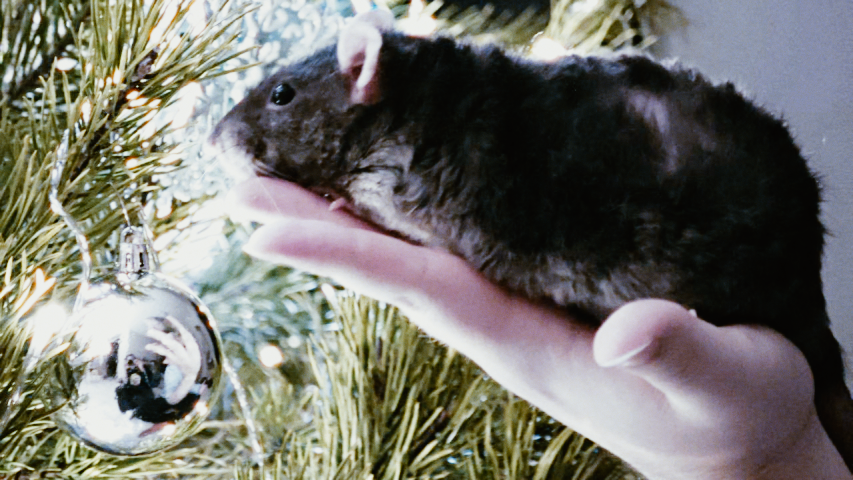
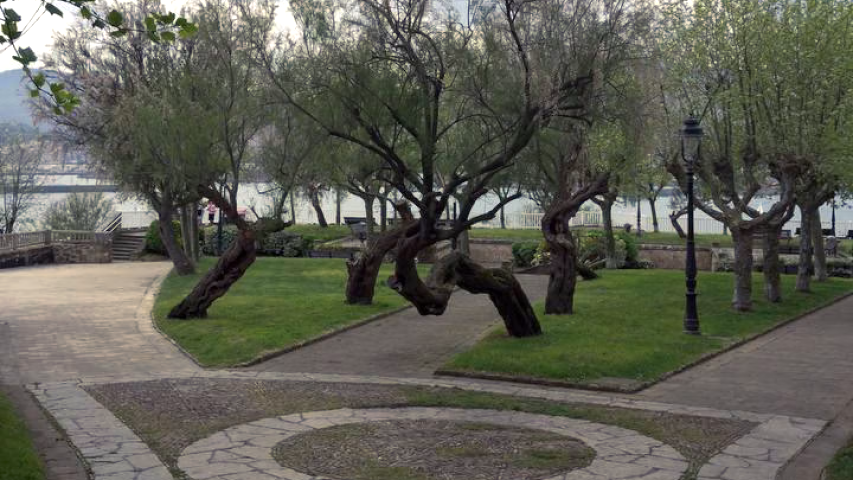
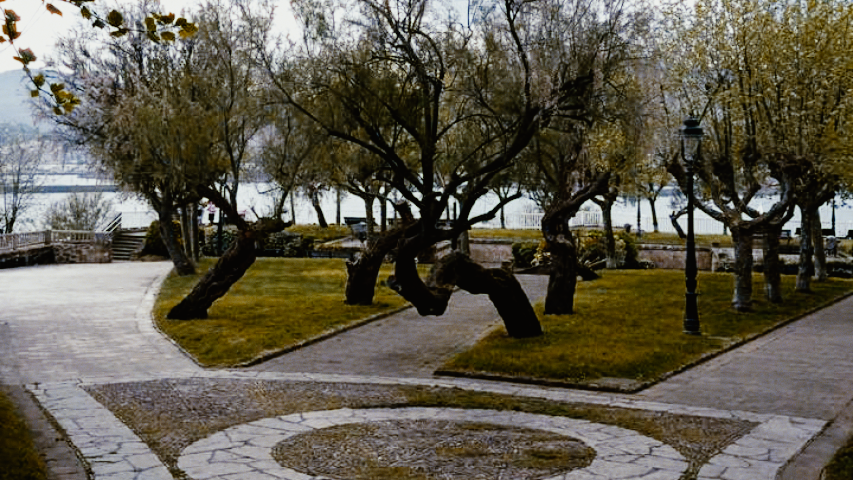
Subtle colour and smooth tonal gradation in daylight, the aims Konica set for its slow professional negative. Original vs Ashigrain.
At a glance
- Exposure index
- 50
- Daylight
- Introduced
- by 1998
- Discontinued
- Process
- C-41
- Prints on
- Scan
About the film
Konica Color Impresa 50 Professional was a daylight colour negative for prints, rated ISO 50 and made by Konica Corporation in 135 and 120.
Konica aimed it at the finest grain and sharpness, with subtle colour and tonal gradation, and balanced it for daylight, electronic flash and blue flash bulbs. Its data sheet credits the colour rendering to a technology Konica called Simulated Spectral Foundation, without explaining it. With a Wratten 80B filter it was rated ISO 16 under 3400 K photolamps, and ISO 12 with an 80A under 3200 K tungsten. It was coated on a triacetate base, processed in Konica's CNK-4 chemistry or in C-41, and needed no exposure or filter correction from 1/10,000 s to 1 s. The earliest dated evidence of the film found is that data sheet, produced as a PDF by Konica in February 1998. In January 2006 Konica Minolta, which says it made Japan's first photographic paper in 1903 and Japan's first colour film in 1940, announced that it would leave the photo business as digitisation shrank silver-halide photography, and said its colour film production would end by March 2007.
Sources for this history
- Konica Color IMPRESA 50 Professional Film Technical Data Sheet, Konica Corporation
- Konica Minolta Announces Withdrawal Plan for Camera Business and Photo Business, Konica Minolta Holdings, Inc.
The look
Konica Color Impresa 50 Professional is a daylight still-photo colour negative rated ISO 50, which Konica aimed at the finest grain and sharpness and at subtle colour and tonal gradation. Ashigrain shows it as a scan for your grade, with Kodak 2393 as its print pairing.



Best for
- Studio portraits by electronic flash
- Daylight landscapes with fine detail
- Product and still-life photography
Compare camera films
Science & sources

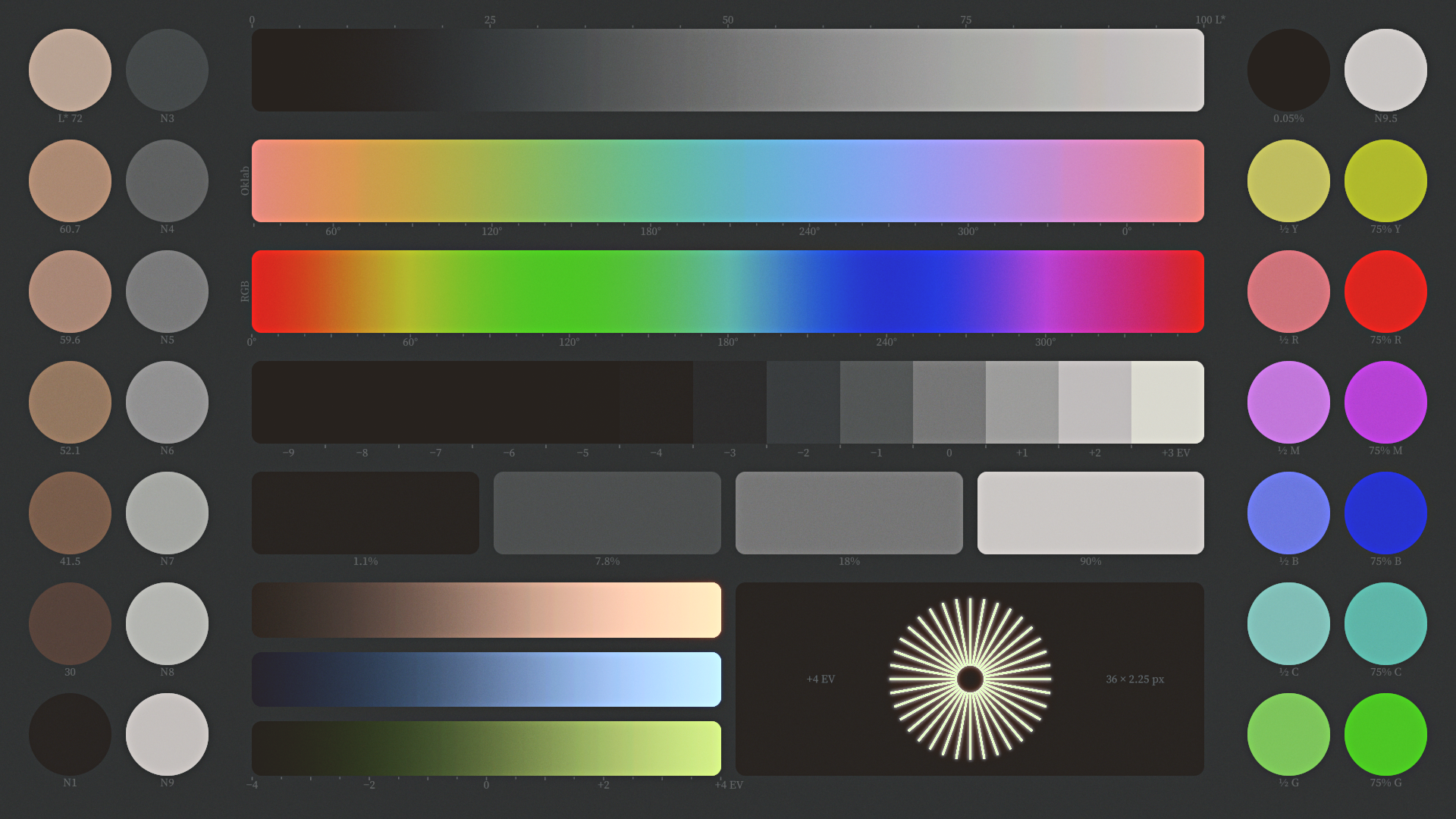
A daylight-balanced still-photo colour negative rated at ISO 50, shown as a scan. Its curves, spectral sensitivity and single visual MTF are digitised from Konica's sheet. Its grain is borrowed from Kodak Vision3 50D and its individual dye shapes from Kodak Vision3 250D, because the sheet publishes neither an RMS granularity nor separate dye curves.
Response curves and the evidence behind the model
Compare manufacturer data with Ashigrain’s response on the same axes. These curves show how the model is calibrated to its sources; they do not establish a match to photographed film.
Characteristic response
RMS granularity
Density variation (σD). Where the datasheet gives a single grain value, the response away from that point is an approximation.
| Channel | Density | Datasheet-based σD | Model σD |
|---|---|---|---|
| R | 0.3 | 0.004688 | 0.004625 |
| G | 0.3 | 0.005251 | 0.005178 |
| B | 0.3 | 0.009485 | 0.009339 |
| R | 0.6 | 0.004647 | 0.004584 |
| G | 0.6 | 0.004595 | 0.004531 |
| B | 0.6 | 0.010293 | 0.010134 |
| R | 1 | 0.003848 | 0.003797 |
| G | 1 | 0.004659 | 0.004595 |
| B | 1 | 0.008347 | 0.008219 |
| G | 1.5 | 0.00374 | 0.003688 |
| B | 1.5 | 0.008165 | 0.008039 |
| B | 2 | 0.004533 | 0.004463 |
Model limits
These images show the film model in use. Spectral response, lighting and viewing conditions include approximations. Halation, bloom, grain size, weave and flicker are not fully measured for each film. The look of real film also depends on development and print timing.
- Custom lighting spectra, camera metering and the spectral reflectance inferred from fixed-white-balance footage are assumptions used by the model, not measurements of this film.
- Colour-print timing and scan balance under arbitrary lighting are modelled. Scanner colour balance has no standard physical unit.
- The sheet gives exposure indexes with Wratten 80B and 80A conversion filters but publishes no filter spectra; their transmission is modelled.
- The sheet prints no RMS granularity. Grain is proxied from Kodak Vision3 50D (5203), so the granularity values shown are that film's.
- Only a midscale neutral and a minimum-density spectrum are printed, not separate cyan, magenta and yellow dye spectra. The individual dye shapes are borrowed from Kodak Vision3 250D (5207), a proxy rather than this film's dyes.
- The source prints one visual MTF curve, not separate red, green and blue curves. The model applies it to all three layers.
- The characteristic chart prints no log-exposure unit; lux-seconds are assumed. The spectral sensitivity is printed as relative log sensitivity with an arbitrary origin.
- The sheet's reciprocity table is recorded but not modelled.
- Individual dye amounts, layer interactions and push/pull behaviour are approximated where the datasheet provides no calibration. Grain size is assumed; published RMS granularity does not specify dye-cloud size.
- Characteristic response outside the published exposure range is an extrapolation, not measured film data.
- Halation strength, radius and layer weights are not quantified by the datasheet. The effect of removing antihalation and the bloom response are also approximations.
- The default output is a scan. Scan balance has no standard unit and is modelled.
- The printer lamp and filter spectra and the Status A grey aim used in this preview are approximated; the source does not publish the required spectral or laboratory aim data.
Reciprocity: modelled from 1/10000 s to 10 s, following the datasheet's corrections for long and short exposures. Exposure time stops at the ends of that range.
Film guide: assumptions and practical choices
Sources
- Exposure index: Konica Color IMPRESA 50 Professional Film technical data sheet, PDF created 1998-02-24 (Microsoft Word), p. 1
- Characteristic curves: Konica Color IMPRESA 50 Professional Film technical data sheet, PDF created 1998-02-24 (Microsoft Word), p. 2
- Process: Konica Color IMPRESA 50 Professional Film technical data sheet, PDF created 1998-02-24 (Microsoft Word), p. 2