 Ashigrain
Colour negative · Experimental
Harman Phoenix 200
Harman's first colour film: grain, contrast, halation.
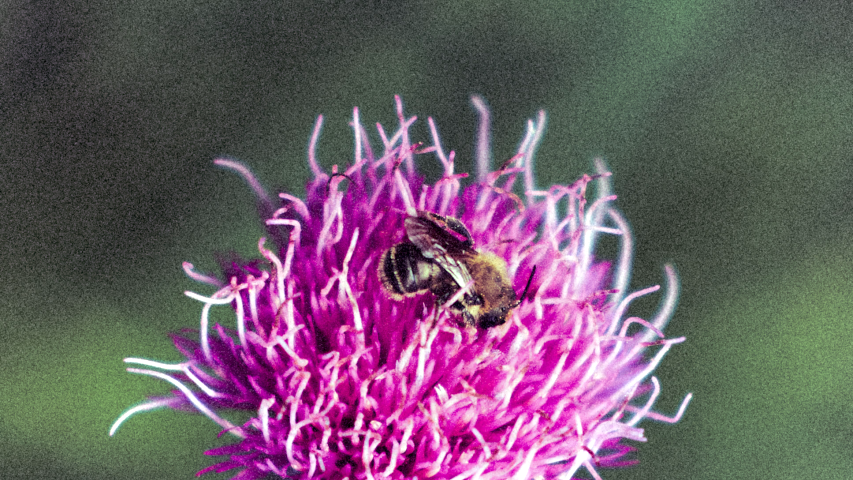
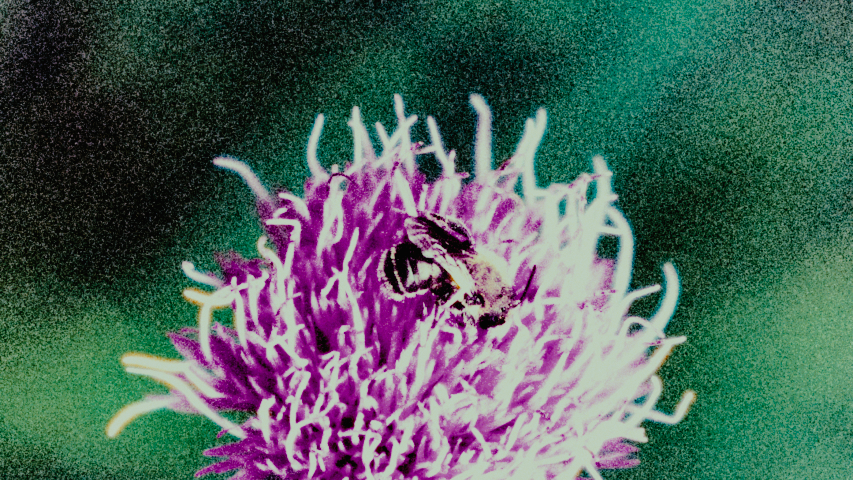
Harman Phoenix 200's best-known trait: strong halation around bright lights, with high contrast and visible grain. Original vs Ashigrain.
At a glance
- Exposure index
- 200
- Daylight
- Introduced
- 2023
- Process
- C-41
- Prints on
- Scan
About the film
Late in 2022 a small skunk-works team at Harman's factory in Mobberley, England, was set up to find out whether a colour film could be designed, coated and made there.
Harman announced Phoenix 200 on 1 December 2023 as the first colour film made at Mobberley from emulsion to cassette, and its technical sheet is dated November 2023. The first batch went to selected retailers in limited quantities. Harman describes an experimental film with high contrast, strong visible grain and punchy colour, at its best outdoors in even light and metered for the mid-tones. It has no masking dyes and only limited antihalation in the base, so halation around bright lights is likely. Rated ISO 200/24° for C-41, it can be exposed from EI 100 to 400, but Harman does not recommend push processing. It was sold in 36-exposure DX-coded 35 mm cassettes. In July 2025 Harman released Phoenix II, an entirely reformulated emulsion with more normal contrast and colour balance, finer grain and wider latitude by Harman's account.
Sources for this history
- HARMAN PHOENIX 200 Technical Information (November 2023), HARMAN technology Limited
- Harman Photo announces new Phoenix colour negative film, Kosmo Foto
- Harman Technology releases Phoenix II colour negative film, Kosmo Foto
The look
Harman Phoenix 200 is an experimental ISO 200 daylight colour negative for C-41, with high contrast, strong visible grain and punchy colour. It has no orange mask and only limited antihalation in the base, so bright lights halate strongly. Ashigrain renders it as a scan for your grade.




Best for
- Punchy, grainy colour outdoors in even light
- Night streets with haloed lights
- Lo-fi and experimental projects
Compare camera films
Science & sources

An unmasked daylight colour negative rated at EI 200. It defaults to a scan. The model is reconstructed: its curves are traced from Harman's chart on an assumed exposure anchor and its sensitivity is converted from the sheet's wedge spectrogram, while its dye shapes come from Agfa Optima II 100 (borrowed in turn from Kodak Vision3 250D) and its grain and MTF from Kodak Portra 800.
Response curves and the evidence behind the model
Compare manufacturer data with Ashigrain’s response on the same axes. These curves show how the model is calibrated to its sources; they do not establish a match to photographed film.
Characteristic response
RMS granularity
Density variation (σD). Where the datasheet gives a single grain value, the response away from that point is an approximation.
| Channel | Density | Datasheet-based σD | Model σD |
|---|---|---|---|
| R | 0.3 | 0.009679 | 0.009586 |
| G | 0.3 | 0.012154 | 0.01187 |
| B | 0.3 | 0.030611 | 0.030057 |
| R | 0.6 | 0.006716 | 0.006651 |
| G | 0.6 | 0.009066 | 0.008854 |
| B | 0.6 | 0.023624 | 0.023197 |
| R | 1 | 0.006315 | 0.006254 |
| G | 1 | 0.007129 | 0.006962 |
| B | 1 | 0.019107 | 0.018761 |
| R | 1.5 | 0.005885 | 0.005829 |
| G | 1.5 | 0.008109 | 0.007919 |
| B | 1.5 | 0.020119 | 0.019755 |
| G | 2 | 0.006053 | 0.005911 |
| B | 2 | 0.015302 | 0.015025 |
Model limits
These images show the film model in use. Spectral response, lighting and viewing conditions include approximations. Halation, bloom, grain size, weave and flicker are not fully measured for each film. The look of real film also depends on development and print timing.
- Custom lighting spectra, camera metering and the spectral reflectance inferred from fixed-white-balance footage are assumptions used by the model, not measurements of this film.
- Colour-print timing and scan balance under arbitrary lighting are modelled. Scanner colour balance has no standard physical unit.
- The sheet rates the film for daylight only and gives no tungsten exposure index. The optional conversion filters use separate measured spectra; the source does not calibrate their effect on this film.
- The characteristic curves are traced from the sheet's chart, which uses a relative exposure axis. Its normal-exposure point is not printed; its alignment is assumed.
- The spectral sensitivity is printed as a wedge spectrogram to 2856 K tungsten. Converting it to sensitivity uses an assumed wedge constant.
- The sheet prints no dye spectra. The dye shapes come from Agfa Optima II 100's model, which borrows them from Kodak Vision3 250D (5207), a proxy rather than this film's dyes.
- The sheet prints no granularity or MTF. Both are proxied from Kodak Portra 800, whose model grain is itself borrowed from Kodak Vision3 500T (5219), so the granularity values shown are not measurements of Phoenix 200.
- The sheet states only limited antihalation in the base. Halation strength, radius, layer weights and bloom are not measured.
- Reciprocity follows the sheet's correction formula above its threshold time. The sheet gives no upper limit for the formula, so the range it is applied over is an approximation.
- Push and pull have no published curves for this film and use a generic model.
- Individual dye amounts, layer interactions and push/pull behaviour are approximated where the datasheet provides no calibration. Grain size is assumed; published RMS granularity does not specify dye-cloud size.
- Characteristic response outside the published exposure range is an extrapolation, not measured film data.
- Under custom lights the fast rendering path follows the full spectral calculation less closely for this film than for most others.
- The default output is a scan. Scan balance has no standard unit and is modelled.
- The printer lamp and filter spectra and the Status A grey aim used in this preview are approximated; the source does not publish the required spectral or laboratory aim data.
Reciprocity: modelled from 1/10000 s to 100 s, following the datasheet's corrections for long and short exposures. Exposure time stops at the ends of that range.
Film guide: assumptions and practical choices
Sources
- Exposure index: HARMAN PHOENIX 200 ISO 200/24 C41 process colour film, Technical Information, Footer 'Page n of 6 ... Nov 2023'; PDF created 2023-11-15 (macodirect item HP2011, English), p. 1
- Characteristic curves: HARMAN PHOENIX 200 ISO 200/24 C41 process colour film, Technical Information, Footer 'Page n of 6 ... Nov 2023'; PDF created 2023-11-15 (macodirect item HP2011, English), p. 3
- Process: HARMAN PHOENIX 200 ISO 200/24 C41 process colour film, Technical Information, Footer 'Page n of 6 ... Nov 2023'; PDF created 2023-11-15 (macodirect item HP2011, English), p. 3