Colour print · Print film

Technicolor Dye Transfer (1997 revival)

Technicolor's late-1990s dye-transfer revival.

Planned media

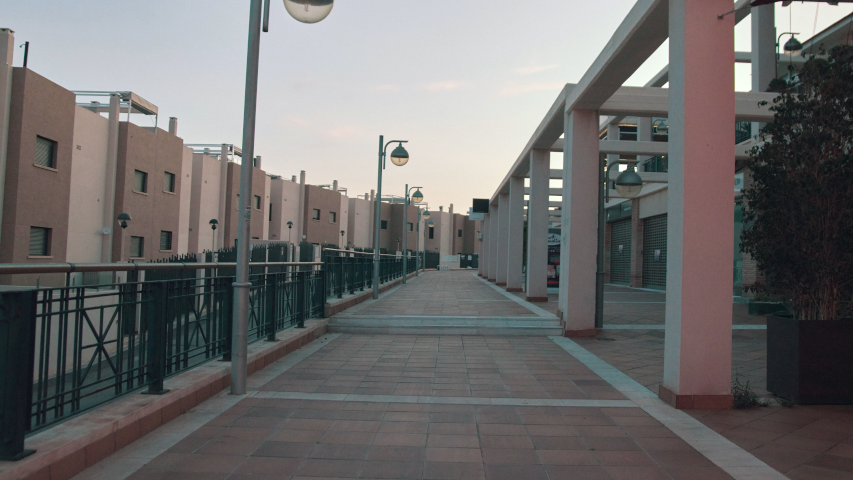
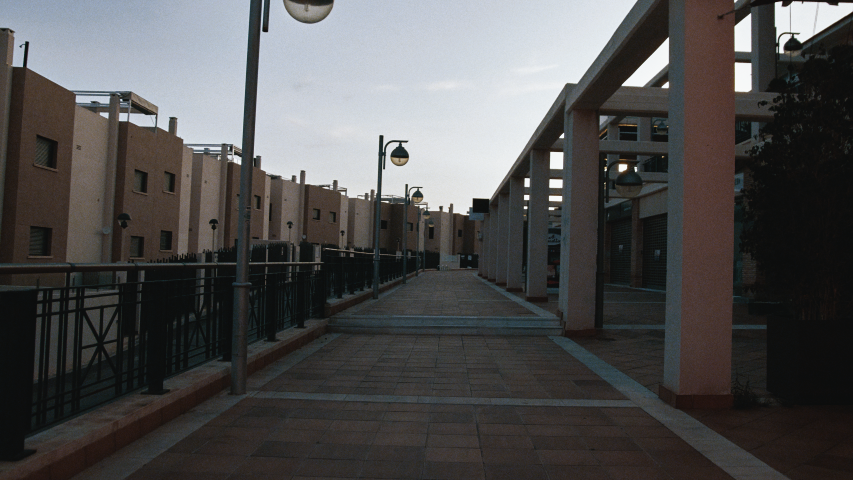
A labelled surrogate of Technicolor's late-1990s dye-transfer revival: the Process IV model with no key image and an assumed steeper tone for deeper blacks. Original vs Ashigrain.

Kodak Vision3 500T, Technicolor Dye Transfer (1997 revival)

stock
Kodak Vision3 500T
mode
Print
print_film
Technicolor Dye Transfer (1997 revival)
film_format
Super 35 (4-perf)

At a glance

Introduced
1997
Discontinued
Process
three separation records printed onto matrix film, developed to hardened gelatin reliefs, imbibed with cyan, magenta and yellow dyes and transferred in register onto a blank
Maximum density
≈ 2.8
Base
Polyester

About the film

Technicolor had stopped dye-transfer printing in the United States in the mid-1970s, studied a revival from the early 1990s, and brought it back in 1997 at its North Hollywood laboratory on the Universal lot.

To do so it bought back the dye-transfer equipment that its West Drayton plant had sold to China in the late 1970s. Film Atlas names Batman & Robin (1997) as the first film released with the new prints, as show prints only, and in December 1997 the Los Angeles Times reported that the process had so far been used on a few prints of Giant and Batman & Robin. Ricotta, one of the revival's principals, said it gave sharper, less grainy images and an extended tone scale with blacker blacks and whiter whites. The prints were made on Estar polyester blanks supplied by Kodak, with soundtracks printed in black and white. It was used for show prints of new features such as Bulworth, The Thin Red Line and Godzilla (all 1998), Pearl Harbor and Apocalypse Now Redux (both 2001), and for reissues of Rear Window, Gone with the Wind and The Wizard of Oz. The 1999 Rear Window reissue had about 40 dye-transfer prints. The revival was meant to scale up to large release runs but stayed with small ones because of quality-control problems, technical failures and the coming of digital projection, and it had ended by the early 2000s.

Sources for this history
  1. Technicolor dye-transfer revival (Robert Hoffman), Film Atlas (FIAF / George Eastman Museum)
  2. Technicolor prints from color negatives (Richard W. Haines), Film Atlas (FIAF / George Eastman Museum)
  3. Film restoration more than 'Rear Window'-dressing (Bill Desowitz, 11 December 1997), CNN Interactive (Los Angeles Times)

The look

In 1997 Technicolor revived dye-transfer printing for show prints of new features and reissued classics, on polyester base; it had stopped again by the early 2000s. Ashigrain's version is a labelled surrogate, a model inspired by the print rather than a reproduction: Process IV's model with no key image and a steeper tone.


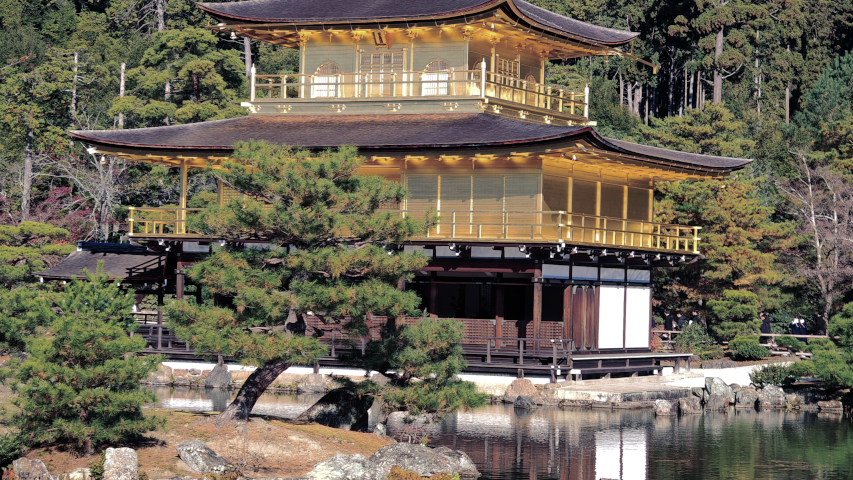
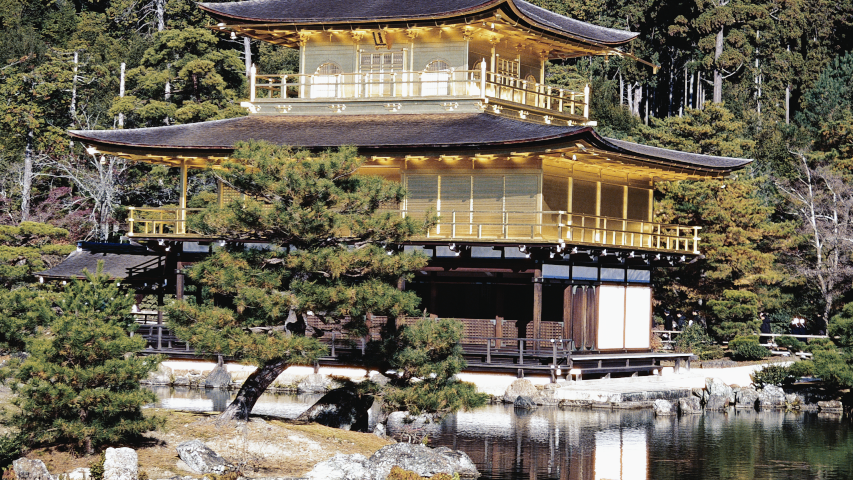
Technicolor Dye Transfer (1997 revival) sample frame: OriginalTechnicolor Dye Transfer (1997 revival) sample frame: Ashigrain

Best for

  1. Late-1990s show-print looks
  2. Restored reissues of studio classics
  3. Deep blacks with saturated dye colour

Compare print films

Planned media

The same Vision3 500T night frame on each print film: how deep the blacks go, how the highlights roll off and how the colour separates.

Kodak Vision3 500T, Kodak Vision Premier Color Print Film 2393

stock
Kodak Vision3 500T
mode
Print
print_film
Kodak Vision Premier Color Print Film 2393
film_format
Super 35 (4-perf)
Kodak Vision3 500T → Kodak Vision Premier Color Print Film 2393

Planned media

The same Vision3 500T night frame on each print film: how deep the blacks go, how the highlights roll off and how the colour separates.

Kodak Vision3 500T, Eastman Color SP Print Film 5383

stock
Kodak Vision3 500T
mode
Print
print_film
Eastman Color SP Print Film 5383
film_format
Super 35 (4-perf)
Kodak Vision3 500T → Eastman Color SP Print Film 5383

Planned media

The same Vision3 500T night frame on each print film: how deep the blacks go, how the highlights roll off and how the colour separates.

Kodak Vision3 500T, Eastman Color Print Film 5384

stock
Kodak Vision3 500T
mode
Print
print_film
Eastman Color Print Film 5384
film_format
Super 35 (4-perf)
Kodak Vision3 500T → Eastman Color Print Film 5384

Planned media

The same Vision3 500T night frame on each print film: how deep the blacks go, how the highlights roll off and how the colour separates.

Kodak Vision3 500T, Fujifilm Eterna-CP 3521XD

stock
Kodak Vision3 500T
mode
Print
print_film
Fujifilm Eterna-CP 3521XD
film_format
Super 35 (4-perf)
Kodak Vision3 500T → Fujifilm Eterna-CP 3521XD

Planned media

The same Vision3 500T night frame on each print film: how deep the blacks go, how the highlights roll off and how the colour separates.

Kodak Vision3 500T, Du Pont Color Release Positive Type 275

stock
Kodak Vision3 500T
mode
Print
print_film
Du Pont Color Release Positive Type 275
film_format
Super 35 (4-perf)
Kodak Vision3 500T → Du Pont Color Release Positive Type 275

Planned media

The same Vision3 500T night frame on each print film: how deep the blacks go, how the highlights roll off and how the colour separates.

Kodak Vision3 500T, Fujifilm Eterna-CP 3523XD

stock
Kodak Vision3 500T
mode
Print
print_film
Fujifilm Eterna-CP 3523XD
film_format
Super 35 (4-perf)
Kodak Vision3 500T → Fujifilm Eterna-CP 3523XD

Planned media

The same Vision3 500T night frame on each print film: how deep the blacks go, how the highlights roll off and how the colour separates.

Kodak Vision3 500T, Kodak Vision Color Print Film 2383

stock
Kodak Vision3 500T
mode
Print
print_film
Kodak Vision Color Print Film 2383
film_format
Super 35 (4-perf)
Kodak Vision3 500T → Kodak Vision Color Print Film 2383

Planned media

The same Vision3 500T night frame on each print film: how deep the blacks go, how the highlights roll off and how the colour separates.

Kodak Vision3 500T, Fujifilm Eterna-CP 3513DI

stock
Kodak Vision3 500T
mode
Print
print_film
Fujifilm Eterna-CP 3513DI
film_format
Super 35 (4-perf)
Kodak Vision3 500T → Fujifilm Eterna-CP 3513DI

Planned media

The same Vision3 500T night frame on each print film: how deep the blacks go, how the highlights roll off and how the colour separates.

Kodak Vision3 500T, Eastman EXR Color Print Film 5386

stock
Kodak Vision3 500T
mode
Print
print_film
Eastman EXR Color Print Film 5386
film_format
Super 35 (4-perf)
Kodak Vision3 500T → Eastman EXR Color Print Film 5386

Planned media

The same Vision3 500T night frame on each print film: how deep the blacks go, how the highlights roll off and how the colour separates.

Kodak Vision3 500T, Eastman Color Print Film 5381 (1972)

stock
Kodak Vision3 500T
mode
Print
print_film
Eastman Color Print Film 5381 (1972)
film_format
Super 35 (4-perf)
Kodak Vision3 500T → Eastman Color Print Film 5381 (1972)

Planned media

The same Vision3 500T night frame on each print film: how deep the blacks go, how the highlights roll off and how the colour separates.

Kodak Vision3 500T, Eastman Color Print Film 5385

stock
Kodak Vision3 500T
mode
Print
print_film
Eastman Color Print Film 5385
film_format
Super 35 (4-perf)
Kodak Vision3 500T → Eastman Color Print Film 5385

Planned media

The same Vision3 500T night frame on each print film: how deep the blacks go, how the highlights roll off and how the colour separates.

Kodak Vision3 500T, Agfa CP30 Colour Print Film

stock
Kodak Vision3 500T
mode
Print
print_film
Agfa CP30 Colour Print Film
film_format
Super 35 (4-perf)
Kodak Vision3 500T → Agfa CP30 Colour Print Film

Planned media

The same Vision3 500T night frame on each print film: how deep the blacks go, how the highlights roll off and how the colour separates.

Kodak Vision3 500T, SuperCinecolor

stock
Kodak Vision3 500T
mode
Print
print_film
SuperCinecolor
film_format
Super 35 (4-perf)
Kodak Vision3 500T → SuperCinecolor

Planned media

The same Vision3 500T night frame on each print film. On this two-colour print (a labelled surrogate) every colour falls between blue-green and red-orange: how deep the blacks go, how the highlights roll off and which lights keep their hue.

Kodak Vision3 500T, Cinecolor (two-colour)

stock
Kodak Vision3 500T
mode
Print
print_film
Cinecolor (two-colour)
film_format
Super 35 (4-perf)
Kodak Vision3 500T → Cinecolor (two-colour)

Planned media

The same Vision3 500T night frame on each print film: how deep the blacks go, how the highlights roll off and how the colour separates.

Kodak Vision3 500T, Gevacolor Positive 953

stock
Kodak Vision3 500T
mode
Print
print_film
Gevacolor Positive 953
film_format
Super 35 (4-perf)
Kodak Vision3 500T → Gevacolor Positive 953

Planned media

The same Vision3 500T night frame on each print film: how deep the blacks go, how the highlights roll off and how the colour separates.

Kodak Vision3 500T, Gevacolor Print 9.85

stock
Kodak Vision3 500T
mode
Print
print_film
Gevacolor Print 9.85
film_format
Super 35 (4-perf)
Kodak Vision3 500T → Gevacolor Print 9.85

Planned media

The same Vision3 500T night frame on each print film: how deep the blacks go, how the highlights roll off and how the colour separates.

Kodak Vision3 500T, Gevacolor Print 986

stock
Kodak Vision3 500T
mode
Print
print_film
Gevacolor Print 986
film_format
Super 35 (4-perf)
Kodak Vision3 500T → Gevacolor Print 986

Planned media

The same Vision3 500T night frame on each print film: how deep the blacks go, how the highlights roll off and how the colour separates.

Kodak Vision3 500T, Gevacolor Print 982

stock
Kodak Vision3 500T
mode
Print
print_film
Gevacolor Print 982
film_format
Super 35 (4-perf)
Kodak Vision3 500T → Gevacolor Print 982

Planned media

The same Vision3 500T night frame on each print film: how deep the blacks go, how the highlights roll off and how the colour separates.

Kodak Vision3 500T, Ferraniacolor Positive

stock
Kodak Vision3 500T
mode
Print
print_film
Ferraniacolor Positive
film_format
Super 35 (4-perf)
Kodak Vision3 500T → Ferraniacolor Positive

Planned media

The same Vision3 500T night frame on each print film: how deep the blacks go, how the highlights roll off and how the colour separates.

Kodak Vision3 500T, 3M Color Positive 650

stock
Kodak Vision3 500T
mode
Print
print_film
3M Color Positive 650
film_format
Super 35 (4-perf)
Kodak Vision3 500T → 3M Color Positive 650

Planned media

The same Vision3 500T night frame on each print film: how deep the blacks go, how the highlights roll off and how the colour separates.

Kodak Vision3 500T, Fujicolor Positive F-CP 3510

stock
Kodak Vision3 500T
mode
Print
print_film
Fujicolor Positive F-CP 3510
film_format
Super 35 (4-perf)
Kodak Vision3 500T → Fujicolor Positive F-CP 3510

Planned media

The same Vision3 500T night frame on each print film: how deep the blacks go, how the highlights roll off and how the colour separates.

Kodak Vision3 500T, Fujicolor Positive F-CP 3519

stock
Kodak Vision3 500T
mode
Print
print_film
Fujicolor Positive F-CP 3519
film_format
Super 35 (4-perf)
Kodak Vision3 500T → Fujicolor Positive F-CP 3519

Planned media

The same Vision3 500T night frame on each print film: how deep the blacks go, how the highlights roll off and how the colour separates.

Kodak Vision3 500T, Fujifilm Eterna-CP 3512

stock
Kodak Vision3 500T
mode
Print
print_film
Fujifilm Eterna-CP 3512
film_format
Super 35 (4-perf)
Kodak Vision3 500T → Fujifilm Eterna-CP 3512

Planned media

The same Vision3 500T night frame on each print film: how deep the blacks go, how the highlights roll off and how the colour separates.

Kodak Vision3 500T, Eastman Color Print 5381 (1950)

stock
Kodak Vision3 500T
mode
Print
print_film
Eastman Color Print 5381 (1950)
film_format
Super 35 (4-perf)
Kodak Vision3 500T → Eastman Color Print 5381 (1950)

Planned media

The same Vision3 500T night frame on each print film. On this blue-sensitive black-and-white print the colour negative turns grey: how deep the blacks go, how the highlights roll off and how dark the reds and greens print.

Kodak Vision3 500T, Eastman Fine Grain Release Positive 5302

stock
Kodak Vision3 500T
mode
Print
print_film
Eastman Fine Grain Release Positive 5302
film_format
Super 35 (4-perf)
Kodak Vision3 500T → Eastman Fine Grain Release Positive 5302

Planned media

The same Vision3 500T night frame on each print film: how deep the blacks go, how the highlights roll off and how the colour separates.

Kodak Vision3 500T, Ansco Color Print 848

stock
Kodak Vision3 500T
mode
Print
print_film
Ansco Color Print 848
film_format
Super 35 (4-perf)
Kodak Vision3 500T → Ansco Color Print 848

Planned media

The same Vision3 500T night frame on each print film. On this blue-sensitive black-and-white print the colour negative turns grey: how deep the blacks go, how the highlights roll off and how dark the red neon and skin print.

Kodak Vision3 500T, Kodak B&W Print Film 2302

stock
Kodak Vision3 500T
mode
Print
print_film
Kodak B&W Print Film 2302
film_format
Super 35 (4-perf)
Kodak Vision3 500T → Kodak B&W Print Film 2302

Planned media

The same Vision3 500T night frame on each print film: how deep the blacks go, how the highlights roll off and how the colour separates.

Kodak Vision3 500T, Svema TsP-11

stock
Kodak Vision3 500T
mode
Print
print_film
Svema TsP-11
film_format
Super 35 (4-perf)
Kodak Vision3 500T → Svema TsP-11

Planned media

The same Vision3 500T night frame on each print film. On this black-and-white print the colour negative turns grey: how deep the blacks go, how the highlights roll off and how the coloured lights and skin translate to grey.

Kodak Vision3 500T, Svema MZ-3

stock
Kodak Vision3 500T
mode
Print
print_film
Svema MZ-3
film_format
Super 35 (4-perf)
Kodak Vision3 500T → Svema MZ-3

Planned media

The same Vision3 500T night frame on each print film. On this blue-sensitive black-and-white print the colour negative turns grey: how deep the blacks go, how the highlights roll off and how the coloured lights and skin translate to grey.

Kodak Vision3 500T, ORWO PF 2 Positive Print Film

stock
Kodak Vision3 500T
mode
Print
print_film
ORWO PF 2 Positive Print Film
film_format
Super 35 (4-perf)
Kodak Vision3 500T → ORWO PF 2 Positive Print Film

Planned media

The same Vision3 500T night frame on each print film: how deep the blacks go, how the highlights roll off and how the colour separates.

Kodak Vision3 500T, Technicolor Dye Transfer (1997 revival)

stock
Kodak Vision3 500T
mode
Print
print_film
Technicolor Dye Transfer (1997 revival)
film_format
Super 35 (4-perf)
Kodak Vision3 500T → Technicolor Dye Transfer (1997 revival)

Planned media

The same Vision3 500T night frame on each print film: how deep the blacks go, how the highlights roll off and how the colour separates.

Kodak Vision3 500T, Svema TsP-8R

stock
Kodak Vision3 500T
mode
Print
print_film
Svema TsP-8R
film_format
Super 35 (4-perf)
Kodak Vision3 500T → Svema TsP-8R

Planned media

The same Vision3 500T night frame on each print film: how deep the blacks go, how the highlights roll off and how the colour separates.

Kodak Vision3 500T, Shostka Colour Positive (1950s)

stock
Kodak Vision3 500T
mode
Print
print_film
Shostka Colour Positive (1950s)
film_format
Super 35 (4-perf)
Kodak Vision3 500T → Shostka Colour Positive (1950s)

Planned media

The same Vision3 500T night frame on each print film: how deep the blacks go, how the highlights roll off and how the colour separates.

Kodak Vision3 500T, Technicolor Dye Transfer (Process IV)

stock
Kodak Vision3 500T
mode
Print
print_film
Technicolor Dye Transfer (Process IV)
film_format
Super 35 (4-perf)
Kodak Vision3 500T → Technicolor Dye Transfer (Process IV)

Planned media

The same Vision3 500T night frame on each print film: how deep the blacks go, how the highlights roll off and how the colour separates.

Kodak Vision3 500T, Gasparcolor Print

stock
Kodak Vision3 500T
mode
Print
print_film
Gasparcolor Print
film_format
Super 35 (4-perf)
Kodak Vision3 500T → Gasparcolor Print

Planned media

The same Vision3 500T night frame on each print film. On this two-colour print (a labelled surrogate) every colour falls between a blue and a red dye: how deep the blacks go, how the highlights roll off and which lights keep their hue.

Kodak Vision3 500T, Trucolor Print (two-colour)

stock
Kodak Vision3 500T
mode
Print
print_film
Trucolor Print (two-colour)
film_format
Super 35 (4-perf)
Kodak Vision3 500T → Trucolor Print (two-colour)

Planned media

The same Vision3 500T night frame on each print film: how deep the blacks go, how the highlights roll off and how the colour separates.

Kodak Vision3 500T, Kodak Vision Color Teleprint Film 2395

stock
Kodak Vision3 500T
mode
Print
print_film
Kodak Vision Color Teleprint Film 2395
film_format
Super 35 (4-perf)
Kodak Vision3 500T → Kodak Vision Color Teleprint Film 2395

The same Kodak Vision3 500T night frame, printed on each film.

Print film · deepest blacks firstKindMaximum density, Status A · higher means deeper blacksYears made
Kodak Vision Premier Color Print Film 2393Kodak Vision Premier Color Print Film 2393+2.7 deeper than Technicolor Dye Transfer (1997 revival)Colour5.51998
Eastman Color SP Print Film 5383Eastman Color SP Print Film 5383Made 1974–1983 · +2.2 deeper than Technicolor Dye Transfer (1997 revival)Colour5.01974–83
Eastman Color Print Film 5384Eastman Color Print Film 5384+2.1 deeper than Technicolor Dye Transfer (1997 revival)Colour4.91981
Fujifilm Eterna-CP 3521XDFujifilm Eterna-CP 3521XD+2.0 deeper than Technicolor Dye Transfer (1997 revival)Colour4.82007
Du Pont Color Release Positive Type 275Du Pont Color Release Positive Type 275+1.9 deeper than Technicolor Dye Transfer (1997 revival)Colour4.71949
Fujifilm Eterna-CP 3523XDFujifilm Eterna-CP 3523XD+1.7 deeper than Technicolor Dye Transfer (1997 revival)Colour4.52010
Kodak Vision Color Print Film 2383Kodak Vision Color Print Film 2383Made since 1998, in production · +1.3 deeper than Technicolor Dye Transfer (1997 revival)Colour4.11998–
Fujifilm Eterna-CP 3513DIFujifilm Eterna-CP 3513DI+1.2 deeper than Technicolor Dye Transfer (1997 revival)Colour4.02005
Eastman EXR Color Print Film 5386Eastman EXR Color Print Film 5386+1.2 deeper than Technicolor Dye Transfer (1997 revival)Colour4.01993
Eastman Color Print Film 5381 (1972)Eastman Color Print Film 5381 (1972)+1.2 deeper than Technicolor Dye Transfer (1997 revival)Colour4.01972
Eastman Color Print Film 5385Eastman Color Print Film 5385+1.2 deeper than Technicolor Dye Transfer (1997 revival)Colour4.01962
Agfa CP30 Colour Print FilmAgfa CP30 Colour Print Film+1.2 deeper than Technicolor Dye Transfer (1997 revival)Colour4.02003
SuperCinecolorSuperCinecolor+1.2 deeper than Technicolor Dye Transfer (1997 revival)Colour4.01948
Cinecolor (two-colour)Cinecolor (two-colour)+1.2 deeper than Technicolor Dye Transfer (1997 revival)Colour4.01932
Gevacolor Positive 953Gevacolor Positive 953+1.2 deeper than Technicolor Dye Transfer (1997 revival)Colour4.01958
Gevacolor Print 9.85Gevacolor Print 9.85+1.2 deeper than Technicolor Dye Transfer (1997 revival)Colour4.01971
Gevacolor Print 986Gevacolor Print 986+1.2 deeper than Technicolor Dye Transfer (1997 revival)Colour4.01975
Gevacolor Print 982Gevacolor Print 982+1.2 deeper than Technicolor Dye Transfer (1997 revival)Colour4.01980
Ferraniacolor PositiveFerraniacolor Positive+1.2 deeper than Technicolor Dye Transfer (1997 revival)Colour4.01949
3M Color Positive 6503M Color Positive 650+1.2 deeper than Technicolor Dye Transfer (1997 revival)Colour4.01970
Fujicolor Positive F-CP 3510Fujicolor Positive F-CP 3510+1.0 deeper than Technicolor Dye Transfer (1997 revival)Colour3.82003
Fujicolor Positive F-CP 3519Fujicolor Positive F-CP 3519+1.0 deeper than Technicolor Dye Transfer (1997 revival)Colour3.82001
Fujifilm Eterna-CP 3512Fujifilm Eterna-CP 3512Made 2010–2013 · +0.9 deeper than Technicolor Dye Transfer (1997 revival)Colour3.72010–13
Eastman Color Print 5381 (1950)Eastman Color Print 5381 (1950)Made 1950–1953 · +0.7 deeper than Technicolor Dye Transfer (1997 revival)Colour3.51950–53
Eastman Fine Grain Release Positive 5302Eastman Fine Grain Release Positive 5302+0.6 deeper than Technicolor Dye Transfer (1997 revival)B&W3.41950
Ansco Color Print 848Ansco Color Print 848+0.5 deeper than Technicolor Dye Transfer (1997 revival)Colour3.31951
Kodak B&W Print Film 2302Kodak B&W Print Film 2302Made since 2000, in production · +0.4 deeper than Technicolor Dye Transfer (1997 revival)B&W3.22000–
Svema TsP-11Svema TsP-11+0.2 deeper than Technicolor Dye Transfer (1997 revival)Colour3.01979
Svema MZ-3Svema MZ-3+0.2 deeper than Technicolor Dye Transfer (1997 revival)B&W3.01979
ORWO PF 2 Positive Print FilmORWO PF 2 Positive Print Film+0.2 deeper than Technicolor Dye Transfer (1997 revival)B&W3.02014
Technicolor Dye Transfer (1997 revival)Technicolor Dye Transfer (1997 revival)this printColour2.81997
Svema TsP-8RSvema TsP-8Rsame as Technicolor Dye Transfer (1997 revival)Colour2.81969
Shostka Colour Positive (1950s)Shostka Colour Positive (1950s)same as Technicolor Dye Transfer (1997 revival)Colour2.81948
Technicolor Dye Transfer (Process IV)Technicolor Dye Transfer (Process IV)same as Technicolor Dye Transfer (1997 revival)Colour2.81932
Gasparcolor PrintGasparcolor Print−0.1 lighter than Technicolor Dye Transfer (1997 revival)Colour2.71932
Trucolor Print (two-colour)Trucolor Print (two-colour)−0.2 lighter than Technicolor Dye Transfer (1997 revival)Colour2.61945
Kodak Vision Color Teleprint Film 2395Kodak Vision Color Teleprint Film 2395−0.4 lighter than Technicolor Dye Transfer (1997 revival)Colour2.41999

Science & sources

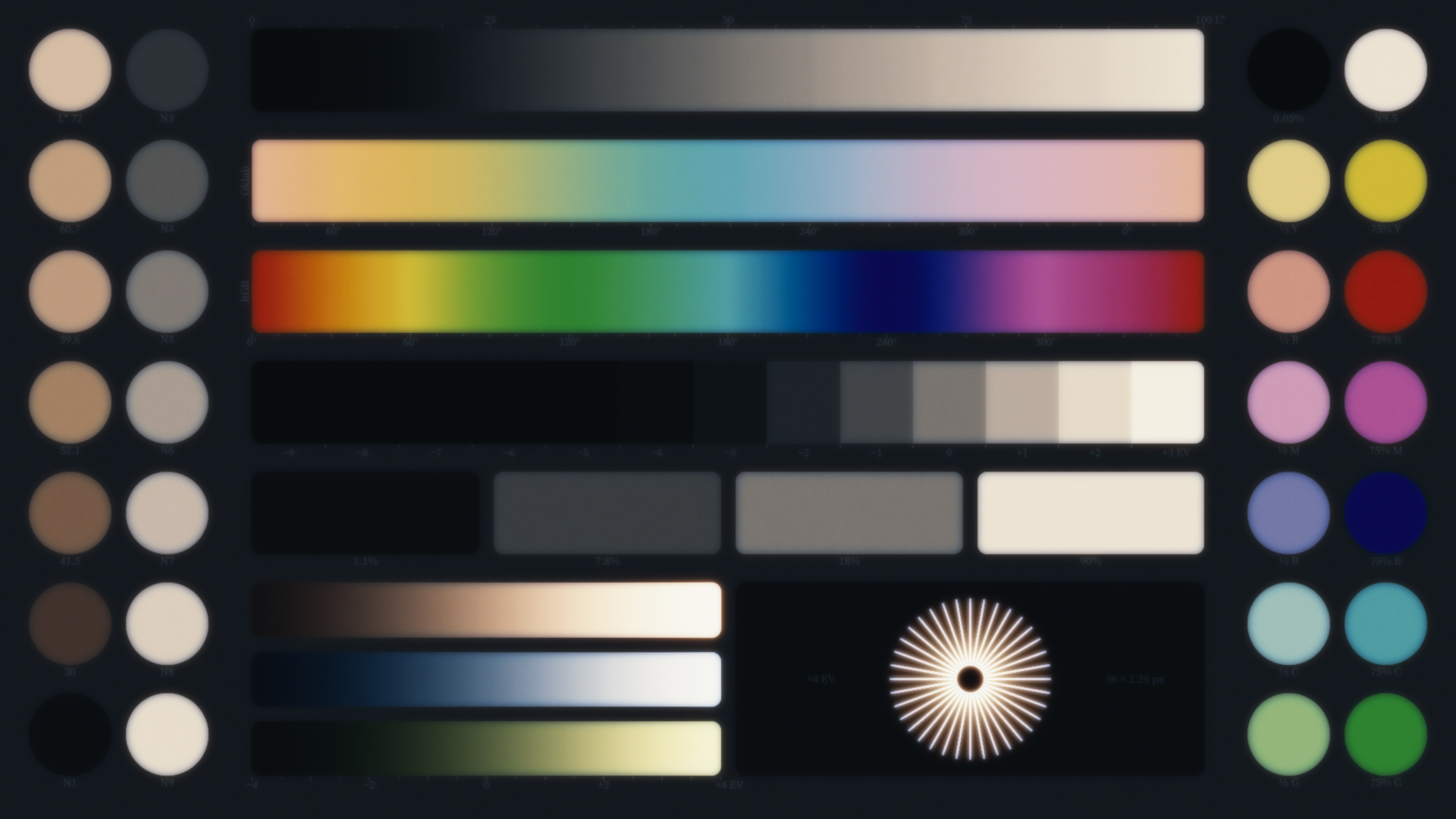
Technicolor Dye Transfer (1997 revival) calibration chart: OriginalTechnicolor Dye Transfer (1997 revival) calibration chart: Processed
Synthetic test chart (skin tones, Munsell greys, colour bars, tone and hue ramps, step wedge, memory-colour roll-off, halation star) before and after the full Ashigrain pipeline: ORWOCOLOR NC 3 printed on Technicolor Dye Transfer (1997 revival), Super 35 4-perf, default controls, exposure +0.54 stops to match the original's mid-grey, frame 0.

A three-colour model inspired by the revival print, not a reproduction of it, shown after Kodak Vision3 500T. It shares the Technicolor Process IV model's assumed curves, record sensitivities and dyes, with no key image and an assumed steeper matrix gamma of 2.7 for the extended tone scale the revival claimed.

Response curves and the evidence behind the model

Compare manufacturer data with Ashigrain’s response on the same axes. These curves show how the model is calibrated to its sources; they do not establish a match to photographed film.

Characteristic response

Density against log H (lux-seconds) for channels R, G, B. R circles, G squares, B triangles, N diamonds; filled markers and solid lines are digitised, open markers and dashed lines are simulated: digitised and simulated.−3.0−2.0−1.00.01.02.03.0log H (lux-seconds)0.01.02.03.0Density

Model limits

These images show the film model in use. Spectral response, lighting and viewing conditions include approximations. Halation, bloom, grain size, weave and flicker are not fully measured for each film. The look of real film also depends on development and print timing.

  • This is a three-colour model inspired by the 1997–2002 Technicolor dye-transfer revival, rather than a reproduction of its prints.
  • No characteristic curve, separation filter, matrix gamma or dye spectrum of a revival print exists in the sources. The curves, record sensitivities and transfer dyes are those of Ashigrain's Technicolor Process IV surrogate, themselves named assumptions.
  • It differs only where a source says so: there is no key image, and the matrix gamma of 2.7, steeper than Process IV's 2.6, is an assumption standing for the extended tone scale the revival claimed.
  • The polyester base is recorded but not modelled.
  • The source gives no printer lamp or filter spectra. Their spectral response is approximated.
  • The available sources do not measure veiling flare during projection. The model approximates its contribution to lifted blacks on screen, so the result is not a measured projection contrast.

Reciprocity: not modelled. Exposure time has no effect on this film.

Film guide: assumptions and practical choices

This preview combines the print film with the named camera negative. In this comparison, the print has no separate exposure index or measured grain response.

Sources

  1. Process: J. A. Ball, The Technicolor Process of Three-Color Cinematography (American WideScreen Museum transcription), widescreenmuseum.com/oldcolor/ball.htm as served 2026-10-28 (transcription; figures ballpic1a.gif, ballpic2.gif not registered), p. 1
  2. Reconstructed: J. A. Ball, The Technicolor Process of Three-Color Cinematography (American WideScreen Museum transcription), widescreenmuseum.com/oldcolor/ball.htm as served 2026-10-28 (transcription; figures ballpic1a.gif, ballpic2.gif not registered), p. 1

Bring this film into your grade.

Every film is included in one purchase, with no subscription.

€199 + VAT