 Ashigrain
Black-and-white print · Print film
Svema MZ-3
Свема МЗ-3
Soviet black-and-white positive for mass release prints.
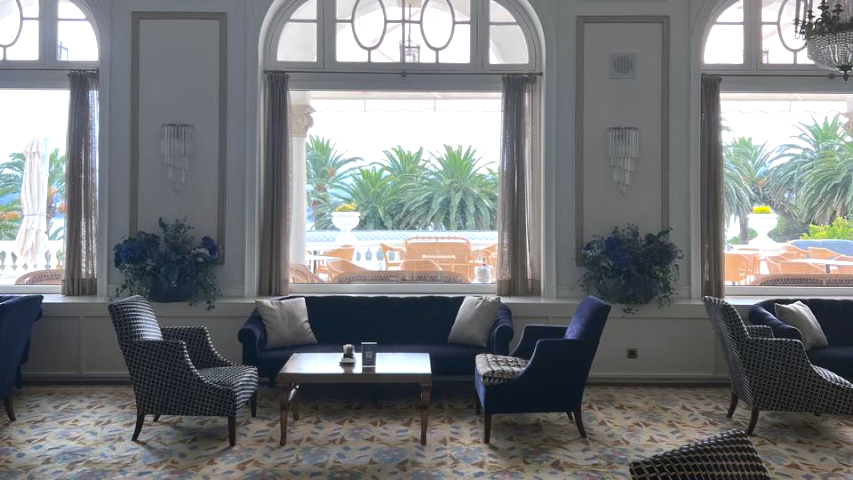
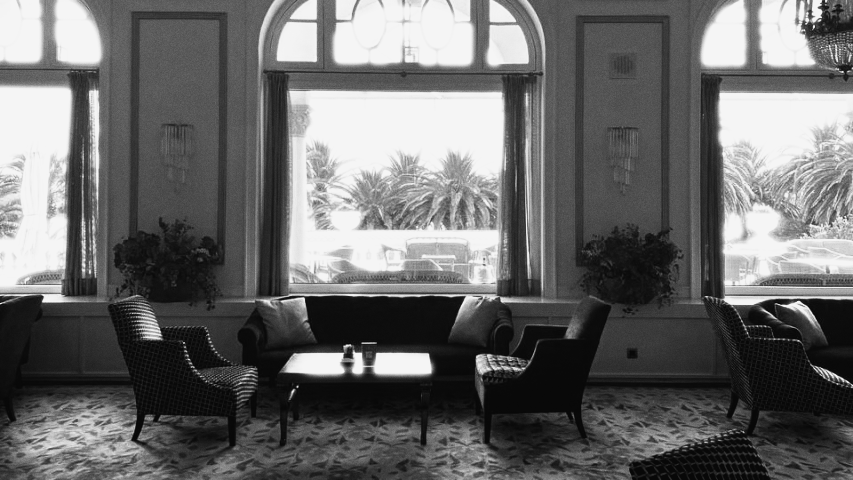
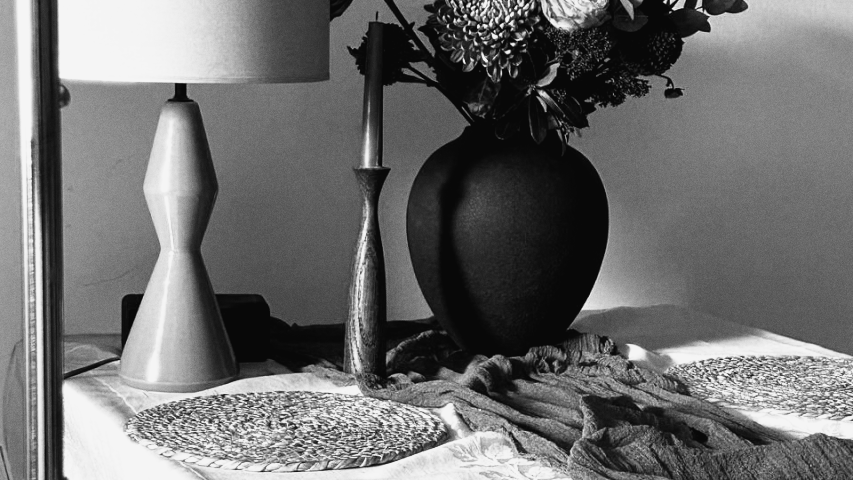
The Soviet mass-release black-and-white positive, reconstructed from handbook figures at a gamma of 2.6: neutral image tone on a ruined-city exterior. Original vs Ashigrain.
At a glance
- Introduced
- by 1979
- Process
- ГОСТ 10691.3-84 developer No. 6, 2-4 min
- Maximum density
- ≈ 3.0
About the film
Svema MZ-3 (Свема МЗ-3) was a Soviet black-and-white positive film for mass and routine printing of feature copies.
A 1979 cinematographer's handbook describes it and notes its good sharpness, fine grain and neutral image tone. The handbook gives a speed of 2.8 to 5.5 GOST units, a contrast of 2.6 and a resolving power of at least 108 lines per millimetre. It was made in 35 mm and 70 mm and in 32 mm stock carrying two 16 mm or four 8 mm strips, and the MZ-3M variant, with widescreen perforation and four magnetic sound tracks, shared its photographic properties. A 1980 textbook lists MZ-3 and MZ-3M among domestic black-and-white positive films. A 1990 handbook gives fog of at most 0.04 and a maximum density of at least 3.0 after 4 minutes' development, with a higher contrast of 2.9 to 3.1. No sensitisation is printed for it, and the 1990 handbook notes that plain silver halide responds only to light below about 500 nm.
Sources for this history
- Гордийчук И. Б., Пелль В. Г. Справочник кинооператора (1979), Internet Archive
- Иофис Е. А. Кинофотопроцессы и материалы (1980), Internet Archive
- Журба Ю. И. Краткий справочник по фотографическим процессам и материалам (1990), djvu.online
The look
Svema MZ-3 was a Soviet black-and-white print film for mass printing of feature copies, documented from 1979. A 1979 handbook notes its good sharpness, fine grain and neutral image tone. Ashigrain reconstructs it from handbook figures, with a sensitivity shape borrowed from Kodak 5302.



Best for
- Printing Tasma NK-2 negatives
- Soviet black-and-white release-print looks
- Comparing MZ-3 with Kodak 2302
Compare print films
The same Vision3 500T night frame on each print film: how deep the blacks go, how the highlights roll off and how the colour separates.
The same Vision3 500T night frame on each print film: how deep the blacks go, how the highlights roll off and how the colour separates.
The same Vision3 500T night frame on each print film: how deep the blacks go, how the highlights roll off and how the colour separates.
The same Vision3 500T night frame on each print film: how deep the blacks go, how the highlights roll off and how the colour separates.
The same Vision3 500T night frame on each print film: how deep the blacks go, how the highlights roll off and how the colour separates.
The same Vision3 500T night frame on each print film: how deep the blacks go, how the highlights roll off and how the colour separates.
The same Vision3 500T night frame on each print film: how deep the blacks go, how the highlights roll off and how the colour separates.
The same Vision3 500T night frame on each print film: how deep the blacks go, how the highlights roll off and how the colour separates.
The same Vision3 500T night frame on each print film: how deep the blacks go, how the highlights roll off and how the colour separates.
The same Vision3 500T night frame on each print film: how deep the blacks go, how the highlights roll off and how the colour separates.
The same Vision3 500T night frame on each print film: how deep the blacks go, how the highlights roll off and how the colour separates.
The same Vision3 500T night frame on each print film: how deep the blacks go, how the highlights roll off and how the colour separates.
The same Vision3 500T night frame on each print film: how deep the blacks go, how the highlights roll off and how the colour separates.
The same Vision3 500T night frame on each print film. On this two-colour print (a labelled surrogate) every colour falls between blue-green and red-orange: how deep the blacks go, how the highlights roll off and which lights keep their hue.
The same Vision3 500T night frame on each print film: how deep the blacks go, how the highlights roll off and how the colour separates.
The same Vision3 500T night frame on each print film: how deep the blacks go, how the highlights roll off and how the colour separates.
The same Vision3 500T night frame on each print film: how deep the blacks go, how the highlights roll off and how the colour separates.
The same Vision3 500T night frame on each print film: how deep the blacks go, how the highlights roll off and how the colour separates.
The same Vision3 500T night frame on each print film: how deep the blacks go, how the highlights roll off and how the colour separates.
The same Vision3 500T night frame on each print film: how deep the blacks go, how the highlights roll off and how the colour separates.
The same Vision3 500T night frame on each print film: how deep the blacks go, how the highlights roll off and how the colour separates.
The same Vision3 500T night frame on each print film: how deep the blacks go, how the highlights roll off and how the colour separates.
The same Vision3 500T night frame on each print film: how deep the blacks go, how the highlights roll off and how the colour separates.
The same Vision3 500T night frame on each print film: how deep the blacks go, how the highlights roll off and how the colour separates.
The same Vision3 500T night frame on each print film. On this blue-sensitive black-and-white print the colour negative turns grey: how deep the blacks go, how the highlights roll off and how dark the reds and greens print.
The same Vision3 500T night frame on each print film: how deep the blacks go, how the highlights roll off and how the colour separates.
The same Vision3 500T night frame on each print film. On this blue-sensitive black-and-white print the colour negative turns grey: how deep the blacks go, how the highlights roll off and how dark the red neon and skin print.
The same Vision3 500T night frame on each print film: how deep the blacks go, how the highlights roll off and how the colour separates.
The same Vision3 500T night frame on each print film. On this black-and-white print the colour negative turns grey: how deep the blacks go, how the highlights roll off and how the coloured lights and skin translate to grey.
The same Vision3 500T night frame on each print film. On this blue-sensitive black-and-white print the colour negative turns grey: how deep the blacks go, how the highlights roll off and how the coloured lights and skin translate to grey.
The same Vision3 500T night frame on each print film: how deep the blacks go, how the highlights roll off and how the colour separates.
The same Vision3 500T night frame on each print film: how deep the blacks go, how the highlights roll off and how the colour separates.
The same Vision3 500T night frame on each print film: how deep the blacks go, how the highlights roll off and how the colour separates.
The same Vision3 500T night frame on each print film: how deep the blacks go, how the highlights roll off and how the colour separates.
The same Vision3 500T night frame on each print film: how deep the blacks go, how the highlights roll off and how the colour separates.
The same Vision3 500T night frame on each print film. On this two-colour print (a labelled surrogate) every colour falls between a blue and a red dye: how deep the blacks go, how the highlights roll off and which lights keep their hue.
The same Vision3 500T night frame on each print film: how deep the blacks go, how the highlights roll off and how the colour separates.
The same Kodak Vision3 500T night frame, printed on each film.
- Kodak Vision Premier Color Print Film 2393
- Eastman Color SP Print Film 5383
- Eastman Color Print Film 5384
- Fujifilm Eterna-CP 3521XD
- Du Pont Color Release Positive Type 275
- Fujifilm Eterna-CP 3523XD
- Kodak Vision Color Print Film 2383
- Fujifilm Eterna-CP 3513DI
- Eastman EXR Color Print Film 5386
- Eastman Color Print Film 5381 (1972)
- Eastman Color Print Film 5385
- Agfa CP30 Colour Print Film
- SuperCinecolor
- Cinecolor (two-colour)
- Gevacolor Positive 953
- Gevacolor Print 9.85
- Gevacolor Print 986
- Gevacolor Print 982
- Ferraniacolor Positive
- 3M Color Positive 650
- Fujicolor Positive F-CP 3510
- Fujicolor Positive F-CP 3519
- Fujifilm Eterna-CP 3512
- Eastman Color Print 5381 (1950)
- Eastman Fine Grain Release Positive 5302
- Ansco Color Print 848
- Kodak B&W Print Film 2302
- Svema TsP-11
- Svema MZ-3
- ORWO PF 2 Positive Print Film
- Technicolor Dye Transfer (1997 revival)
- Svema TsP-8R
- Shostka Colour Positive (1950s)
- Technicolor Dye Transfer (Process IV)
- Gasparcolor Print
- Trucolor Print (two-colour)
- Kodak Vision Color Teleprint Film 2395
Science & sources

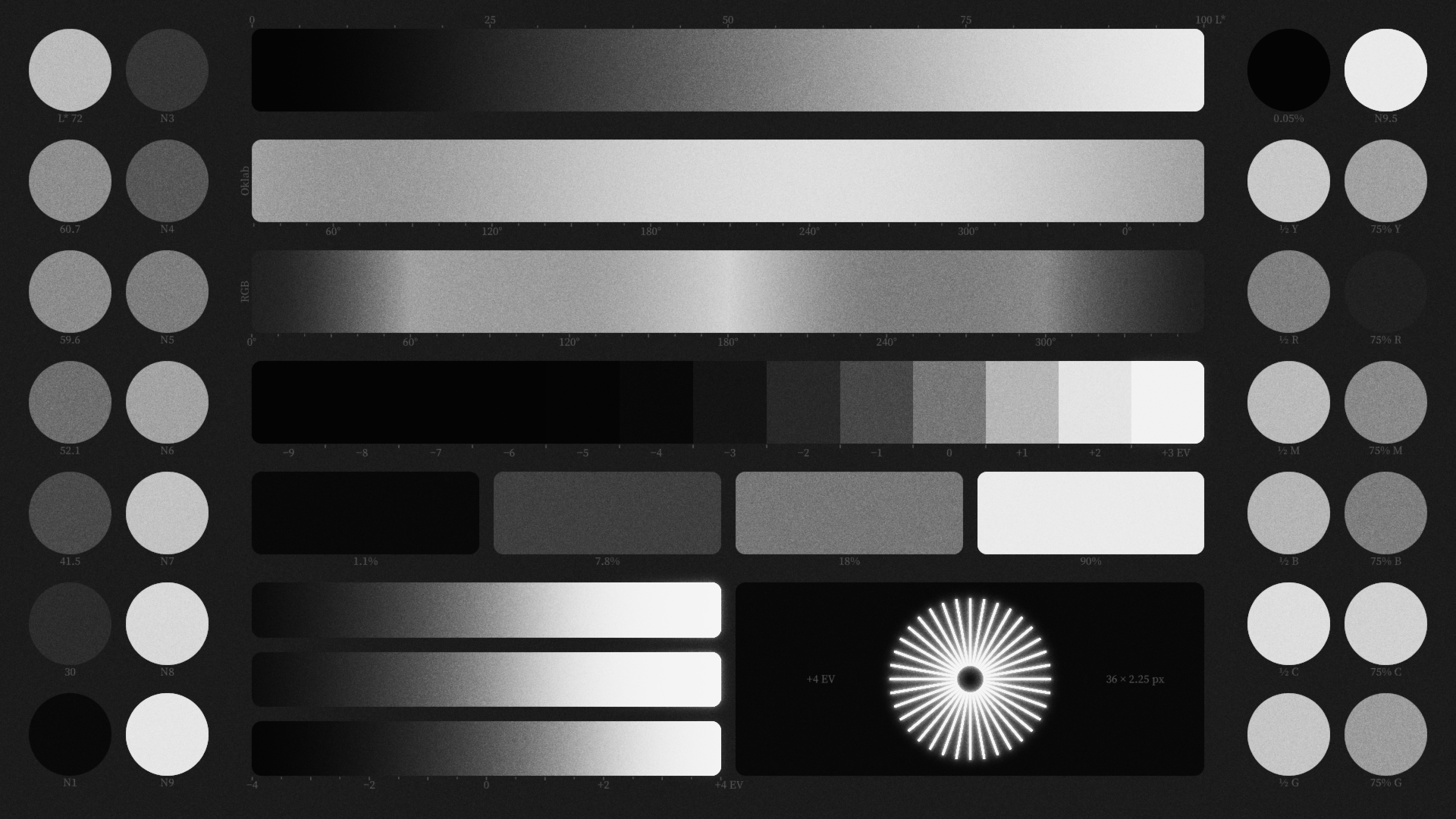
A Soviet black-and-white print film, shown after Tasma NK-2. No curve of MZ-3 is published: its characteristic curve is reconstructed from handbook figures, and its blue-only sensitivity takes its shape from Eastman Fine Grain Release Positive 5302, a proxy, with an assumed 480 nm edge.
The following trademark notice is provided in English.
Svema is named only to identify the film; its trademarks belong to their respective owners, whose identity is unknown.
Response curves and the evidence behind the model
Compare manufacturer data with Ashigrain’s response on the same axes. These curves show how the model is calibrated to its sources; they do not establish a match to photographed film.
Characteristic response
Model limits
These images show the film model in use. Spectral response, lighting and viewing conditions include approximations. Halation, bloom, grain size, weave and flicker are not fully measured for each film. The look of real film also depends on development and print timing.
- Свема МЗ-3 has no published curve. Its characteristic curve is reconstructed from Soviet handbooks (Гордийчук & Пелль 1979; Журба 1990), not digitised from a datasheet.
- The sources conflict on contrast (2.6 in 1979; 2.9–3.1 at 4-minute development in 1990); the model uses 2.6.
- No sensitisation limit is printed. The blue-only sensitivity takes its peak from Eastman Fine Grain Release Positive 5302, a proxy, and its 480 nm long-wavelength edge is an assumption.
- The silver image has no dye chart and is taken as spectrally neutral.
- No MTF or granularity is printed; only a resolving power of at least 108 lines/mm is recorded.
- The source gives no printer lamp or filter spectra. Black-and-white print timing is modelled.
Reciprocity: not modelled. Exposure time has no effect on this film.
Film guide: assumptions and practical choices
Sources
- Reconstructed: Гордийчук И. Б., Пелль В. Г. Справочник кинооператора (1979), 1979 edition, p. 192
- Process: Журба Ю. И. Краткий справочник по фотографическим процессам и материалам (1990), 1990 edition, p. 91