 Ashigrain
Colour print · Print film
Eastman Color Print Film 5381 (1972)
Kodak's 1970s colour print for every format.
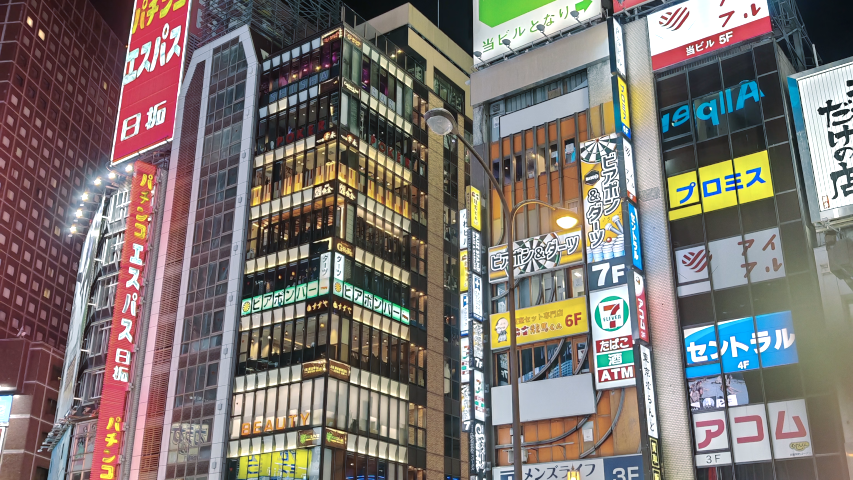
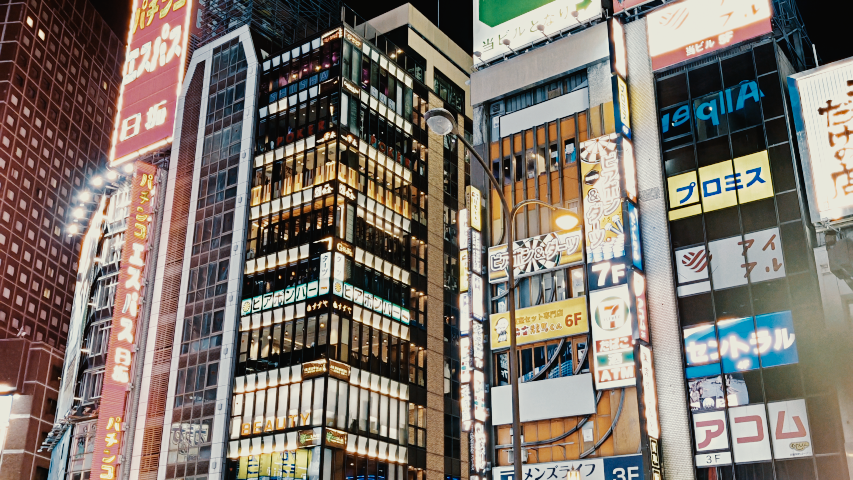
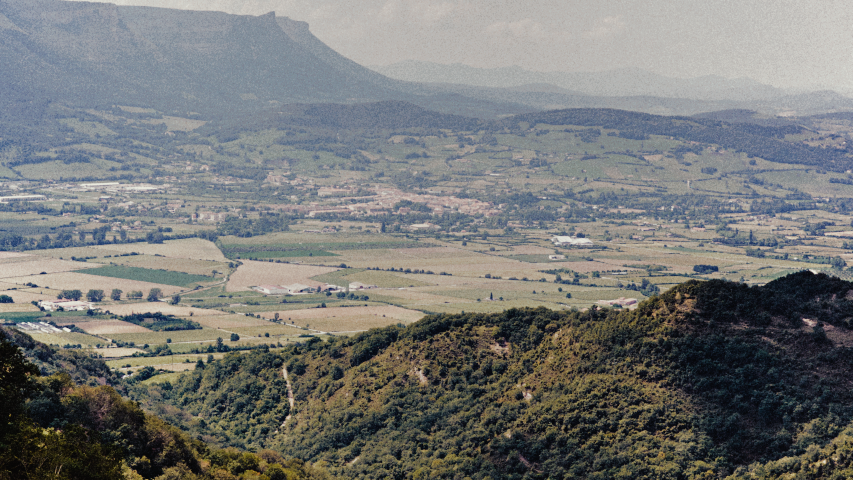
Kodak's 1970s print for every format, as a labelled surrogate whose curves and dyes are EXR 5386's, unchanged: a 1970s release-print look. Original vs Ashigrain.
At a glance
- Introduced
- 1972
- Discontinued
- Process
- ECP
- Maximum density
- ≈ 4.0
About the film
Eastman Color Print Film 5381 of 1972 was a Kodak colour print film for release printing, made in 35 mm as 5381 and in 16 mm as 7381.
Kodak reused the number: it is not the first Eastman Color print film of 1950, which also carried the code 5381. Kodak's chronology lists the 35 mm film under 1972, replacing 5385, and Henry Wilhelm's table of Eastman Color print films gives the same year for both codes. Kodak says that with it there was, for the first time, a single colour print film for all formats. It continued a line of Eastman Color print films that ran from the 1950 5381 through 5382 and 5385. In 1974 Kodak introduced SP print film 5383 for the higher-temperature ECP-2 process, meant to co-exist with 5381. Kodak says 5381 was discontinued in January 1982 and replaced by 5384, a film for the ECP-2A process with improved cyan dye keeping in the dark.
Sources for this history
- Chronology of Film, Eastman Kodak Company
- The Permanence and Care of Color Photographs (1993), chapter 9: The Permanent Preservation of Color Motion Pictures, Henry Wilhelm with Carol Brower
The look
Eastman Color Print Film 5381 of 1972 replaced 5385, and Kodak says it was the first colour print film common to every format. Kodak replaced it with 5384 in 1982. Ashigrain's version is a labelled surrogate, a model inspired by the print rather than a reproduction.



Best for
- 1970s release-print looks
- Printing Eastman Color Negative 5247
- Comparing 1970s and 1990s Kodak prints
Compare print films
The same Vision3 500T night frame on each print film: how deep the blacks go, how the highlights roll off and how the colour separates.
The same Vision3 500T night frame on each print film: how deep the blacks go, how the highlights roll off and how the colour separates.
The same Vision3 500T night frame on each print film: how deep the blacks go, how the highlights roll off and how the colour separates.
The same Vision3 500T night frame on each print film: how deep the blacks go, how the highlights roll off and how the colour separates.
The same Vision3 500T night frame on each print film: how deep the blacks go, how the highlights roll off and how the colour separates.
The same Vision3 500T night frame on each print film: how deep the blacks go, how the highlights roll off and how the colour separates.
The same Vision3 500T night frame on each print film: how deep the blacks go, how the highlights roll off and how the colour separates.
The same Vision3 500T night frame on each print film: how deep the blacks go, how the highlights roll off and how the colour separates.
The same Vision3 500T night frame on each print film: how deep the blacks go, how the highlights roll off and how the colour separates.
The same Vision3 500T night frame on each print film: how deep the blacks go, how the highlights roll off and how the colour separates.
The same Vision3 500T night frame on each print film: how deep the blacks go, how the highlights roll off and how the colour separates.
The same Vision3 500T night frame on each print film: how deep the blacks go, how the highlights roll off and how the colour separates.
The same Vision3 500T night frame on each print film: how deep the blacks go, how the highlights roll off and how the colour separates.
The same Vision3 500T night frame on each print film. On this two-colour print (a labelled surrogate) every colour falls between blue-green and red-orange: how deep the blacks go, how the highlights roll off and which lights keep their hue.
The same Vision3 500T night frame on each print film: how deep the blacks go, how the highlights roll off and how the colour separates.
The same Vision3 500T night frame on each print film: how deep the blacks go, how the highlights roll off and how the colour separates.
The same Vision3 500T night frame on each print film: how deep the blacks go, how the highlights roll off and how the colour separates.
The same Vision3 500T night frame on each print film: how deep the blacks go, how the highlights roll off and how the colour separates.
The same Vision3 500T night frame on each print film: how deep the blacks go, how the highlights roll off and how the colour separates.
The same Vision3 500T night frame on each print film: how deep the blacks go, how the highlights roll off and how the colour separates.
The same Vision3 500T night frame on each print film: how deep the blacks go, how the highlights roll off and how the colour separates.
The same Vision3 500T night frame on each print film: how deep the blacks go, how the highlights roll off and how the colour separates.
The same Vision3 500T night frame on each print film: how deep the blacks go, how the highlights roll off and how the colour separates.
The same Vision3 500T night frame on each print film: how deep the blacks go, how the highlights roll off and how the colour separates.
The same Vision3 500T night frame on each print film. On this blue-sensitive black-and-white print the colour negative turns grey: how deep the blacks go, how the highlights roll off and how dark the reds and greens print.
The same Vision3 500T night frame on each print film: how deep the blacks go, how the highlights roll off and how the colour separates.
The same Vision3 500T night frame on each print film. On this blue-sensitive black-and-white print the colour negative turns grey: how deep the blacks go, how the highlights roll off and how dark the red neon and skin print.
The same Vision3 500T night frame on each print film: how deep the blacks go, how the highlights roll off and how the colour separates.
The same Vision3 500T night frame on each print film. On this black-and-white print the colour negative turns grey: how deep the blacks go, how the highlights roll off and how the coloured lights and skin translate to grey.
The same Vision3 500T night frame on each print film. On this blue-sensitive black-and-white print the colour negative turns grey: how deep the blacks go, how the highlights roll off and how the coloured lights and skin translate to grey.
The same Vision3 500T night frame on each print film: how deep the blacks go, how the highlights roll off and how the colour separates.
The same Vision3 500T night frame on each print film: how deep the blacks go, how the highlights roll off and how the colour separates.
The same Vision3 500T night frame on each print film: how deep the blacks go, how the highlights roll off and how the colour separates.
The same Vision3 500T night frame on each print film: how deep the blacks go, how the highlights roll off and how the colour separates.
The same Vision3 500T night frame on each print film: how deep the blacks go, how the highlights roll off and how the colour separates.
The same Vision3 500T night frame on each print film. On this two-colour print (a labelled surrogate) every colour falls between a blue and a red dye: how deep the blacks go, how the highlights roll off and which lights keep their hue.
The same Vision3 500T night frame on each print film: how deep the blacks go, how the highlights roll off and how the colour separates.
The same Kodak Vision3 500T night frame, printed on each film.
- Kodak Vision Premier Color Print Film 2393
- Eastman Color SP Print Film 5383
- Eastman Color Print Film 5384
- Fujifilm Eterna-CP 3521XD
- Du Pont Color Release Positive Type 275
- Fujifilm Eterna-CP 3523XD
- Kodak Vision Color Print Film 2383
- Fujifilm Eterna-CP 3513DI
- Eastman EXR Color Print Film 5386
- Eastman Color Print Film 5381 (1972)
- Eastman Color Print Film 5385
- Agfa CP30 Colour Print Film
- SuperCinecolor
- Cinecolor (two-colour)
- Gevacolor Positive 953
- Gevacolor Print 9.85
- Gevacolor Print 986
- Gevacolor Print 982
- Ferraniacolor Positive
- 3M Color Positive 650
- Fujicolor Positive F-CP 3510
- Fujicolor Positive F-CP 3519
- Fujifilm Eterna-CP 3512
- Eastman Color Print 5381 (1950)
- Eastman Fine Grain Release Positive 5302
- Ansco Color Print 848
- Kodak B&W Print Film 2302
- Svema TsP-11
- Svema MZ-3
- ORWO PF 2 Positive Print Film
- Technicolor Dye Transfer (1997 revival)
- Svema TsP-8R
- Shostka Colour Positive (1950s)
- Technicolor Dye Transfer (Process IV)
- Gasparcolor Print
- Trucolor Print (two-colour)
- Kodak Vision Color Teleprint Film 2395
Science & sources

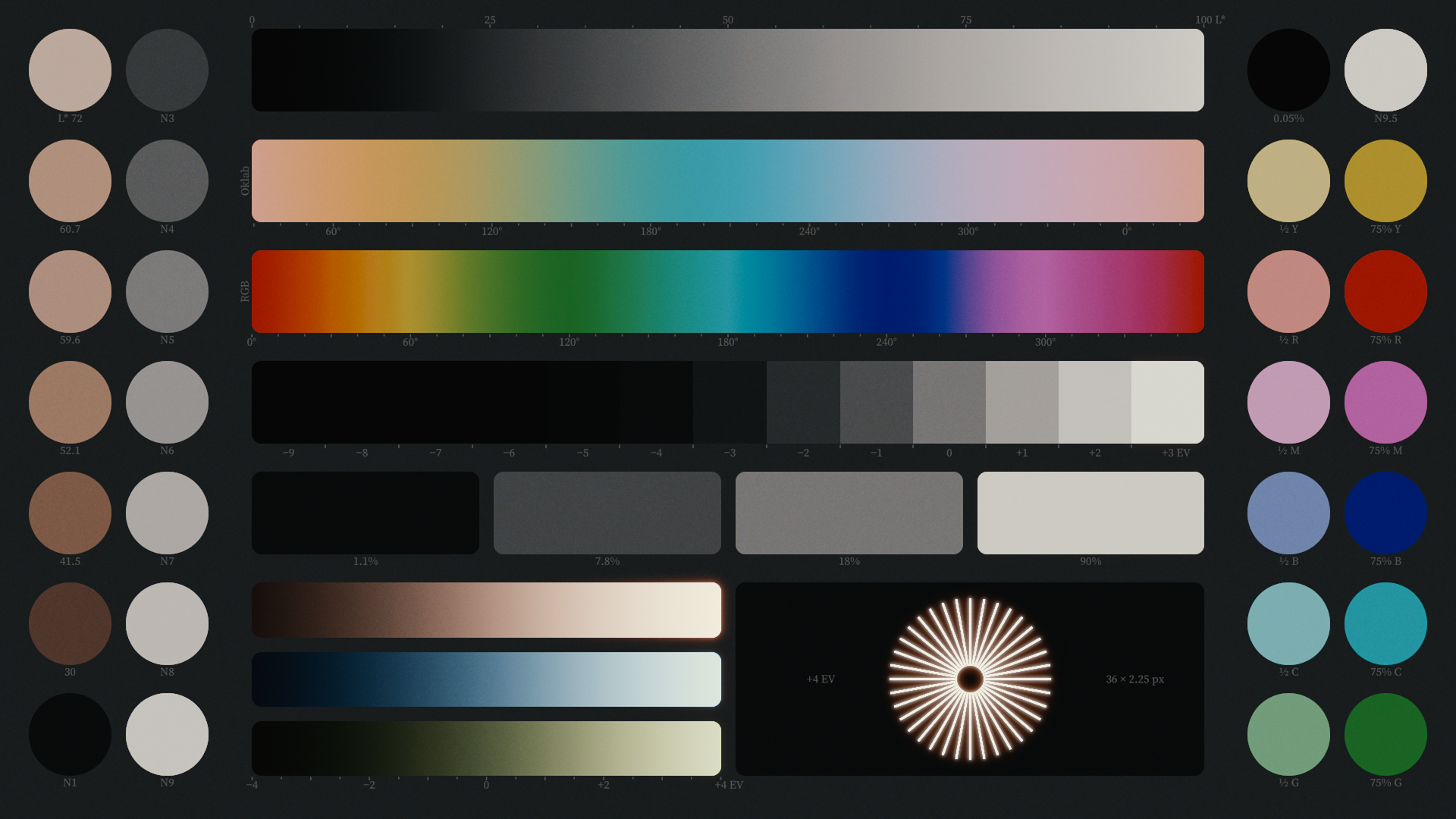
A labelled surrogate inspired by the 1972 print, not a reproduction of it, shown after Eastman Color Negative 5247. No data of this film is registered: its characteristic curves, spectral sensitivity and dyes are those of Eastman EXR Color Print Film 5386, a proxy, unchanged. Its ECP process is an assumption and is not modelled.
Response curves and the evidence behind the model
Compare manufacturer data with Ashigrain’s response on the same axes. These curves show how the model is calibrated to its sources; they do not establish a match to photographed film.
Characteristic response
Model limits
These images show the film model in use. Spectral response, lighting and viewing conditions include approximations. Halation, bloom, grain size, weave and flicker are not fully measured for each film. The look of real film also depends on development and print timing.
- This is a labelled surrogate inspired by the 1972 Eastman Color Print Film 5381, rather than a reproduction of it. No sensitometric or spectral data of this film is registered.
- The characteristic curves, spectral sensitivity and dyes are those of Eastman EXR Color Print Film 5386 (Kodak H-1-5386, 1999), a proxy, unchanged; its curves were measured in ECP-2B, not in this film's process.
- Process ECP is an assumption inferred from Kodak's chronology, which names no process for this film; process is not modelled.
- The neutral aim is the proxy's Status A aim (1.10 / 1.06 / 1.03); no aim of this film is registered.
- This is the 1972 film, not the first Eastman Color Print 5381 of 1950.
- Dye fading is not modelled; the model renders a fresh print.
- The source gives no printer lamp or filter spectra. Their spectral response is approximated.
- The available sources do not measure veiling flare during projection. The model approximates its contribution to lifted blacks on screen, so the result is not a measured projection contrast.
Reciprocity: not modelled. Exposure time has no effect on this film.
Film guide: assumptions and practical choices
This preview combines the print film with the named camera negative. In this comparison, the print has no separate exposure index or measured grain response.
Sources
- Characteristic curves: EASTMAN EXR Color Print Film 5386 / 7386 / 2386 / 3386 Technical Data, H-1-5386, February 1999, p. 3
- Process: Eastman Kodak: Chronology of Film (History of Film), live page www.kodak.com/en/motion/page/chronology-of-film/ as served 2026-10-28, p. 1