Barwny film pozytywowy · Film pozytywowy

SuperCinecolor

Trójbarwna kopia Cinecolor na taśmie z emulsją dwustronną.

Planowany materiał

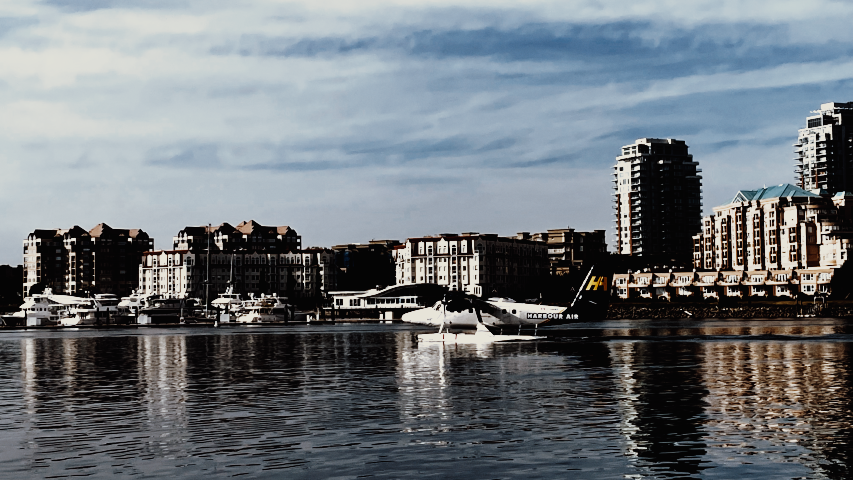
Cinecolor's three-colour print, reconstructed: its dyes, including the Prussian-blue cyan, are traced from Gundelfinger's 1950 paper, with tone borrowed from Agfa CP30. Original vs Ashigrain.

Ansco Color Negative 843, SuperCinecolor

stock
Ansco Color Negative 843
mode
Print
print_film
SuperCinecolor
film_format
Super 35 (4-perf)

W skrócie

Wprowadzenie
koniec lat 1940.
Wycofany
Proces
Cinecolor three-colour machine processing (development to silver, then toning and dyeing of the component images)
Gęstość maksymalna
≈ 4,0

O filmie

SuperCinecolor rozszerzył dwubarwny proces Cinecolor do trzech barw, kopiując z trzech negatywów selekcyjnych na duplitowaną taśmę pozytywową, pokrytą emulsją po obu stronach.

American WideScreen Museum datuje jego wprowadzenie na 1948 rok, a inżynier Cinecolor Alan Gundelfinger przedstawił go Society of Motion Picture Engineers 11 października 1949 roku. Rekordy cyjanowy i magentowy kopiowano najpierw na przeciwległe strony taśmy, a żółty później na stronę cyjanową. Cyjan był tonowanym obrazem żelazowym z błękitu pruskiego, a żółty i magenta były barwnikami zasadowymi zaprawionymi na obrazie z jodku srebra, i Gundelfinger nazwał nieco wyższą gęstość cyjanu w zieleni niż w błękicie najgorszą wadą procesu. Jego pierwszy film fabularny, The Sword of Monte Cristo, wszedł na ekrany w 1951 roku, a po nim tytuły takie jak Jack and the Beanstalk i Abbott and Costello Meet Captain Kidd (oba z 1952 roku) oraz Riders to the Stars (1954). Według Museum Jack and the Beanstalk nakręcono na negatywie Eastman Color i skopiowano w SuperCinecolor, a Cinecolor używał barwnej taśmy kopiowej Eastman do kopii roboczych, lecz do kopii eksploatacyjnych zachował własny proces. Kopie oceniano przy projekcji łukowej, a proces stosowano też w serialach telewizyjnych. Według Museum Cinecolor zakończył działalność w 1954 roku, a Technicolor kupił jego majątek.

Źródła tej historii
  1. Cinecolor Three-Color Process (Alan M. Gundelfinger, Journal of the SMPTE 54, January 1950), Society of Motion Picture and Television Engineers
  2. Supercinecolor / Natural Color, Timeline of Historical Film Colors, University of Zurich
  3. Cinecolor, American WideScreen Museum

Charakter obrazu

SuperCinecolor był trójbarwnym procesem kopiowym Cinecolor z końca lat 40., kopiowanym z negatywów selekcyjnych na taśmę z emulsją po obu stronach. Jego pierwszy film fabularny, The Sword of Monte Cristo, wszedł na ekrany w 1951 roku. Ashigrain go rekonstruuje: barwniki odrysowano z artykułu Cinecolor z 1950 roku, a tonalność i czułość zapożyczono z Agfa Print CP30.


SuperCinecolor: przykładowa klatka: OryginałSuperCinecolor: przykładowa klatka: Ashigrain

Najlepsze zastosowania

  1. Filmy płaszcza i szpady oraz fantasy z początku lat 50.
  2. Filmy science fiction klasy B z lat 50.
  3. Porównanie trójbarwnego Cinecolor z Technicolor

Porównaj filmy pozytywowe

Planowany materiał

The same Vision3 500T night frame on each print film: how deep the blacks go, how the highlights roll off and how the colour separates.

Kodak Vision3 500T, Kodak Vision Premier Color Print Film 2393

stock
Kodak Vision3 500T
mode
Print
print_film
Kodak Vision Premier Color Print Film 2393
film_format
Super 35 (4-perf)
Kodak Vision3 500T → Kodak Vision Premier Color Print Film 2393

Planowany materiał

The same Vision3 500T night frame on each print film: how deep the blacks go, how the highlights roll off and how the colour separates.

Kodak Vision3 500T, Eastman Color SP Print Film 5383

stock
Kodak Vision3 500T
mode
Print
print_film
Eastman Color SP Print Film 5383
film_format
Super 35 (4-perf)
Kodak Vision3 500T → Eastman Color SP Print Film 5383

Planowany materiał

The same Vision3 500T night frame on each print film: how deep the blacks go, how the highlights roll off and how the colour separates.

Kodak Vision3 500T, Eastman Color Print Film 5384

stock
Kodak Vision3 500T
mode
Print
print_film
Eastman Color Print Film 5384
film_format
Super 35 (4-perf)
Kodak Vision3 500T → Eastman Color Print Film 5384

Planowany materiał

The same Vision3 500T night frame on each print film: how deep the blacks go, how the highlights roll off and how the colour separates.

Kodak Vision3 500T, Fujifilm Eterna-CP 3521XD

stock
Kodak Vision3 500T
mode
Print
print_film
Fujifilm Eterna-CP 3521XD
film_format
Super 35 (4-perf)
Kodak Vision3 500T → Fujifilm Eterna-CP 3521XD

Planowany materiał

The same Vision3 500T night frame on each print film: how deep the blacks go, how the highlights roll off and how the colour separates.

Kodak Vision3 500T, Du Pont Color Release Positive Type 275

stock
Kodak Vision3 500T
mode
Print
print_film
Du Pont Color Release Positive Type 275
film_format
Super 35 (4-perf)
Kodak Vision3 500T → Du Pont Color Release Positive Type 275

Planowany materiał

The same Vision3 500T night frame on each print film: how deep the blacks go, how the highlights roll off and how the colour separates.

Kodak Vision3 500T, Fujifilm Eterna-CP 3523XD

stock
Kodak Vision3 500T
mode
Print
print_film
Fujifilm Eterna-CP 3523XD
film_format
Super 35 (4-perf)
Kodak Vision3 500T → Fujifilm Eterna-CP 3523XD

Planowany materiał

The same Vision3 500T night frame on each print film: how deep the blacks go, how the highlights roll off and how the colour separates.

Kodak Vision3 500T, Kodak Vision Color Print Film 2383

stock
Kodak Vision3 500T
mode
Print
print_film
Kodak Vision Color Print Film 2383
film_format
Super 35 (4-perf)
Kodak Vision3 500T → Kodak Vision Color Print Film 2383

Planowany materiał

The same Vision3 500T night frame on each print film: how deep the blacks go, how the highlights roll off and how the colour separates.

Kodak Vision3 500T, Fujifilm Eterna-CP 3513DI

stock
Kodak Vision3 500T
mode
Print
print_film
Fujifilm Eterna-CP 3513DI
film_format
Super 35 (4-perf)
Kodak Vision3 500T → Fujifilm Eterna-CP 3513DI

Planowany materiał

The same Vision3 500T night frame on each print film: how deep the blacks go, how the highlights roll off and how the colour separates.

Kodak Vision3 500T, Eastman EXR Color Print Film 5386

stock
Kodak Vision3 500T
mode
Print
print_film
Eastman EXR Color Print Film 5386
film_format
Super 35 (4-perf)
Kodak Vision3 500T → Eastman EXR Color Print Film 5386

Planowany materiał

The same Vision3 500T night frame on each print film: how deep the blacks go, how the highlights roll off and how the colour separates.

Kodak Vision3 500T, Eastman Color Print Film 5381 (1972)

stock
Kodak Vision3 500T
mode
Print
print_film
Eastman Color Print Film 5381 (1972)
film_format
Super 35 (4-perf)
Kodak Vision3 500T → Eastman Color Print Film 5381 (1972)

Planowany materiał

The same Vision3 500T night frame on each print film: how deep the blacks go, how the highlights roll off and how the colour separates.

Kodak Vision3 500T, Eastman Color Print Film 5385

stock
Kodak Vision3 500T
mode
Print
print_film
Eastman Color Print Film 5385
film_format
Super 35 (4-perf)
Kodak Vision3 500T → Eastman Color Print Film 5385

Planowany materiał

The same Vision3 500T night frame on each print film: how deep the blacks go, how the highlights roll off and how the colour separates.

Kodak Vision3 500T, Agfa CP30 Colour Print Film

stock
Kodak Vision3 500T
mode
Print
print_film
Agfa CP30 Colour Print Film
film_format
Super 35 (4-perf)
Kodak Vision3 500T → Agfa CP30 Colour Print Film

Planowany materiał

The same Vision3 500T night frame on each print film: how deep the blacks go, how the highlights roll off and how the colour separates.

Kodak Vision3 500T, SuperCinecolor

stock
Kodak Vision3 500T
mode
Print
print_film
SuperCinecolor
film_format
Super 35 (4-perf)
Kodak Vision3 500T → SuperCinecolor

Planowany materiał

The same Vision3 500T night frame on each print film. On this two-colour print (a labelled surrogate) every colour falls between blue-green and red-orange: how deep the blacks go, how the highlights roll off and which lights keep their hue.

Kodak Vision3 500T, Cinecolor (two-colour)

stock
Kodak Vision3 500T
mode
Print
print_film
Cinecolor (two-colour)
film_format
Super 35 (4-perf)
Kodak Vision3 500T → Cinecolor (two-colour)

Planowany materiał

The same Vision3 500T night frame on each print film: how deep the blacks go, how the highlights roll off and how the colour separates.

Kodak Vision3 500T, Gevacolor Positive 953

stock
Kodak Vision3 500T
mode
Print
print_film
Gevacolor Positive 953
film_format
Super 35 (4-perf)
Kodak Vision3 500T → Gevacolor Positive 953

Planowany materiał

The same Vision3 500T night frame on each print film: how deep the blacks go, how the highlights roll off and how the colour separates.

Kodak Vision3 500T, Gevacolor Print 9.85

stock
Kodak Vision3 500T
mode
Print
print_film
Gevacolor Print 9.85
film_format
Super 35 (4-perf)
Kodak Vision3 500T → Gevacolor Print 9.85

Planowany materiał

The same Vision3 500T night frame on each print film: how deep the blacks go, how the highlights roll off and how the colour separates.

Kodak Vision3 500T, Gevacolor Print 986

stock
Kodak Vision3 500T
mode
Print
print_film
Gevacolor Print 986
film_format
Super 35 (4-perf)
Kodak Vision3 500T → Gevacolor Print 986

Planowany materiał

The same Vision3 500T night frame on each print film: how deep the blacks go, how the highlights roll off and how the colour separates.

Kodak Vision3 500T, Gevacolor Print 982

stock
Kodak Vision3 500T
mode
Print
print_film
Gevacolor Print 982
film_format
Super 35 (4-perf)
Kodak Vision3 500T → Gevacolor Print 982

Planowany materiał

The same Vision3 500T night frame on each print film: how deep the blacks go, how the highlights roll off and how the colour separates.

Kodak Vision3 500T, Ferraniacolor Positive

stock
Kodak Vision3 500T
mode
Print
print_film
Ferraniacolor Positive
film_format
Super 35 (4-perf)
Kodak Vision3 500T → Ferraniacolor Positive

Planowany materiał

The same Vision3 500T night frame on each print film: how deep the blacks go, how the highlights roll off and how the colour separates.

Kodak Vision3 500T, 3M Color Positive 650

stock
Kodak Vision3 500T
mode
Print
print_film
3M Color Positive 650
film_format
Super 35 (4-perf)
Kodak Vision3 500T → 3M Color Positive 650

Planowany materiał

The same Vision3 500T night frame on each print film: how deep the blacks go, how the highlights roll off and how the colour separates.

Kodak Vision3 500T, Fujicolor Positive F-CP 3510

stock
Kodak Vision3 500T
mode
Print
print_film
Fujicolor Positive F-CP 3510
film_format
Super 35 (4-perf)
Kodak Vision3 500T → Fujicolor Positive F-CP 3510

Planowany materiał

The same Vision3 500T night frame on each print film: how deep the blacks go, how the highlights roll off and how the colour separates.

Kodak Vision3 500T, Fujicolor Positive F-CP 3519

stock
Kodak Vision3 500T
mode
Print
print_film
Fujicolor Positive F-CP 3519
film_format
Super 35 (4-perf)
Kodak Vision3 500T → Fujicolor Positive F-CP 3519

Planowany materiał

The same Vision3 500T night frame on each print film: how deep the blacks go, how the highlights roll off and how the colour separates.

Kodak Vision3 500T, Fujifilm Eterna-CP 3512

stock
Kodak Vision3 500T
mode
Print
print_film
Fujifilm Eterna-CP 3512
film_format
Super 35 (4-perf)
Kodak Vision3 500T → Fujifilm Eterna-CP 3512

Planowany materiał

The same Vision3 500T night frame on each print film: how deep the blacks go, how the highlights roll off and how the colour separates.

Kodak Vision3 500T, Eastman Color Print 5381 (1950)

stock
Kodak Vision3 500T
mode
Print
print_film
Eastman Color Print 5381 (1950)
film_format
Super 35 (4-perf)
Kodak Vision3 500T → Eastman Color Print 5381 (1950)

Planowany materiał

The same Vision3 500T night frame on each print film. On this blue-sensitive black-and-white print the colour negative turns grey: how deep the blacks go, how the highlights roll off and how dark the reds and greens print.

Kodak Vision3 500T, Eastman Fine Grain Release Positive 5302

stock
Kodak Vision3 500T
mode
Print
print_film
Eastman Fine Grain Release Positive 5302
film_format
Super 35 (4-perf)
Kodak Vision3 500T → Eastman Fine Grain Release Positive 5302

Planowany materiał

The same Vision3 500T night frame on each print film: how deep the blacks go, how the highlights roll off and how the colour separates.

Kodak Vision3 500T, Ansco Color Print 848

stock
Kodak Vision3 500T
mode
Print
print_film
Ansco Color Print 848
film_format
Super 35 (4-perf)
Kodak Vision3 500T → Ansco Color Print 848

Planowany materiał

The same Vision3 500T night frame on each print film. On this blue-sensitive black-and-white print the colour negative turns grey: how deep the blacks go, how the highlights roll off and how dark the red neon and skin print.

Kodak Vision3 500T, Kodak B&W Print Film 2302

stock
Kodak Vision3 500T
mode
Print
print_film
Kodak B&W Print Film 2302
film_format
Super 35 (4-perf)
Kodak Vision3 500T → Kodak B&W Print Film 2302

Planowany materiał

The same Vision3 500T night frame on each print film: how deep the blacks go, how the highlights roll off and how the colour separates.

Kodak Vision3 500T, Svema TsP-11

stock
Kodak Vision3 500T
mode
Print
print_film
Svema TsP-11
film_format
Super 35 (4-perf)
Kodak Vision3 500T → Svema TsP-11

Planowany materiał

The same Vision3 500T night frame on each print film. On this black-and-white print the colour negative turns grey: how deep the blacks go, how the highlights roll off and how the coloured lights and skin translate to grey.

Kodak Vision3 500T, Svema MZ-3

stock
Kodak Vision3 500T
mode
Print
print_film
Svema MZ-3
film_format
Super 35 (4-perf)
Kodak Vision3 500T → Svema MZ-3

Planowany materiał

The same Vision3 500T night frame on each print film. On this blue-sensitive black-and-white print the colour negative turns grey: how deep the blacks go, how the highlights roll off and how the coloured lights and skin translate to grey.

Kodak Vision3 500T, ORWO PF 2 Positive Print Film

stock
Kodak Vision3 500T
mode
Print
print_film
ORWO PF 2 Positive Print Film
film_format
Super 35 (4-perf)
Kodak Vision3 500T → ORWO PF 2 Positive Print Film

Planowany materiał

The same Vision3 500T night frame on each print film: how deep the blacks go, how the highlights roll off and how the colour separates.

Kodak Vision3 500T, Technicolor Dye Transfer (1997 revival)

stock
Kodak Vision3 500T
mode
Print
print_film
Technicolor Dye Transfer (1997 revival)
film_format
Super 35 (4-perf)
Kodak Vision3 500T → Technicolor Dye Transfer (1997 revival)

Planowany materiał

The same Vision3 500T night frame on each print film: how deep the blacks go, how the highlights roll off and how the colour separates.

Kodak Vision3 500T, Svema TsP-8R

stock
Kodak Vision3 500T
mode
Print
print_film
Svema TsP-8R
film_format
Super 35 (4-perf)
Kodak Vision3 500T → Svema TsP-8R

Planowany materiał

The same Vision3 500T night frame on each print film: how deep the blacks go, how the highlights roll off and how the colour separates.

Kodak Vision3 500T, Shostka Colour Positive (1950s)

stock
Kodak Vision3 500T
mode
Print
print_film
Shostka Colour Positive (1950s)
film_format
Super 35 (4-perf)
Kodak Vision3 500T → Shostka Colour Positive (1950s)

Planowany materiał

The same Vision3 500T night frame on each print film: how deep the blacks go, how the highlights roll off and how the colour separates.

Kodak Vision3 500T, Technicolor Dye Transfer (Process IV)

stock
Kodak Vision3 500T
mode
Print
print_film
Technicolor Dye Transfer (Process IV)
film_format
Super 35 (4-perf)
Kodak Vision3 500T → Technicolor Dye Transfer (Process IV)

Planowany materiał

The same Vision3 500T night frame on each print film: how deep the blacks go, how the highlights roll off and how the colour separates.

Kodak Vision3 500T, Gasparcolor Print

stock
Kodak Vision3 500T
mode
Print
print_film
Gasparcolor Print
film_format
Super 35 (4-perf)
Kodak Vision3 500T → Gasparcolor Print

Planowany materiał

The same Vision3 500T night frame on each print film. On this two-colour print (a labelled surrogate) every colour falls between a blue and a red dye: how deep the blacks go, how the highlights roll off and which lights keep their hue.

Kodak Vision3 500T, Trucolor Print (two-colour)

stock
Kodak Vision3 500T
mode
Print
print_film
Trucolor Print (two-colour)
film_format
Super 35 (4-perf)
Kodak Vision3 500T → Trucolor Print (two-colour)

Planowany materiał

The same Vision3 500T night frame on each print film: how deep the blacks go, how the highlights roll off and how the colour separates.

Kodak Vision3 500T, Kodak Vision Color Teleprint Film 2395

stock
Kodak Vision3 500T
mode
Print
print_film
Kodak Vision Color Teleprint Film 2395
film_format
Super 35 (4-perf)
Kodak Vision3 500T → Kodak Vision Color Teleprint Film 2395

Ta sama nocna klatka z filmu Kodak Vision3 500T, skopiowana na każdy pozytyw.

Pozytyw · najpierw najgłębsza czerńRodzajGęstość maksymalna, Status A · wyżej znaczy głębsza czerńLata produkcji
Kodak Vision Premier Color Print Film 2393Kodak Vision Premier Color Print Film 2393+1.5 głębsza niż SuperCinecolorKolor5.51998
Eastman Color SP Print Film 5383Eastman Color SP Print Film 5383Produkowany w latach 1974–1983 · +1.0 głębsza niż SuperCinecolorKolor5.01974–83
Eastman Color Print Film 5384Eastman Color Print Film 5384+0.9 głębsza niż SuperCinecolorKolor4.91981
Fujifilm Eterna-CP 3521XDFujifilm Eterna-CP 3521XD+0.8 głębsza niż SuperCinecolorKolor4.82007
Du Pont Color Release Positive Type 275Du Pont Color Release Positive Type 275+0.7 głębsza niż SuperCinecolorKolor4.71949
Fujifilm Eterna-CP 3523XDFujifilm Eterna-CP 3523XD+0.5 głębsza niż SuperCinecolorKolor4.52010
Kodak Vision Color Print Film 2383Kodak Vision Color Print Film 2383Produkowany od 1998, nadal w produkcji · +0.1 głębsza niż SuperCinecolorKolor4.11998–
Fujifilm Eterna-CP 3513DIFujifilm Eterna-CP 3513DItaka sama jak SuperCinecolorKolor4.02005
Eastman EXR Color Print Film 5386Eastman EXR Color Print Film 5386taka sama jak SuperCinecolorKolor4.01993
Eastman Color Print Film 5381 (1972)Eastman Color Print Film 5381 (1972)taka sama jak SuperCinecolorKolor4.01972
Eastman Color Print Film 5385Eastman Color Print Film 5385taka sama jak SuperCinecolorKolor4.01962
Agfa CP30 Colour Print FilmAgfa CP30 Colour Print Filmtaka sama jak SuperCinecolorKolor4.02003
SuperCinecolorSuperCinecolorten pozytywKolor4.01948
Cinecolor (two-colour)Cinecolor (two-colour)taka sama jak SuperCinecolorKolor4.01932
Gevacolor Positive 953Gevacolor Positive 953taka sama jak SuperCinecolorKolor4.01958
Gevacolor Print 9.85Gevacolor Print 9.85taka sama jak SuperCinecolorKolor4.01971
Gevacolor Print 986Gevacolor Print 986taka sama jak SuperCinecolorKolor4.01975
Gevacolor Print 982Gevacolor Print 982taka sama jak SuperCinecolorKolor4.01980
Ferraniacolor PositiveFerraniacolor Positivetaka sama jak SuperCinecolorKolor4.01949
3M Color Positive 6503M Color Positive 650taka sama jak SuperCinecolorKolor4.01970
Fujicolor Positive F-CP 3510Fujicolor Positive F-CP 3510−0.2 jaśniejsza niż SuperCinecolorKolor3.82003
Fujicolor Positive F-CP 3519Fujicolor Positive F-CP 3519−0.2 jaśniejsza niż SuperCinecolorKolor3.82001
Fujifilm Eterna-CP 3512Fujifilm Eterna-CP 3512Produkowany w latach 2010–2013 · −0.3 jaśniejsza niż SuperCinecolorKolor3.72010–13
Eastman Color Print 5381 (1950)Eastman Color Print 5381 (1950)Produkowany w latach 1950–1953 · −0.5 jaśniejsza niż SuperCinecolorKolor3.51950–53
Eastman Fine Grain Release Positive 5302Eastman Fine Grain Release Positive 5302−0.6 jaśniejsza niż SuperCinecolorCz.-b.3.41950
Ansco Color Print 848Ansco Color Print 848−0.7 jaśniejsza niż SuperCinecolorKolor3.31951
Kodak B&W Print Film 2302Kodak B&W Print Film 2302Produkowany od 2000, nadal w produkcji · −0.8 jaśniejsza niż SuperCinecolorCz.-b.3.22000–
Svema TsP-11Svema TsP-11−1.0 jaśniejsza niż SuperCinecolorKolor3.01979
Svema MZ-3Svema MZ-3−1.0 jaśniejsza niż SuperCinecolorCz.-b.3.01979
ORWO PF 2 Positive Print FilmORWO PF 2 Positive Print Film−1.0 jaśniejsza niż SuperCinecolorCz.-b.3.02014
Technicolor Dye Transfer (1997 revival)Technicolor Dye Transfer (1997 revival)−1.2 jaśniejsza niż SuperCinecolorKolor2.81997
Svema TsP-8RSvema TsP-8R−1.2 jaśniejsza niż SuperCinecolorKolor2.81969
Shostka Colour Positive (1950s)Shostka Colour Positive (1950s)−1.2 jaśniejsza niż SuperCinecolorKolor2.81948
Technicolor Dye Transfer (Process IV)Technicolor Dye Transfer (Process IV)−1.2 jaśniejsza niż SuperCinecolorKolor2.81932
Gasparcolor PrintGasparcolor Print−1.3 jaśniejsza niż SuperCinecolorKolor2.71932
Trucolor Print (two-colour)Trucolor Print (two-colour)−1.4 jaśniejsza niż SuperCinecolorKolor2.61945
Kodak Vision Color Teleprint Film 2395Kodak Vision Color Teleprint Film 2395−1.6 jaśniejsza niż SuperCinecolorKolor2.41999

Nauka i źródła

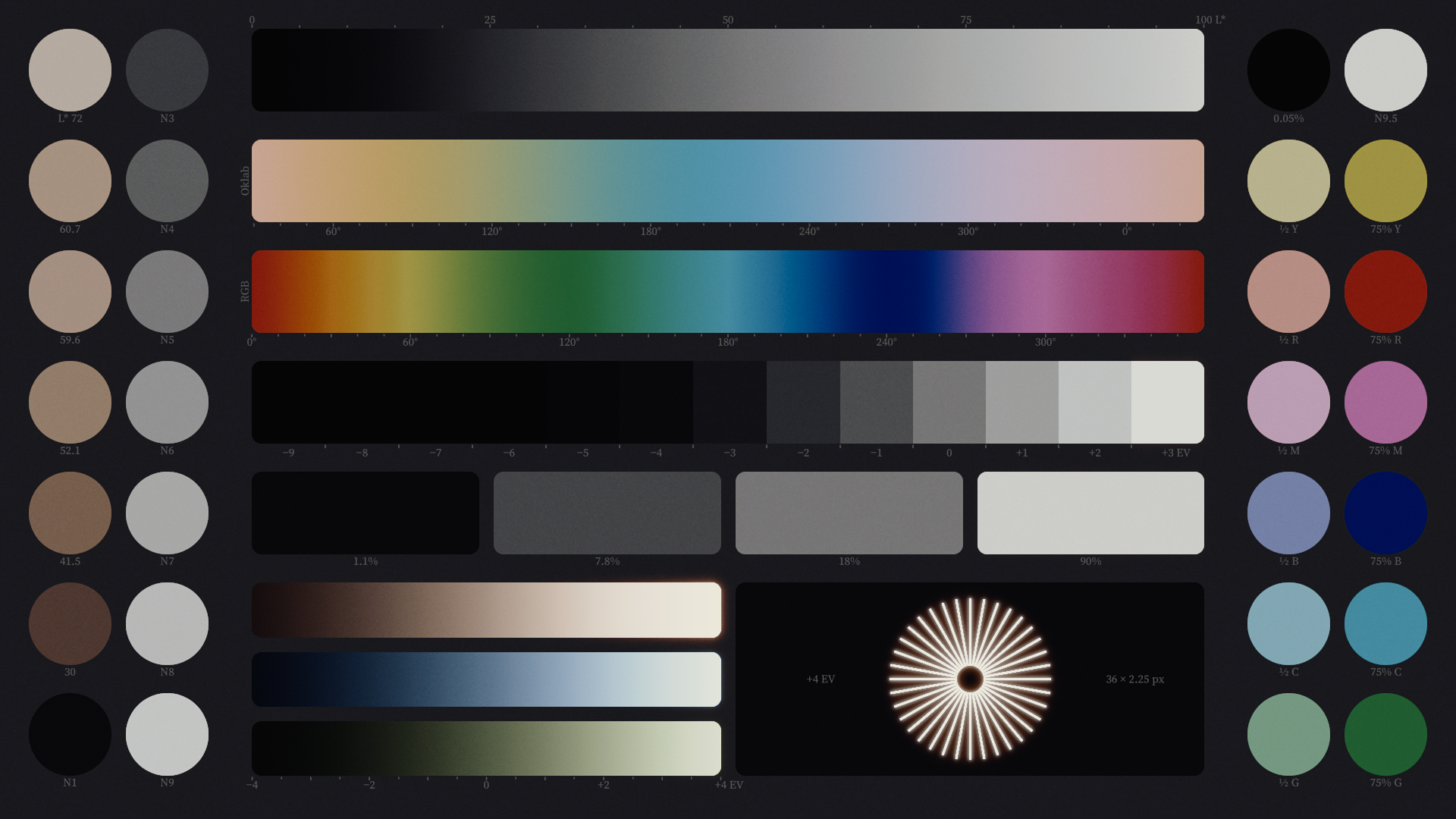
SuperCinecolor: tablica kalibracyjna: OryginałSuperCinecolor: tablica kalibracyjna: Przetworzony
Syntetyczna tablica testowa (odcienie skóry, szarości Munsell, paski kolorów, rampy szarości i odcieni, klin schodkowy, przejście świateł barw pamięciowych, gwiazda halacji) przed i po przejściu przez pełny potok Ashigrain: Kodak Vision3 50D skopiowany na SuperCinecolor, Super 35 4-perf, domyślne parametry, ekspozycja +0.66 stopnia dla dopasowania średniej szarości oryginału, klatka 0.

Trójbarwna kopia, pokazana po Ansco Color Negative 843. Trzy barwniki i ich neutralność odrysowano z artykułu Gundelfingera z 1950 roku; krzywe charakterystyczne i czułości rekordów zapożyczono z Agfa Print CP30, zastępstwa, bo artykuł nie drukuje żadnej krzywej ani czułości.

Krzywe odpowiedzi i podstawy modelu

Porównaj dane producenta z odpowiedzią Ashigrain na tych samych osiach. Krzywe pokazują kalibrację modelu do źródeł; nie potwierdzają zgodności z obrazem zarejestrowanym na filmie.

Odpowiedź charakterystyczna

Gęstość względem log H (luksosekundy) dla kanałów R, G, B. R – kółka, G – kwadraty, B – trójkąty, N – romby; wypełnione znaczniki i linie ciągłe oznaczają wartości zdigitalizowane, a puste znaczniki i linie przerywane – wartości symulowane: zdigitalizowane i symulowane.0.00.51.01.52.0log H (luksosekundy)0.01.02.03.04.0Gęstość

Ograniczenia modelu

Te obrazy pokazują działanie modelu filmu. Odpowiedź widmowa, oświetlenie i warunki oglądania zawierają przybliżenia, a halacja, poświata, rozmiar ziarna, niestabilność i migotanie nie są w pełni zmierzone dla każdego filmu. Rzeczywiste ujęcie zależy też od wywołania i ustawień kopiowania.

  • Nie wydrukowano żadnej krzywej charakterystycznej, gammy rekordów ani czułości widmowej SuperCinecolor. Tonalność i czułości rekordów to zdigitalizowane krzywe Agfa Print CP30, bez zmian, zastępstwo, a nie dane tego procesu.
  • Trzy barwniki i ich neutralność odrysowano z rastrowej ryciny w artykule Gundelfingera z 1950 roku, w jednym przejściu. Ogony żółtego i magenty powyżej 600 nm biegną razem wzdłuż dolnej krawędzi wykresu i są przy niej utrzymane.
  • Artykuł podaje tylko chromatyczność łuku projekcyjnego (x 0.3408, y 0.3583), a nie jego widmo; przyjęto widmo serii światła dziennego o tej chromatyczności.
  • Dla SuperCinecolor nie wydrukowano ani MTF, ani ziarnistości.
  • Źródło nie podaje widm lampy ani filtrów kopiarki. Ich odpowiedź spektralna jest przybliżona.
  • Modelowane światło rozproszone projekcji podnosi czerń na ekranie. Jego siła jest założeniem, bo dostępne źródła jej nie mierzą, więc nie określa zmierzonego kontrastu projekcji.

Efekt Schwarzschilda: niemodelowany. Czas naświetlania nie wpływa na ten film.

Przewodnik po filmach: założenia i praktyczne wybory

Ten podgląd łączy pozytyw ze wskazanym negatywem kamerowym. W tym porównaniu pozytyw nie ma osobnego wskaźnika ekspozycji ani własnej zmierzonej odpowiedzi ziarna.

Źródła

  1. Characteristic curves: AGFA PRINT CP30 colour print film product info / technical data, 17/10/2011, s. 5

Wprowadź ten film do swojej korekcji barwnej.

Wszystkie filmy w jednym zakupie, bez abonamentu.