 Ashigrain
Barwny film pozytywowy · Film pozytywowy
Ferraniacolor Positive
Włoska barwna kopia firmy Ferrania z lat 50.
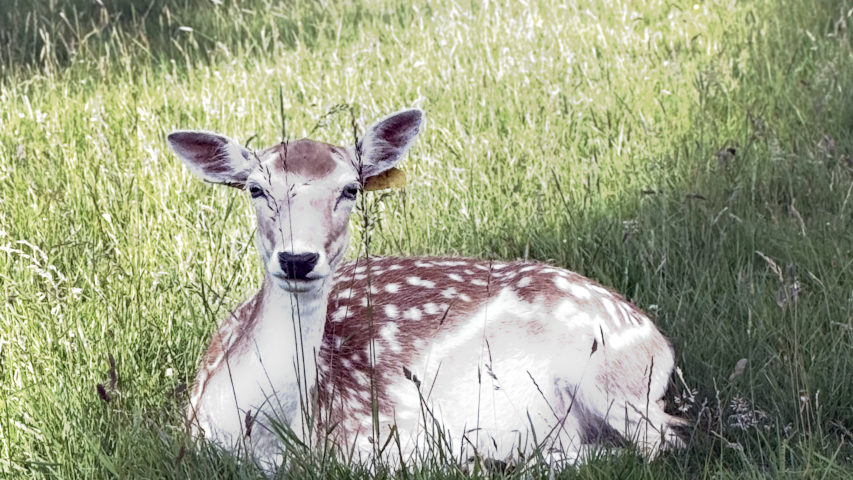
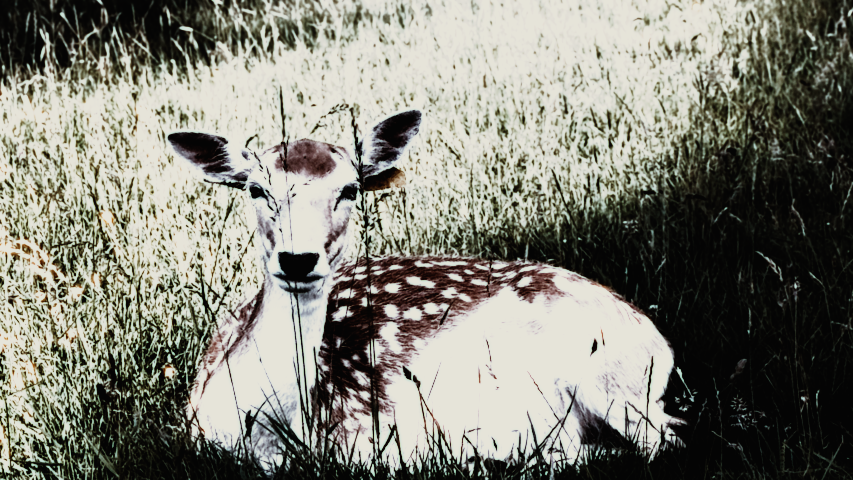
Ferrania's 1950s colour print as a labelled surrogate on Agfa CP30's curves, for Italian cinema of the 1950s; it renders a fresh print, not a faded one. Original vs Ashigrain.
W skrócie
- Wprowadzenie
- ok. 1949
- Wycofany
- Proces
- Ferrania colour positive process (not documented)
- Gęstość maksymalna
- ≈ 4,0
O filmie
Ferraniacolor Positive był barwną taśmą kopiową systemu Ferraniacolor, chromogenicznego jednotaśmowego systemu barwnego włoskiego producenta taśm Ferrania.
Timeline of Historical Film Colors datuje system na lata 1949–1966, czego nie potwierdza żadne drugie źródło. Jego sprzęgacze znajdowały się w warstwach taśmy, jak w innych chromogenicznych taśmach jednotaśmowych. Galerie Timeline obejmują włoskie filmy krótkometrażowe z lat 50. nakręcone w Ferraniacolor, takie jak Gente della laguna (1954) i I fidanzati (1957). Pokazują też, że używano go do kopii z negatywów Eastman Color: pozytyw Ferraniacolor czechosłowackiego filmu fabularnego Smrt v sedle (1958), skopiowany z negatywu Eastmancolor, przechowuje Narodowe Archiwum Filmowe w Pradze. Ta kopia wyblakła, jak często zachowane kopie Ferraniacolor. Timeline łączy późniejszą taśmę barwną 3M z Ferraniacolor w jednym haśle.
Źródła tej historii
- Ferrania color / Ferraniacolor / 3M color, Timeline of Historical Film Colors, University of Zurich
Charakter obrazu
Ferraniacolor Positive był taśmą kopiową chromogenicznego systemu barwnego firmy Ferrania, datowanego na lata około 1949–1966. Wśród zachowanych kopii są pozytywy Ferraniacolor z negatywów Eastman Color, często wyblakłe. Wersja Ashigrain to oznaczony zamiennik, model inspirowany kopią, a nie jej reprodukcja.




Najlepsze zastosowania
- Kino włoskie lat 50.
- Europejskie kopie eksploatacyjne lat 50.
- Porównanie Ferraniacolor z 3M Color Positive
Porównaj filmy pozytywowe
The same Vision3 500T night frame on each print film: how deep the blacks go, how the highlights roll off and how the colour separates.
The same Vision3 500T night frame on each print film: how deep the blacks go, how the highlights roll off and how the colour separates.
The same Vision3 500T night frame on each print film: how deep the blacks go, how the highlights roll off and how the colour separates.
The same Vision3 500T night frame on each print film: how deep the blacks go, how the highlights roll off and how the colour separates.
The same Vision3 500T night frame on each print film: how deep the blacks go, how the highlights roll off and how the colour separates.
The same Vision3 500T night frame on each print film: how deep the blacks go, how the highlights roll off and how the colour separates.
The same Vision3 500T night frame on each print film: how deep the blacks go, how the highlights roll off and how the colour separates.
The same Vision3 500T night frame on each print film: how deep the blacks go, how the highlights roll off and how the colour separates.
The same Vision3 500T night frame on each print film: how deep the blacks go, how the highlights roll off and how the colour separates.
The same Vision3 500T night frame on each print film: how deep the blacks go, how the highlights roll off and how the colour separates.
The same Vision3 500T night frame on each print film: how deep the blacks go, how the highlights roll off and how the colour separates.
The same Vision3 500T night frame on each print film: how deep the blacks go, how the highlights roll off and how the colour separates.
The same Vision3 500T night frame on each print film: how deep the blacks go, how the highlights roll off and how the colour separates.
The same Vision3 500T night frame on each print film. On this two-colour print (a labelled surrogate) every colour falls between blue-green and red-orange: how deep the blacks go, how the highlights roll off and which lights keep their hue.
The same Vision3 500T night frame on each print film: how deep the blacks go, how the highlights roll off and how the colour separates.
The same Vision3 500T night frame on each print film: how deep the blacks go, how the highlights roll off and how the colour separates.
The same Vision3 500T night frame on each print film: how deep the blacks go, how the highlights roll off and how the colour separates.
The same Vision3 500T night frame on each print film: how deep the blacks go, how the highlights roll off and how the colour separates.
The same Vision3 500T night frame on each print film: how deep the blacks go, how the highlights roll off and how the colour separates.
The same Vision3 500T night frame on each print film: how deep the blacks go, how the highlights roll off and how the colour separates.
The same Vision3 500T night frame on each print film: how deep the blacks go, how the highlights roll off and how the colour separates.
The same Vision3 500T night frame on each print film: how deep the blacks go, how the highlights roll off and how the colour separates.
The same Vision3 500T night frame on each print film: how deep the blacks go, how the highlights roll off and how the colour separates.
The same Vision3 500T night frame on each print film: how deep the blacks go, how the highlights roll off and how the colour separates.
The same Vision3 500T night frame on each print film. On this blue-sensitive black-and-white print the colour negative turns grey: how deep the blacks go, how the highlights roll off and how dark the reds and greens print.
The same Vision3 500T night frame on each print film: how deep the blacks go, how the highlights roll off and how the colour separates.
The same Vision3 500T night frame on each print film. On this blue-sensitive black-and-white print the colour negative turns grey: how deep the blacks go, how the highlights roll off and how dark the red neon and skin print.
The same Vision3 500T night frame on each print film: how deep the blacks go, how the highlights roll off and how the colour separates.
The same Vision3 500T night frame on each print film. On this black-and-white print the colour negative turns grey: how deep the blacks go, how the highlights roll off and how the coloured lights and skin translate to grey.
The same Vision3 500T night frame on each print film. On this blue-sensitive black-and-white print the colour negative turns grey: how deep the blacks go, how the highlights roll off and how the coloured lights and skin translate to grey.
The same Vision3 500T night frame on each print film: how deep the blacks go, how the highlights roll off and how the colour separates.
The same Vision3 500T night frame on each print film: how deep the blacks go, how the highlights roll off and how the colour separates.
The same Vision3 500T night frame on each print film: how deep the blacks go, how the highlights roll off and how the colour separates.
The same Vision3 500T night frame on each print film: how deep the blacks go, how the highlights roll off and how the colour separates.
The same Vision3 500T night frame on each print film: how deep the blacks go, how the highlights roll off and how the colour separates.
The same Vision3 500T night frame on each print film. On this two-colour print (a labelled surrogate) every colour falls between a blue and a red dye: how deep the blacks go, how the highlights roll off and which lights keep their hue.
The same Vision3 500T night frame on each print film: how deep the blacks go, how the highlights roll off and how the colour separates.
Ta sama nocna klatka z filmu Kodak Vision3 500T, skopiowana na każdy pozytyw.
- Kodak Vision Premier Color Print Film 2393
- Eastman Color SP Print Film 5383
- Eastman Color Print Film 5384
- Fujifilm Eterna-CP 3521XD
- Du Pont Color Release Positive Type 275
- Fujifilm Eterna-CP 3523XD
- Kodak Vision Color Print Film 2383
- Fujifilm Eterna-CP 3513DI
- Eastman EXR Color Print Film 5386
- Eastman Color Print Film 5381 (1972)
- Eastman Color Print Film 5385
- Agfa CP30 Colour Print Film
- SuperCinecolor
- Cinecolor (two-colour)
- Gevacolor Positive 953
- Gevacolor Print 9.85
- Gevacolor Print 986
- Gevacolor Print 982
- Ferraniacolor Positive
- 3M Color Positive 650
- Fujicolor Positive F-CP 3510
- Fujicolor Positive F-CP 3519
- Fujifilm Eterna-CP 3512
- Eastman Color Print 5381 (1950)
- Eastman Fine Grain Release Positive 5302
- Ansco Color Print 848
- Kodak B&W Print Film 2302
- Svema TsP-11
- Svema MZ-3
- ORWO PF 2 Positive Print Film
- Technicolor Dye Transfer (1997 revival)
- Svema TsP-8R
- Shostka Colour Positive (1950s)
- Technicolor Dye Transfer (Process IV)
- Gasparcolor Print
- Trucolor Print (two-colour)
- Kodak Vision Color Teleprint Film 2395
Nauka i źródła

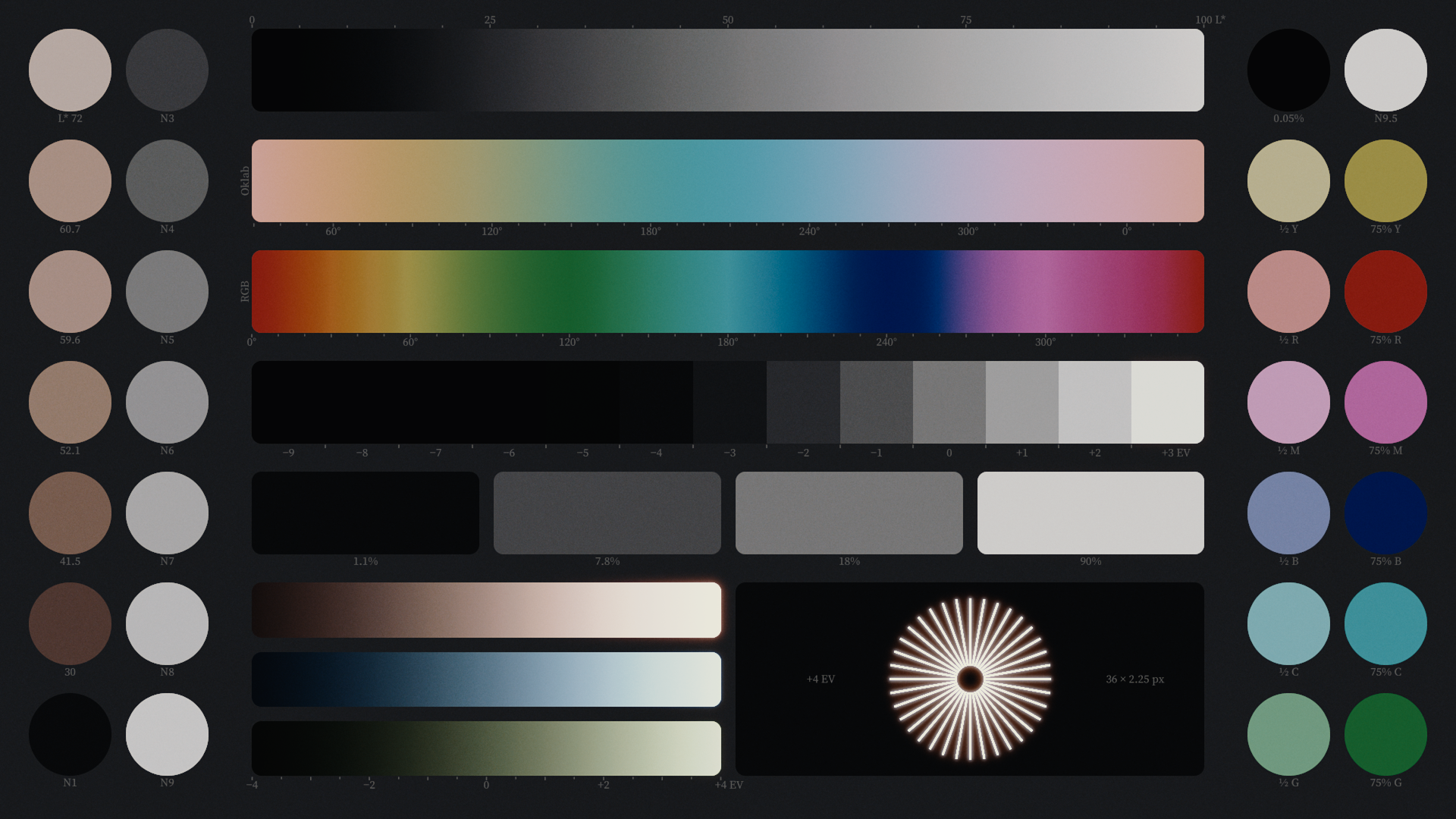
Oznaczony zamiennik inspirowany kopią, a nie reprodukcja Ferraniacolor Positive, pokazany po Ansco Color Negative 843. Nie zarejestrowano żadnych danych tej taśmy: krzywe charakterystyczne, czułość widmowa, MTF i barwniki pochodzą z Agfa Print CP30, użytego jako zastępstwo, bez zmian. Blaknięcie nie jest modelowane; oddaje świeżą kopię.
Krzywe odpowiedzi i podstawy modelu
Porównaj dane producenta z odpowiedzią Ashigrain na tych samych osiach. Krzywe pokazują kalibrację modelu do źródeł; nie potwierdzają zgodności z obrazem zarejestrowanym na filmie.
Odpowiedź charakterystyczna
Ograniczenia modelu
Te obrazy pokazują działanie modelu filmu. Odpowiedź widmowa, oświetlenie i warunki oglądania zawierają przybliżenia, a halacja, poświata, rozmiar ziarna, niestabilność i migotanie nie są w pełni zmierzone dla każdego filmu. Rzeczywiste ujęcie zależy też od wywołania i ustawień kopiowania.
- To oznaczony zamiennik inspirowany Ferraniacolor Positive, a nie jego reprodukcja. Nie zarejestrowano żadnych danych sensytometrycznych ani widmowych taśmy.
- Krzywe charakterystyczne, czułość widmowa, MTF i barwniki pochodzą z Agfa Print CP30, użytego jako zastępstwo, bez zmian. Żadne źródło nie dokumentuje krzywych, barwników ani pochodzenia Ferraniacolor; wybór zastępstwa jest założeniem.
- Proces, równowaga kopiowania i warstwa przeciwodblaskowa są założeniami i nie są modelowane.
- Zachowane kopie są często wyblakłe; blaknięcie nie jest modelowane, a model oddaje świeżą kopię.
- Cel neutralny to zakładany cel zrównoważony na szarość (0.994 / 1.000 / 1.004, Status A); własny cel zastępstwa nie jest używany.
- Źródło nie podaje widm lampy ani filtrów kopiarki. Ich odpowiedź spektralna jest przybliżona.
- Modelowane światło rozproszone projekcji podnosi czerń na ekranie. Jego siła jest założeniem, bo dostępne źródła jej nie mierzą, więc nie określa zmierzonego kontrastu projekcji.
Efekt Schwarzschilda: niemodelowany. Czas naświetlania nie wpływa na ten film.
Przewodnik po filmach: założenia i praktyczne wybory
Ten podgląd łączy pozytyw ze wskazanym negatywem kamerowym. W tym porównaniu pozytyw nie ma osobnego wskaźnika ekspozycji ani własnej zmierzonej odpowiedzi ziarna.
Źródła
- Characteristic curves: AGFA PRINT CP30 colour print film product info / technical data, 17/10/2011, s. 5
Wprowadź ten film do swojej korekcji barwnej.
Wszystkie filmy w jednym zakupie, bez abonamentu.
€199 + VAT