Copie couleur · Pellicule de copie

Trucolor Print (two-colour)

La copie bichrome Trucolor, teintée bleu et rouge.

Média prévu

A labelled surrogate of Trucolor's two-colour print, a blue dye on one side and a red dye on the other: a two-record image with a narrow gamut. Original vs Ashigrain.

Ansco Color Negative 843, Trucolor Print (two-colour)

stock
Ansco Color Negative 843
mode
Print
print_film
Trucolor Print (two-colour)
film_format
Super 35 (4-perf)

En bref

Lancement
milieu des années 1940
Arrêté
Procédé
Trucolor double-coated coupler print (one colour developer forms a blue dye on one side and a red dye on the other; silver bleached and fixed out; silver-compound sound track)
Densité maximale
≈ 2,6

À propos du film

Le Trucolor était un procédé de tirage bichrome exploité par Consolidated Film Industries, le laboratoire de Republic Pictures.

Brian Coe, cité par la Timeline of Historical Film Colors, indique qu’il a été utilisé en 1946 pour Out California Way. Coe le présente comme le seul nouveau procédé bichrome notable après la Seconde Guerre mondiale, quand la plupart des méthodes bichromes autres que le Cinecolor étaient dépassées, et l’American WideScreen Museum le décrit comme l’équivalent du Cinecolor chez Republic. Les copies étaient tirées de négatifs bipack, surtout pour des films de série B. Un rapport de 1948 de la Society of Motion Picture Engineers décrit le film de tirage comme un support de sécurité couché des deux côtés d’émulsions positives contenant des coupleurs chromogènes, l’un formant un colorant bleu et l’autre un colorant rouge dans le même révélateur. Le blanchiment et le fixage éliminaient ensuite l’argent, laissant deux images de colorant, tandis que la piste sonore restait un composé d’argent. Coe écrit qu’après 1950 le Trucolor utilisait des films couleur modernes, et qu’en 1954 le procédé bichrome était dépassé et son dernier service de tirage avait fermé.

Sources de cet historique
  1. Trucolor 2 color, Timeline of Historical Film Colors
  2. Report of SMPE Progress Committee (Journal of the SMPE 50, June 1948, pp. 523–542), Society of Motion Picture Engineers, Internet Archive
  3. Cinecolor, American WideScreen Museum

Le rendu

Le Trucolor était un procédé de tirage bichrome de Consolidated Film Industries, le laboratoire de Republic Pictures, en usage dès 1946. Son film était couché des deux côtés, formant un colorant bleu sur l’un et un colorant rouge sur l’autre. La version d’Ashigrain est un substitut déclaré, un modèle inspiré de la copie et non une reproduction.
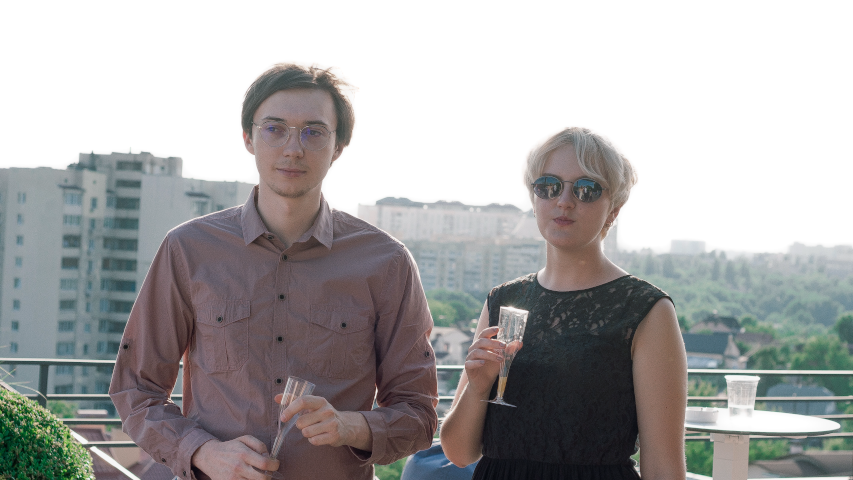

Image d’exemple : Trucolor Print (two-colour) : OriginalImage d’exemple : Trucolor Print (two-colour) : Ashigrain

Idéale pour

  1. Films de série B de Republic, fin des années 1940
  2. Comparer Trucolor et Cinecolor
  3. Pastiche d’époque bichrome

Comparer les films de copie

Média prévu

The same Vision3 500T night frame on each print film: how deep the blacks go, how the highlights roll off and how the colour separates.

Kodak Vision3 500T, Kodak Vision Premier Color Print Film 2393

stock
Kodak Vision3 500T
mode
Print
print_film
Kodak Vision Premier Color Print Film 2393
film_format
Super 35 (4-perf)
Kodak Vision3 500T → Kodak Vision Premier Color Print Film 2393

Média prévu

The same Vision3 500T night frame on each print film: how deep the blacks go, how the highlights roll off and how the colour separates.

Kodak Vision3 500T, Eastman Color SP Print Film 5383

stock
Kodak Vision3 500T
mode
Print
print_film
Eastman Color SP Print Film 5383
film_format
Super 35 (4-perf)
Kodak Vision3 500T → Eastman Color SP Print Film 5383

Média prévu

The same Vision3 500T night frame on each print film: how deep the blacks go, how the highlights roll off and how the colour separates.

Kodak Vision3 500T, Eastman Color Print Film 5384

stock
Kodak Vision3 500T
mode
Print
print_film
Eastman Color Print Film 5384
film_format
Super 35 (4-perf)
Kodak Vision3 500T → Eastman Color Print Film 5384

Média prévu

The same Vision3 500T night frame on each print film: how deep the blacks go, how the highlights roll off and how the colour separates.

Kodak Vision3 500T, Fujifilm Eterna-CP 3521XD

stock
Kodak Vision3 500T
mode
Print
print_film
Fujifilm Eterna-CP 3521XD
film_format
Super 35 (4-perf)
Kodak Vision3 500T → Fujifilm Eterna-CP 3521XD

Média prévu

The same Vision3 500T night frame on each print film: how deep the blacks go, how the highlights roll off and how the colour separates.

Kodak Vision3 500T, Du Pont Color Release Positive Type 275

stock
Kodak Vision3 500T
mode
Print
print_film
Du Pont Color Release Positive Type 275
film_format
Super 35 (4-perf)
Kodak Vision3 500T → Du Pont Color Release Positive Type 275

Média prévu

The same Vision3 500T night frame on each print film: how deep the blacks go, how the highlights roll off and how the colour separates.

Kodak Vision3 500T, Fujifilm Eterna-CP 3523XD

stock
Kodak Vision3 500T
mode
Print
print_film
Fujifilm Eterna-CP 3523XD
film_format
Super 35 (4-perf)
Kodak Vision3 500T → Fujifilm Eterna-CP 3523XD

Média prévu

The same Vision3 500T night frame on each print film: how deep the blacks go, how the highlights roll off and how the colour separates.

Kodak Vision3 500T, Kodak Vision Color Print Film 2383

stock
Kodak Vision3 500T
mode
Print
print_film
Kodak Vision Color Print Film 2383
film_format
Super 35 (4-perf)
Kodak Vision3 500T → Kodak Vision Color Print Film 2383

Média prévu

The same Vision3 500T night frame on each print film: how deep the blacks go, how the highlights roll off and how the colour separates.

Kodak Vision3 500T, Fujifilm Eterna-CP 3513DI

stock
Kodak Vision3 500T
mode
Print
print_film
Fujifilm Eterna-CP 3513DI
film_format
Super 35 (4-perf)
Kodak Vision3 500T → Fujifilm Eterna-CP 3513DI

Média prévu

The same Vision3 500T night frame on each print film: how deep the blacks go, how the highlights roll off and how the colour separates.

Kodak Vision3 500T, Eastman EXR Color Print Film 5386

stock
Kodak Vision3 500T
mode
Print
print_film
Eastman EXR Color Print Film 5386
film_format
Super 35 (4-perf)
Kodak Vision3 500T → Eastman EXR Color Print Film 5386

Média prévu

The same Vision3 500T night frame on each print film: how deep the blacks go, how the highlights roll off and how the colour separates.

Kodak Vision3 500T, Eastman Color Print Film 5381 (1972)

stock
Kodak Vision3 500T
mode
Print
print_film
Eastman Color Print Film 5381 (1972)
film_format
Super 35 (4-perf)
Kodak Vision3 500T → Eastman Color Print Film 5381 (1972)

Média prévu

The same Vision3 500T night frame on each print film: how deep the blacks go, how the highlights roll off and how the colour separates.

Kodak Vision3 500T, Eastman Color Print Film 5385

stock
Kodak Vision3 500T
mode
Print
print_film
Eastman Color Print Film 5385
film_format
Super 35 (4-perf)
Kodak Vision3 500T → Eastman Color Print Film 5385

Média prévu

The same Vision3 500T night frame on each print film: how deep the blacks go, how the highlights roll off and how the colour separates.

Kodak Vision3 500T, Agfa CP30 Colour Print Film

stock
Kodak Vision3 500T
mode
Print
print_film
Agfa CP30 Colour Print Film
film_format
Super 35 (4-perf)
Kodak Vision3 500T → Agfa CP30 Colour Print Film

Média prévu

The same Vision3 500T night frame on each print film: how deep the blacks go, how the highlights roll off and how the colour separates.

Kodak Vision3 500T, SuperCinecolor

stock
Kodak Vision3 500T
mode
Print
print_film
SuperCinecolor
film_format
Super 35 (4-perf)
Kodak Vision3 500T → SuperCinecolor

Média prévu

The same Vision3 500T night frame on each print film. On this two-colour print (a labelled surrogate) every colour falls between blue-green and red-orange: how deep the blacks go, how the highlights roll off and which lights keep their hue.

Kodak Vision3 500T, Cinecolor (two-colour)

stock
Kodak Vision3 500T
mode
Print
print_film
Cinecolor (two-colour)
film_format
Super 35 (4-perf)
Kodak Vision3 500T → Cinecolor (two-colour)

Média prévu

The same Vision3 500T night frame on each print film: how deep the blacks go, how the highlights roll off and how the colour separates.

Kodak Vision3 500T, Gevacolor Positive 953

stock
Kodak Vision3 500T
mode
Print
print_film
Gevacolor Positive 953
film_format
Super 35 (4-perf)
Kodak Vision3 500T → Gevacolor Positive 953

Média prévu

The same Vision3 500T night frame on each print film: how deep the blacks go, how the highlights roll off and how the colour separates.

Kodak Vision3 500T, Gevacolor Print 9.85

stock
Kodak Vision3 500T
mode
Print
print_film
Gevacolor Print 9.85
film_format
Super 35 (4-perf)
Kodak Vision3 500T → Gevacolor Print 9.85

Média prévu

The same Vision3 500T night frame on each print film: how deep the blacks go, how the highlights roll off and how the colour separates.

Kodak Vision3 500T, Gevacolor Print 986

stock
Kodak Vision3 500T
mode
Print
print_film
Gevacolor Print 986
film_format
Super 35 (4-perf)
Kodak Vision3 500T → Gevacolor Print 986

Média prévu

The same Vision3 500T night frame on each print film: how deep the blacks go, how the highlights roll off and how the colour separates.

Kodak Vision3 500T, Gevacolor Print 982

stock
Kodak Vision3 500T
mode
Print
print_film
Gevacolor Print 982
film_format
Super 35 (4-perf)
Kodak Vision3 500T → Gevacolor Print 982

Média prévu

The same Vision3 500T night frame on each print film: how deep the blacks go, how the highlights roll off and how the colour separates.

Kodak Vision3 500T, Ferraniacolor Positive

stock
Kodak Vision3 500T
mode
Print
print_film
Ferraniacolor Positive
film_format
Super 35 (4-perf)
Kodak Vision3 500T → Ferraniacolor Positive

Média prévu

The same Vision3 500T night frame on each print film: how deep the blacks go, how the highlights roll off and how the colour separates.

Kodak Vision3 500T, 3M Color Positive 650

stock
Kodak Vision3 500T
mode
Print
print_film
3M Color Positive 650
film_format
Super 35 (4-perf)
Kodak Vision3 500T → 3M Color Positive 650

Média prévu

The same Vision3 500T night frame on each print film: how deep the blacks go, how the highlights roll off and how the colour separates.

Kodak Vision3 500T, Fujicolor Positive F-CP 3510

stock
Kodak Vision3 500T
mode
Print
print_film
Fujicolor Positive F-CP 3510
film_format
Super 35 (4-perf)
Kodak Vision3 500T → Fujicolor Positive F-CP 3510

Média prévu

The same Vision3 500T night frame on each print film: how deep the blacks go, how the highlights roll off and how the colour separates.

Kodak Vision3 500T, Fujicolor Positive F-CP 3519

stock
Kodak Vision3 500T
mode
Print
print_film
Fujicolor Positive F-CP 3519
film_format
Super 35 (4-perf)
Kodak Vision3 500T → Fujicolor Positive F-CP 3519

Média prévu

The same Vision3 500T night frame on each print film: how deep the blacks go, how the highlights roll off and how the colour separates.

Kodak Vision3 500T, Fujifilm Eterna-CP 3512

stock
Kodak Vision3 500T
mode
Print
print_film
Fujifilm Eterna-CP 3512
film_format
Super 35 (4-perf)
Kodak Vision3 500T → Fujifilm Eterna-CP 3512

Média prévu

The same Vision3 500T night frame on each print film: how deep the blacks go, how the highlights roll off and how the colour separates.

Kodak Vision3 500T, Eastman Color Print 5381 (1950)

stock
Kodak Vision3 500T
mode
Print
print_film
Eastman Color Print 5381 (1950)
film_format
Super 35 (4-perf)
Kodak Vision3 500T → Eastman Color Print 5381 (1950)

Média prévu

The same Vision3 500T night frame on each print film. On this blue-sensitive black-and-white print the colour negative turns grey: how deep the blacks go, how the highlights roll off and how dark the reds and greens print.

Kodak Vision3 500T, Eastman Fine Grain Release Positive 5302

stock
Kodak Vision3 500T
mode
Print
print_film
Eastman Fine Grain Release Positive 5302
film_format
Super 35 (4-perf)
Kodak Vision3 500T → Eastman Fine Grain Release Positive 5302

Média prévu

The same Vision3 500T night frame on each print film: how deep the blacks go, how the highlights roll off and how the colour separates.

Kodak Vision3 500T, Ansco Color Print 848

stock
Kodak Vision3 500T
mode
Print
print_film
Ansco Color Print 848
film_format
Super 35 (4-perf)
Kodak Vision3 500T → Ansco Color Print 848

Média prévu

The same Vision3 500T night frame on each print film. On this blue-sensitive black-and-white print the colour negative turns grey: how deep the blacks go, how the highlights roll off and how dark the red neon and skin print.

Kodak Vision3 500T, Kodak B&W Print Film 2302

stock
Kodak Vision3 500T
mode
Print
print_film
Kodak B&W Print Film 2302
film_format
Super 35 (4-perf)
Kodak Vision3 500T → Kodak B&W Print Film 2302

Média prévu

The same Vision3 500T night frame on each print film: how deep the blacks go, how the highlights roll off and how the colour separates.

Kodak Vision3 500T, Svema TsP-11

stock
Kodak Vision3 500T
mode
Print
print_film
Svema TsP-11
film_format
Super 35 (4-perf)
Kodak Vision3 500T → Svema TsP-11

Média prévu

The same Vision3 500T night frame on each print film. On this black-and-white print the colour negative turns grey: how deep the blacks go, how the highlights roll off and how the coloured lights and skin translate to grey.

Kodak Vision3 500T, Svema MZ-3

stock
Kodak Vision3 500T
mode
Print
print_film
Svema MZ-3
film_format
Super 35 (4-perf)
Kodak Vision3 500T → Svema MZ-3

Média prévu

The same Vision3 500T night frame on each print film. On this blue-sensitive black-and-white print the colour negative turns grey: how deep the blacks go, how the highlights roll off and how the coloured lights and skin translate to grey.

Kodak Vision3 500T, ORWO PF 2 Positive Print Film

stock
Kodak Vision3 500T
mode
Print
print_film
ORWO PF 2 Positive Print Film
film_format
Super 35 (4-perf)
Kodak Vision3 500T → ORWO PF 2 Positive Print Film

Média prévu

The same Vision3 500T night frame on each print film: how deep the blacks go, how the highlights roll off and how the colour separates.

Kodak Vision3 500T, Technicolor Dye Transfer (1997 revival)

stock
Kodak Vision3 500T
mode
Print
print_film
Technicolor Dye Transfer (1997 revival)
film_format
Super 35 (4-perf)
Kodak Vision3 500T → Technicolor Dye Transfer (1997 revival)

Média prévu

The same Vision3 500T night frame on each print film: how deep the blacks go, how the highlights roll off and how the colour separates.

Kodak Vision3 500T, Svema TsP-8R

stock
Kodak Vision3 500T
mode
Print
print_film
Svema TsP-8R
film_format
Super 35 (4-perf)
Kodak Vision3 500T → Svema TsP-8R

Média prévu

The same Vision3 500T night frame on each print film: how deep the blacks go, how the highlights roll off and how the colour separates.

Kodak Vision3 500T, Shostka Colour Positive (1950s)

stock
Kodak Vision3 500T
mode
Print
print_film
Shostka Colour Positive (1950s)
film_format
Super 35 (4-perf)
Kodak Vision3 500T → Shostka Colour Positive (1950s)

Média prévu

The same Vision3 500T night frame on each print film: how deep the blacks go, how the highlights roll off and how the colour separates.

Kodak Vision3 500T, Technicolor Dye Transfer (Process IV)

stock
Kodak Vision3 500T
mode
Print
print_film
Technicolor Dye Transfer (Process IV)
film_format
Super 35 (4-perf)
Kodak Vision3 500T → Technicolor Dye Transfer (Process IV)

Média prévu

The same Vision3 500T night frame on each print film: how deep the blacks go, how the highlights roll off and how the colour separates.

Kodak Vision3 500T, Gasparcolor Print

stock
Kodak Vision3 500T
mode
Print
print_film
Gasparcolor Print
film_format
Super 35 (4-perf)
Kodak Vision3 500T → Gasparcolor Print

Média prévu

The same Vision3 500T night frame on each print film. On this two-colour print (a labelled surrogate) every colour falls between a blue and a red dye: how deep the blacks go, how the highlights roll off and which lights keep their hue.

Kodak Vision3 500T, Trucolor Print (two-colour)

stock
Kodak Vision3 500T
mode
Print
print_film
Trucolor Print (two-colour)
film_format
Super 35 (4-perf)
Kodak Vision3 500T → Trucolor Print (two-colour)

Média prévu

The same Vision3 500T night frame on each print film: how deep the blacks go, how the highlights roll off and how the colour separates.

Kodak Vision3 500T, Kodak Vision Color Teleprint Film 2395

stock
Kodak Vision3 500T
mode
Print
print_film
Kodak Vision Color Teleprint Film 2395
film_format
Super 35 (4-perf)
Kodak Vision3 500T → Kodak Vision Color Teleprint Film 2395

La même image de nuit sur Kodak Vision3 500T, tirée sur chaque positif.

Positif · noirs les plus profonds d’abordTypeDensité maximale, Status A · plus haut, noir plus profondAnnées de fabrication
Kodak Vision Premier Color Print Film 2393Kodak Vision Premier Color Print Film 2393+2.9 plus profond que Trucolor Print (two-colour)Couleur5.51998
Eastman Color SP Print Film 5383Eastman Color SP Print Film 5383Fabriquée 1974–1983 · +2.4 plus profond que Trucolor Print (two-colour)Couleur5.01974–83
Eastman Color Print Film 5384Eastman Color Print Film 5384+2.3 plus profond que Trucolor Print (two-colour)Couleur4.91981
Fujifilm Eterna-CP 3521XDFujifilm Eterna-CP 3521XD+2.2 plus profond que Trucolor Print (two-colour)Couleur4.82007
Du Pont Color Release Positive Type 275Du Pont Color Release Positive Type 275+2.1 plus profond que Trucolor Print (two-colour)Couleur4.71949
Fujifilm Eterna-CP 3523XDFujifilm Eterna-CP 3523XD+1.9 plus profond que Trucolor Print (two-colour)Couleur4.52010
Kodak Vision Color Print Film 2383Kodak Vision Color Print Film 2383Fabriquée depuis 1998, en production · +1.5 plus profond que Trucolor Print (two-colour)Couleur4.11998–
Fujifilm Eterna-CP 3513DIFujifilm Eterna-CP 3513DI+1.4 plus profond que Trucolor Print (two-colour)Couleur4.02005
Eastman EXR Color Print Film 5386Eastman EXR Color Print Film 5386+1.4 plus profond que Trucolor Print (two-colour)Couleur4.01993
Eastman Color Print Film 5381 (1972)Eastman Color Print Film 5381 (1972)+1.4 plus profond que Trucolor Print (two-colour)Couleur4.01972
Eastman Color Print Film 5385Eastman Color Print Film 5385+1.4 plus profond que Trucolor Print (two-colour)Couleur4.01962
Agfa CP30 Colour Print FilmAgfa CP30 Colour Print Film+1.4 plus profond que Trucolor Print (two-colour)Couleur4.02003
SuperCinecolorSuperCinecolor+1.4 plus profond que Trucolor Print (two-colour)Couleur4.01948
Cinecolor (two-colour)Cinecolor (two-colour)+1.4 plus profond que Trucolor Print (two-colour)Couleur4.01932
Gevacolor Positive 953Gevacolor Positive 953+1.4 plus profond que Trucolor Print (two-colour)Couleur4.01958
Gevacolor Print 9.85Gevacolor Print 9.85+1.4 plus profond que Trucolor Print (two-colour)Couleur4.01971
Gevacolor Print 986Gevacolor Print 986+1.4 plus profond que Trucolor Print (two-colour)Couleur4.01975
Gevacolor Print 982Gevacolor Print 982+1.4 plus profond que Trucolor Print (two-colour)Couleur4.01980
Ferraniacolor PositiveFerraniacolor Positive+1.4 plus profond que Trucolor Print (two-colour)Couleur4.01949
3M Color Positive 6503M Color Positive 650+1.4 plus profond que Trucolor Print (two-colour)Couleur4.01970
Fujicolor Positive F-CP 3510Fujicolor Positive F-CP 3510+1.2 plus profond que Trucolor Print (two-colour)Couleur3.82003
Fujicolor Positive F-CP 3519Fujicolor Positive F-CP 3519+1.2 plus profond que Trucolor Print (two-colour)Couleur3.82001
Fujifilm Eterna-CP 3512Fujifilm Eterna-CP 3512Fabriquée 2010–2013 · +1.1 plus profond que Trucolor Print (two-colour)Couleur3.72010–13
Eastman Color Print 5381 (1950)Eastman Color Print 5381 (1950)Fabriquée 1950–1953 · +0.9 plus profond que Trucolor Print (two-colour)Couleur3.51950–53
Eastman Fine Grain Release Positive 5302Eastman Fine Grain Release Positive 5302+0.8 plus profond que Trucolor Print (two-colour)N&B3.41950
Ansco Color Print 848Ansco Color Print 848+0.7 plus profond que Trucolor Print (two-colour)Couleur3.31951
Kodak B&W Print Film 2302Kodak B&W Print Film 2302Fabriquée depuis 2000, en production · +0.6 plus profond que Trucolor Print (two-colour)N&B3.22000–
Svema TsP-11Svema TsP-11+0.4 plus profond que Trucolor Print (two-colour)Couleur3.01979
Svema MZ-3Svema MZ-3+0.4 plus profond que Trucolor Print (two-colour)N&B3.01979
ORWO PF 2 Positive Print FilmORWO PF 2 Positive Print Film+0.4 plus profond que Trucolor Print (two-colour)N&B3.02014
Technicolor Dye Transfer (1997 revival)Technicolor Dye Transfer (1997 revival)+0.2 plus profond que Trucolor Print (two-colour)Couleur2.81997
Svema TsP-8RSvema TsP-8R+0.2 plus profond que Trucolor Print (two-colour)Couleur2.81969
Shostka Colour Positive (1950s)Shostka Colour Positive (1950s)+0.2 plus profond que Trucolor Print (two-colour)Couleur2.81948
Technicolor Dye Transfer (Process IV)Technicolor Dye Transfer (Process IV)+0.2 plus profond que Trucolor Print (two-colour)Couleur2.81932
Gasparcolor PrintGasparcolor Print+0.1 plus profond que Trucolor Print (two-colour)Couleur2.71932
Trucolor Print (two-colour)Trucolor Print (two-colour)ce positifCouleur2.61945
Kodak Vision Color Teleprint Film 2395Kodak Vision Color Teleprint Film 2395−0.2 plus clair que Trucolor Print (two-colour)Couleur2.41999

Science et sources

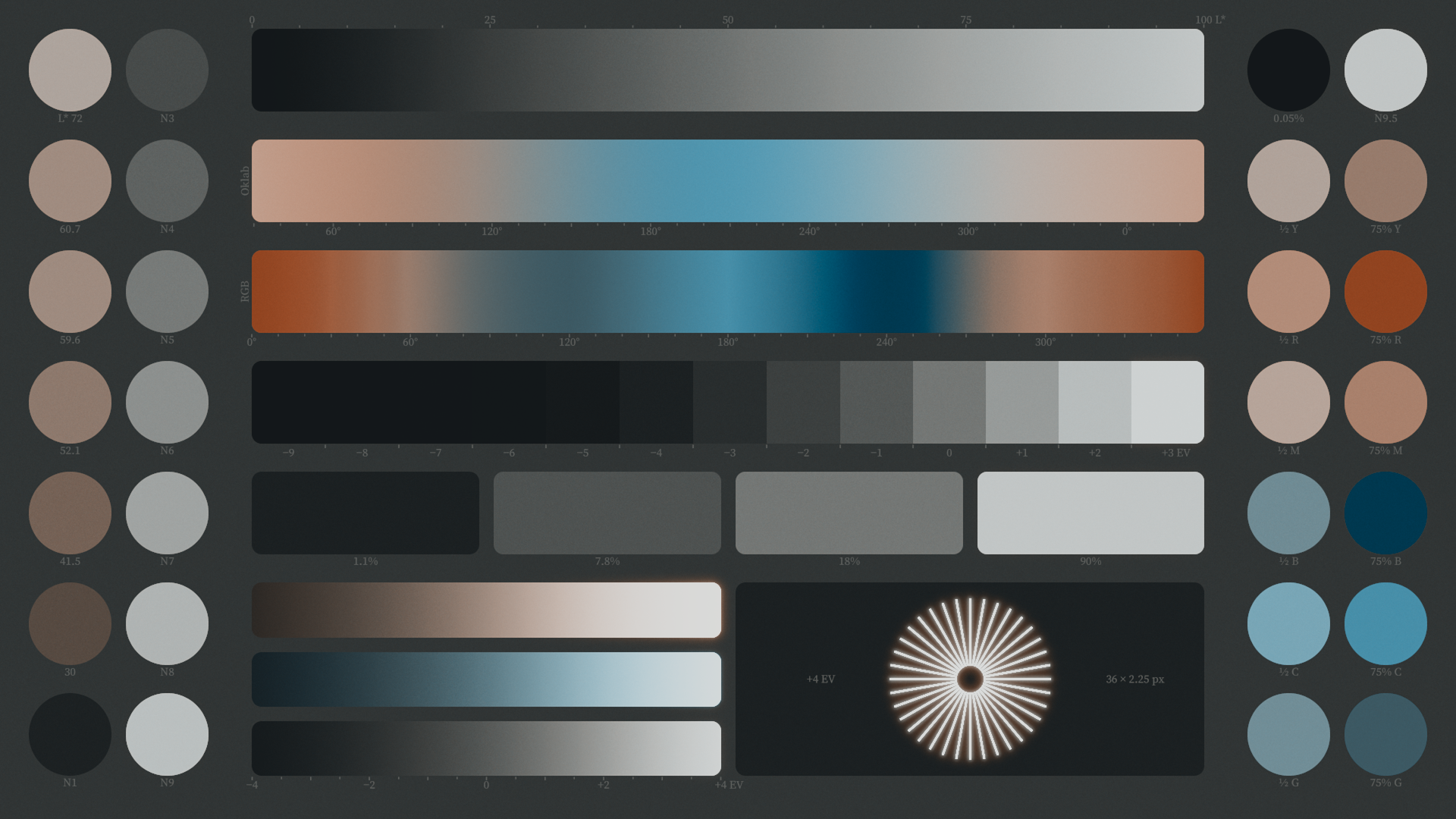
Charte de calibrage : Trucolor Print (two-colour) : OriginalCharte de calibrage : Trucolor Print (two-colour) : Traité
Charte de test synthétique (tons chair, gris Munsell, barres de couleur, rampes de gris et de teintes, coin de gris à paliers, roulement des hautes lumières des couleurs mémorisées, étoile de halation) avant et après le pipeline complet d’Ashigrain : Kodak Vision3 50D tirée sur Trucolor Print (two-colour), Super 35 4-perf, réglages par défaut, exposition +0.84 diaphragme pour égaler le gris moyen de l’original, image 0.

Un modèle bichrome inspiré de la copie, et non une reproduction du Trucolor, montré après l’Ansco Color Negative 843. Il partage les colorants et les sensibilités d’enregistrement du modèle de procédé Trucolor d’Ashigrain, eux-mêmes dérivés d’hypothèses nommées, et ses deux courbes de tirage sont des hypothèses réglées pour le gris le plus neutre. Aucune MTF ni granularité n’est publiée pour lui.

Courbes de réponse et fondements du modèle

Comparez les données du fabricant à la réponse d’Ashigrain sur les mêmes axes. Ces courbes montrent comment le modèle est calibré sur ses sources ; elles ne prouvent pas qu’il reproduit une prise de vue argentique.

Réponse caractéristique

Densité en fonction de log H (lux-secondes) pour les canaux R, G, B. R : cercles, G : carrés, B : triangles, N : losanges ; les marqueurs pleins et les lignes continues correspondent à numérisé, les marqueurs vides et les lignes en tirets à simulé : numérisé et simulé.−1.00.01.02.03.0log H (lux-secondes)0.01.02.03.0Densité

Limites du modèle

Ces images présentent le modèle de pellicule en action. La réponse spectrale, l’éclairage et les conditions de visionnage comportent des approximations ; les halos, la diffusion, la taille du grain, l’instabilité et le scintillement ne sont pas entièrement mesurés pour chaque pellicule. Une prise de vue réelle dépend aussi du développement et du calage du tirage.

  • Il s’agit d’un modèle bichrome inspiré de la copie Trucolor, et non d’une reproduction. Aucune courbe caractéristique, sensibilité spectrale, spectre de colorant, MTF ni mesure de grain d’une copie Trucolor n’existe dans les sources.
  • Les colorants et les sensibilités d’enregistrement sont ceux du modèle de procédé Trucolor d’Ashigrain, eux-mêmes dérivés d’hypothèses nommées guidées par un rapport SMPE de 1948.
  • Les deux courbes de tirage (gamma 2.6 pour l’enregistrement rouge-orangé et 2.0 pour l’enregistrement bleu-vert) sont des hypothèses choisies pour le gris le plus neutre ; deux colorants ne peuvent pas produire un neutre exact.
  • Le modèle traite les deux sélections dans un chemin à trois couches : la couche bleue copie la sélection verte et il n’y a pas de colorant jaune.
  • La piste sonore argentique et le couchage double face sont consignés mais pas modélisés. Aucune MTF ni granularité n’est publiée pour lui.
  • La source ne donne aucun spectre de lampe ni de filtre de tireuse. Leur réponse spectrale est approchée.
  • Le voile de projection modélisé relève les noirs à l’écran. Son intensité est supposée, faute de mesure dans les sources disponibles ; il ne permet donc pas d’établir un contraste de projection mesuré.

Réciprocité : non modélisée. Le temps de pose n’a aucun effet sur cette pellicule.

Guide des pellicules : hypothèses et choix pratiques

Cet aperçu associe le positif au négatif de prise de vue indiqué. Dans cette comparaison, le positif n’a ni indice d’exposition distinct ni réponse de grain mesurée propre.

Sources

  1. Process: Journal of the SMPE vol. 50 (Jan-Jun 1948), incl. Report of SMPE Progress Committee (June 1948), pp.523-542, archive.org item journalofsociety50socirich (Prelinger Library scan), file journalofsociety50socirich.pdf (derivative, 47493669 bytes), p. 550
  2. Reconstructed: Journal of the SMPE vol. 50 (Jan-Jun 1948), incl. Report of SMPE Progress Committee (June 1948), pp.523-542, archive.org item journalofsociety50socirich (Prelinger Library scan), file journalofsociety50socirich.pdf (derivative, 47493669 bytes), p. 550

Intégrez cette pellicule à votre étalonnage.

Toutes les pellicules en un seul achat, sans abonnement.