 Ashigrain
Copie noir et blanc · Pellicule de copie
Svema MZ-3
Свема МЗ-3
Positif noir et blanc soviétique pour le tirage de masse.
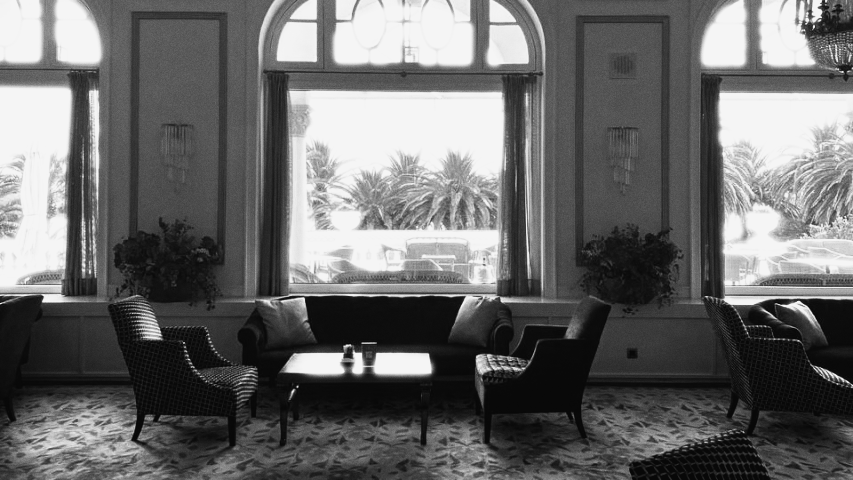
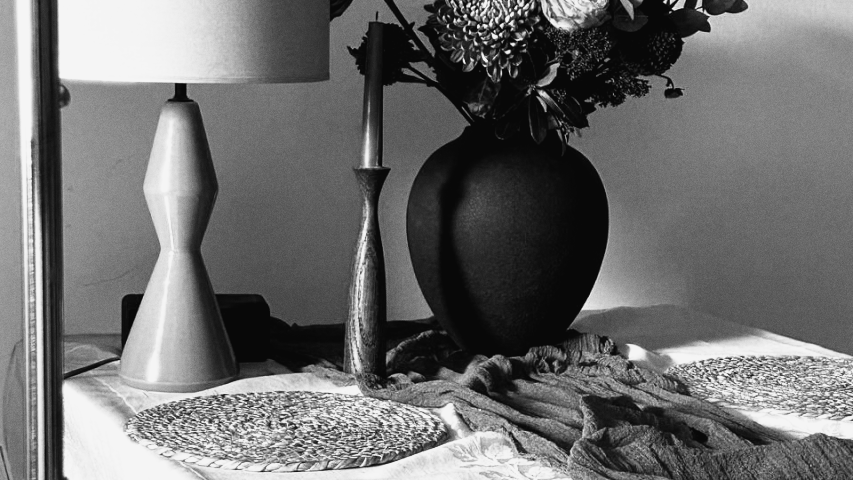
The Soviet mass-release black-and-white positive, reconstructed from handbook figures at a gamma of 2.6: neutral image tone on a ruined-city exterior. Original vs Ashigrain.
En bref
- Lancement
- dès 1979
- Procédé
- ГОСТ 10691.3-84 developer No. 6, 2-4 min
- Densité maximale
- ≈ 3,0
À propos du film
La Svema MZ-3 (Свема МЗ-3) était un film positif noir et blanc soviétique pour le tirage en masse et courant des copies de longs métrages.
Un manuel du chef opérateur de 1979 la décrit et relève sa bonne netteté, son grain fin et son ton d’image neutre. Le manuel donne une sensibilité de 2.8 à 5.5 unités GOST, un contraste de 2.6 et un pouvoir résolvant d’au moins 108 traits par millimètre. Elle était fabriquée en 35 mm et 70 mm et en pellicule de 32 mm portant deux bandes de 16 mm ou quatre de 8 mm, et la variante MZ-3M, à perforation panoramique et quatre pistes sonores magnétiques, partageait ses propriétés photographiques. Un manuel d’enseignement de 1980 cite MZ-3 et MZ-3M parmi les films positifs noir et blanc nationaux. Un manuel de 1990 donne un voile d’au plus 0.04 et une densité maximale d’au moins 3.0 après 4 minutes de développement, avec un contraste plus élevé de 2.9 à 3.1. Aucune sensibilisation n’est indiquée pour elle, et le manuel de 1990 note que l’halogénure d’argent nu ne réagit qu’à la lumière en dessous d’environ 500 nm.
Sources de cet historique
- Гордийчук И. Б., Пелль В. Г. Справочник кинооператора (1979), Internet Archive
- Иофис Е. А. Кинофотопроцессы и материалы (1980), Internet Archive
- Журба Ю. И. Краткий справочник по фотографическим процессам и материалам (1990), djvu.online
Le rendu
La Svema MZ-3 était un film de tirage noir et blanc soviétique pour le tirage en masse des copies de longs métrages, documenté à partir de 1979. Un manuel de 1979 relève sa bonne netteté, son grain fin et son ton d’image neutre. Ashigrain la reconstruit d’après les valeurs des manuels, avec une forme de sensibilité empruntée au Kodak 5302.




Idéale pour
- Tirer des négatifs Tasma NK-2
- Rendus de copie d’exploitation noir et blanc soviétique
- Comparer MZ-3 avec Kodak 2302
Comparer les films de copie
The same Vision3 500T night frame on each print film: how deep the blacks go, how the highlights roll off and how the colour separates.
The same Vision3 500T night frame on each print film: how deep the blacks go, how the highlights roll off and how the colour separates.
The same Vision3 500T night frame on each print film: how deep the blacks go, how the highlights roll off and how the colour separates.
The same Vision3 500T night frame on each print film: how deep the blacks go, how the highlights roll off and how the colour separates.
The same Vision3 500T night frame on each print film: how deep the blacks go, how the highlights roll off and how the colour separates.
The same Vision3 500T night frame on each print film: how deep the blacks go, how the highlights roll off and how the colour separates.
The same Vision3 500T night frame on each print film: how deep the blacks go, how the highlights roll off and how the colour separates.
The same Vision3 500T night frame on each print film: how deep the blacks go, how the highlights roll off and how the colour separates.
The same Vision3 500T night frame on each print film: how deep the blacks go, how the highlights roll off and how the colour separates.
The same Vision3 500T night frame on each print film: how deep the blacks go, how the highlights roll off and how the colour separates.
The same Vision3 500T night frame on each print film: how deep the blacks go, how the highlights roll off and how the colour separates.
The same Vision3 500T night frame on each print film: how deep the blacks go, how the highlights roll off and how the colour separates.
The same Vision3 500T night frame on each print film: how deep the blacks go, how the highlights roll off and how the colour separates.
The same Vision3 500T night frame on each print film. On this two-colour print (a labelled surrogate) every colour falls between blue-green and red-orange: how deep the blacks go, how the highlights roll off and which lights keep their hue.
The same Vision3 500T night frame on each print film: how deep the blacks go, how the highlights roll off and how the colour separates.
The same Vision3 500T night frame on each print film: how deep the blacks go, how the highlights roll off and how the colour separates.
The same Vision3 500T night frame on each print film: how deep the blacks go, how the highlights roll off and how the colour separates.
The same Vision3 500T night frame on each print film: how deep the blacks go, how the highlights roll off and how the colour separates.
The same Vision3 500T night frame on each print film: how deep the blacks go, how the highlights roll off and how the colour separates.
The same Vision3 500T night frame on each print film: how deep the blacks go, how the highlights roll off and how the colour separates.
The same Vision3 500T night frame on each print film: how deep the blacks go, how the highlights roll off and how the colour separates.
The same Vision3 500T night frame on each print film: how deep the blacks go, how the highlights roll off and how the colour separates.
The same Vision3 500T night frame on each print film: how deep the blacks go, how the highlights roll off and how the colour separates.
The same Vision3 500T night frame on each print film: how deep the blacks go, how the highlights roll off and how the colour separates.
The same Vision3 500T night frame on each print film. On this blue-sensitive black-and-white print the colour negative turns grey: how deep the blacks go, how the highlights roll off and how dark the reds and greens print.
The same Vision3 500T night frame on each print film: how deep the blacks go, how the highlights roll off and how the colour separates.
The same Vision3 500T night frame on each print film. On this blue-sensitive black-and-white print the colour negative turns grey: how deep the blacks go, how the highlights roll off and how dark the red neon and skin print.
The same Vision3 500T night frame on each print film: how deep the blacks go, how the highlights roll off and how the colour separates.
The same Vision3 500T night frame on each print film. On this black-and-white print the colour negative turns grey: how deep the blacks go, how the highlights roll off and how the coloured lights and skin translate to grey.
The same Vision3 500T night frame on each print film. On this blue-sensitive black-and-white print the colour negative turns grey: how deep the blacks go, how the highlights roll off and how the coloured lights and skin translate to grey.
The same Vision3 500T night frame on each print film: how deep the blacks go, how the highlights roll off and how the colour separates.
The same Vision3 500T night frame on each print film: how deep the blacks go, how the highlights roll off and how the colour separates.
The same Vision3 500T night frame on each print film: how deep the blacks go, how the highlights roll off and how the colour separates.
The same Vision3 500T night frame on each print film: how deep the blacks go, how the highlights roll off and how the colour separates.
The same Vision3 500T night frame on each print film: how deep the blacks go, how the highlights roll off and how the colour separates.
The same Vision3 500T night frame on each print film. On this two-colour print (a labelled surrogate) every colour falls between a blue and a red dye: how deep the blacks go, how the highlights roll off and which lights keep their hue.
The same Vision3 500T night frame on each print film: how deep the blacks go, how the highlights roll off and how the colour separates.
La même image de nuit sur Kodak Vision3 500T, tirée sur chaque positif.
- Kodak Vision Premier Color Print Film 2393
- Eastman Color SP Print Film 5383
- Eastman Color Print Film 5384
- Fujifilm Eterna-CP 3521XD
- Du Pont Color Release Positive Type 275
- Fujifilm Eterna-CP 3523XD
- Kodak Vision Color Print Film 2383
- Fujifilm Eterna-CP 3513DI
- Eastman EXR Color Print Film 5386
- Eastman Color Print Film 5381 (1972)
- Eastman Color Print Film 5385
- Agfa CP30 Colour Print Film
- SuperCinecolor
- Cinecolor (two-colour)
- Gevacolor Positive 953
- Gevacolor Print 9.85
- Gevacolor Print 986
- Gevacolor Print 982
- Ferraniacolor Positive
- 3M Color Positive 650
- Fujicolor Positive F-CP 3510
- Fujicolor Positive F-CP 3519
- Fujifilm Eterna-CP 3512
- Eastman Color Print 5381 (1950)
- Eastman Fine Grain Release Positive 5302
- Ansco Color Print 848
- Kodak B&W Print Film 2302
- Svema TsP-11
- Svema MZ-3
- ORWO PF 2 Positive Print Film
- Technicolor Dye Transfer (1997 revival)
- Svema TsP-8R
- Shostka Colour Positive (1950s)
- Technicolor Dye Transfer (Process IV)
- Gasparcolor Print
- Trucolor Print (two-colour)
- Kodak Vision Color Teleprint Film 2395
Science et sources

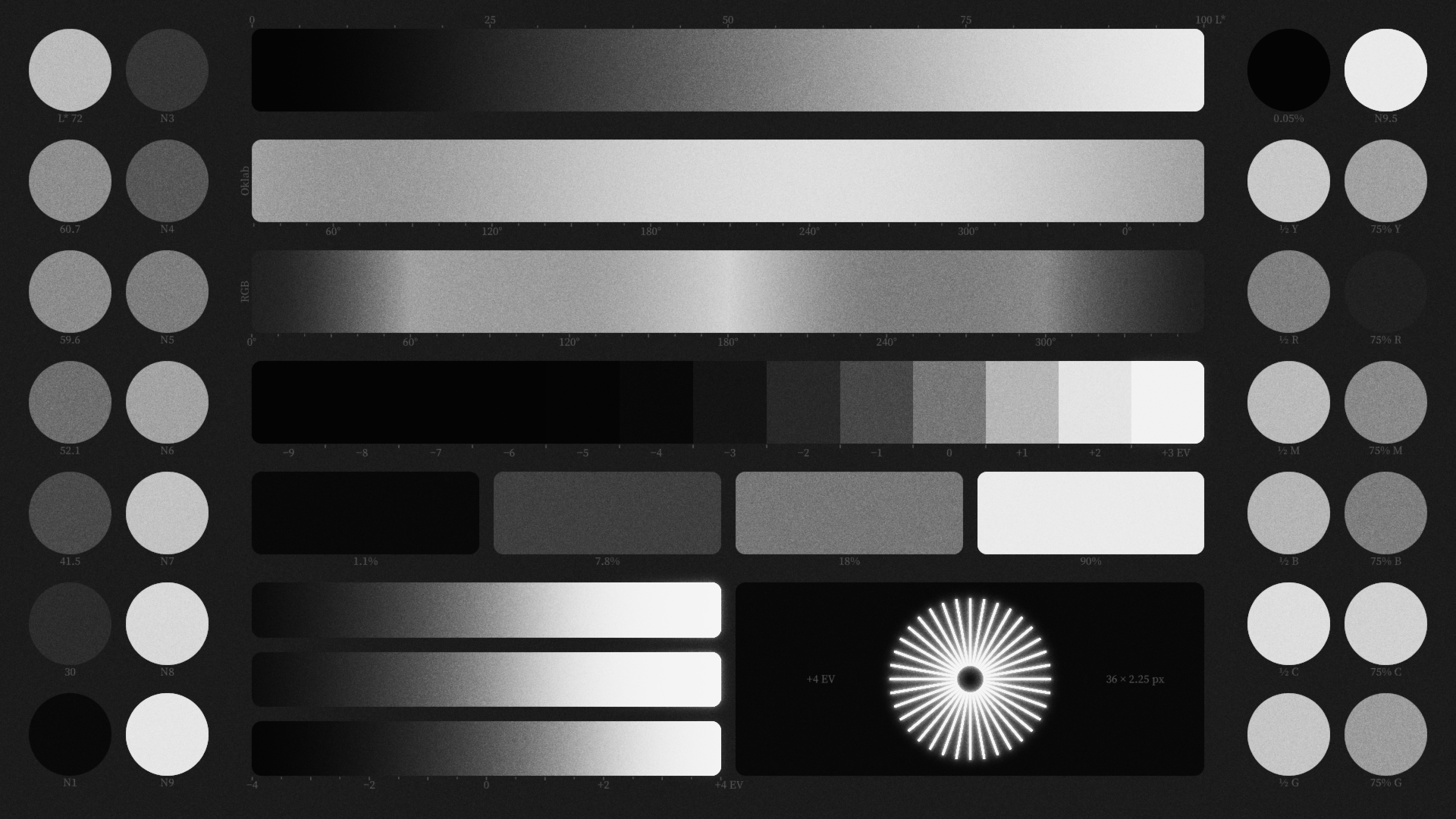
Un film de tirage noir et blanc soviétique, montré après Tasma NK-2. Aucune courbe de la MZ-3 n’est publiée : sa courbe caractéristique est reconstruite d’après les valeurs des manuels, et sa sensibilité au seul bleu prend sa forme sur l’Eastman Fine Grain Release Positive 5302, un substitut, avec un bord supposé à 480 nm.
La mention relative aux marques qui suit est fournie en anglais.
Svema is named only to identify the film; its trademarks belong to their respective owners, whose identity is unknown.
Courbes de réponse et fondements du modèle
Comparez les données du fabricant à la réponse d’Ashigrain sur les mêmes axes. Ces courbes montrent comment le modèle est calibré sur ses sources ; elles ne prouvent pas qu’il reproduit une prise de vue argentique.
Réponse caractéristique
Limites du modèle
Ces images présentent le modèle de pellicule en action. La réponse spectrale, l’éclairage et les conditions de visionnage comportent des approximations ; les halos, la diffusion, la taille du grain, l’instabilité et le scintillement ne sont pas entièrement mesurés pour chaque pellicule. Une prise de vue réelle dépend aussi du développement et du calage du tirage.
- Свема МЗ-3 n’a aucune courbe publiée. Sa courbe caractéristique est reconstruite d’après des manuels soviétiques (Гордийчук & Пелль 1979 ; Журба 1990), non numérisée depuis une fiche technique.
- Les sources divergent sur le contraste (2.6 en 1979 ; 2.9–3.1 pour un développement de 4 minutes en 1990) ; le modèle utilise 2.6.
- Aucune limite de sensibilisation n’est imprimée. La sensibilité au seul bleu prend son pic sur l’Eastman Fine Grain Release Positive 5302, un substitut, et son bord de grande longueur d’onde à 480 nm est une hypothèse.
- L’image argentique n’a pas de graphique de colorants et est considérée comme spectralement neutre.
- Aucune MTF ni granularité n’est imprimée ; seul un pouvoir résolvant d’au moins 108 traits/mm est consigné.
- La source ne donne aucun spectre de lampe ni de filtre de tireuse. L’étalonnage de la copie noir et blanc est modélisé.
Réciprocité : non modélisée. Le temps de pose n’a aucun effet sur cette pellicule.
Guide des pellicules : hypothèses et choix pratiques
Sources
- Reconstructed: Гордийчук И. Б., Пелль В. Г. Справочник кинооператора (1979), 1979 edition, p. 192
- Process: Журба Ю. И. Краткий справочник по фотографическим процессам и материалам (1990), 1990 edition, p. 91
Intégrez cette pellicule à votre étalonnage.
Toutes les pellicules en un seul achat, sans abonnement.
€199 + VAT