 Ashigrain
Copie couleur · Pellicule de copie
Cinecolor (two-colour)
Les copies bichromes Cinecolor des courts métrages et dessins animés.
A labelled surrogate of two-colour Cinecolor: only a blue-green and an orange-red image, so blues reproduce as blue-greens. Original vs Ashigrain.
En bref
- Lancement
- 1932
- Arrêté
- Procédé
- Cinecolor two-colour processing (develop, fix and wash the duplitized positive, then colour each record by toning and dyeing)
- Densité maximale
- ≈ 4,0
À propos du film
Le Cinecolor était un procédé de tirage soustractif bichrome, imprimé sur un film à double émulsion couché des deux côtés.
L’American WideScreen Museum indique que la Cinecolor Corporation est née en 1932, et la Timeline of Historical Film Colors attribue le procédé à William Crespinel, dont la demande de brevet de 1932 a été cédée à Cinecolor. Selon le Museum, Cinecolor a repris le système Multicolor après la faillite de Multicolor et l’a utilisé presque sans changement jusqu’à la fin des années 1940. Deux négatifs exposés en bipack enregistraient les parties rouge-orangé et bleu-vert de la scène, et une tireuse pas à pas imprimait un enregistrement sur chaque face du positif. L’enregistrement rouge était viré au bleu-vert par le fer en bleu de Prusse, et l’enregistrement vert était teint en rouge-orangé avec un colorant à mordant. De 1932 à 1940, il a surtout servi aux courts métrages et aux dessins animés de petits studios, et son premier long métrage fut The Gentleman from Arizona de Monogram. Parmi les clients suivants figuraient Monogram, PRC, Screen Guild et Eagle-Lion, et Warner Bros. a sorti plusieurs dessins animés en Cinecolor en 1948. Le Museum relève ses limites, une image projetée douce, parce que les deux enregistrements se trouvaient sur des faces opposées du film, et une piste sonore virée au cyan, et le SuperCinecolor trichrome lui a succédé.
Sources de cet historique
- Cinecolor (subtractive 2 color), Timeline of Historical Film Colors, University of Zurich
- Cinecolor, American WideScreen Museum
- US Patent 2,016,666: Colored photograph and method of making same (1935), W. T. Crespinel
- Cinecolor Three-Color Process (Alan M. Gundelfinger, Journal of the SMPTE 54, January 1950), Society of Motion Picture and Television Engineers
Le rendu
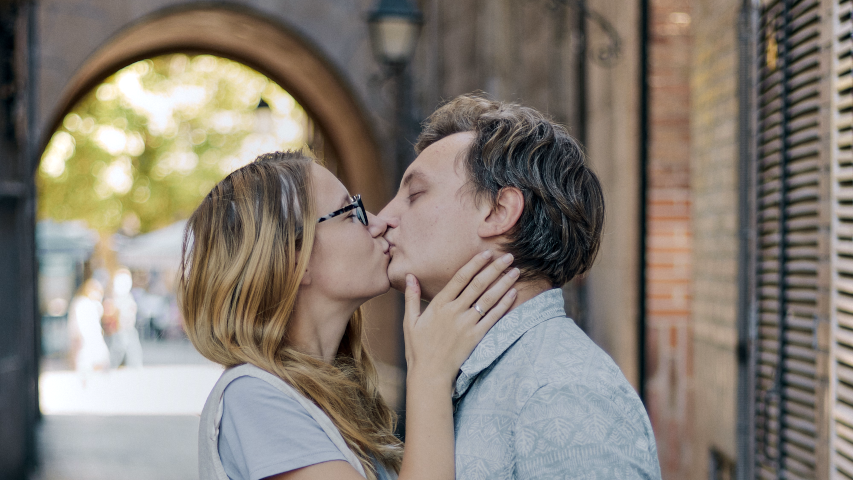
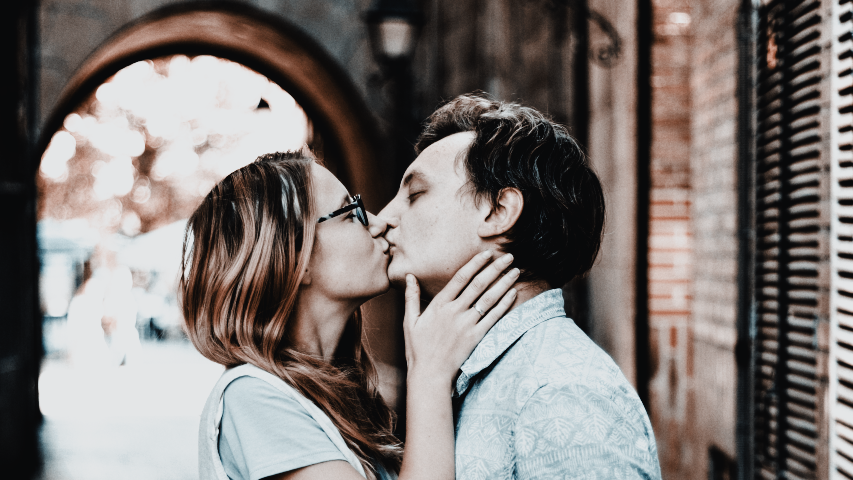
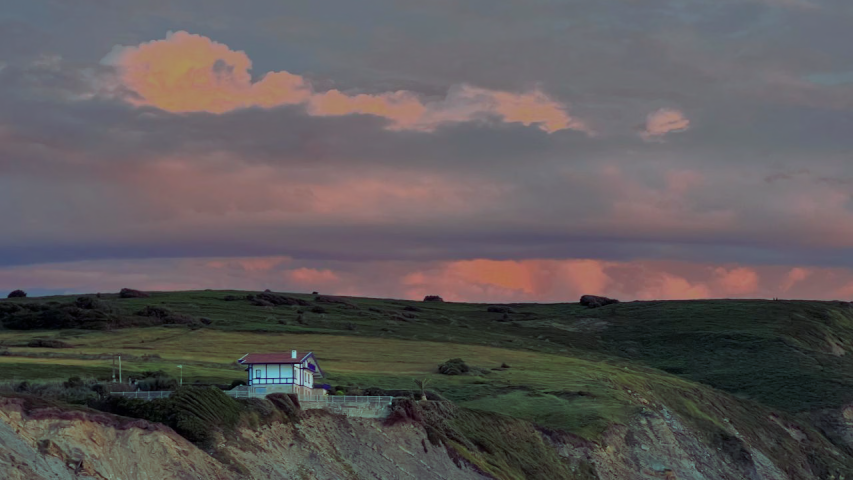
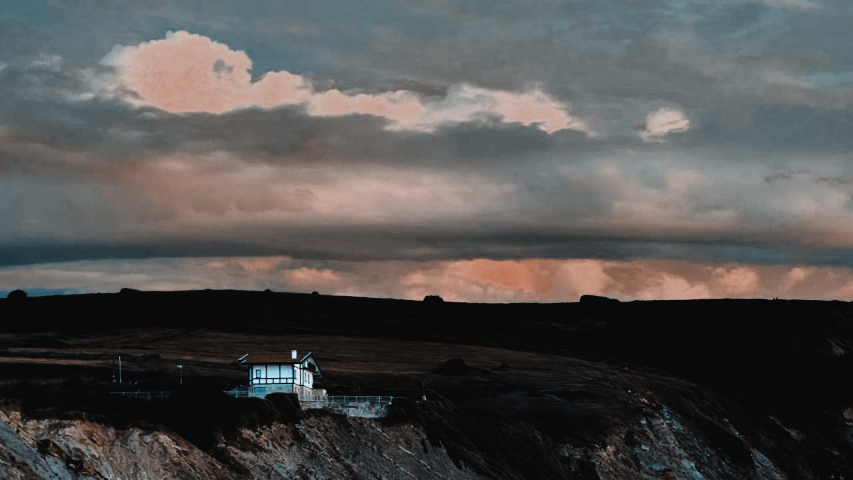
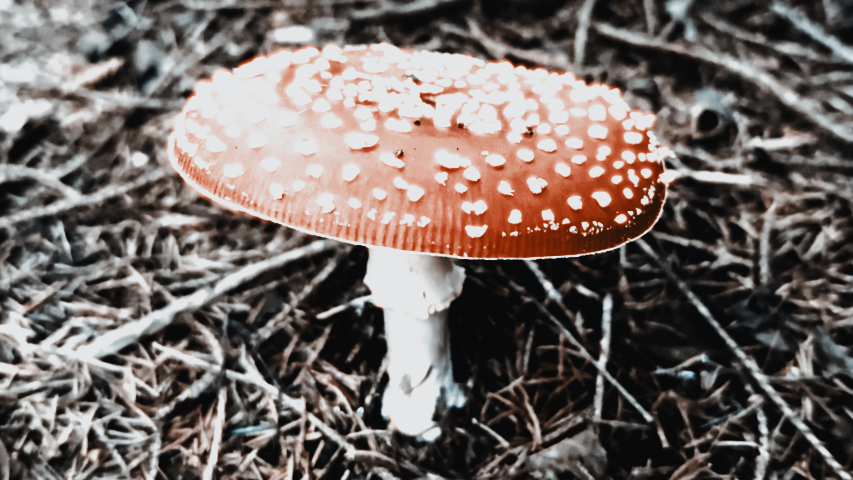
Le Cinecolor était un procédé de tirage bichrome apparu en 1932, qui imprimait une image bleu-vert et une image rouge-orangé sur les deux faces d’un film à double émulsion. Il a servi aux courts métrages, aux dessins animés et aux longs métrages de petits studios jusqu’à la fin des années 1940. La version d’Ashigrain est un substitut déclaré, un modèle inspiré de la copie et non une reproduction.

Idéale pour
- Dessins animés et courts métrages des années 1940
- Longs métrages à petit budget des années 1940
- Comparer le Cinecolor bichrome et le SuperCinecolor
Comparer les films de copie
The same Vision3 500T night frame on each print film: how deep the blacks go, how the highlights roll off and how the colour separates.
The same Vision3 500T night frame on each print film: how deep the blacks go, how the highlights roll off and how the colour separates.
The same Vision3 500T night frame on each print film: how deep the blacks go, how the highlights roll off and how the colour separates.
The same Vision3 500T night frame on each print film: how deep the blacks go, how the highlights roll off and how the colour separates.
The same Vision3 500T night frame on each print film: how deep the blacks go, how the highlights roll off and how the colour separates.
The same Vision3 500T night frame on each print film: how deep the blacks go, how the highlights roll off and how the colour separates.
The same Vision3 500T night frame on each print film: how deep the blacks go, how the highlights roll off and how the colour separates.
The same Vision3 500T night frame on each print film: how deep the blacks go, how the highlights roll off and how the colour separates.
The same Vision3 500T night frame on each print film: how deep the blacks go, how the highlights roll off and how the colour separates.
The same Vision3 500T night frame on each print film: how deep the blacks go, how the highlights roll off and how the colour separates.
The same Vision3 500T night frame on each print film: how deep the blacks go, how the highlights roll off and how the colour separates.
The same Vision3 500T night frame on each print film: how deep the blacks go, how the highlights roll off and how the colour separates.
The same Vision3 500T night frame on each print film: how deep the blacks go, how the highlights roll off and how the colour separates.
The same Vision3 500T night frame on each print film. On this two-colour print (a labelled surrogate) every colour falls between blue-green and red-orange: how deep the blacks go, how the highlights roll off and which lights keep their hue.
The same Vision3 500T night frame on each print film: how deep the blacks go, how the highlights roll off and how the colour separates.
The same Vision3 500T night frame on each print film: how deep the blacks go, how the highlights roll off and how the colour separates.
The same Vision3 500T night frame on each print film: how deep the blacks go, how the highlights roll off and how the colour separates.
The same Vision3 500T night frame on each print film: how deep the blacks go, how the highlights roll off and how the colour separates.
The same Vision3 500T night frame on each print film: how deep the blacks go, how the highlights roll off and how the colour separates.
The same Vision3 500T night frame on each print film: how deep the blacks go, how the highlights roll off and how the colour separates.
The same Vision3 500T night frame on each print film: how deep the blacks go, how the highlights roll off and how the colour separates.
The same Vision3 500T night frame on each print film: how deep the blacks go, how the highlights roll off and how the colour separates.
The same Vision3 500T night frame on each print film: how deep the blacks go, how the highlights roll off and how the colour separates.
The same Vision3 500T night frame on each print film: how deep the blacks go, how the highlights roll off and how the colour separates.
The same Vision3 500T night frame on each print film. On this blue-sensitive black-and-white print the colour negative turns grey: how deep the blacks go, how the highlights roll off and how dark the reds and greens print.
The same Vision3 500T night frame on each print film: how deep the blacks go, how the highlights roll off and how the colour separates.
The same Vision3 500T night frame on each print film. On this blue-sensitive black-and-white print the colour negative turns grey: how deep the blacks go, how the highlights roll off and how dark the red neon and skin print.
The same Vision3 500T night frame on each print film: how deep the blacks go, how the highlights roll off and how the colour separates.
The same Vision3 500T night frame on each print film. On this black-and-white print the colour negative turns grey: how deep the blacks go, how the highlights roll off and how the coloured lights and skin translate to grey.
The same Vision3 500T night frame on each print film. On this blue-sensitive black-and-white print the colour negative turns grey: how deep the blacks go, how the highlights roll off and how the coloured lights and skin translate to grey.
The same Vision3 500T night frame on each print film: how deep the blacks go, how the highlights roll off and how the colour separates.
The same Vision3 500T night frame on each print film: how deep the blacks go, how the highlights roll off and how the colour separates.
The same Vision3 500T night frame on each print film: how deep the blacks go, how the highlights roll off and how the colour separates.
The same Vision3 500T night frame on each print film: how deep the blacks go, how the highlights roll off and how the colour separates.
The same Vision3 500T night frame on each print film: how deep the blacks go, how the highlights roll off and how the colour separates.
The same Vision3 500T night frame on each print film. On this two-colour print (a labelled surrogate) every colour falls between a blue and a red dye: how deep the blacks go, how the highlights roll off and which lights keep their hue.
The same Vision3 500T night frame on each print film: how deep the blacks go, how the highlights roll off and how the colour separates.
La même image de nuit sur Kodak Vision3 500T, tirée sur chaque positif.
- Kodak Vision Premier Color Print Film 2393
- Eastman Color SP Print Film 5383
- Eastman Color Print Film 5384
- Fujifilm Eterna-CP 3521XD
- Du Pont Color Release Positive Type 275
- Fujifilm Eterna-CP 3523XD
- Kodak Vision Color Print Film 2383
- Fujifilm Eterna-CP 3513DI
- Eastman EXR Color Print Film 5386
- Eastman Color Print Film 5381 (1972)
- Eastman Color Print Film 5385
- Agfa CP30 Colour Print Film
- SuperCinecolor
- Cinecolor (two-colour)
- Gevacolor Positive 953
- Gevacolor Print 9.85
- Gevacolor Print 986
- Gevacolor Print 982
- Ferraniacolor Positive
- 3M Color Positive 650
- Fujicolor Positive F-CP 3510
- Fujicolor Positive F-CP 3519
- Fujifilm Eterna-CP 3512
- Eastman Color Print 5381 (1950)
- Eastman Fine Grain Release Positive 5302
- Ansco Color Print 848
- Kodak B&W Print Film 2302
- Svema TsP-11
- Svema MZ-3
- ORWO PF 2 Positive Print Film
- Technicolor Dye Transfer (1997 revival)
- Svema TsP-8R
- Shostka Colour Positive (1950s)
- Technicolor Dye Transfer (Process IV)
- Gasparcolor Print
- Trucolor Print (two-colour)
- Kodak Vision Color Teleprint Film 2395
Science et sources

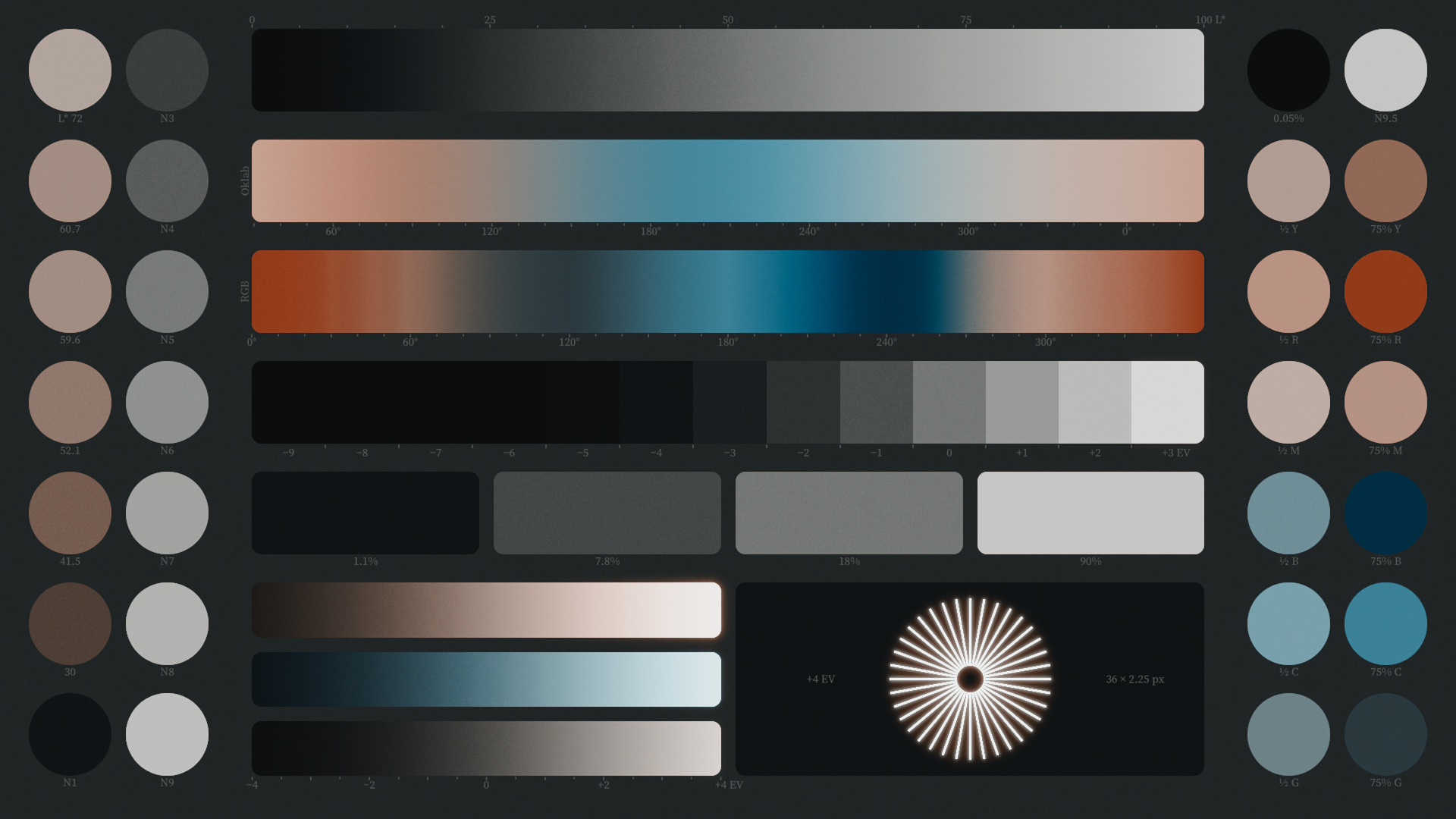
Un modèle bichrome inspiré de la copie, et non une reproduction du Cinecolor, montré après l’Ansco Color Negative 843. Ses sensibilités de tonalité et d’enregistrement sont empruntées à l’Agfa Print CP30, un substitut ; son colorant bleu de Prusse est relevé dans l’article de Gundelfinger de 1950 sur le procédé trichrome, et son colorant rouge-orangé est une hypothèse nommée. Aucune MTF ni granularité n’est publiée pour lui.
Courbes de réponse et fondements du modèle
Comparez les données du fabricant à la réponse d’Ashigrain sur les mêmes axes. Ces courbes montrent comment le modèle est calibré sur ses sources ; elles ne prouvent pas qu’il reproduit une prise de vue argentique.
Réponse caractéristique
Limites du modèle
Ces images présentent le modèle de pellicule en action. La réponse spectrale, l’éclairage et les conditions de visionnage comportent des approximations ; les halos, la diffusion, la taille du grain, l’instabilité et le scintillement ne sont pas entièrement mesurés pour chaque pellicule. Une prise de vue réelle dépend aussi du développement et du calage du tirage.
- Il s’agit d’un modèle bichrome inspiré de la copie Cinecolor, et non d’une reproduction. Aucune courbe caractéristique de la copie bichrome n’est enregistrée.
- Les sensibilités de tonalité et d’enregistrement sont celles de l’Agfa Print CP30, un substitut ; la sensibilité de l’enregistrement vert est la somme du vert et du bleu du substitut.
- Le colorant bleu de Prusse est le cyan relevé dans l’article de Gundelfinger de 1950 sur le procédé trichrome. Le colorant rouge-orangé est une gaussienne supposée (pic à 480 nm, largeur 70 nm), choisie pour le gris le plus neutre.
- Le modèle traite les deux sélections dans un chemin à trois couches : la couche bleue copie la sélection verte et il n’y a pas de colorant jaune.
- Le couchage double face et son image projetée douce ne sont pas modélisés. Aucune MTF ni granularité n’est publiée pour lui.
- La source ne donne aucun spectre de lampe ni de filtre de tireuse. Leur réponse spectrale est approchée.
- Le voile de projection modélisé relève les noirs à l’écran. Son intensité est supposée, faute de mesure dans les sources disponibles ; il ne permet donc pas d’établir un contraste de projection mesuré.
Réciprocité : non modélisée. Le temps de pose n’a aucun effet sur cette pellicule.
Guide des pellicules : hypothèses et choix pratiques
Cet aperçu associe le positif au négatif de prise de vue indiqué. Dans cette comparaison, le positif n’a ni indice d’exposition distinct ni réponse de grain mesurée propre.
Sources
- Characteristic curves: AGFA PRINT CP30 colour print film product info / technical data, 17/10/2011, p. 5
- Process: US Patent 2,016,666: Colored photograph and method of making same (W. T. Crespinel, assigned to Cinecolor Inc.), US 2,016,666 A, filed 1932-12-02, granted 1935-10-08; Google Patents image PDF (5 pages), p. 3
Intégrez cette pellicule à votre étalonnage.
Toutes les pellicules en un seul achat, sans abonnement.
€199 + VAT