 Ashigrain
Copie couleur · Pellicule de copie
Ferraniacolor Positive
La copie couleur italienne de Ferrania, années 1950.
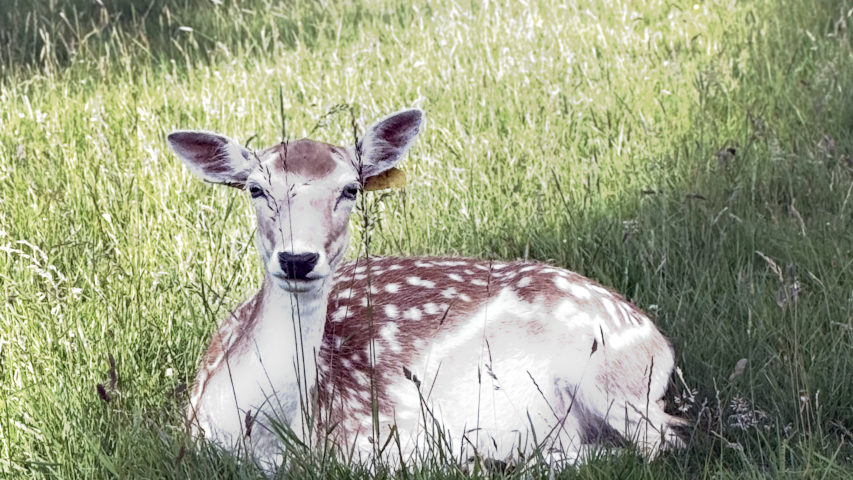
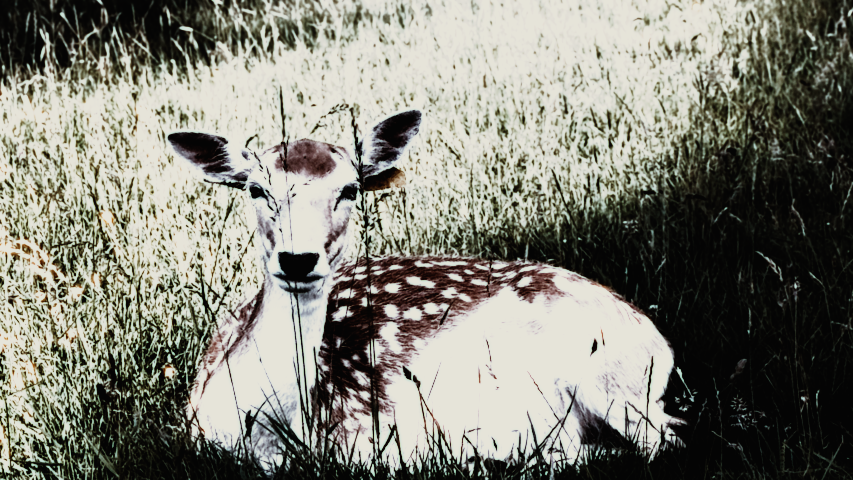
Ferrania's 1950s colour print as a labelled surrogate on Agfa CP30's curves, for Italian cinema of the 1950s; it renders a fresh print, not a faded one. Original vs Ashigrain.
En bref
- Lancement
- vers 1949
- Arrêté
- Procédé
- Ferrania colour positive process (not documented)
- Densité maximale
- ≈ 4,0
À propos du film
Le Ferraniacolor Positive était le film de tirage couleur du Ferraniacolor, le système couleur monopack chromogène du fabricant de film italien Ferrania.
La Timeline of Historical Film Colors date le système de 1949 à 1966, une période qu’aucune seconde source ne confirme. Ses coupleurs se trouvaient dans les couches du film, comme dans d’autres films monopack chromogènes. Les galeries de la Timeline comprennent des courts métrages italiens des années 1950 tournés en Ferraniacolor, comme Gente della laguna (1954) et I fidanzati (1957). Elles montrent aussi qu’il servait à tirer des copies de négatifs Eastman Color : un positif Ferraniacolor du long métrage tchécoslovaque Smrt v sedle (1958), tiré d’un négatif Eastmancolor, est conservé aux Archives nationales du film à Prague. Cette copie s’est décolorée, comme souvent les copies Ferraniacolor conservées. La Timeline regroupe le film couleur ultérieur de 3M avec le Ferraniacolor dans une seule entrée.
Sources de cet historique
- Ferrania color / Ferraniacolor / 3M color, Timeline of Historical Film Colors, University of Zurich
Le rendu
Le Ferraniacolor Positive était le film de tirage du système couleur chromogène de Ferrania, daté d’environ 1949 à 1966. Parmi les copies conservées figurent des positifs Ferraniacolor tirés de négatifs Eastman Color, souvent décolorés. La version d’Ashigrain est un substitut déclaré, un modèle inspiré de la copie et non une reproduction.




Idéale pour
- Cinéma italien des années 1950
- Copies d’exploitation européennes des années 1950
- Comparer Ferraniacolor et 3M Color Positive
Comparer les films de copie
The same Vision3 500T night frame on each print film: how deep the blacks go, how the highlights roll off and how the colour separates.
The same Vision3 500T night frame on each print film: how deep the blacks go, how the highlights roll off and how the colour separates.
The same Vision3 500T night frame on each print film: how deep the blacks go, how the highlights roll off and how the colour separates.
The same Vision3 500T night frame on each print film: how deep the blacks go, how the highlights roll off and how the colour separates.
The same Vision3 500T night frame on each print film: how deep the blacks go, how the highlights roll off and how the colour separates.
The same Vision3 500T night frame on each print film: how deep the blacks go, how the highlights roll off and how the colour separates.
The same Vision3 500T night frame on each print film: how deep the blacks go, how the highlights roll off and how the colour separates.
The same Vision3 500T night frame on each print film: how deep the blacks go, how the highlights roll off and how the colour separates.
The same Vision3 500T night frame on each print film: how deep the blacks go, how the highlights roll off and how the colour separates.
The same Vision3 500T night frame on each print film: how deep the blacks go, how the highlights roll off and how the colour separates.
The same Vision3 500T night frame on each print film: how deep the blacks go, how the highlights roll off and how the colour separates.
The same Vision3 500T night frame on each print film: how deep the blacks go, how the highlights roll off and how the colour separates.
The same Vision3 500T night frame on each print film: how deep the blacks go, how the highlights roll off and how the colour separates.
The same Vision3 500T night frame on each print film. On this two-colour print (a labelled surrogate) every colour falls between blue-green and red-orange: how deep the blacks go, how the highlights roll off and which lights keep their hue.
The same Vision3 500T night frame on each print film: how deep the blacks go, how the highlights roll off and how the colour separates.
The same Vision3 500T night frame on each print film: how deep the blacks go, how the highlights roll off and how the colour separates.
The same Vision3 500T night frame on each print film: how deep the blacks go, how the highlights roll off and how the colour separates.
The same Vision3 500T night frame on each print film: how deep the blacks go, how the highlights roll off and how the colour separates.
The same Vision3 500T night frame on each print film: how deep the blacks go, how the highlights roll off and how the colour separates.
The same Vision3 500T night frame on each print film: how deep the blacks go, how the highlights roll off and how the colour separates.
The same Vision3 500T night frame on each print film: how deep the blacks go, how the highlights roll off and how the colour separates.
The same Vision3 500T night frame on each print film: how deep the blacks go, how the highlights roll off and how the colour separates.
The same Vision3 500T night frame on each print film: how deep the blacks go, how the highlights roll off and how the colour separates.
The same Vision3 500T night frame on each print film: how deep the blacks go, how the highlights roll off and how the colour separates.
The same Vision3 500T night frame on each print film. On this blue-sensitive black-and-white print the colour negative turns grey: how deep the blacks go, how the highlights roll off and how dark the reds and greens print.
The same Vision3 500T night frame on each print film: how deep the blacks go, how the highlights roll off and how the colour separates.
The same Vision3 500T night frame on each print film. On this blue-sensitive black-and-white print the colour negative turns grey: how deep the blacks go, how the highlights roll off and how dark the red neon and skin print.
The same Vision3 500T night frame on each print film: how deep the blacks go, how the highlights roll off and how the colour separates.
The same Vision3 500T night frame on each print film. On this black-and-white print the colour negative turns grey: how deep the blacks go, how the highlights roll off and how the coloured lights and skin translate to grey.
The same Vision3 500T night frame on each print film. On this blue-sensitive black-and-white print the colour negative turns grey: how deep the blacks go, how the highlights roll off and how the coloured lights and skin translate to grey.
The same Vision3 500T night frame on each print film: how deep the blacks go, how the highlights roll off and how the colour separates.
The same Vision3 500T night frame on each print film: how deep the blacks go, how the highlights roll off and how the colour separates.
The same Vision3 500T night frame on each print film: how deep the blacks go, how the highlights roll off and how the colour separates.
The same Vision3 500T night frame on each print film: how deep the blacks go, how the highlights roll off and how the colour separates.
The same Vision3 500T night frame on each print film: how deep the blacks go, how the highlights roll off and how the colour separates.
The same Vision3 500T night frame on each print film. On this two-colour print (a labelled surrogate) every colour falls between a blue and a red dye: how deep the blacks go, how the highlights roll off and which lights keep their hue.
The same Vision3 500T night frame on each print film: how deep the blacks go, how the highlights roll off and how the colour separates.
La même image de nuit sur Kodak Vision3 500T, tirée sur chaque positif.
- Kodak Vision Premier Color Print Film 2393
- Eastman Color SP Print Film 5383
- Eastman Color Print Film 5384
- Fujifilm Eterna-CP 3521XD
- Du Pont Color Release Positive Type 275
- Fujifilm Eterna-CP 3523XD
- Kodak Vision Color Print Film 2383
- Fujifilm Eterna-CP 3513DI
- Eastman EXR Color Print Film 5386
- Eastman Color Print Film 5381 (1972)
- Eastman Color Print Film 5385
- Agfa CP30 Colour Print Film
- SuperCinecolor
- Cinecolor (two-colour)
- Gevacolor Positive 953
- Gevacolor Print 9.85
- Gevacolor Print 986
- Gevacolor Print 982
- Ferraniacolor Positive
- 3M Color Positive 650
- Fujicolor Positive F-CP 3510
- Fujicolor Positive F-CP 3519
- Fujifilm Eterna-CP 3512
- Eastman Color Print 5381 (1950)
- Eastman Fine Grain Release Positive 5302
- Ansco Color Print 848
- Kodak B&W Print Film 2302
- Svema TsP-11
- Svema MZ-3
- ORWO PF 2 Positive Print Film
- Technicolor Dye Transfer (1997 revival)
- Svema TsP-8R
- Shostka Colour Positive (1950s)
- Technicolor Dye Transfer (Process IV)
- Gasparcolor Print
- Trucolor Print (two-colour)
- Kodak Vision Color Teleprint Film 2395
Science et sources

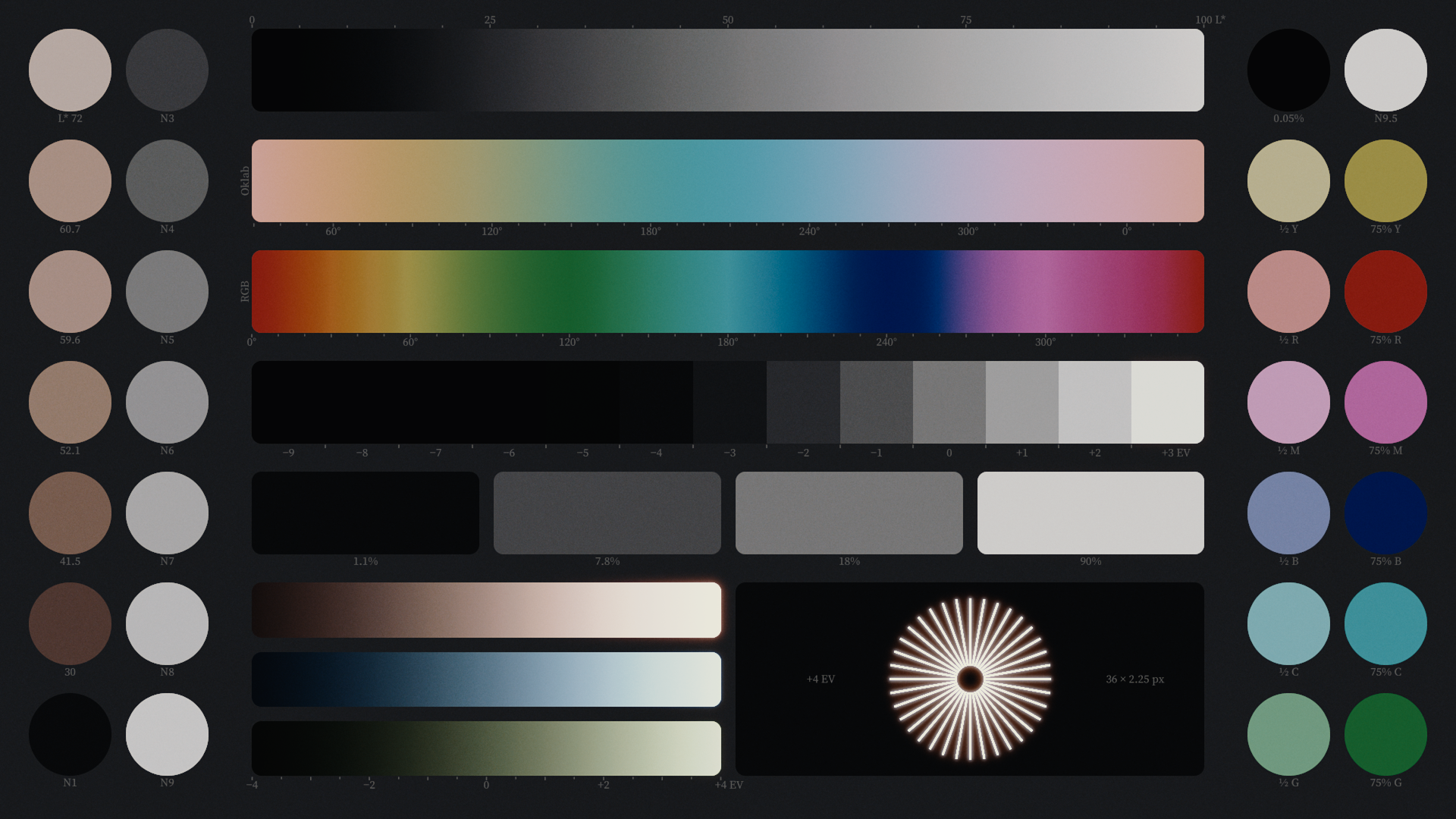
Un substitut déclaré inspiré de la copie, et non une reproduction du Ferraniacolor Positive, montré après l’Ansco Color Negative 843. Aucune donnée de ce film n’est enregistrée : ses courbes caractéristiques, sa sensibilité spectrale, sa MTF et ses colorants sont ceux de l’Agfa Print CP30, un substitut, inchangés. La décoloration n’est pas modélisée ; il rend une copie neuve.
Courbes de réponse et fondements du modèle
Comparez les données du fabricant à la réponse d’Ashigrain sur les mêmes axes. Ces courbes montrent comment le modèle est calibré sur ses sources ; elles ne prouvent pas qu’il reproduit une prise de vue argentique.
Réponse caractéristique
Limites du modèle
Ces images présentent le modèle de pellicule en action. La réponse spectrale, l’éclairage et les conditions de visionnage comportent des approximations ; les halos, la diffusion, la taille du grain, l’instabilité et le scintillement ne sont pas entièrement mesurés pour chaque pellicule. Une prise de vue réelle dépend aussi du développement et du calage du tirage.
- Il s’agit d’un substitut déclaré inspiré du Ferraniacolor Positive, et non d’une reproduction. Aucune donnée sensitométrique ou spectrale du film n’est enregistrée.
- Les courbes caractéristiques, la sensibilité spectrale, la MTF et les colorants sont ceux de l’Agfa Print CP30, un substitut, inchangés. Aucune source ne documente les courbes, les colorants ou la filiation du Ferraniacolor ; le choix du substitut est une hypothèse.
- Le procédé, l’équilibre de tirage et l’antihalo sont des hypothèses et ne sont pas modélisés.
- Les copies conservées sont souvent décolorées ; la décoloration n’est pas modélisée, et le modèle rend une copie neuve.
- La cible neutre est une cible supposée équilibrée sur le gris (0.994 / 1.000 / 1.004, Status A) ; la cible propre du substitut n’est pas utilisée.
- La source ne donne aucun spectre de lampe ni de filtre de tireuse. Leur réponse spectrale est approchée.
- Le voile de projection modélisé relève les noirs à l’écran. Son intensité est supposée, faute de mesure dans les sources disponibles ; il ne permet donc pas d’établir un contraste de projection mesuré.
Réciprocité : non modélisée. Le temps de pose n’a aucun effet sur cette pellicule.
Guide des pellicules : hypothèses et choix pratiques
Cet aperçu associe le positif au négatif de prise de vue indiqué. Dans cette comparaison, le positif n’a ni indice d’exposition distinct ni réponse de grain mesurée propre.
Sources
- Characteristic curves: AGFA PRINT CP30 colour print film product info / technical data, 17/10/2011, p. 5
Intégrez cette pellicule à votre étalonnage.
Toutes les pellicules en un seul achat, sans abonnement.
€199 + VAT