 Ashigrain
Copie couleur · Pellicule de copie
SuperCinecolor
Le tirage trichrome de Cinecolor sur film à double couche.
Cinecolor's three-colour print, reconstructed: its dyes, including the Prussian-blue cyan, are traced from Gundelfinger's 1950 paper, with tone borrowed from Agfa CP30. Original vs Ashigrain.
En bref
- Lancement
- fin des années 1940
- Arrêté
- Procédé
- Cinecolor three-colour machine processing (development to silver, then toning and dyeing of the component images)
- Densité maximale
- ≈ 4,0
À propos du film
SuperCinecolor étendit à trois couleurs le procédé bichrome de Cinecolor, en tirant depuis trois négatifs de sélection sur un film positif duplitisé, couché d’émulsion sur ses deux faces.
L’American WideScreen Museum date son lancement de 1948, et l’ingénieur Alan Gundelfinger de Cinecolor le présenta à la Society of Motion Picture Engineers le 11 octobre 1949. Les enregistrements cyan et magenta étaient tirés d’abord sur les faces opposées du film, et le jaune ensuite sur la face cyan. Le cyan était une image de fer virée en bleu de Prusse, tandis que le jaune et le magenta étaient des colorants basiques mordancés sur une image d’iodure d’argent, et Gundelfinger qualifiait la densité légèrement plus élevée du cyan dans le vert que dans le bleu de pire défaut du procédé. Son premier long métrage, The Sword of Monte Cristo, sortit en 1951, suivi de titres comme Jack and the Beanstalk et Abbott and Costello Meet Captain Kidd (tous deux de 1952) et Riders to the Stars (1954). Selon le Museum, Jack and the Beanstalk fut tourné sur négatif Eastman Color et tiré en SuperCinecolor, et Cinecolor utilisait le film de tirage couleur Eastman pour les rushes mais gardait son propre procédé pour les copies d’exploitation. Les copies étaient jugées en projection à arc, et le procédé servit aussi pour des séries télévisées. Selon le Museum, Cinecolor cessa ses activités en 1954 et Technicolor racheta ses actifs.
Sources de cet historique
- Cinecolor Three-Color Process (Alan M. Gundelfinger, Journal of the SMPTE 54, January 1950), Society of Motion Picture and Television Engineers
- Supercinecolor / Natural Color, Timeline of Historical Film Colors, University of Zurich
- Cinecolor, American WideScreen Museum
Le rendu
SuperCinecolor était le procédé de tirage trichrome de Cinecolor de la fin des années 1940, tiré depuis des négatifs de sélection sur un film couché sur ses deux faces. Son premier long métrage, The Sword of Monte Cristo, sortit en 1951. Ashigrain le reconstruit : ses colorants sont relevés dans l’article de Cinecolor de 1950, la tonalité et la sensibilité étant empruntées à l’Agfa Print CP30.





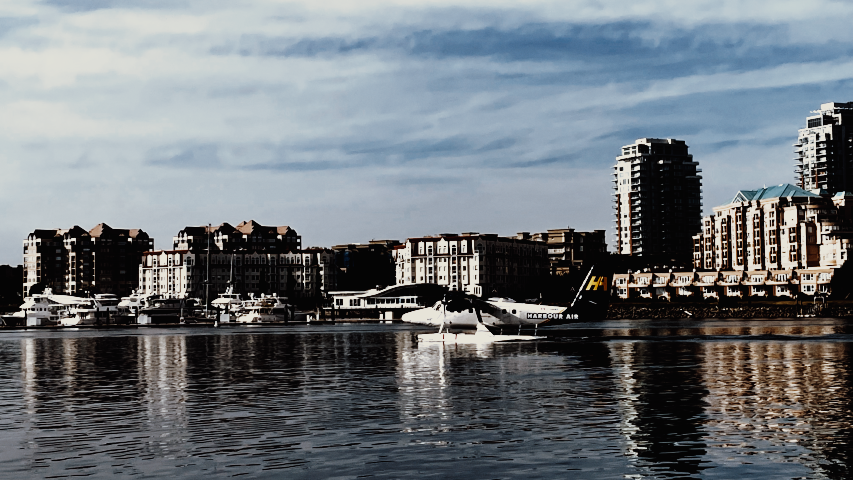
Idéale pour
- Films de cape et d’épée et fantastiques du début des années 1950
- Séries B de science-fiction des années 1950
- Comparer le Cinecolor trichrome avec Technicolor
Comparer les films de copie
The same Vision3 500T night frame on each print film: how deep the blacks go, how the highlights roll off and how the colour separates.
The same Vision3 500T night frame on each print film: how deep the blacks go, how the highlights roll off and how the colour separates.
The same Vision3 500T night frame on each print film: how deep the blacks go, how the highlights roll off and how the colour separates.
The same Vision3 500T night frame on each print film: how deep the blacks go, how the highlights roll off and how the colour separates.
The same Vision3 500T night frame on each print film: how deep the blacks go, how the highlights roll off and how the colour separates.
The same Vision3 500T night frame on each print film: how deep the blacks go, how the highlights roll off and how the colour separates.
The same Vision3 500T night frame on each print film: how deep the blacks go, how the highlights roll off and how the colour separates.
The same Vision3 500T night frame on each print film: how deep the blacks go, how the highlights roll off and how the colour separates.
The same Vision3 500T night frame on each print film: how deep the blacks go, how the highlights roll off and how the colour separates.
The same Vision3 500T night frame on each print film: how deep the blacks go, how the highlights roll off and how the colour separates.
The same Vision3 500T night frame on each print film: how deep the blacks go, how the highlights roll off and how the colour separates.
The same Vision3 500T night frame on each print film: how deep the blacks go, how the highlights roll off and how the colour separates.
The same Vision3 500T night frame on each print film: how deep the blacks go, how the highlights roll off and how the colour separates.
The same Vision3 500T night frame on each print film. On this two-colour print (a labelled surrogate) every colour falls between blue-green and red-orange: how deep the blacks go, how the highlights roll off and which lights keep their hue.
The same Vision3 500T night frame on each print film: how deep the blacks go, how the highlights roll off and how the colour separates.
The same Vision3 500T night frame on each print film: how deep the blacks go, how the highlights roll off and how the colour separates.
The same Vision3 500T night frame on each print film: how deep the blacks go, how the highlights roll off and how the colour separates.
The same Vision3 500T night frame on each print film: how deep the blacks go, how the highlights roll off and how the colour separates.
The same Vision3 500T night frame on each print film: how deep the blacks go, how the highlights roll off and how the colour separates.
The same Vision3 500T night frame on each print film: how deep the blacks go, how the highlights roll off and how the colour separates.
The same Vision3 500T night frame on each print film: how deep the blacks go, how the highlights roll off and how the colour separates.
The same Vision3 500T night frame on each print film: how deep the blacks go, how the highlights roll off and how the colour separates.
The same Vision3 500T night frame on each print film: how deep the blacks go, how the highlights roll off and how the colour separates.
The same Vision3 500T night frame on each print film: how deep the blacks go, how the highlights roll off and how the colour separates.
The same Vision3 500T night frame on each print film. On this blue-sensitive black-and-white print the colour negative turns grey: how deep the blacks go, how the highlights roll off and how dark the reds and greens print.
The same Vision3 500T night frame on each print film: how deep the blacks go, how the highlights roll off and how the colour separates.
The same Vision3 500T night frame on each print film. On this blue-sensitive black-and-white print the colour negative turns grey: how deep the blacks go, how the highlights roll off and how dark the red neon and skin print.
The same Vision3 500T night frame on each print film: how deep the blacks go, how the highlights roll off and how the colour separates.
The same Vision3 500T night frame on each print film. On this black-and-white print the colour negative turns grey: how deep the blacks go, how the highlights roll off and how the coloured lights and skin translate to grey.
The same Vision3 500T night frame on each print film. On this blue-sensitive black-and-white print the colour negative turns grey: how deep the blacks go, how the highlights roll off and how the coloured lights and skin translate to grey.
The same Vision3 500T night frame on each print film: how deep the blacks go, how the highlights roll off and how the colour separates.
The same Vision3 500T night frame on each print film: how deep the blacks go, how the highlights roll off and how the colour separates.
The same Vision3 500T night frame on each print film: how deep the blacks go, how the highlights roll off and how the colour separates.
The same Vision3 500T night frame on each print film: how deep the blacks go, how the highlights roll off and how the colour separates.
The same Vision3 500T night frame on each print film: how deep the blacks go, how the highlights roll off and how the colour separates.
The same Vision3 500T night frame on each print film. On this two-colour print (a labelled surrogate) every colour falls between a blue and a red dye: how deep the blacks go, how the highlights roll off and which lights keep their hue.
The same Vision3 500T night frame on each print film: how deep the blacks go, how the highlights roll off and how the colour separates.
La même image de nuit sur Kodak Vision3 500T, tirée sur chaque positif.
- Kodak Vision Premier Color Print Film 2393
- Eastman Color SP Print Film 5383
- Eastman Color Print Film 5384
- Fujifilm Eterna-CP 3521XD
- Du Pont Color Release Positive Type 275
- Fujifilm Eterna-CP 3523XD
- Kodak Vision Color Print Film 2383
- Fujifilm Eterna-CP 3513DI
- Eastman EXR Color Print Film 5386
- Eastman Color Print Film 5381 (1972)
- Eastman Color Print Film 5385
- Agfa CP30 Colour Print Film
- SuperCinecolor
- Cinecolor (two-colour)
- Gevacolor Positive 953
- Gevacolor Print 9.85
- Gevacolor Print 986
- Gevacolor Print 982
- Ferraniacolor Positive
- 3M Color Positive 650
- Fujicolor Positive F-CP 3510
- Fujicolor Positive F-CP 3519
- Fujifilm Eterna-CP 3512
- Eastman Color Print 5381 (1950)
- Eastman Fine Grain Release Positive 5302
- Ansco Color Print 848
- Kodak B&W Print Film 2302
- Svema TsP-11
- Svema MZ-3
- ORWO PF 2 Positive Print Film
- Technicolor Dye Transfer (1997 revival)
- Svema TsP-8R
- Shostka Colour Positive (1950s)
- Technicolor Dye Transfer (Process IV)
- Gasparcolor Print
- Trucolor Print (two-colour)
- Kodak Vision Color Teleprint Film 2395
Science et sources

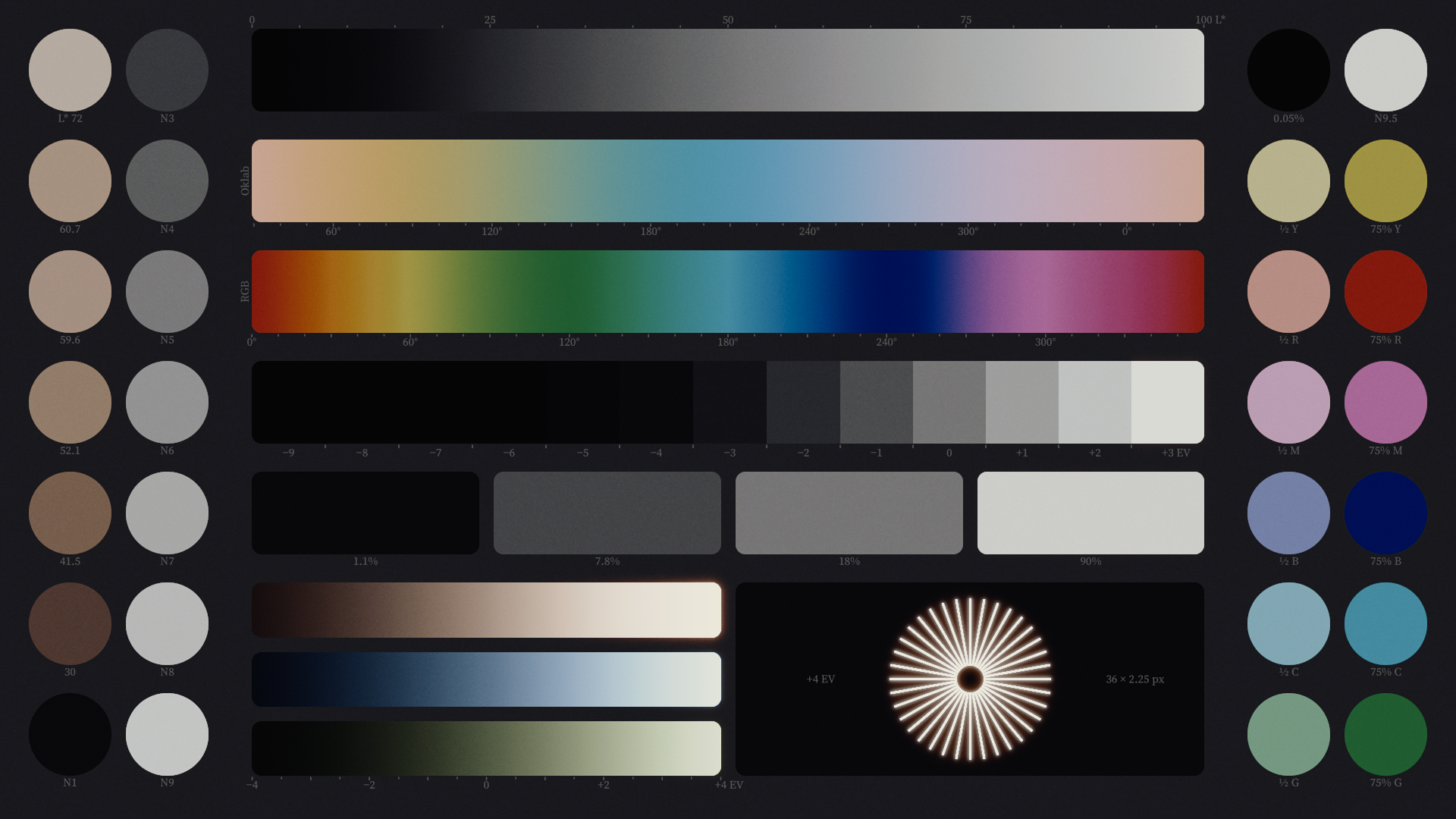
Un tirage trichrome, montré après Ansco Color Negative 843. Ses trois colorants et leur neutre sont relevés dans l’article de Gundelfinger de 1950 ; ses courbes caractéristiques et ses sensibilités d’enregistrement sont empruntées à l’Agfa Print CP30, un substitut, car l’article n’imprime ni courbe ni sensibilité.
Courbes de réponse et fondements du modèle
Comparez les données du fabricant à la réponse d’Ashigrain sur les mêmes axes. Ces courbes montrent comment le modèle est calibré sur ses sources ; elles ne prouvent pas qu’il reproduit une prise de vue argentique.
Réponse caractéristique
Limites du modèle
Ces images présentent le modèle de pellicule en action. La réponse spectrale, l’éclairage et les conditions de visionnage comportent des approximations ; les halos, la diffusion, la taille du grain, l’instabilité et le scintillement ne sont pas entièrement mesurés pour chaque pellicule. Une prise de vue réelle dépend aussi du développement et du calage du tirage.
- Aucune courbe caractéristique, aucun gamma d’enregistrement ni aucune sensibilité spectrale de SuperCinecolor n’est imprimé. La tonalité et les sensibilités d’enregistrement sont les courbes numérisées de l’Agfa Print CP30, inchangées, un substitut et non les données de ce procédé.
- Les trois colorants et leur neutre sont relevés sur une figure tramée de l’article de Gundelfinger de 1950, en un seul passage. Les queues du jaune et du magenta au-delà de 600 nm se confondent le long du bord inférieur du graphique et sont maintenues sur ce bord.
- L’article ne donne que la chromaticité de l’arc de projection (x 0.3408, y 0.3583), pas son spectre ; un spectre de la série lumière du jour à cette chromaticité est supposé.
- Aucune MTF ni granularité n’est imprimée pour SuperCinecolor.
- La source ne donne aucun spectre de lampe ni de filtre de tireuse. Leur réponse spectrale est approchée.
- Le voile de projection modélisé relève les noirs à l’écran. Son intensité est supposée, faute de mesure dans les sources disponibles ; il ne permet donc pas d’établir un contraste de projection mesuré.
Réciprocité : non modélisée. Le temps de pose n’a aucun effet sur cette pellicule.
Guide des pellicules : hypothèses et choix pratiques
Cet aperçu associe le positif au négatif de prise de vue indiqué. Dans cette comparaison, le positif n’a ni indice d’exposition distinct ni réponse de grain mesurée propre.
Sources
- Characteristic curves: AGFA PRINT CP30 colour print film product info / technical data, 17/10/2011, p. 5
Intégrez cette pellicule à votre étalonnage.
Toutes les pellicules en un seul achat, sans abonnement.
€199 + VAT