Farbkopie · Kopierfilm

Technicolor Dye Transfer (1997 revival)

Technicolors Farbübertragungs-Revival der späten 1990er.

Geplante Medien

A labelled surrogate of Technicolor's late-1990s dye-transfer revival: the Process IV model with no key image and an assumed steeper tone for deeper blacks. Original vs Ashigrain.

Kodak Vision3 500T, Technicolor Dye Transfer (1997 revival)

stock
Kodak Vision3 500T
mode
Print
print_film
Technicolor Dye Transfer (1997 revival)
film_format
Super 35 (4-perf)

Auf einen Blick

Eingeführt
1997
Eingestellt
Prozess
three separation records printed onto matrix film, developed to hardened gelatin reliefs, imbibed with cyan, magenta and yellow dyes and transferred in register onto a blank
Maximale Dichte
≈ 2,8
Träger
Polyester

Über den Film

Technicolor hatte das Farbübertragungskopieren in den Vereinigten Staaten Mitte der 1970er eingestellt, untersuchte ab den frühen 1990ern ein Revival und brachte es 1997 in seinem Labor in North Hollywood auf dem Universal-Gelände zurück.

Dazu kaufte es die Farbübertragungsanlagen zurück, die sein Werk in West Drayton Ende der 1970er nach China verkauft hatte. Film Atlas nennt Batman & Robin (1997) als ersten Film, der mit den neuen Kopien herauskam, nur als Premierenkopien, und im Dezember 1997 berichtete die Los Angeles Times, das Verfahren sei bisher für einige Kopien von Giant und Batman & Robin verwendet worden. Ricotta, einer der Verantwortlichen des Revivals, sagte, es liefere schärfere, weniger körnige Bilder und eine erweiterte Tonskala mit schwärzeren Schwärzen und weißeren Weißen. Die Kopien entstanden auf Estar-Polyester-Blankfilm von Kodak, mit schwarzweiß kopierten Tonspuren. Es wurde für Premierenkopien neuer Filme wie Bulworth, The Thin Red Line und Godzilla (alle 1998), Pearl Harbor und Apocalypse Now Redux (beide 2001) verwendet sowie für Wiederaufführungen von Rear Window, Gone with the Wind und The Wizard of Oz. Die Wiederaufführung von Rear Window 1999 hatte etwa 40 Farbübertragungskopien. Das Revival sollte auf große Verleihauflagen anwachsen, blieb aber wegen Problemen der Qualitätskontrolle, technischer Ausfälle und des Aufkommens der digitalen Projektion bei kleinen, und Anfang der 2000er war es beendet.

Quellen zu dieser Geschichte
  1. Technicolor dye-transfer revival (Robert Hoffman), Film Atlas (FIAF / George Eastman Museum)
  2. Technicolor prints from color negatives (Richard W. Haines), Film Atlas (FIAF / George Eastman Museum)
  3. Film restoration more than 'Rear Window'-dressing (Bill Desowitz, 11 December 1997), CNN Interactive (Los Angeles Times)

Der Look

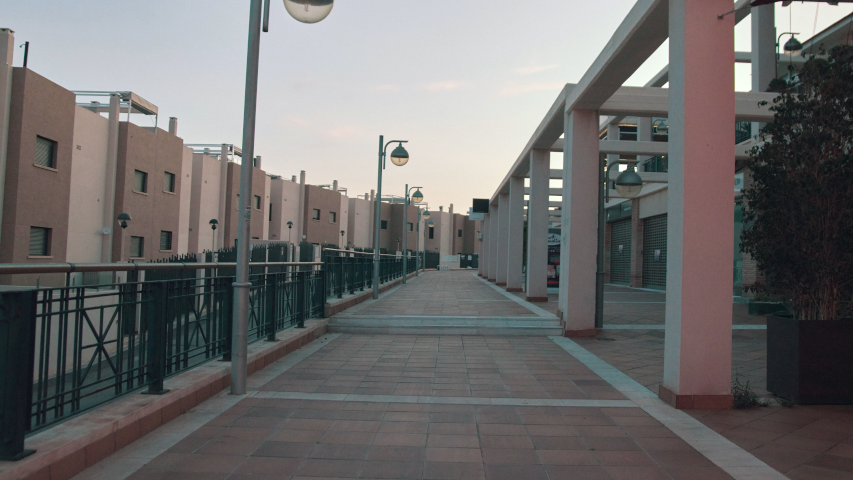
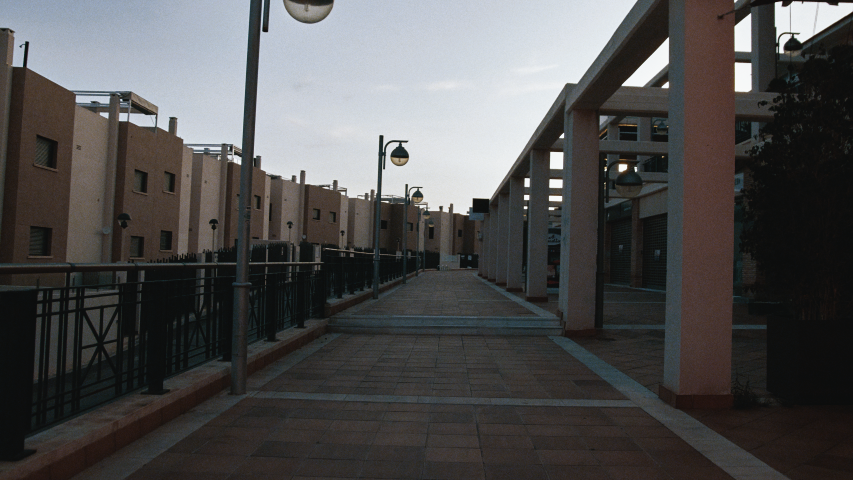
1997 belebte Technicolor das Farbübertragungskopieren für Premierenkopien neuer Filme und wiederaufgeführter Klassiker wieder, auf Polyesterunterlage; Anfang der 2000er war es wieder eingestellt. Ashigrains Fassung ist ein gekennzeichnetes Surrogat, ein von der Kopie inspiriertes Modell statt einer Reproduktion: das Modell von Process IV ohne Schlüsselbild und mit steilerer Tonwiedergabe.


Beispielbild zu Technicolor Dye Transfer (1997 revival): OriginalBeispielbild zu Technicolor Dye Transfer (1997 revival): Ashigrain

Geeignet für

  1. Premierenkopien der späten 1990er
  2. Restaurierte Wiederaufführungen von Studioklassikern
  3. Tiefe Schwärzen mit gesättigter Farbstofffarbe

Kopierfilme vergleichen

Geplante Medien

The same Vision3 500T night frame on each print film: how deep the blacks go, how the highlights roll off and how the colour separates.

Kodak Vision3 500T, Kodak Vision Premier Color Print Film 2393

stock
Kodak Vision3 500T
mode
Print
print_film
Kodak Vision Premier Color Print Film 2393
film_format
Super 35 (4-perf)
Kodak Vision3 500T → Kodak Vision Premier Color Print Film 2393

Geplante Medien

The same Vision3 500T night frame on each print film: how deep the blacks go, how the highlights roll off and how the colour separates.

Kodak Vision3 500T, Eastman Color SP Print Film 5383

stock
Kodak Vision3 500T
mode
Print
print_film
Eastman Color SP Print Film 5383
film_format
Super 35 (4-perf)
Kodak Vision3 500T → Eastman Color SP Print Film 5383

Geplante Medien

The same Vision3 500T night frame on each print film: how deep the blacks go, how the highlights roll off and how the colour separates.

Kodak Vision3 500T, Eastman Color Print Film 5384

stock
Kodak Vision3 500T
mode
Print
print_film
Eastman Color Print Film 5384
film_format
Super 35 (4-perf)
Kodak Vision3 500T → Eastman Color Print Film 5384

Geplante Medien

The same Vision3 500T night frame on each print film: how deep the blacks go, how the highlights roll off and how the colour separates.

Kodak Vision3 500T, Fujifilm Eterna-CP 3521XD

stock
Kodak Vision3 500T
mode
Print
print_film
Fujifilm Eterna-CP 3521XD
film_format
Super 35 (4-perf)
Kodak Vision3 500T → Fujifilm Eterna-CP 3521XD

Geplante Medien

The same Vision3 500T night frame on each print film: how deep the blacks go, how the highlights roll off and how the colour separates.

Kodak Vision3 500T, Du Pont Color Release Positive Type 275

stock
Kodak Vision3 500T
mode
Print
print_film
Du Pont Color Release Positive Type 275
film_format
Super 35 (4-perf)
Kodak Vision3 500T → Du Pont Color Release Positive Type 275

Geplante Medien

The same Vision3 500T night frame on each print film: how deep the blacks go, how the highlights roll off and how the colour separates.

Kodak Vision3 500T, Fujifilm Eterna-CP 3523XD

stock
Kodak Vision3 500T
mode
Print
print_film
Fujifilm Eterna-CP 3523XD
film_format
Super 35 (4-perf)
Kodak Vision3 500T → Fujifilm Eterna-CP 3523XD

Geplante Medien

The same Vision3 500T night frame on each print film: how deep the blacks go, how the highlights roll off and how the colour separates.

Kodak Vision3 500T, Kodak Vision Color Print Film 2383

stock
Kodak Vision3 500T
mode
Print
print_film
Kodak Vision Color Print Film 2383
film_format
Super 35 (4-perf)
Kodak Vision3 500T → Kodak Vision Color Print Film 2383

Geplante Medien

The same Vision3 500T night frame on each print film: how deep the blacks go, how the highlights roll off and how the colour separates.

Kodak Vision3 500T, Fujifilm Eterna-CP 3513DI

stock
Kodak Vision3 500T
mode
Print
print_film
Fujifilm Eterna-CP 3513DI
film_format
Super 35 (4-perf)
Kodak Vision3 500T → Fujifilm Eterna-CP 3513DI

Geplante Medien

The same Vision3 500T night frame on each print film: how deep the blacks go, how the highlights roll off and how the colour separates.

Kodak Vision3 500T, Eastman EXR Color Print Film 5386

stock
Kodak Vision3 500T
mode
Print
print_film
Eastman EXR Color Print Film 5386
film_format
Super 35 (4-perf)
Kodak Vision3 500T → Eastman EXR Color Print Film 5386

Geplante Medien

The same Vision3 500T night frame on each print film: how deep the blacks go, how the highlights roll off and how the colour separates.

Kodak Vision3 500T, Eastman Color Print Film 5381 (1972)

stock
Kodak Vision3 500T
mode
Print
print_film
Eastman Color Print Film 5381 (1972)
film_format
Super 35 (4-perf)
Kodak Vision3 500T → Eastman Color Print Film 5381 (1972)

Geplante Medien

The same Vision3 500T night frame on each print film: how deep the blacks go, how the highlights roll off and how the colour separates.

Kodak Vision3 500T, Eastman Color Print Film 5385

stock
Kodak Vision3 500T
mode
Print
print_film
Eastman Color Print Film 5385
film_format
Super 35 (4-perf)
Kodak Vision3 500T → Eastman Color Print Film 5385

Geplante Medien

The same Vision3 500T night frame on each print film: how deep the blacks go, how the highlights roll off and how the colour separates.

Kodak Vision3 500T, Agfa CP30 Colour Print Film

stock
Kodak Vision3 500T
mode
Print
print_film
Agfa CP30 Colour Print Film
film_format
Super 35 (4-perf)
Kodak Vision3 500T → Agfa CP30 Colour Print Film

Geplante Medien

The same Vision3 500T night frame on each print film: how deep the blacks go, how the highlights roll off and how the colour separates.

Kodak Vision3 500T, SuperCinecolor

stock
Kodak Vision3 500T
mode
Print
print_film
SuperCinecolor
film_format
Super 35 (4-perf)
Kodak Vision3 500T → SuperCinecolor

Geplante Medien

The same Vision3 500T night frame on each print film. On this two-colour print (a labelled surrogate) every colour falls between blue-green and red-orange: how deep the blacks go, how the highlights roll off and which lights keep their hue.

Kodak Vision3 500T, Cinecolor (two-colour)

stock
Kodak Vision3 500T
mode
Print
print_film
Cinecolor (two-colour)
film_format
Super 35 (4-perf)
Kodak Vision3 500T → Cinecolor (two-colour)

Geplante Medien

The same Vision3 500T night frame on each print film: how deep the blacks go, how the highlights roll off and how the colour separates.

Kodak Vision3 500T, Gevacolor Positive 953

stock
Kodak Vision3 500T
mode
Print
print_film
Gevacolor Positive 953
film_format
Super 35 (4-perf)
Kodak Vision3 500T → Gevacolor Positive 953

Geplante Medien

The same Vision3 500T night frame on each print film: how deep the blacks go, how the highlights roll off and how the colour separates.

Kodak Vision3 500T, Gevacolor Print 9.85

stock
Kodak Vision3 500T
mode
Print
print_film
Gevacolor Print 9.85
film_format
Super 35 (4-perf)
Kodak Vision3 500T → Gevacolor Print 9.85

Geplante Medien

The same Vision3 500T night frame on each print film: how deep the blacks go, how the highlights roll off and how the colour separates.

Kodak Vision3 500T, Gevacolor Print 986

stock
Kodak Vision3 500T
mode
Print
print_film
Gevacolor Print 986
film_format
Super 35 (4-perf)
Kodak Vision3 500T → Gevacolor Print 986

Geplante Medien

The same Vision3 500T night frame on each print film: how deep the blacks go, how the highlights roll off and how the colour separates.

Kodak Vision3 500T, Gevacolor Print 982

stock
Kodak Vision3 500T
mode
Print
print_film
Gevacolor Print 982
film_format
Super 35 (4-perf)
Kodak Vision3 500T → Gevacolor Print 982

Geplante Medien

The same Vision3 500T night frame on each print film: how deep the blacks go, how the highlights roll off and how the colour separates.

Kodak Vision3 500T, Ferraniacolor Positive

stock
Kodak Vision3 500T
mode
Print
print_film
Ferraniacolor Positive
film_format
Super 35 (4-perf)
Kodak Vision3 500T → Ferraniacolor Positive

Geplante Medien

The same Vision3 500T night frame on each print film: how deep the blacks go, how the highlights roll off and how the colour separates.

Kodak Vision3 500T, 3M Color Positive 650

stock
Kodak Vision3 500T
mode
Print
print_film
3M Color Positive 650
film_format
Super 35 (4-perf)
Kodak Vision3 500T → 3M Color Positive 650

Geplante Medien

The same Vision3 500T night frame on each print film: how deep the blacks go, how the highlights roll off and how the colour separates.

Kodak Vision3 500T, Fujicolor Positive F-CP 3510

stock
Kodak Vision3 500T
mode
Print
print_film
Fujicolor Positive F-CP 3510
film_format
Super 35 (4-perf)
Kodak Vision3 500T → Fujicolor Positive F-CP 3510

Geplante Medien

The same Vision3 500T night frame on each print film: how deep the blacks go, how the highlights roll off and how the colour separates.

Kodak Vision3 500T, Fujicolor Positive F-CP 3519

stock
Kodak Vision3 500T
mode
Print
print_film
Fujicolor Positive F-CP 3519
film_format
Super 35 (4-perf)
Kodak Vision3 500T → Fujicolor Positive F-CP 3519

Geplante Medien

The same Vision3 500T night frame on each print film: how deep the blacks go, how the highlights roll off and how the colour separates.

Kodak Vision3 500T, Fujifilm Eterna-CP 3512

stock
Kodak Vision3 500T
mode
Print
print_film
Fujifilm Eterna-CP 3512
film_format
Super 35 (4-perf)
Kodak Vision3 500T → Fujifilm Eterna-CP 3512

Geplante Medien

The same Vision3 500T night frame on each print film: how deep the blacks go, how the highlights roll off and how the colour separates.

Kodak Vision3 500T, Eastman Color Print 5381 (1950)

stock
Kodak Vision3 500T
mode
Print
print_film
Eastman Color Print 5381 (1950)
film_format
Super 35 (4-perf)
Kodak Vision3 500T → Eastman Color Print 5381 (1950)

Geplante Medien

The same Vision3 500T night frame on each print film. On this blue-sensitive black-and-white print the colour negative turns grey: how deep the blacks go, how the highlights roll off and how dark the reds and greens print.

Kodak Vision3 500T, Eastman Fine Grain Release Positive 5302

stock
Kodak Vision3 500T
mode
Print
print_film
Eastman Fine Grain Release Positive 5302
film_format
Super 35 (4-perf)
Kodak Vision3 500T → Eastman Fine Grain Release Positive 5302

Geplante Medien

The same Vision3 500T night frame on each print film: how deep the blacks go, how the highlights roll off and how the colour separates.

Kodak Vision3 500T, Ansco Color Print 848

stock
Kodak Vision3 500T
mode
Print
print_film
Ansco Color Print 848
film_format
Super 35 (4-perf)
Kodak Vision3 500T → Ansco Color Print 848

Geplante Medien

The same Vision3 500T night frame on each print film. On this blue-sensitive black-and-white print the colour negative turns grey: how deep the blacks go, how the highlights roll off and how dark the red neon and skin print.

Kodak Vision3 500T, Kodak B&W Print Film 2302

stock
Kodak Vision3 500T
mode
Print
print_film
Kodak B&W Print Film 2302
film_format
Super 35 (4-perf)
Kodak Vision3 500T → Kodak B&W Print Film 2302

Geplante Medien

The same Vision3 500T night frame on each print film: how deep the blacks go, how the highlights roll off and how the colour separates.

Kodak Vision3 500T, Svema TsP-11

stock
Kodak Vision3 500T
mode
Print
print_film
Svema TsP-11
film_format
Super 35 (4-perf)
Kodak Vision3 500T → Svema TsP-11

Geplante Medien

The same Vision3 500T night frame on each print film. On this black-and-white print the colour negative turns grey: how deep the blacks go, how the highlights roll off and how the coloured lights and skin translate to grey.

Kodak Vision3 500T, Svema MZ-3

stock
Kodak Vision3 500T
mode
Print
print_film
Svema MZ-3
film_format
Super 35 (4-perf)
Kodak Vision3 500T → Svema MZ-3

Geplante Medien

The same Vision3 500T night frame on each print film. On this blue-sensitive black-and-white print the colour negative turns grey: how deep the blacks go, how the highlights roll off and how the coloured lights and skin translate to grey.

Kodak Vision3 500T, ORWO PF 2 Positive Print Film

stock
Kodak Vision3 500T
mode
Print
print_film
ORWO PF 2 Positive Print Film
film_format
Super 35 (4-perf)
Kodak Vision3 500T → ORWO PF 2 Positive Print Film

Geplante Medien

The same Vision3 500T night frame on each print film: how deep the blacks go, how the highlights roll off and how the colour separates.

Kodak Vision3 500T, Technicolor Dye Transfer (1997 revival)

stock
Kodak Vision3 500T
mode
Print
print_film
Technicolor Dye Transfer (1997 revival)
film_format
Super 35 (4-perf)
Kodak Vision3 500T → Technicolor Dye Transfer (1997 revival)

Geplante Medien

The same Vision3 500T night frame on each print film: how deep the blacks go, how the highlights roll off and how the colour separates.

Kodak Vision3 500T, Svema TsP-8R

stock
Kodak Vision3 500T
mode
Print
print_film
Svema TsP-8R
film_format
Super 35 (4-perf)
Kodak Vision3 500T → Svema TsP-8R

Geplante Medien

The same Vision3 500T night frame on each print film: how deep the blacks go, how the highlights roll off and how the colour separates.

Kodak Vision3 500T, Shostka Colour Positive (1950s)

stock
Kodak Vision3 500T
mode
Print
print_film
Shostka Colour Positive (1950s)
film_format
Super 35 (4-perf)
Kodak Vision3 500T → Shostka Colour Positive (1950s)

Geplante Medien

The same Vision3 500T night frame on each print film: how deep the blacks go, how the highlights roll off and how the colour separates.

Kodak Vision3 500T, Technicolor Dye Transfer (Process IV)

stock
Kodak Vision3 500T
mode
Print
print_film
Technicolor Dye Transfer (Process IV)
film_format
Super 35 (4-perf)
Kodak Vision3 500T → Technicolor Dye Transfer (Process IV)

Geplante Medien

The same Vision3 500T night frame on each print film: how deep the blacks go, how the highlights roll off and how the colour separates.

Kodak Vision3 500T, Gasparcolor Print

stock
Kodak Vision3 500T
mode
Print
print_film
Gasparcolor Print
film_format
Super 35 (4-perf)
Kodak Vision3 500T → Gasparcolor Print

Geplante Medien

The same Vision3 500T night frame on each print film. On this two-colour print (a labelled surrogate) every colour falls between a blue and a red dye: how deep the blacks go, how the highlights roll off and which lights keep their hue.

Kodak Vision3 500T, Trucolor Print (two-colour)

stock
Kodak Vision3 500T
mode
Print
print_film
Trucolor Print (two-colour)
film_format
Super 35 (4-perf)
Kodak Vision3 500T → Trucolor Print (two-colour)

Geplante Medien

The same Vision3 500T night frame on each print film: how deep the blacks go, how the highlights roll off and how the colour separates.

Kodak Vision3 500T, Kodak Vision Color Teleprint Film 2395

stock
Kodak Vision3 500T
mode
Print
print_film
Kodak Vision Color Teleprint Film 2395
film_format
Super 35 (4-perf)
Kodak Vision3 500T → Kodak Vision Color Teleprint Film 2395

Dasselbe Nachtbild auf Kodak Vision3 500T, auf jeden Printfilm kopiert.

Printfilm · tiefstes Schwarz zuerstArtMaximale Dichte, Status A · höher ist tieferes SchwarzProduktionsjahre
Kodak Vision Premier Color Print Film 2393Kodak Vision Premier Color Print Film 2393+2.7 tiefer als Technicolor Dye Transfer (1997 revival)Farbe5.51998
Eastman Color SP Print Film 5383Eastman Color SP Print Film 5383Hergestellt 1974–1983 · +2.2 tiefer als Technicolor Dye Transfer (1997 revival)Farbe5.01974–83
Eastman Color Print Film 5384Eastman Color Print Film 5384+2.1 tiefer als Technicolor Dye Transfer (1997 revival)Farbe4.91981
Fujifilm Eterna-CP 3521XDFujifilm Eterna-CP 3521XD+2.0 tiefer als Technicolor Dye Transfer (1997 revival)Farbe4.82007
Du Pont Color Release Positive Type 275Du Pont Color Release Positive Type 275+1.9 tiefer als Technicolor Dye Transfer (1997 revival)Farbe4.71949
Fujifilm Eterna-CP 3523XDFujifilm Eterna-CP 3523XD+1.7 tiefer als Technicolor Dye Transfer (1997 revival)Farbe4.52010
Kodak Vision Color Print Film 2383Kodak Vision Color Print Film 2383Hergestellt seit 1998, in Produktion · +1.3 tiefer als Technicolor Dye Transfer (1997 revival)Farbe4.11998–
Fujifilm Eterna-CP 3513DIFujifilm Eterna-CP 3513DI+1.2 tiefer als Technicolor Dye Transfer (1997 revival)Farbe4.02005
Eastman EXR Color Print Film 5386Eastman EXR Color Print Film 5386+1.2 tiefer als Technicolor Dye Transfer (1997 revival)Farbe4.01993
Eastman Color Print Film 5381 (1972)Eastman Color Print Film 5381 (1972)+1.2 tiefer als Technicolor Dye Transfer (1997 revival)Farbe4.01972
Eastman Color Print Film 5385Eastman Color Print Film 5385+1.2 tiefer als Technicolor Dye Transfer (1997 revival)Farbe4.01962
Agfa CP30 Colour Print FilmAgfa CP30 Colour Print Film+1.2 tiefer als Technicolor Dye Transfer (1997 revival)Farbe4.02003
SuperCinecolorSuperCinecolor+1.2 tiefer als Technicolor Dye Transfer (1997 revival)Farbe4.01948
Cinecolor (two-colour)Cinecolor (two-colour)+1.2 tiefer als Technicolor Dye Transfer (1997 revival)Farbe4.01932
Gevacolor Positive 953Gevacolor Positive 953+1.2 tiefer als Technicolor Dye Transfer (1997 revival)Farbe4.01958
Gevacolor Print 9.85Gevacolor Print 9.85+1.2 tiefer als Technicolor Dye Transfer (1997 revival)Farbe4.01971
Gevacolor Print 986Gevacolor Print 986+1.2 tiefer als Technicolor Dye Transfer (1997 revival)Farbe4.01975
Gevacolor Print 982Gevacolor Print 982+1.2 tiefer als Technicolor Dye Transfer (1997 revival)Farbe4.01980
Ferraniacolor PositiveFerraniacolor Positive+1.2 tiefer als Technicolor Dye Transfer (1997 revival)Farbe4.01949
3M Color Positive 6503M Color Positive 650+1.2 tiefer als Technicolor Dye Transfer (1997 revival)Farbe4.01970
Fujicolor Positive F-CP 3510Fujicolor Positive F-CP 3510+1.0 tiefer als Technicolor Dye Transfer (1997 revival)Farbe3.82003
Fujicolor Positive F-CP 3519Fujicolor Positive F-CP 3519+1.0 tiefer als Technicolor Dye Transfer (1997 revival)Farbe3.82001
Fujifilm Eterna-CP 3512Fujifilm Eterna-CP 3512Hergestellt 2010–2013 · +0.9 tiefer als Technicolor Dye Transfer (1997 revival)Farbe3.72010–13
Eastman Color Print 5381 (1950)Eastman Color Print 5381 (1950)Hergestellt 1950–1953 · +0.7 tiefer als Technicolor Dye Transfer (1997 revival)Farbe3.51950–53
Eastman Fine Grain Release Positive 5302Eastman Fine Grain Release Positive 5302+0.6 tiefer als Technicolor Dye Transfer (1997 revival)S/W3.41950
Ansco Color Print 848Ansco Color Print 848+0.5 tiefer als Technicolor Dye Transfer (1997 revival)Farbe3.31951
Kodak B&W Print Film 2302Kodak B&W Print Film 2302Hergestellt seit 2000, in Produktion · +0.4 tiefer als Technicolor Dye Transfer (1997 revival)S/W3.22000–
Svema TsP-11Svema TsP-11+0.2 tiefer als Technicolor Dye Transfer (1997 revival)Farbe3.01979
Svema MZ-3Svema MZ-3+0.2 tiefer als Technicolor Dye Transfer (1997 revival)S/W3.01979
ORWO PF 2 Positive Print FilmORWO PF 2 Positive Print Film+0.2 tiefer als Technicolor Dye Transfer (1997 revival)S/W3.02014
Technicolor Dye Transfer (1997 revival)Technicolor Dye Transfer (1997 revival)dieser PrintfilmFarbe2.81997
Svema TsP-8RSvema TsP-8Rgleich wie Technicolor Dye Transfer (1997 revival)Farbe2.81969
Shostka Colour Positive (1950s)Shostka Colour Positive (1950s)gleich wie Technicolor Dye Transfer (1997 revival)Farbe2.81948
Technicolor Dye Transfer (Process IV)Technicolor Dye Transfer (Process IV)gleich wie Technicolor Dye Transfer (1997 revival)Farbe2.81932
Gasparcolor PrintGasparcolor Print−0.1 heller als Technicolor Dye Transfer (1997 revival)Farbe2.71932
Trucolor Print (two-colour)Trucolor Print (two-colour)−0.2 heller als Technicolor Dye Transfer (1997 revival)Farbe2.61945
Kodak Vision Color Teleprint Film 2395Kodak Vision Color Teleprint Film 2395−0.4 heller als Technicolor Dye Transfer (1997 revival)Farbe2.41999

Wissenschaft und Quellen

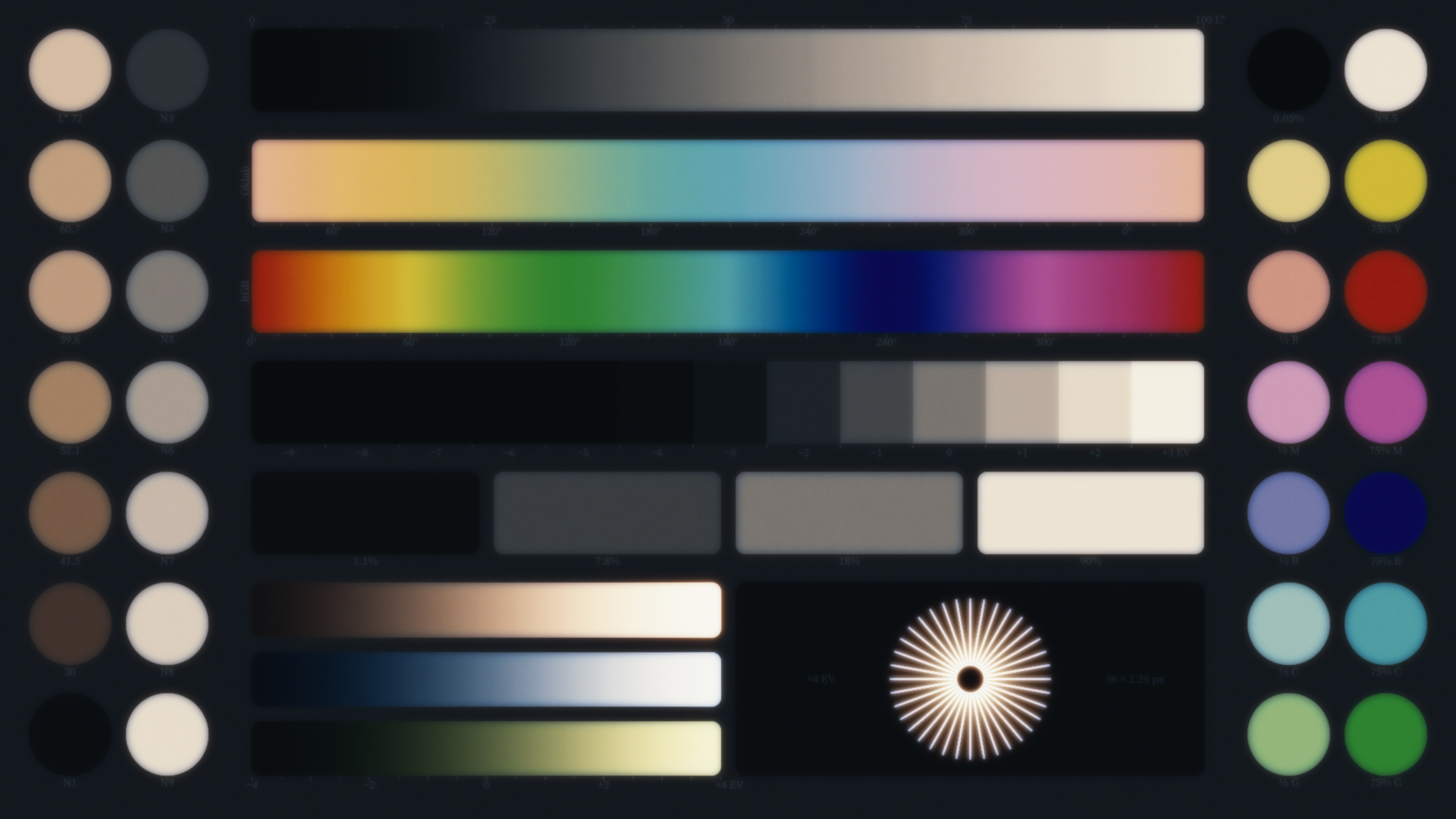
Kalibriertafel zu Technicolor Dye Transfer (1997 revival): OriginalKalibriertafel zu Technicolor Dye Transfer (1997 revival): Bearbeitet
Synthetische Testtafel (Hauttöne, Munsell-Grautöne, Farbbalken, Grau- und Farbtonverläufe, Stufengraukeil, Lichterverlauf der Gedächtnisfarben, Lichthofstern) vor und nach der vollständigen Ashigrain-Pipeline: ORWOCOLOR NC 3, kopiert auf Technicolor Dye Transfer (1997 revival), Super 35 4-perf, Standardeinstellungen der Regler, Belichtung +0.54 Blendenstufen zur Anpassung an das Mittelgrau des Originals, Bild 0.

Ein dreifarbiges Modell, von der Revival-Kopie inspiriert, keine Reproduktion davon, gezeigt nach Kodak Vision3 500T. Es teilt die angenommenen Kurven, Auszugsempfindlichkeiten und Farbstoffe des Modells von Technicolor Process IV, ohne Schlüsselbild und mit einem angenommenen steileren Matrix-Gamma von 2.7 für die erweiterte Tonskala, die das Revival für sich beanspruchte.

Kennlinien und Datengrundlage des Modells

Vergleiche Herstellerdaten und Ashigrains Reaktion auf denselben Achsen. Die Kurven zeigen, wie das Modell an seinen Quellen kalibriert ist; sie belegen keine Übereinstimmung mit auf Film aufgenommenen Bildern.

Kennlinienantwort

Dichte gegen log H (Lux-Sekunden) für die Kanäle R, G, B. R Kreise, G Quadrate, B Dreiecke, N Rauten; gefüllte Markierungen und durchgezogene Linien sind digitalisiert, offene Markierungen und gestrichelte Linien sind simuliert: digitalisiert und simuliert.−3.0−2.0−1.00.01.02.03.0log H (Lux-Sekunden)0.01.02.03.0Dichte

Modellgrenzen

Diese Bilder zeigen das Filmmodell in Anwendung. Spektralantwort, Licht und Betrachtungsbedingungen enthalten Näherungen. Halation, Bloom, Korngröße, Bildstand und Flackern sind nicht für jeden Film vollständig vermessen. Eine echte Filmaufnahme hängt auch von Entwicklung und Kopierlichtabstimmung ab.

  • Dies ist ein dreifarbiges Modell, inspiriert vom Technicolor-Farbübertragungs-Revival 1997–2002, keine Reproduktion seiner Kopien.
  • In den Quellen gibt es keine Kennlinie, kein Auszugsfilter, kein Matrix-Gamma und kein Farbstoffspektrum einer Revival-Kopie. Kurven, Auszugsempfindlichkeiten und Übertragungsfarbstoffe sind die von Ashigrains Surrogat für Technicolor Process IV, selbst benannte Annahmen.
  • Es weicht nur dort ab, wo eine Quelle es sagt: Es gibt kein Schlüsselbild, und das Matrix-Gamma von 2.7, steiler als die 2.6 von Process IV, ist eine Annahme für die erweiterte Tonskala, die das Revival für sich beanspruchte.
  • Die Polyesterunterlage ist erfasst, aber nicht modelliert.
  • Die Quelle gibt keine Spektren von Kopierlampe oder Filtern an. Ihre spektrale Wirkung ist angenähert.
  • Modelliertes Projektionsstreulicht hebt die Schwarztöne auf der Leinwand an. Seine Stärke ist angenommen, da die verfügbaren Quellen sie nicht messen. Daraus lässt sich kein gemessener Projektionskontrast ableiten.

Schwarzschildeffekt: nicht modelliert. Die Belichtungszeit hat bei diesem Film keine Wirkung.

Filmleitfaden: Annahmen und praktische Entscheidungen

Diese Vorschau kombiniert den Printfilm mit dem genannten Kameranegativ. Der Print hat in diesem Vergleich keinen eigenen Belichtungsindex und keine separat gemessene Kornantwort.

Quellen

  1. Process: J. A. Ball, The Technicolor Process of Three-Color Cinematography (American WideScreen Museum transcription), widescreenmuseum.com/oldcolor/ball.htm as served 2026-10-28 (transcription; figures ballpic1a.gif, ballpic2.gif not registered), S. 1
  2. Reconstructed: J. A. Ball, The Technicolor Process of Three-Color Cinematography (American WideScreen Museum transcription), widescreenmuseum.com/oldcolor/ball.htm as served 2026-10-28 (transcription; figures ballpic1a.gif, ballpic2.gif not registered), S. 1

Hol diesen Film in dein Grading.

Alle Filme in einem Kauf, ohne Abo.