 Ashigrain
Farbkopie · Kopierfilm
Ansco Color Print 848
Anscos Farb-Verleihkopierfilm der 1950er.
Ansco's 1950s release print on its own camera negative, 843: the Ansco negative-positive system, traced from Duerr's 1952 paper with dyes taken from Type 843. Original vs Ashigrain.
Auf einen Blick
- Eingeführt
- spätestens 1951
- Prozess
- Ansco color positive process (Ansco Type 846/848 color developer)
- Maximale Dichte
- ≈ 3,3
Über den Film
Ansco Color Print 848 war der Verleihkopierfilm des Negativ-Positiv-Verfahrens, mit dem die Ansco Division der General Aniline & Film Corp. in Binghamton, New York, ihr Umkehrverfahren Ansco Color von 1945 für professionelle Filme ablösen wollte.
Herman Duerr von Ansco stellte das Verfahren mit Typ 848 als Verleihkopierfilm am 18. Oktober 1951 auf der Tagung der Society in Hollywood vor. Das Journal of the SMPTE druckte seinen Aufsatz im Juni 1952. Mit Typ 848 entstanden Verleihkopien von Ansco-Farbnegativen des Typs 843, von Farb-Dupnegativen des Typs 846 oder von Schwarzweiß-Dreifarben-Auszugsnegativen. Der Aufsatz legt die Kopierschritte für Verleihkopien dar und wie Sicherungsmaster und Dupes in sie einfließen, und er behandelt die Tonanforderungen und die Silbertonspuren der Kopien. Wie das Negativ ist der Film ein dreischichtiges chromogenes Monopack mit farbgebender Entwicklung. Der Aufsatz veröffentlicht seine integrale Dichte und spektrale Empfindlichkeit, aber keine Farbstoffkurve. Die Timeline of Historical Film Colors führt ihren Eintrag zu 848 unter 1956, und keine Quelle nennt, wann der Film eingestellt wurde.
Quellen zu dieser Geschichte
- The Ansco Color Negative-Positive Process (Journal of the SMPTE 58(6), June 1952, pp. 465–479), Herman H. Duerr (Ansco), Internet Archive
- Ansco Color Print Film, type 848, Timeline of Historical Film Colors
Der Look
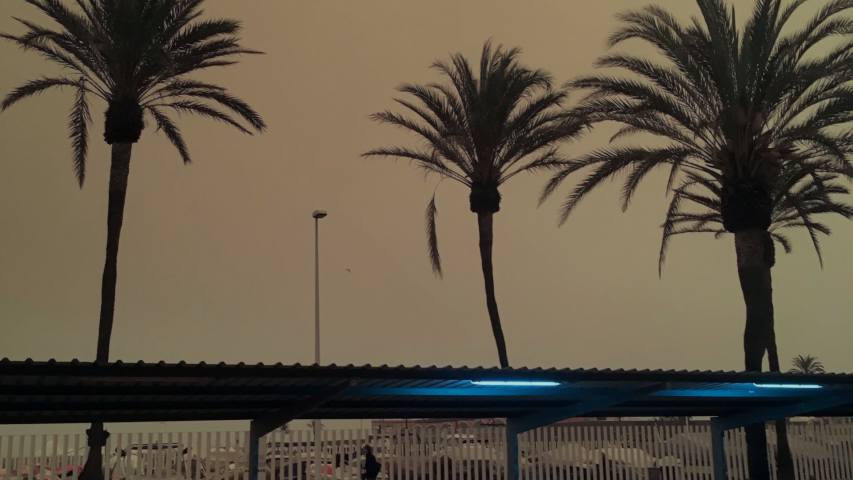
Ansco Color Print 848 ist der Farb-Verleihkopierfilm des Negativ-Positiv-Verfahrens von Ansco aus den 1950ern, gepaart mit dem Kameranegativ Typ 843. Seine Farbstoffspektren stammen vom Typ 843, weil der Aufsatz von Ansco keine Farbstoffkurve für 848 abdruckt. Ashigrain zeigt ihn nach Ansco Color Negative 843.





Geeignet für
- Kopieren von Ansco Color Negative 843
- Farbe der Verleihkopien der 1950er
- Vergleich von Ansco 848 mit Kodak 2383
Kopierfilme vergleichen
The same Vision3 500T night frame on each print film: how deep the blacks go, how the highlights roll off and how the colour separates.
The same Vision3 500T night frame on each print film: how deep the blacks go, how the highlights roll off and how the colour separates.
The same Vision3 500T night frame on each print film: how deep the blacks go, how the highlights roll off and how the colour separates.
The same Vision3 500T night frame on each print film: how deep the blacks go, how the highlights roll off and how the colour separates.
The same Vision3 500T night frame on each print film: how deep the blacks go, how the highlights roll off and how the colour separates.
The same Vision3 500T night frame on each print film: how deep the blacks go, how the highlights roll off and how the colour separates.
The same Vision3 500T night frame on each print film: how deep the blacks go, how the highlights roll off and how the colour separates.
The same Vision3 500T night frame on each print film: how deep the blacks go, how the highlights roll off and how the colour separates.
The same Vision3 500T night frame on each print film: how deep the blacks go, how the highlights roll off and how the colour separates.
The same Vision3 500T night frame on each print film: how deep the blacks go, how the highlights roll off and how the colour separates.
The same Vision3 500T night frame on each print film: how deep the blacks go, how the highlights roll off and how the colour separates.
The same Vision3 500T night frame on each print film: how deep the blacks go, how the highlights roll off and how the colour separates.
The same Vision3 500T night frame on each print film: how deep the blacks go, how the highlights roll off and how the colour separates.
The same Vision3 500T night frame on each print film. On this two-colour print (a labelled surrogate) every colour falls between blue-green and red-orange: how deep the blacks go, how the highlights roll off and which lights keep their hue.
The same Vision3 500T night frame on each print film: how deep the blacks go, how the highlights roll off and how the colour separates.
The same Vision3 500T night frame on each print film: how deep the blacks go, how the highlights roll off and how the colour separates.
The same Vision3 500T night frame on each print film: how deep the blacks go, how the highlights roll off and how the colour separates.
The same Vision3 500T night frame on each print film: how deep the blacks go, how the highlights roll off and how the colour separates.
The same Vision3 500T night frame on each print film: how deep the blacks go, how the highlights roll off and how the colour separates.
The same Vision3 500T night frame on each print film: how deep the blacks go, how the highlights roll off and how the colour separates.
The same Vision3 500T night frame on each print film: how deep the blacks go, how the highlights roll off and how the colour separates.
The same Vision3 500T night frame on each print film: how deep the blacks go, how the highlights roll off and how the colour separates.
The same Vision3 500T night frame on each print film: how deep the blacks go, how the highlights roll off and how the colour separates.
The same Vision3 500T night frame on each print film: how deep the blacks go, how the highlights roll off and how the colour separates.
The same Vision3 500T night frame on each print film. On this blue-sensitive black-and-white print the colour negative turns grey: how deep the blacks go, how the highlights roll off and how dark the reds and greens print.
The same Vision3 500T night frame on each print film: how deep the blacks go, how the highlights roll off and how the colour separates.
The same Vision3 500T night frame on each print film. On this blue-sensitive black-and-white print the colour negative turns grey: how deep the blacks go, how the highlights roll off and how dark the red neon and skin print.
The same Vision3 500T night frame on each print film: how deep the blacks go, how the highlights roll off and how the colour separates.
The same Vision3 500T night frame on each print film. On this black-and-white print the colour negative turns grey: how deep the blacks go, how the highlights roll off and how the coloured lights and skin translate to grey.
The same Vision3 500T night frame on each print film. On this blue-sensitive black-and-white print the colour negative turns grey: how deep the blacks go, how the highlights roll off and how the coloured lights and skin translate to grey.
The same Vision3 500T night frame on each print film: how deep the blacks go, how the highlights roll off and how the colour separates.
The same Vision3 500T night frame on each print film: how deep the blacks go, how the highlights roll off and how the colour separates.
The same Vision3 500T night frame on each print film: how deep the blacks go, how the highlights roll off and how the colour separates.
The same Vision3 500T night frame on each print film: how deep the blacks go, how the highlights roll off and how the colour separates.
The same Vision3 500T night frame on each print film: how deep the blacks go, how the highlights roll off and how the colour separates.
The same Vision3 500T night frame on each print film. On this two-colour print (a labelled surrogate) every colour falls between a blue and a red dye: how deep the blacks go, how the highlights roll off and which lights keep their hue.
The same Vision3 500T night frame on each print film: how deep the blacks go, how the highlights roll off and how the colour separates.
Dasselbe Nachtbild auf Kodak Vision3 500T, auf jeden Printfilm kopiert.
- Kodak Vision Premier Color Print Film 2393
- Eastman Color SP Print Film 5383
- Eastman Color Print Film 5384
- Fujifilm Eterna-CP 3521XD
- Du Pont Color Release Positive Type 275
- Fujifilm Eterna-CP 3523XD
- Kodak Vision Color Print Film 2383
- Fujifilm Eterna-CP 3513DI
- Eastman EXR Color Print Film 5386
- Eastman Color Print Film 5381 (1972)
- Eastman Color Print Film 5385
- Agfa CP30 Colour Print Film
- SuperCinecolor
- Cinecolor (two-colour)
- Gevacolor Positive 953
- Gevacolor Print 9.85
- Gevacolor Print 986
- Gevacolor Print 982
- Ferraniacolor Positive
- 3M Color Positive 650
- Fujicolor Positive F-CP 3510
- Fujicolor Positive F-CP 3519
- Fujifilm Eterna-CP 3512
- Eastman Color Print 5381 (1950)
- Eastman Fine Grain Release Positive 5302
- Ansco Color Print 848
- Kodak B&W Print Film 2302
- Svema TsP-11
- Svema MZ-3
- ORWO PF 2 Positive Print Film
- Technicolor Dye Transfer (1997 revival)
- Svema TsP-8R
- Shostka Colour Positive (1950s)
- Technicolor Dye Transfer (Process IV)
- Gasparcolor Print
- Trucolor Print (two-colour)
- Kodak Vision Color Teleprint Film 2395
Wissenschaft und Quellen

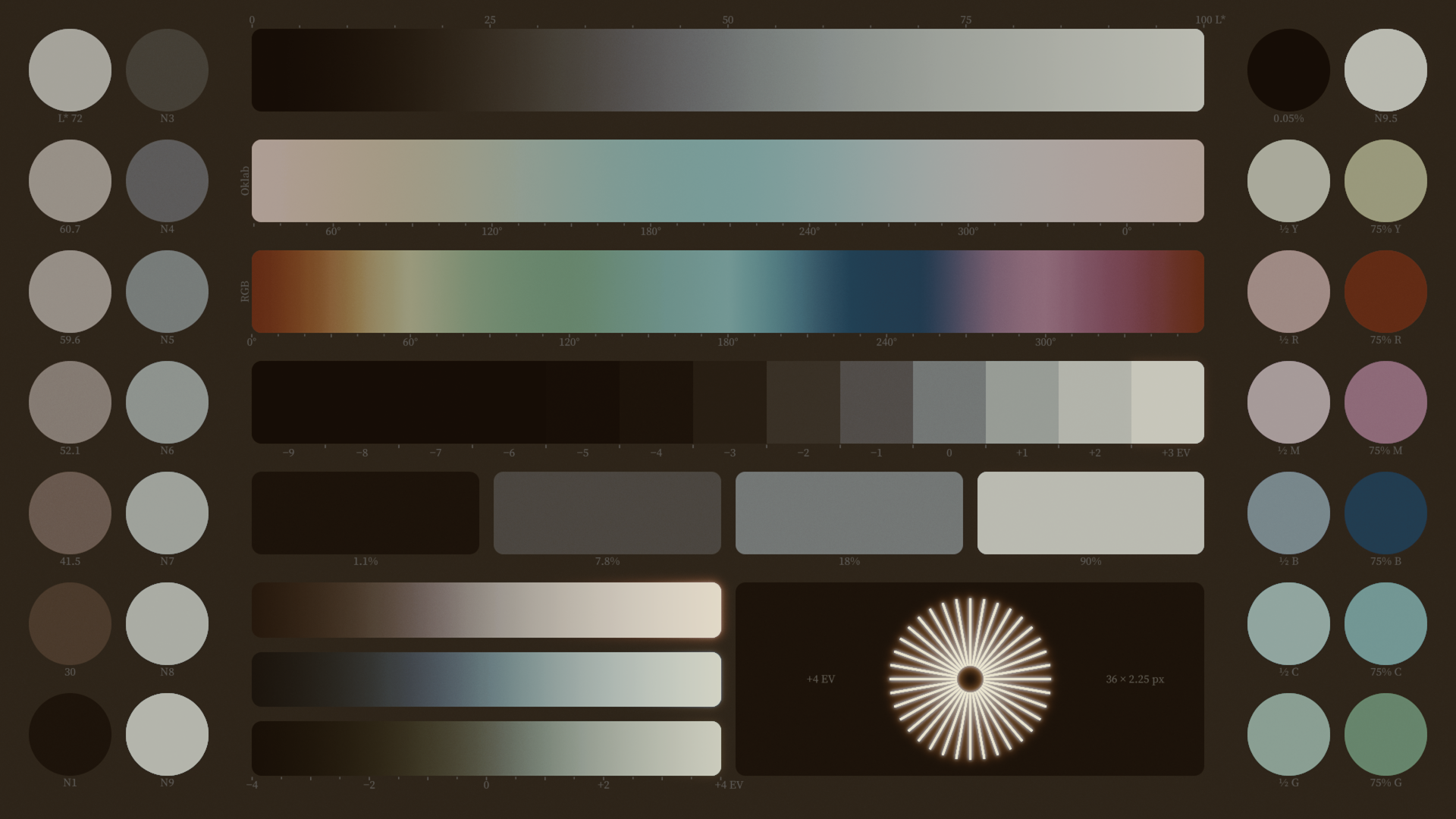
Ein Farb-Verleihkopierfilm, gezeigt nach Ansco Color Negative 843. Das Ergebnis vereint die Filmantwort von Negativ und Kopie. Seine Kurven und seine spektrale Empfindlichkeit sind aus Duerrs Aufsatz von 1952 nachgezeichnet, und seine Farbstoffspektren stammen vom Typ 843, weil der Aufsatz keine Farbstoffkurve für 848 abdruckt.
Kennlinien und Datengrundlage des Modells
Vergleiche Herstellerdaten und Ashigrains Reaktion auf denselben Achsen. Die Kurven zeigen, wie das Modell an seinen Quellen kalibriert ist; sie belegen keine Übereinstimmung mit auf Film aufgenommenen Bildern.
Kennlinienantwort
Modellgrenzen
Diese Bilder zeigen das Filmmodell in Anwendung. Spektralantwort, Licht und Betrachtungsbedingungen enthalten Näherungen. Halation, Bloom, Korngröße, Bildstand und Flackern sind nicht für jeden Film vollständig vermessen. Eine echte Filmaufnahme hängt auch von Entwicklung und Kopierlichtabstimmung ab.
- Der Aufsatz druckt keine Farbstoffkurve für Typ 848 ab, nur Absorptionsmaxima bei 440, 540 und 660 nm. Die Farbstoffspektren stammen vom Negativ Typ 843, ein Stellvertreter und nicht die Farbstoffe dieses Films.
- Die Kurven des Aufsatzes sind integrale Dichten nach Macbeth-Ansco, keine Dichten nach Status A. Sie auf der Skala Status A des Modells zu lesen, ist eine Näherung.
- Diese Vorschau nähert die Spektren von Kopierlampe und Filtern sowie den Status A-Grauzielwert an. Die Quelle liefert weder die Spektraldaten noch den Laborzielwert für ihre Kalibrierung.
- Die Kennlinienantwort außerhalb des veröffentlichten Belichtungsbereichs ist eine Extrapolation, keine gemessenen Filmdaten.
- Modelliertes Projektionsstreulicht hebt die Schwarztöne auf der Leinwand an. Seine Stärke ist angenommen, da die verfügbaren Quellen sie nicht messen. Daraus lässt sich kein gemessener Projektionskontrast ableiten.
Schwarzschildeffekt: nicht modelliert. Die Belichtungszeit hat bei diesem Film keine Wirkung.
Filmleitfaden: Annahmen und praktische Entscheidungen
Diese Vorschau kombiniert den Printfilm mit dem genannten Kameranegativ. Der Print hat in diesem Vergleich keinen eigenen Belichtungsindex und keine separat gemessene Kornantwort.
Quellen
- Characteristic curves: Duerr, H. H.: The Ansco Color Negative-Positive Process. J. SMPTE 58(6), June 1952, pp. 465-479 (volume 58 scan), archive.org item journalofsociety58socirich (Prelinger Library, Journal of the SMPTE Vol. 58, Jan-Jun 1952), derivative file journalofsociety58socirich.pdf, S. 479
- Process: Duerr, H. H.: The Ansco Color Negative-Positive Process. J. SMPTE 58(6), June 1952, pp. 465-479 (volume 58 scan), archive.org item journalofsociety58socirich (Prelinger Library, Journal of the SMPTE Vol. 58, Jan-Jun 1952), derivative file journalofsociety58socirich.pdf, S. 480
Hol diesen Film in dein Grading.
Alle Filme in einem Kauf, ohne Abo.
€199 + VAT