 Ashigrain
Farbkopie · Kopierfilm
Eastman Color Print Film 5381 (1972)
Kodaks Farbkopie der 1970er für jedes Format.
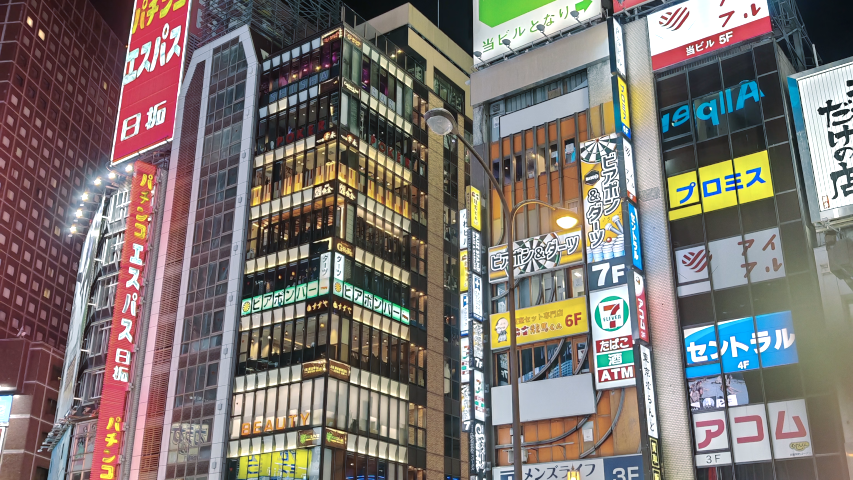
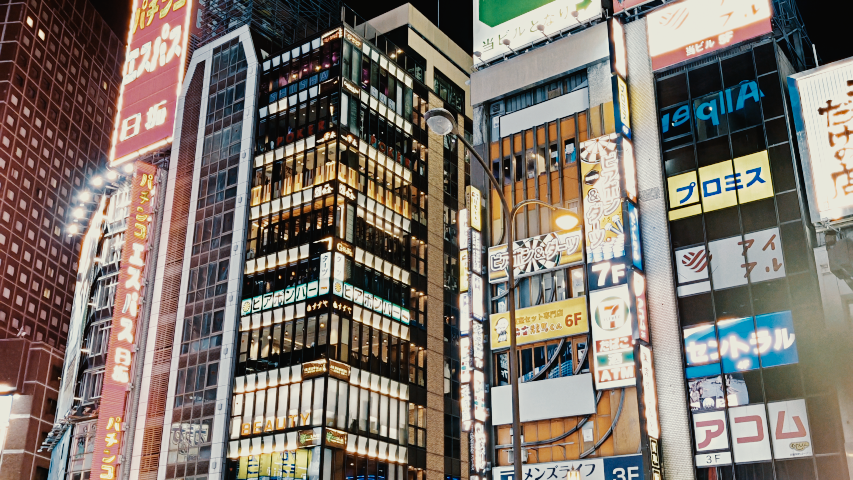
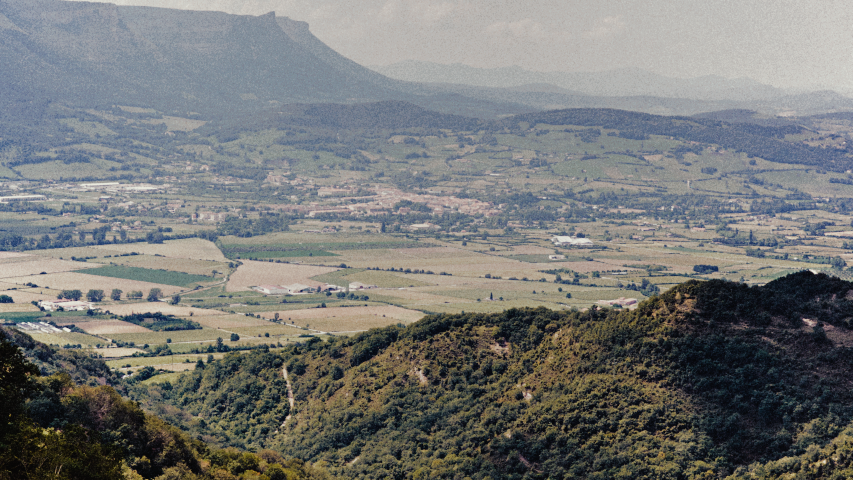
Kodak's 1970s print for every format, as a labelled surrogate whose curves and dyes are EXR 5386's, unchanged: a 1970s release-print look. Original vs Ashigrain.
Auf einen Blick
- Eingeführt
- 1972
- Eingestellt
- Prozess
- ECP
- Maximale Dichte
- ≈ 4,0
Über den Film
Eastman Color Print Film 5381 von 1972 war ein Farbkopierfilm von Kodak für Verleihkopien, in 35 mm als 5381 und in 16 mm als 7381.
Kodak verwendete die Nummer erneut: Er ist nicht der erste Eastman-Color-Kopierfilm von 1950, der ebenfalls den Code 5381 trug. Kodaks Chronik führt den 35-mm-Film unter 1972 als Ersatz für 5385, und Henry Wilhelms Tabelle der Eastman-Color-Kopierfilme nennt für beide Codes dasselbe Jahr. Laut Kodak gab es mit ihm erstmals einen einzigen Farbkopierfilm für alle Formate. Er setzte eine Reihe von Eastman-Color-Kopierfilmen fort, die vom 5381 von 1950 über 5382 und 5385 reichte. 1974 führte Kodak den SP-Kopierfilm 5383 für den heißeren ECP-2-Prozess ein, der neben 5381 bestehen sollte. Laut Kodak wurde 5381 im Januar 1982 eingestellt und durch 5384 ersetzt, einen Film für den ECP-2A-Prozess mit besserer Dunkelbeständigkeit des Cyanfarbstoffs.
Quellen zu dieser Geschichte
- Chronology of Film, Eastman Kodak Company
- The Permanence and Care of Color Photographs (1993), chapter 9: The Permanent Preservation of Color Motion Pictures, Henry Wilhelm with Carol Brower
Der Look
Eastman Color Print Film 5381 von 1972 löste 5385 ab, und laut Kodak war er der erste Farbkopierfilm, der allen Formaten gemeinsam war. Kodak ersetzte ihn 1982 durch 5384. Ashigrains Fassung ist ein gekennzeichnetes Surrogat, ein von der Kopie inspiriertes Modell statt einer Reproduktion.



Geeignet für
- Verleihkopie-Looks der 1970er
- Kopien von Eastman Color Negative 5247
- Kodak-Kopien der 1970er und 1990er im Vergleich
Kopierfilme vergleichen
The same Vision3 500T night frame on each print film: how deep the blacks go, how the highlights roll off and how the colour separates.
The same Vision3 500T night frame on each print film: how deep the blacks go, how the highlights roll off and how the colour separates.
The same Vision3 500T night frame on each print film: how deep the blacks go, how the highlights roll off and how the colour separates.
The same Vision3 500T night frame on each print film: how deep the blacks go, how the highlights roll off and how the colour separates.
The same Vision3 500T night frame on each print film: how deep the blacks go, how the highlights roll off and how the colour separates.
The same Vision3 500T night frame on each print film: how deep the blacks go, how the highlights roll off and how the colour separates.
The same Vision3 500T night frame on each print film: how deep the blacks go, how the highlights roll off and how the colour separates.
The same Vision3 500T night frame on each print film: how deep the blacks go, how the highlights roll off and how the colour separates.
The same Vision3 500T night frame on each print film: how deep the blacks go, how the highlights roll off and how the colour separates.
The same Vision3 500T night frame on each print film: how deep the blacks go, how the highlights roll off and how the colour separates.
The same Vision3 500T night frame on each print film: how deep the blacks go, how the highlights roll off and how the colour separates.
The same Vision3 500T night frame on each print film: how deep the blacks go, how the highlights roll off and how the colour separates.
The same Vision3 500T night frame on each print film: how deep the blacks go, how the highlights roll off and how the colour separates.
The same Vision3 500T night frame on each print film. On this two-colour print (a labelled surrogate) every colour falls between blue-green and red-orange: how deep the blacks go, how the highlights roll off and which lights keep their hue.
The same Vision3 500T night frame on each print film: how deep the blacks go, how the highlights roll off and how the colour separates.
The same Vision3 500T night frame on each print film: how deep the blacks go, how the highlights roll off and how the colour separates.
The same Vision3 500T night frame on each print film: how deep the blacks go, how the highlights roll off and how the colour separates.
The same Vision3 500T night frame on each print film: how deep the blacks go, how the highlights roll off and how the colour separates.
The same Vision3 500T night frame on each print film: how deep the blacks go, how the highlights roll off and how the colour separates.
The same Vision3 500T night frame on each print film: how deep the blacks go, how the highlights roll off and how the colour separates.
The same Vision3 500T night frame on each print film: how deep the blacks go, how the highlights roll off and how the colour separates.
The same Vision3 500T night frame on each print film: how deep the blacks go, how the highlights roll off and how the colour separates.
The same Vision3 500T night frame on each print film: how deep the blacks go, how the highlights roll off and how the colour separates.
The same Vision3 500T night frame on each print film: how deep the blacks go, how the highlights roll off and how the colour separates.
The same Vision3 500T night frame on each print film. On this blue-sensitive black-and-white print the colour negative turns grey: how deep the blacks go, how the highlights roll off and how dark the reds and greens print.
The same Vision3 500T night frame on each print film: how deep the blacks go, how the highlights roll off and how the colour separates.
The same Vision3 500T night frame on each print film. On this blue-sensitive black-and-white print the colour negative turns grey: how deep the blacks go, how the highlights roll off and how dark the red neon and skin print.
The same Vision3 500T night frame on each print film: how deep the blacks go, how the highlights roll off and how the colour separates.
The same Vision3 500T night frame on each print film. On this black-and-white print the colour negative turns grey: how deep the blacks go, how the highlights roll off and how the coloured lights and skin translate to grey.
The same Vision3 500T night frame on each print film. On this blue-sensitive black-and-white print the colour negative turns grey: how deep the blacks go, how the highlights roll off and how the coloured lights and skin translate to grey.
The same Vision3 500T night frame on each print film: how deep the blacks go, how the highlights roll off and how the colour separates.
The same Vision3 500T night frame on each print film: how deep the blacks go, how the highlights roll off and how the colour separates.
The same Vision3 500T night frame on each print film: how deep the blacks go, how the highlights roll off and how the colour separates.
The same Vision3 500T night frame on each print film: how deep the blacks go, how the highlights roll off and how the colour separates.
The same Vision3 500T night frame on each print film: how deep the blacks go, how the highlights roll off and how the colour separates.
The same Vision3 500T night frame on each print film. On this two-colour print (a labelled surrogate) every colour falls between a blue and a red dye: how deep the blacks go, how the highlights roll off and which lights keep their hue.
The same Vision3 500T night frame on each print film: how deep the blacks go, how the highlights roll off and how the colour separates.
Dasselbe Nachtbild auf Kodak Vision3 500T, auf jeden Printfilm kopiert.
- Kodak Vision Premier Color Print Film 2393
- Eastman Color SP Print Film 5383
- Eastman Color Print Film 5384
- Fujifilm Eterna-CP 3521XD
- Du Pont Color Release Positive Type 275
- Fujifilm Eterna-CP 3523XD
- Kodak Vision Color Print Film 2383
- Fujifilm Eterna-CP 3513DI
- Eastman EXR Color Print Film 5386
- Eastman Color Print Film 5381 (1972)
- Eastman Color Print Film 5385
- Agfa CP30 Colour Print Film
- SuperCinecolor
- Cinecolor (two-colour)
- Gevacolor Positive 953
- Gevacolor Print 9.85
- Gevacolor Print 986
- Gevacolor Print 982
- Ferraniacolor Positive
- 3M Color Positive 650
- Fujicolor Positive F-CP 3510
- Fujicolor Positive F-CP 3519
- Fujifilm Eterna-CP 3512
- Eastman Color Print 5381 (1950)
- Eastman Fine Grain Release Positive 5302
- Ansco Color Print 848
- Kodak B&W Print Film 2302
- Svema TsP-11
- Svema MZ-3
- ORWO PF 2 Positive Print Film
- Technicolor Dye Transfer (1997 revival)
- Svema TsP-8R
- Shostka Colour Positive (1950s)
- Technicolor Dye Transfer (Process IV)
- Gasparcolor Print
- Trucolor Print (two-colour)
- Kodak Vision Color Teleprint Film 2395
Wissenschaft und Quellen

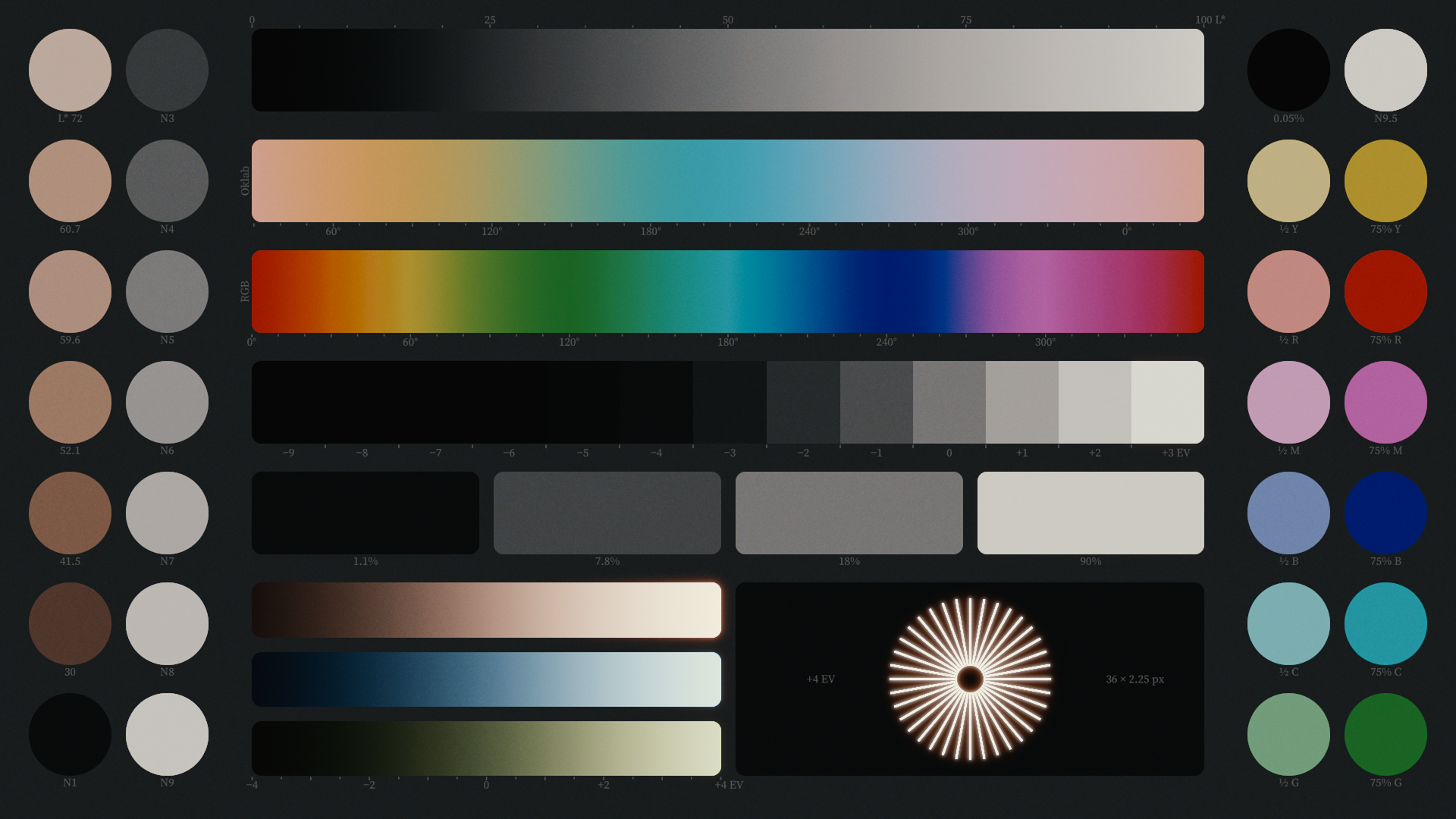
Ein gekennzeichnetes Surrogat, inspiriert von der Kopie von 1972, keine Reproduktion davon, gezeigt nach Eastman Color Negative 5247. Von diesem Film sind keine Daten registriert: Kennlinien, spektrale Empfindlichkeit und Farbstoffe sind die von Eastman EXR Color Print Film 5386, einem Ersatz, unverändert. Sein ECP-Prozess ist eine Annahme und wird nicht modelliert.
Kennlinien und Datengrundlage des Modells
Vergleiche Herstellerdaten und Ashigrains Reaktion auf denselben Achsen. Die Kurven zeigen, wie das Modell an seinen Quellen kalibriert ist; sie belegen keine Übereinstimmung mit auf Film aufgenommenen Bildern.
Kennlinienantwort
Modellgrenzen
Diese Bilder zeigen das Filmmodell in Anwendung. Spektralantwort, Licht und Betrachtungsbedingungen enthalten Näherungen. Halation, Bloom, Korngröße, Bildstand und Flackern sind nicht für jeden Film vollständig vermessen. Eine echte Filmaufnahme hängt auch von Entwicklung und Kopierlichtabstimmung ab.
- Dies ist ein gekennzeichnetes Surrogat, inspiriert vom Eastman Color Print Film 5381 von 1972, keine Reproduktion davon. Von diesem Film sind keine sensitometrischen oder spektralen Daten registriert.
- Kennlinien, spektrale Empfindlichkeit und Farbstoffe sind die von Eastman EXR Color Print Film 5386 (Kodak H-1-5386, 1999), einem Ersatz, unverändert; seine Kurven wurden in ECP-2B gemessen, nicht im Prozess dieses Films.
- Der Prozess ECP ist eine aus Kodaks Chronik abgeleitete Annahme, die für diesen Film keinen Prozess nennt; der Prozess wird nicht modelliert.
- Das Neutralziel ist das Ziel des Ersatzes nach Status A (1.10 / 1.06 / 1.03); für diesen Film ist kein Ziel registriert.
- Dies ist der Film von 1972, nicht der erste Eastman Color Print 5381 von 1950.
- Das Ausbleichen der Farbstoffe wird nicht modelliert; das Modell gibt eine frische Kopie wieder.
- Die Quelle gibt keine Spektren von Kopierlampe oder Filtern an. Ihre spektrale Wirkung ist angenähert.
- Modelliertes Projektionsstreulicht hebt die Schwarztöne auf der Leinwand an. Seine Stärke ist angenommen, da die verfügbaren Quellen sie nicht messen. Daraus lässt sich kein gemessener Projektionskontrast ableiten.
Schwarzschildeffekt: nicht modelliert. Die Belichtungszeit hat bei diesem Film keine Wirkung.
Filmleitfaden: Annahmen und praktische Entscheidungen
Diese Vorschau kombiniert den Printfilm mit dem genannten Kameranegativ. Der Print hat in diesem Vergleich keinen eigenen Belichtungsindex und keine separat gemessene Kornantwort.
Quellen
- Characteristic curves: EASTMAN EXR Color Print Film 5386 / 7386 / 2386 / 3386 Technical Data, H-1-5386, February 1999, S. 3
- Process: Eastman Kodak: Chronology of Film (History of Film), live page www.kodak.com/en/motion/page/chronology-of-film/ as served 2026-10-28, S. 1
Hol diesen Film in dein Grading.
Alle Filme in einem Kauf, ohne Abo.
€199 + VAT