 Ashigrain
Farbkopie · Kopierfilm
Fujifilm Eterna-CP 3512
Fujifilms letzte allgemeine Verleihkopie, mit mehr Kontrast.
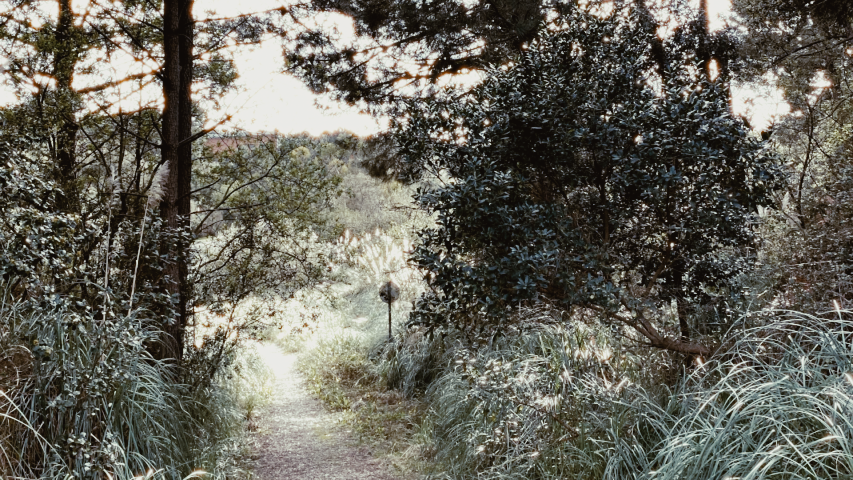
One of Fujifilm's last release prints, modelled entirely from its own 2010 data sheet: natural, balanced colour with markedly more contrast. Original vs Ashigrain.
Auf einen Blick
- Eingeführt
- spätestens 2010
- Eingestellt 2013
- Prozess
- ECP-2B
- Maximale Dichte
- ≈ 3,7
- Träger
- Polyester
Über den Film
Fujicolor Positive Film Eterna-CP 3512 war ein Farbkopierfilm für Verleihkopien, mit der Nummer 3512 in 35 mm und 3612 in 16 mm, auf Polyester gegossen.
Sein Datenblatt ist auf 2010 datiert, und im Kinofilm-Handbuch 2007/2008 von Fujifilm, das den Kopierfilm F-CP, Eterna-CP 3513DI und Eterna-CP 3521XD aufführte, erscheint er nicht. Fujifilms früherer allgemeiner Kopierfilm war F-CP 3510 gewesen. Im Handbuch von Fujifilm aus 2011 stand er neben Eterna-CP 3514DI und Eterna-CP 3523XD in der letzten Kopierfilmreihe des Unternehmens. Das Datenblatt von 2010 nennt die Entwicklung in ECP-2B, das Handbuch von 2011 dagegen ECP-2D und ECP-2E. Fujifilm zielte für eine 18-Prozent-Graukarte bei Xenon-Projektion auf Dichten nach Status A von 1.10 Rot, 1.05 Grün und 1.05 Blau, und das Datenblatt nennt keine RMS-Körnigkeit. Fujifilm beendete am 31. März 2013 die gesamte Kinofilmproduktion, Farbpositiv eingeschlossen. Seine Liste eingestellter Filme von 2013 nannte Eterna-CP 3512 und fasste ihn als natürliche, ausgewogene Farbe mit deutlich mehr Kontrast zusammen.
Quellen zu dieser Geschichte
- FUJICOLOR POSITIVE FILM ETERNA-CP 35mm Type 3512 / 16mm Type 3612 (KB-1002E), FUJIFILM Corporation
- Motion Picture Film Manual KB-1101E, FUJIFILM Corporation
- Motion Picture Film Manual (KB-0707E), FUJIFILM Corporation
- Announcement on Motion Picture Film Business of Fujifilm, FUJIFILM Corporation
- Fujifilm, Film and Digital Times
- Discontinued Films, FUJIFILM Corporation
Der Look
Fujifilm Eterna-CP 3512 war einer der letzten Farbkopierfilme von Fujifilm für Verleihkopien, auf Polyesterunterlage. Fujifilm fasste ihn als natürliche, ausgewogene Farbe mit stark gesteigertem Kontrast zusammen. Kurven, Farbstoffe und Empfindlichkeit stammen aus Fujifilms eigenem Datenblatt.





Geeignet für
- Kopien von Fujifilm-Eterna-Negativen
- Kräftiger Kontrast später Verleihkopien
- Eterna-CP 3512 im Vergleich mit Kodak 2383
Kopierfilme vergleichen
The same Vision3 500T night frame on each print film: how deep the blacks go, how the highlights roll off and how the colour separates.
The same Vision3 500T night frame on each print film: how deep the blacks go, how the highlights roll off and how the colour separates.
The same Vision3 500T night frame on each print film: how deep the blacks go, how the highlights roll off and how the colour separates.
The same Vision3 500T night frame on each print film: how deep the blacks go, how the highlights roll off and how the colour separates.
The same Vision3 500T night frame on each print film: how deep the blacks go, how the highlights roll off and how the colour separates.
The same Vision3 500T night frame on each print film: how deep the blacks go, how the highlights roll off and how the colour separates.
The same Vision3 500T night frame on each print film: how deep the blacks go, how the highlights roll off and how the colour separates.
The same Vision3 500T night frame on each print film: how deep the blacks go, how the highlights roll off and how the colour separates.
The same Vision3 500T night frame on each print film: how deep the blacks go, how the highlights roll off and how the colour separates.
The same Vision3 500T night frame on each print film: how deep the blacks go, how the highlights roll off and how the colour separates.
The same Vision3 500T night frame on each print film: how deep the blacks go, how the highlights roll off and how the colour separates.
The same Vision3 500T night frame on each print film: how deep the blacks go, how the highlights roll off and how the colour separates.
The same Vision3 500T night frame on each print film: how deep the blacks go, how the highlights roll off and how the colour separates.
The same Vision3 500T night frame on each print film. On this two-colour print (a labelled surrogate) every colour falls between blue-green and red-orange: how deep the blacks go, how the highlights roll off and which lights keep their hue.
The same Vision3 500T night frame on each print film: how deep the blacks go, how the highlights roll off and how the colour separates.
The same Vision3 500T night frame on each print film: how deep the blacks go, how the highlights roll off and how the colour separates.
The same Vision3 500T night frame on each print film: how deep the blacks go, how the highlights roll off and how the colour separates.
The same Vision3 500T night frame on each print film: how deep the blacks go, how the highlights roll off and how the colour separates.
The same Vision3 500T night frame on each print film: how deep the blacks go, how the highlights roll off and how the colour separates.
The same Vision3 500T night frame on each print film: how deep the blacks go, how the highlights roll off and how the colour separates.
The same Vision3 500T night frame on each print film: how deep the blacks go, how the highlights roll off and how the colour separates.
The same Vision3 500T night frame on each print film: how deep the blacks go, how the highlights roll off and how the colour separates.
The same Vision3 500T night frame on each print film: how deep the blacks go, how the highlights roll off and how the colour separates.
The same Vision3 500T night frame on each print film: how deep the blacks go, how the highlights roll off and how the colour separates.
The same Vision3 500T night frame on each print film. On this blue-sensitive black-and-white print the colour negative turns grey: how deep the blacks go, how the highlights roll off and how dark the reds and greens print.
The same Vision3 500T night frame on each print film: how deep the blacks go, how the highlights roll off and how the colour separates.
The same Vision3 500T night frame on each print film. On this blue-sensitive black-and-white print the colour negative turns grey: how deep the blacks go, how the highlights roll off and how dark the red neon and skin print.
The same Vision3 500T night frame on each print film: how deep the blacks go, how the highlights roll off and how the colour separates.
The same Vision3 500T night frame on each print film. On this black-and-white print the colour negative turns grey: how deep the blacks go, how the highlights roll off and how the coloured lights and skin translate to grey.
The same Vision3 500T night frame on each print film. On this blue-sensitive black-and-white print the colour negative turns grey: how deep the blacks go, how the highlights roll off and how the coloured lights and skin translate to grey.
The same Vision3 500T night frame on each print film: how deep the blacks go, how the highlights roll off and how the colour separates.
The same Vision3 500T night frame on each print film: how deep the blacks go, how the highlights roll off and how the colour separates.
The same Vision3 500T night frame on each print film: how deep the blacks go, how the highlights roll off and how the colour separates.
The same Vision3 500T night frame on each print film: how deep the blacks go, how the highlights roll off and how the colour separates.
The same Vision3 500T night frame on each print film: how deep the blacks go, how the highlights roll off and how the colour separates.
The same Vision3 500T night frame on each print film. On this two-colour print (a labelled surrogate) every colour falls between a blue and a red dye: how deep the blacks go, how the highlights roll off and which lights keep their hue.
The same Vision3 500T night frame on each print film: how deep the blacks go, how the highlights roll off and how the colour separates.
Dasselbe Nachtbild auf Kodak Vision3 500T, auf jeden Printfilm kopiert.
- Kodak Vision Premier Color Print Film 2393
- Eastman Color SP Print Film 5383
- Eastman Color Print Film 5384
- Fujifilm Eterna-CP 3521XD
- Du Pont Color Release Positive Type 275
- Fujifilm Eterna-CP 3523XD
- Kodak Vision Color Print Film 2383
- Fujifilm Eterna-CP 3513DI
- Eastman EXR Color Print Film 5386
- Eastman Color Print Film 5381 (1972)
- Eastman Color Print Film 5385
- Agfa CP30 Colour Print Film
- SuperCinecolor
- Cinecolor (two-colour)
- Gevacolor Positive 953
- Gevacolor Print 9.85
- Gevacolor Print 986
- Gevacolor Print 982
- Ferraniacolor Positive
- 3M Color Positive 650
- Fujicolor Positive F-CP 3510
- Fujicolor Positive F-CP 3519
- Fujifilm Eterna-CP 3512
- Eastman Color Print 5381 (1950)
- Eastman Fine Grain Release Positive 5302
- Ansco Color Print 848
- Kodak B&W Print Film 2302
- Svema TsP-11
- Svema MZ-3
- ORWO PF 2 Positive Print Film
- Technicolor Dye Transfer (1997 revival)
- Svema TsP-8R
- Shostka Colour Positive (1950s)
- Technicolor Dye Transfer (Process IV)
- Gasparcolor Print
- Trucolor Print (two-colour)
- Kodak Vision Color Teleprint Film 2395
Wissenschaft und Quellen

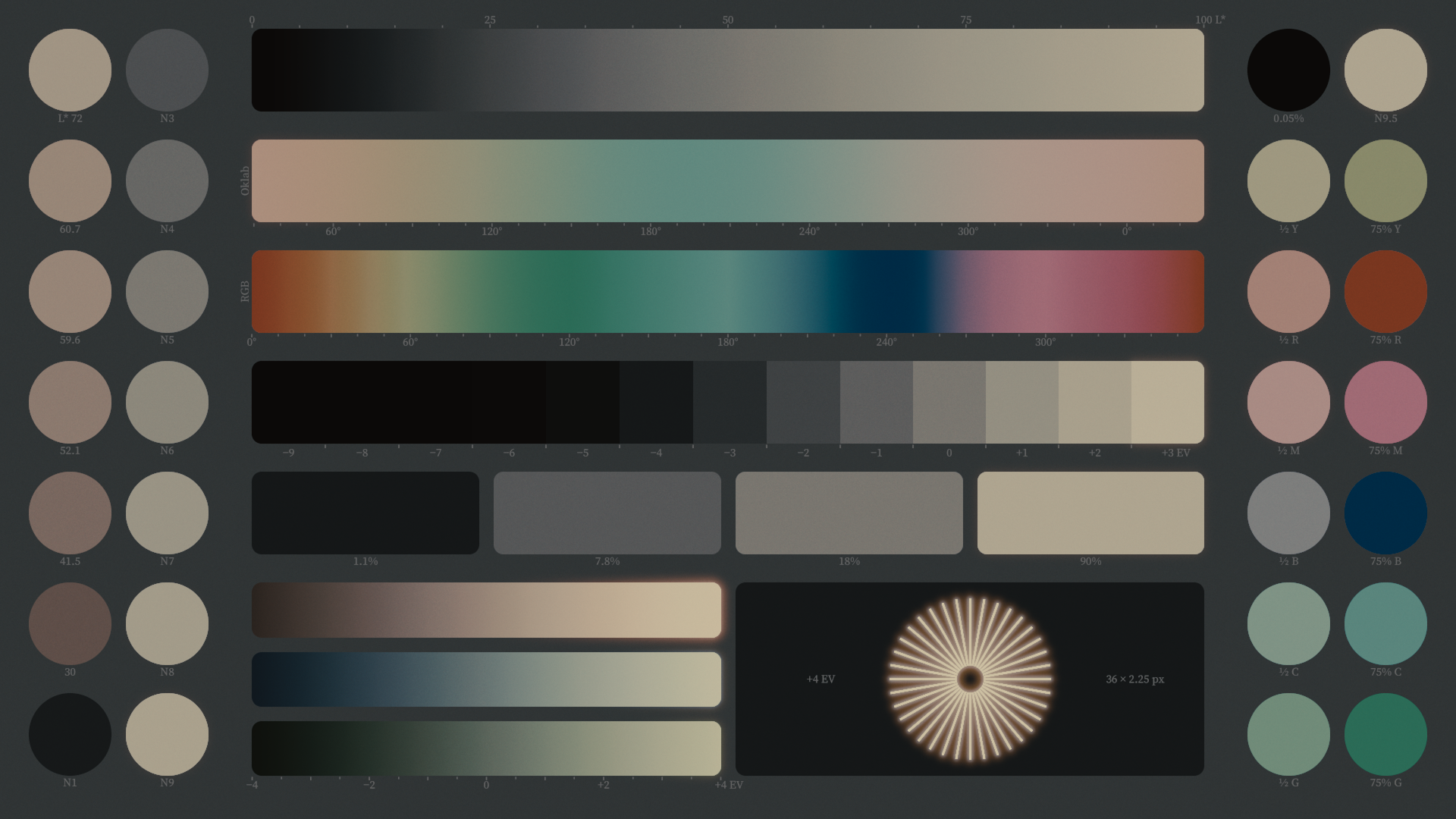
Ein Farbkopierfilm, gezeigt nach Fujifilm Eterna 250D. Das Ergebnis verbindet das Verhalten von Negativ und Kopie. Kennlinien, spektrale Empfindlichkeit, Farbstoffdichten und CTF sind aus Fujifilms eigenem Datenblatt von 2010 digitalisiert; keine Größe ist von einem anderen Film entlehnt.
Kennlinien und Datengrundlage des Modells
Vergleiche Herstellerdaten und Ashigrains Reaktion auf denselben Achsen. Die Kurven zeigen, wie das Modell an seinen Quellen kalibriert ist; sie belegen keine Übereinstimmung mit auf Film aufgenommenen Bildern.
Kennlinienantwort
Modellgrenzen
Diese Bilder zeigen das Filmmodell in Anwendung. Spektralantwort, Licht und Betrachtungsbedingungen enthalten Näherungen. Halation, Bloom, Korngröße, Bildstand und Flackern sind nicht für jeden Film vollständig vermessen. Eine echte Filmaufnahme hängt auch von Entwicklung und Kopierlichtabstimmung ab.
- Die Kennlinien verwenden eine relative Belichtungsachse: Das Datenblatt zeigt nur einen Maßstabsbalken von 0.5 log H, und die Grün- und Blaukurven sind um 1.0 log H verschoben gedruckt. Ihre absolute Belichtung ist nicht angegeben.
- Für diesen Film ist keine RMS-Körnigkeit veröffentlicht.
- Die spektralen Empfindlichkeiten lassen eine Lücke zwischen 575 und 640 nm. Die einzelnen Farbstoffkurven decken 400–700 nm nicht ab (Cyan ab etwa 490 nm, Magenta bis etwa 648 nm, Gelb bis etwa 697 nm); nur die Graukurve tut es.
- Die Quelle enthält keine Tabelle der Kopierbedingungen und keine Lampen- oder Filterspektren. Die spektrale Antwort der Kopiermaschine ist angenähert.
- Das Datenblatt wird aus einer archivierten Kopie gelesen.
- Modelliertes Projektionsstreulicht hebt die Schwarztöne auf der Leinwand an. Seine Stärke ist angenommen, da die verfügbaren Quellen sie nicht messen. Daraus lässt sich kein gemessener Projektionskontrast ableiten.
Schwarzschildeffekt: nicht modelliert. Die Belichtungszeit hat bei diesem Film keine Wirkung.
Filmleitfaden: Annahmen und praktische Entscheidungen
Diese Vorschau kombiniert den Printfilm mit dem genannten Kameranegativ. Der Print hat in diesem Vergleich keinen eigenen Belichtungsindex und keine separat gemessene Kornantwort.
Quellen
- Characteristic curves: FUJICOLOR POSITIVE FILM ETERNA-CP 3512 (35mm Type 3512 / 16mm Type 3612) data sheet, Ref. No. KB-1002E (SK•10•05•F1079), S. 1
- Process: FUJICOLOR POSITIVE FILM ETERNA-CP 3512 (35mm Type 3512 / 16mm Type 3612) data sheet, Ref. No. KB-1002E (SK•10•05•F1079), S. 2
Hol diesen Film in dein Grading.
Alle Filme in einem Kauf, ohne Abo.
€199 + VAT