 Ashigrain
Farbkopie · Kopierfilm
Eastman Color SP Print Film 5383
Kodaks Positiv der 1970er Jahre für große Kopierauflagen.
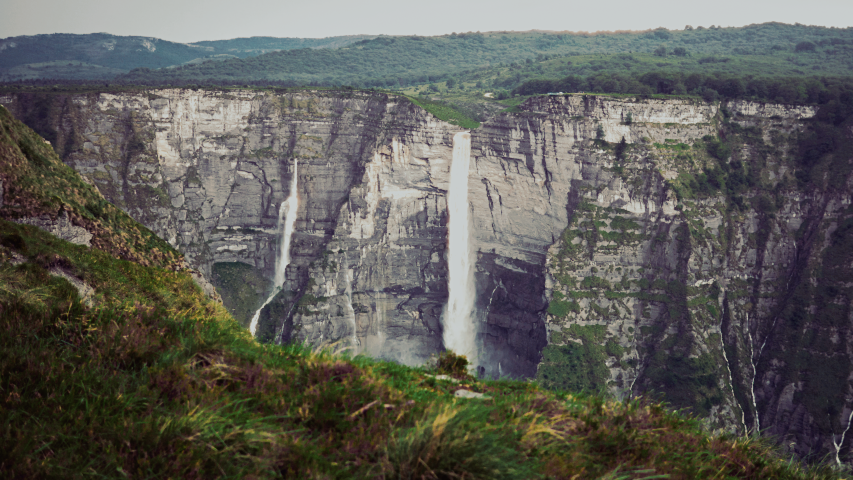
Eastman Color SP Print 5383, printed from Eastman Color Negative 5247. Original vs Ashigrain.
Auf einen Blick
- Eingeführt
- 1974
- Eingestellt 1983
- Prozess
- ECP-2A
- Maximale Dichte
- ≈ 5,0
Über den Film
Eastman Color SP Print Film 5383 ist mit seiner Version 16 mm 7383 ein Farbpositivfilm für den wärmeren Prozess ECP-2.
Kodaks Chronologie führt ihn unter 1974, und die von Kodak unabhängige Timeline of Historical Film Colors datiert ihn auf dasselbe Jahr. Kodak entwickelte ihn für effizientere Kinokopierung in größeren Laboren mit ähnlicher Qualität wie Positivfilm 5381. Beide Filme wurden nebeneinander verkauft. Ein Artikel im SMPTE Journal vom Dezember 1982 beschrieb die neuen 5384 und 7384 als Ersatz für 5383 und 7383 sowie den LFSP-Positivfilm 7379. Kodaks Chronologie nennt 5384 ebenfalls als Ersatz für 5381, 5383, 7378 und 7379. Sowohl Kodak als auch die Timeline datieren das Ende von 5383 auf 1983.
Quellen zu dieser Geschichte
- Chronology of Film, Eastman Kodak Company
- Eastman Color SP Print Film 5383 / 7383, Timeline of Historical Film Colors, University of Zurich
- Eastman Color Print Film 5384 (SMPTE Journal 91(12), December 1982), abstract, Society of Motion Picture and Television Engineers
Der Look
Eastman Color SP Print Film 5383 war Kodaks Farbpositivfilm für den wärmeren Prozess ECP-2, entwickelt für effiziente Kinokopierung in großen Laboren. Seine blaue Schicht reicht ins nahe Ultraviolett und machte ihn anfällig für statische Marken; 5384 ersetzte ihn in den frühen 1980er Jahren.





Geeignet für
- Kinokopien-Looks der 1970er Jahre
- Dichte, tiefe Positivschwärzen
- 5383 mit seinem Nachfolger 5384 vergleichen
Kopierfilme vergleichen
The same Vision3 500T night frame on each print film: how deep the blacks go, how the highlights roll off and how the colour separates.
The same Vision3 500T night frame on each print film: how deep the blacks go, how the highlights roll off and how the colour separates.
The same Vision3 500T night frame on each print film: how deep the blacks go, how the highlights roll off and how the colour separates.
The same Vision3 500T night frame on each print film: how deep the blacks go, how the highlights roll off and how the colour separates.
The same Vision3 500T night frame on each print film: how deep the blacks go, how the highlights roll off and how the colour separates.
The same Vision3 500T night frame on each print film: how deep the blacks go, how the highlights roll off and how the colour separates.
The same Vision3 500T night frame on each print film: how deep the blacks go, how the highlights roll off and how the colour separates.
The same Vision3 500T night frame on each print film: how deep the blacks go, how the highlights roll off and how the colour separates.
The same Vision3 500T night frame on each print film: how deep the blacks go, how the highlights roll off and how the colour separates.
The same Vision3 500T night frame on each print film: how deep the blacks go, how the highlights roll off and how the colour separates.
The same Vision3 500T night frame on each print film: how deep the blacks go, how the highlights roll off and how the colour separates.
The same Vision3 500T night frame on each print film: how deep the blacks go, how the highlights roll off and how the colour separates.
The same Vision3 500T night frame on each print film: how deep the blacks go, how the highlights roll off and how the colour separates.
The same Vision3 500T night frame on each print film. On this two-colour print (a labelled surrogate) every colour falls between blue-green and red-orange: how deep the blacks go, how the highlights roll off and which lights keep their hue.
The same Vision3 500T night frame on each print film: how deep the blacks go, how the highlights roll off and how the colour separates.
The same Vision3 500T night frame on each print film: how deep the blacks go, how the highlights roll off and how the colour separates.
The same Vision3 500T night frame on each print film: how deep the blacks go, how the highlights roll off and how the colour separates.
The same Vision3 500T night frame on each print film: how deep the blacks go, how the highlights roll off and how the colour separates.
The same Vision3 500T night frame on each print film: how deep the blacks go, how the highlights roll off and how the colour separates.
The same Vision3 500T night frame on each print film: how deep the blacks go, how the highlights roll off and how the colour separates.
The same Vision3 500T night frame on each print film: how deep the blacks go, how the highlights roll off and how the colour separates.
The same Vision3 500T night frame on each print film: how deep the blacks go, how the highlights roll off and how the colour separates.
The same Vision3 500T night frame on each print film: how deep the blacks go, how the highlights roll off and how the colour separates.
The same Vision3 500T night frame on each print film: how deep the blacks go, how the highlights roll off and how the colour separates.
The same Vision3 500T night frame on each print film. On this blue-sensitive black-and-white print the colour negative turns grey: how deep the blacks go, how the highlights roll off and how dark the reds and greens print.
The same Vision3 500T night frame on each print film: how deep the blacks go, how the highlights roll off and how the colour separates.
The same Vision3 500T night frame on each print film. On this blue-sensitive black-and-white print the colour negative turns grey: how deep the blacks go, how the highlights roll off and how dark the red neon and skin print.
The same Vision3 500T night frame on each print film: how deep the blacks go, how the highlights roll off and how the colour separates.
The same Vision3 500T night frame on each print film. On this black-and-white print the colour negative turns grey: how deep the blacks go, how the highlights roll off and how the coloured lights and skin translate to grey.
The same Vision3 500T night frame on each print film. On this blue-sensitive black-and-white print the colour negative turns grey: how deep the blacks go, how the highlights roll off and how the coloured lights and skin translate to grey.
The same Vision3 500T night frame on each print film: how deep the blacks go, how the highlights roll off and how the colour separates.
The same Vision3 500T night frame on each print film: how deep the blacks go, how the highlights roll off and how the colour separates.
The same Vision3 500T night frame on each print film: how deep the blacks go, how the highlights roll off and how the colour separates.
The same Vision3 500T night frame on each print film: how deep the blacks go, how the highlights roll off and how the colour separates.
The same Vision3 500T night frame on each print film: how deep the blacks go, how the highlights roll off and how the colour separates.
The same Vision3 500T night frame on each print film. On this two-colour print (a labelled surrogate) every colour falls between a blue and a red dye: how deep the blacks go, how the highlights roll off and which lights keep their hue.
The same Vision3 500T night frame on each print film: how deep the blacks go, how the highlights roll off and how the colour separates.
Dasselbe Nachtbild auf Kodak Vision3 500T, auf jeden Printfilm kopiert.
- Kodak Vision Premier Color Print Film 2393
- Eastman Color SP Print Film 5383
- Eastman Color Print Film 5384
- Fujifilm Eterna-CP 3521XD
- Du Pont Color Release Positive Type 275
- Fujifilm Eterna-CP 3523XD
- Kodak Vision Color Print Film 2383
- Fujifilm Eterna-CP 3513DI
- Eastman EXR Color Print Film 5386
- Eastman Color Print Film 5381 (1972)
- Eastman Color Print Film 5385
- Agfa CP30 Colour Print Film
- SuperCinecolor
- Cinecolor (two-colour)
- Gevacolor Positive 953
- Gevacolor Print 9.85
- Gevacolor Print 986
- Gevacolor Print 982
- Ferraniacolor Positive
- 3M Color Positive 650
- Fujicolor Positive F-CP 3510
- Fujicolor Positive F-CP 3519
- Fujifilm Eterna-CP 3512
- Eastman Color Print 5381 (1950)
- Eastman Fine Grain Release Positive 5302
- Ansco Color Print 848
- Kodak B&W Print Film 2302
- Svema TsP-11
- Svema MZ-3
- ORWO PF 2 Positive Print Film
- Technicolor Dye Transfer (1997 revival)
- Svema TsP-8R
- Shostka Colour Positive (1950s)
- Technicolor Dye Transfer (Process IV)
- Gasparcolor Print
- Trucolor Print (two-colour)
- Kodak Vision Color Teleprint Film 2395
Wissenschaft und Quellen

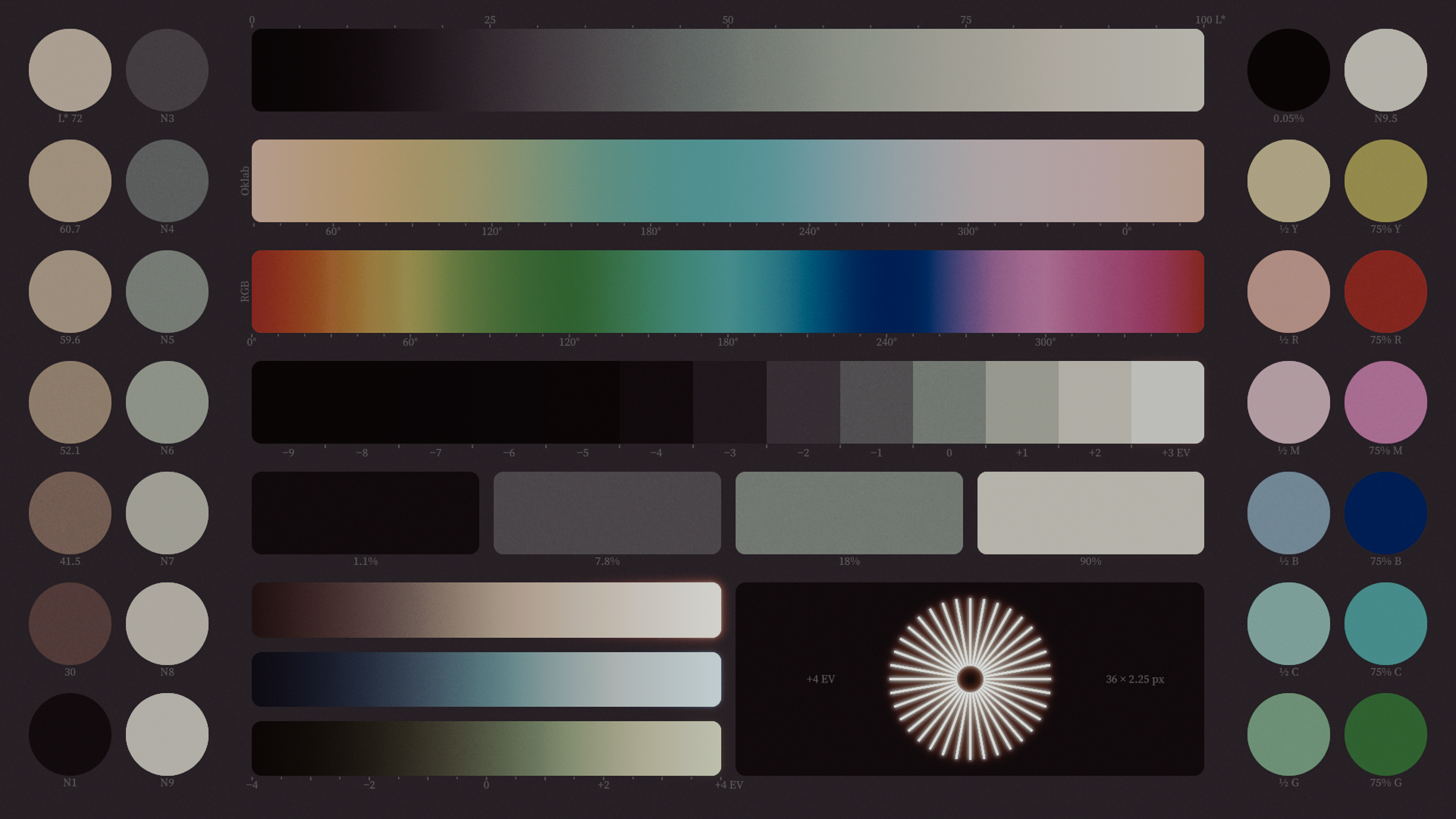
Ein Farbpositivfilm, gezeigt nach Eastman Color Negative 5247. Das Ergebnis kombiniert die Reaktionen von Negativ und Positiv. Seine Daten sind aus einem Zeitschriftenartikel von 1982 nachgezeichnet, der ihn mit 5384 vergleicht.
Kennlinien und Datengrundlage des Modells
Vergleiche Herstellerdaten und Ashigrains Reaktion auf denselben Achsen. Die Kurven zeigen, wie das Modell an seinen Quellen kalibriert ist; sie belegen keine Übereinstimmung mit auf Film aufgenommenen Bildern.
Kennlinienantwort
Modellgrenzen
Diese Bilder zeigen das Filmmodell in Anwendung. Spektralantwort, Licht und Betrachtungsbedingungen enthalten Näherungen. Halation, Bloom, Korngröße, Bildstand und Flackern sind nicht für jeden Film vollständig vermessen. Eine echte Filmaufnahme hängt auch von Entwicklung und Kopierlichtabstimmung ab.
- Kennlinien, spektrale Empfindlichkeiten, Farbstoffdichten und visuelle MTF sind aus einem 1-Bit-Scan der Diagramme eines Artikels im SMPTE Journal vom Dezember 1982 (Carl und Kollegen) nachgezeichnet, nicht aus einem Kodak-Datenblatt. Der Scan begrenzt die Genauigkeit.
- Wo der Artikel eine Kurve nur einmal für 5384 und 5383 druckt, wird diese gemeinsame Kurve für beide Filme verwendet.
- Der Artikel druckt nur für 5384 einen Laborzielwert. Der Status A-Grauzielwert wird angenommen: das Modell kopiert Szenengrau auf eine neutrale Mitteldichte.
- Modelliertes Projektionsstreulicht hebt die Schwarztöne auf der Leinwand an. Seine Stärke ist angenommen, da die verfügbaren Quellen sie nicht messen. Daraus lässt sich kein gemessener Projektionskontrast ableiten.
Schwarzschildeffekt: nicht modelliert. Die Belichtungszeit hat bei diesem Film keine Wirkung.
Filmleitfaden: Annahmen und praktische Entscheidungen
Diese Vorschau kombiniert den Printfilm mit dem genannten Kameranegativ. Der Print hat in diesem Vergleich keinen eigenen Belichtungsindex und keine separat gemessene Kornantwort.
Quellen
- Characteristic curves: Eastman Color Print Film 5384, SMPTE J. 91(12), Dec. 1982, pp. 1161-1170, S. 5
- Process: Eastman Color Print Film 5384, SMPTE J. 91(12), Dec. 1982, pp. 1161-1170, S. 5
Hol diesen Film in dein Grading.
Alle Filme in einem Kauf, ohne Abo.
€199 + VAT