 Ashigrain
Farbkopie · Kopierfilm
Cinecolor (two-colour)
Cinecolors Zweifarbenkopien für Kurzfilme und Cartoons.
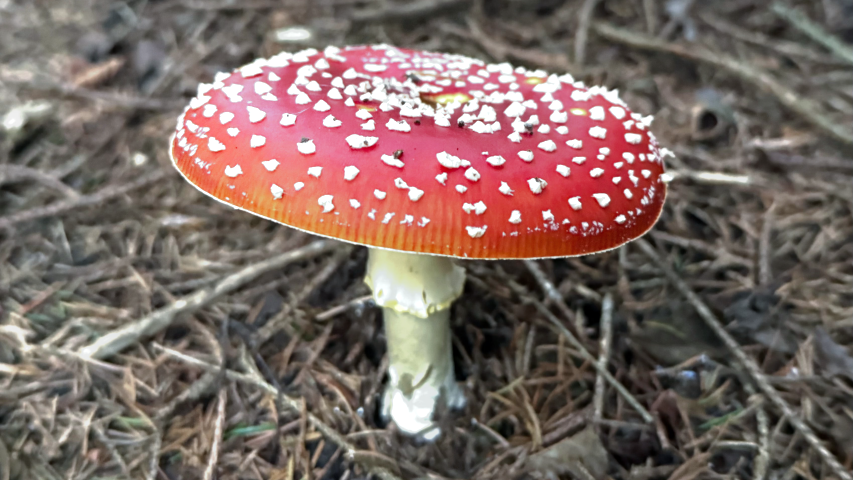
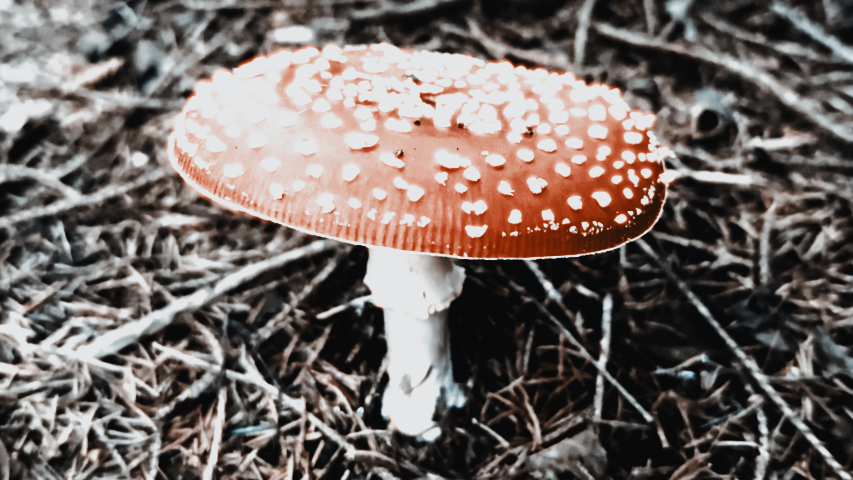
A labelled surrogate of two-colour Cinecolor: only a blue-green and an orange-red image, so blues reproduce as blue-greens. Original vs Ashigrain.
Auf einen Blick
- Eingeführt
- 1932
- Eingestellt
- Prozess
- Cinecolor two-colour processing (develop, fix and wash the duplitized positive, then colour each record by toning and dyeing)
- Maximale Dichte
- ≈ 4,0
Über den Film
Cinecolor war ein subtraktives Zweifarben-Kopierverfahren auf doppelseitig mit Emulsion beschichtetem Film.
Das American WideScreen Museum schreibt, die Cinecolor Corporation sei 1932 entstanden, und die Timeline of Historical Film Colors schreibt das Verfahren William Crespinel zu, dessen Patentanmeldung von 1932 an Cinecolor übertragen wurde. Laut dem Museum übernahm Cinecolor nach dem finanziellen Scheitern von Multicolor dessen System und nutzte es bis Ende der 1940er weitgehend unverändert. Zwei im Bipack belichtete Negative zeichneten die rotorangen und blaugrünen Anteile der Szene auf, und ein Schrittkopierer kopierte je einen Auszug auf jede Seite des Positivs. Der Rotauszug wurde mit Eisen zu Berliner Blau blaugrün getont, der Grünauszug mit einem Beizenfarbstoff rotorange gefärbt. Von 1932 bis 1940 diente es vor allem Kurzfilmen und Cartoons kleinerer Studios, und sein erster Spielfilm war Monograms The Gentleman from Arizona. Spätere Kunden waren Monogram, PRC, Screen Guild und Eagle-Lion, und Warner Bros. brachte 1948 mehrere Cartoons in Cinecolor heraus. Das Museum nennt seine Grenzen, ein weiches Projektionsbild, weil die beiden Auszüge auf gegenüberliegenden Seiten des Films lagen, und eine cyangetönte Tonspur, und das dreifarbige SuperCinecolor folgte ihm.
Quellen zu dieser Geschichte
- Cinecolor (subtractive 2 color), Timeline of Historical Film Colors, University of Zurich
- Cinecolor, American WideScreen Museum
- US Patent 2,016,666: Colored photograph and method of making same (1935), W. T. Crespinel
- Cinecolor Three-Color Process (Alan M. Gundelfinger, Journal of the SMPTE 54, January 1950), Society of Motion Picture and Television Engineers
Der Look
Cinecolor war ein Zweifarben-Kopierverfahren ab 1932, das ein blaugrünes und ein rotoranges Bild auf die beiden Seiten eines doppelseitig beschichteten Films kopierte. Es diente Kurzfilmen, Cartoons und Spielfilmen kleinerer Studios bis Ende der 1940er. Ashigrains Fassung ist ein gekennzeichnetes Surrogat, ein von der Kopie inspiriertes Modell statt einer Reproduktion.
Geeignet für
- Cartoons und Kurzfilme der 1940er
- Low-Budget-Spielfilme der 1940er
- Zweifarbiges Cinecolor und SuperCinecolor im Vergleich
Kopierfilme vergleichen
The same Vision3 500T night frame on each print film: how deep the blacks go, how the highlights roll off and how the colour separates.
The same Vision3 500T night frame on each print film: how deep the blacks go, how the highlights roll off and how the colour separates.
The same Vision3 500T night frame on each print film: how deep the blacks go, how the highlights roll off and how the colour separates.
The same Vision3 500T night frame on each print film: how deep the blacks go, how the highlights roll off and how the colour separates.
The same Vision3 500T night frame on each print film: how deep the blacks go, how the highlights roll off and how the colour separates.
The same Vision3 500T night frame on each print film: how deep the blacks go, how the highlights roll off and how the colour separates.
The same Vision3 500T night frame on each print film: how deep the blacks go, how the highlights roll off and how the colour separates.
The same Vision3 500T night frame on each print film: how deep the blacks go, how the highlights roll off and how the colour separates.
The same Vision3 500T night frame on each print film: how deep the blacks go, how the highlights roll off and how the colour separates.
The same Vision3 500T night frame on each print film: how deep the blacks go, how the highlights roll off and how the colour separates.
The same Vision3 500T night frame on each print film: how deep the blacks go, how the highlights roll off and how the colour separates.
The same Vision3 500T night frame on each print film: how deep the blacks go, how the highlights roll off and how the colour separates.
The same Vision3 500T night frame on each print film: how deep the blacks go, how the highlights roll off and how the colour separates.
The same Vision3 500T night frame on each print film. On this two-colour print (a labelled surrogate) every colour falls between blue-green and red-orange: how deep the blacks go, how the highlights roll off and which lights keep their hue.
The same Vision3 500T night frame on each print film: how deep the blacks go, how the highlights roll off and how the colour separates.
The same Vision3 500T night frame on each print film: how deep the blacks go, how the highlights roll off and how the colour separates.
The same Vision3 500T night frame on each print film: how deep the blacks go, how the highlights roll off and how the colour separates.
The same Vision3 500T night frame on each print film: how deep the blacks go, how the highlights roll off and how the colour separates.
The same Vision3 500T night frame on each print film: how deep the blacks go, how the highlights roll off and how the colour separates.
The same Vision3 500T night frame on each print film: how deep the blacks go, how the highlights roll off and how the colour separates.
The same Vision3 500T night frame on each print film: how deep the blacks go, how the highlights roll off and how the colour separates.
The same Vision3 500T night frame on each print film: how deep the blacks go, how the highlights roll off and how the colour separates.
The same Vision3 500T night frame on each print film: how deep the blacks go, how the highlights roll off and how the colour separates.
The same Vision3 500T night frame on each print film: how deep the blacks go, how the highlights roll off and how the colour separates.
The same Vision3 500T night frame on each print film. On this blue-sensitive black-and-white print the colour negative turns grey: how deep the blacks go, how the highlights roll off and how dark the reds and greens print.
The same Vision3 500T night frame on each print film: how deep the blacks go, how the highlights roll off and how the colour separates.
The same Vision3 500T night frame on each print film. On this blue-sensitive black-and-white print the colour negative turns grey: how deep the blacks go, how the highlights roll off and how dark the red neon and skin print.
The same Vision3 500T night frame on each print film: how deep the blacks go, how the highlights roll off and how the colour separates.
The same Vision3 500T night frame on each print film. On this black-and-white print the colour negative turns grey: how deep the blacks go, how the highlights roll off and how the coloured lights and skin translate to grey.
The same Vision3 500T night frame on each print film. On this blue-sensitive black-and-white print the colour negative turns grey: how deep the blacks go, how the highlights roll off and how the coloured lights and skin translate to grey.
The same Vision3 500T night frame on each print film: how deep the blacks go, how the highlights roll off and how the colour separates.
The same Vision3 500T night frame on each print film: how deep the blacks go, how the highlights roll off and how the colour separates.
The same Vision3 500T night frame on each print film: how deep the blacks go, how the highlights roll off and how the colour separates.
The same Vision3 500T night frame on each print film: how deep the blacks go, how the highlights roll off and how the colour separates.
The same Vision3 500T night frame on each print film: how deep the blacks go, how the highlights roll off and how the colour separates.
The same Vision3 500T night frame on each print film. On this two-colour print (a labelled surrogate) every colour falls between a blue and a red dye: how deep the blacks go, how the highlights roll off and which lights keep their hue.
The same Vision3 500T night frame on each print film: how deep the blacks go, how the highlights roll off and how the colour separates.
Dasselbe Nachtbild auf Kodak Vision3 500T, auf jeden Printfilm kopiert.
- Kodak Vision Premier Color Print Film 2393
- Eastman Color SP Print Film 5383
- Eastman Color Print Film 5384
- Fujifilm Eterna-CP 3521XD
- Du Pont Color Release Positive Type 275
- Fujifilm Eterna-CP 3523XD
- Kodak Vision Color Print Film 2383
- Fujifilm Eterna-CP 3513DI
- Eastman EXR Color Print Film 5386
- Eastman Color Print Film 5381 (1972)
- Eastman Color Print Film 5385
- Agfa CP30 Colour Print Film
- SuperCinecolor
- Cinecolor (two-colour)
- Gevacolor Positive 953
- Gevacolor Print 9.85
- Gevacolor Print 986
- Gevacolor Print 982
- Ferraniacolor Positive
- 3M Color Positive 650
- Fujicolor Positive F-CP 3510
- Fujicolor Positive F-CP 3519
- Fujifilm Eterna-CP 3512
- Eastman Color Print 5381 (1950)
- Eastman Fine Grain Release Positive 5302
- Ansco Color Print 848
- Kodak B&W Print Film 2302
- Svema TsP-11
- Svema MZ-3
- ORWO PF 2 Positive Print Film
- Technicolor Dye Transfer (1997 revival)
- Svema TsP-8R
- Shostka Colour Positive (1950s)
- Technicolor Dye Transfer (Process IV)
- Gasparcolor Print
- Trucolor Print (two-colour)
- Kodak Vision Color Teleprint Film 2395
Wissenschaft und Quellen

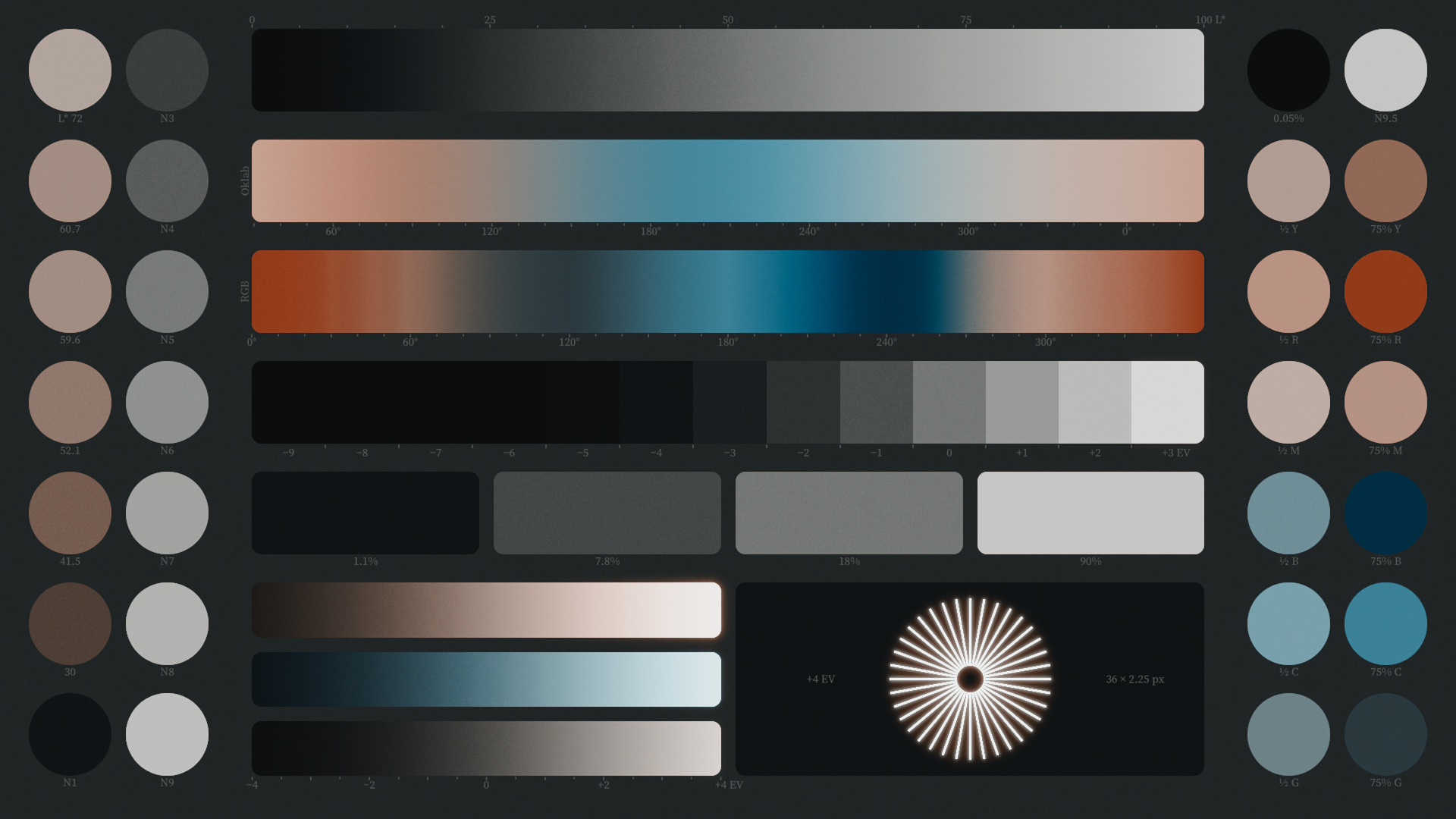
Ein von der Kopie inspiriertes Zweifarbmodell, keine Reproduktion von Cinecolor, gezeigt nach Ansco Color Negative 843. Tonwerte und Auszugsempfindlichkeiten sind von Agfa Print CP30 entlehnt, einem Ersatz; sein Berliner-Blau-Farbstoff ist aus Gundelfingers Aufsatz von 1950 über das Dreifarbverfahren nachgezeichnet, und sein orangeroter Farbstoff ist eine benannte Annahme. Für ihn sind weder MTF noch Körnigkeit veröffentlicht.
Kennlinien und Datengrundlage des Modells
Vergleiche Herstellerdaten und Ashigrains Reaktion auf denselben Achsen. Die Kurven zeigen, wie das Modell an seinen Quellen kalibriert ist; sie belegen keine Übereinstimmung mit auf Film aufgenommenen Bildern.
Kennlinienantwort
Modellgrenzen
Diese Bilder zeigen das Filmmodell in Anwendung. Spektralantwort, Licht und Betrachtungsbedingungen enthalten Näherungen. Halation, Bloom, Korngröße, Bildstand und Flackern sind nicht für jeden Film vollständig vermessen. Eine echte Filmaufnahme hängt auch von Entwicklung und Kopierlichtabstimmung ab.
- Dies ist ein von der Cinecolor-Kopie inspiriertes Zweifarbmodell, keine Reproduktion davon. Von der Zweifarbenkopie ist keine Kennlinie registriert.
- Tonwerte und Auszugsempfindlichkeiten stammen von Agfa Print CP30, einem Ersatz; die Empfindlichkeit des Grünauszugs ist die Summe aus Grün und Blau des Ersatzes.
- Der Berliner-Blau-Farbstoff ist das Cyan, nachgezeichnet aus Gundelfingers Aufsatz von 1950 über das Dreifarbverfahren. Der orangerote Farbstoff ist eine angenommene Gaußkurve (Maximum 480 nm, Breite 70 nm), gewählt für das neutralste Grau.
- Das Modell führt die beiden Auszüge in einem dreischichtigen Pfad: Die blaue Schicht kopiert den grünen Auszug, und es gibt keinen Gelbfarbstoff.
- Die doppelseitige Beschichtung und ihr weiches Projektionsbild werden nicht modelliert. Für ihn sind weder MTF noch Körnigkeit veröffentlicht.
- Die Quelle gibt keine Spektren von Kopierlampe oder Filtern an. Ihre spektrale Wirkung ist angenähert.
- Modelliertes Projektionsstreulicht hebt die Schwarztöne auf der Leinwand an. Seine Stärke ist angenommen, da die verfügbaren Quellen sie nicht messen. Daraus lässt sich kein gemessener Projektionskontrast ableiten.
Schwarzschildeffekt: nicht modelliert. Die Belichtungszeit hat bei diesem Film keine Wirkung.
Filmleitfaden: Annahmen und praktische Entscheidungen
Diese Vorschau kombiniert den Printfilm mit dem genannten Kameranegativ. Der Print hat in diesem Vergleich keinen eigenen Belichtungsindex und keine separat gemessene Kornantwort.
Quellen
- Characteristic curves: AGFA PRINT CP30 colour print film product info / technical data, 17/10/2011, S. 5
- Process: US Patent 2,016,666: Colored photograph and method of making same (W. T. Crespinel, assigned to Cinecolor Inc.), US 2,016,666 A, filed 1932-12-02, granted 1935-10-08; Google Patents image PDF (5 pages), S. 3
Hol diesen Film in dein Grading.
Alle Filme in einem Kauf, ohne Abo.
€199 + VAT