 Ashigrain
Positiva a colori · Pellicole positive
Technicolor Dye Transfer (1997 revival)
Il ritorno del trasferimento di coloranti Technicolor a fine anni Novanta.
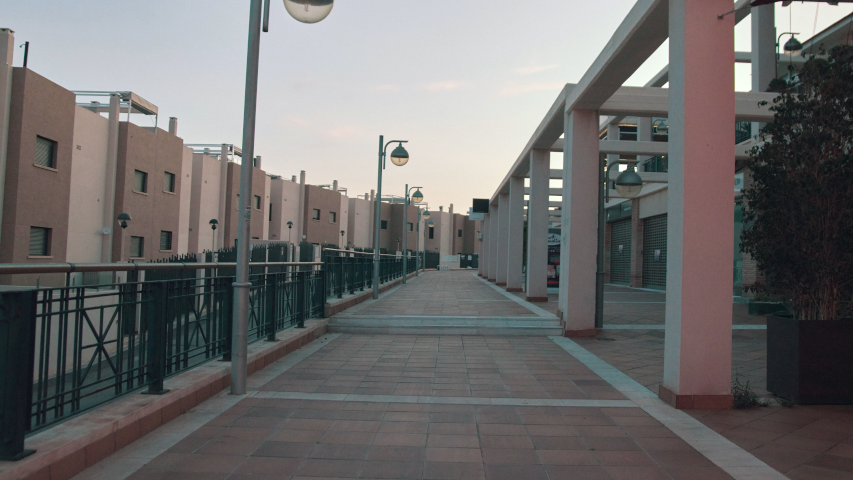
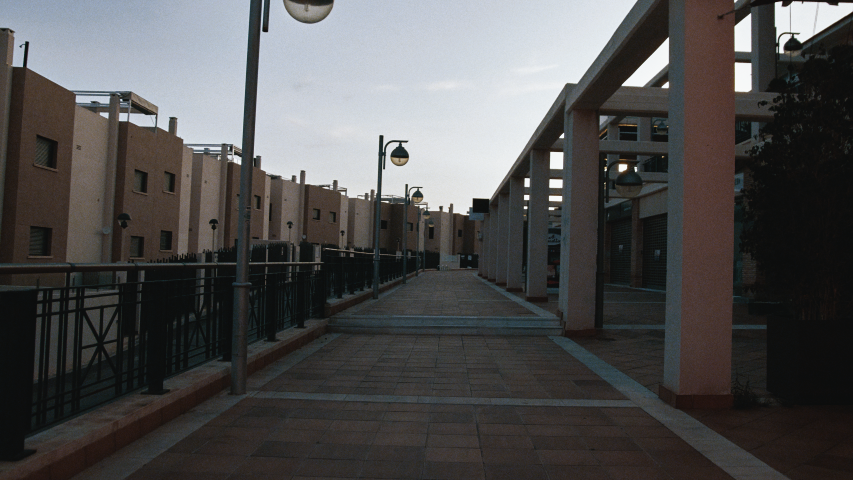
A labelled surrogate of Technicolor's late-1990s dye-transfer revival: the Process IV model with no key image and an assumed steeper tone for deeper blacks. Original vs Ashigrain.
In sintesi
- Introduzione
- 1997
- Fuori produzione
- Processo
- three separation records printed onto matrix film, developed to hardened gelatin reliefs, imbibed with cyan, magenta and yellow dyes and transferred in register onto a blank
- Densità massima
- ≈ 2,8
- Supporto
- Poliestere
Sulla pellicola
Technicolor aveva interrotto la stampa a trasferimento di coloranti negli Stati Uniti a metà degli anni Settanta, studiò un ritorno dai primi anni Novanta e la riportò in vita nel 1997 nel suo laboratorio di North Hollywood, nell’area Universal.
Per farlo ricomprò le attrezzature per il trasferimento di coloranti che il suo stabilimento di West Drayton aveva venduto alla Cina alla fine degli anni Settanta. Film Atlas indica Batman & Robin (1997) come primo film uscito con le nuove copie, solo come copie di prima, e nel dicembre 1997 il Los Angeles Times riferì che il procedimento era stato fino ad allora usato per poche copie di Giant e di Batman & Robin. Ricotta, uno dei responsabili del ritorno, disse che dava immagini più nitide e meno granulose e una scala tonale estesa, con neri più neri e bianchi più bianchi. Le copie erano realizzate su pellicole vergini in poliestere Estar fornite da Kodak, con colonne sonore stampate in bianco e nero. Fu usato per copie di prima di nuovi film come Bulworth, The Thin Red Line e Godzilla (tutti del 1998), Pearl Harbor e Apocalypse Now Redux (entrambi del 2001), e per le riedizioni di Rear Window, Gone with the Wind e The Wizard of Oz. La riedizione di Rear Window del 1999 ebbe circa 40 copie a trasferimento di coloranti. Il ritorno doveva crescere fino a grandi tirature di distribuzione, ma rimase a tirature piccole per problemi di controllo qualità, guasti tecnici e l’arrivo della proiezione digitale, e all’inizio degli anni 2000 era finito.
Fonti di questa storia
- Technicolor dye-transfer revival (Robert Hoffman), Film Atlas (FIAF / George Eastman Museum)
- Technicolor prints from color negatives (Richard W. Haines), Film Atlas (FIAF / George Eastman Museum)
- Film restoration more than 'Rear Window'-dressing (Bill Desowitz, 11 December 1997), CNN Interactive (Los Angeles Times)
Il look
Nel 1997 Technicolor riportò in vita la stampa a trasferimento di coloranti per le copie di prima di nuovi film e di classici riediti, su supporto in poliestere; all’inizio degli anni 2000 era di nuovo cessata. La versione di Ashigrain è un sostituto dichiarato, un modello ispirato alla copia e non una riproduzione: il modello del Process IV senza immagine chiave e con una resa tonale più ripida.



Ideale per
- Look da copia di prima di fine anni Novanta
- Riedizioni restaurate di classici degli studios
- Neri profondi con colore saturo dei coloranti
Confronta le pellicole positive
The same Vision3 500T night frame on each print film: how deep the blacks go, how the highlights roll off and how the colour separates.
The same Vision3 500T night frame on each print film: how deep the blacks go, how the highlights roll off and how the colour separates.
The same Vision3 500T night frame on each print film: how deep the blacks go, how the highlights roll off and how the colour separates.
The same Vision3 500T night frame on each print film: how deep the blacks go, how the highlights roll off and how the colour separates.
The same Vision3 500T night frame on each print film: how deep the blacks go, how the highlights roll off and how the colour separates.
The same Vision3 500T night frame on each print film: how deep the blacks go, how the highlights roll off and how the colour separates.
The same Vision3 500T night frame on each print film: how deep the blacks go, how the highlights roll off and how the colour separates.
The same Vision3 500T night frame on each print film: how deep the blacks go, how the highlights roll off and how the colour separates.
The same Vision3 500T night frame on each print film: how deep the blacks go, how the highlights roll off and how the colour separates.
The same Vision3 500T night frame on each print film: how deep the blacks go, how the highlights roll off and how the colour separates.
The same Vision3 500T night frame on each print film: how deep the blacks go, how the highlights roll off and how the colour separates.
The same Vision3 500T night frame on each print film: how deep the blacks go, how the highlights roll off and how the colour separates.
The same Vision3 500T night frame on each print film: how deep the blacks go, how the highlights roll off and how the colour separates.
The same Vision3 500T night frame on each print film. On this two-colour print (a labelled surrogate) every colour falls between blue-green and red-orange: how deep the blacks go, how the highlights roll off and which lights keep their hue.
The same Vision3 500T night frame on each print film: how deep the blacks go, how the highlights roll off and how the colour separates.
The same Vision3 500T night frame on each print film: how deep the blacks go, how the highlights roll off and how the colour separates.
The same Vision3 500T night frame on each print film: how deep the blacks go, how the highlights roll off and how the colour separates.
The same Vision3 500T night frame on each print film: how deep the blacks go, how the highlights roll off and how the colour separates.
The same Vision3 500T night frame on each print film: how deep the blacks go, how the highlights roll off and how the colour separates.
The same Vision3 500T night frame on each print film: how deep the blacks go, how the highlights roll off and how the colour separates.
The same Vision3 500T night frame on each print film: how deep the blacks go, how the highlights roll off and how the colour separates.
The same Vision3 500T night frame on each print film: how deep the blacks go, how the highlights roll off and how the colour separates.
The same Vision3 500T night frame on each print film: how deep the blacks go, how the highlights roll off and how the colour separates.
The same Vision3 500T night frame on each print film: how deep the blacks go, how the highlights roll off and how the colour separates.
The same Vision3 500T night frame on each print film. On this blue-sensitive black-and-white print the colour negative turns grey: how deep the blacks go, how the highlights roll off and how dark the reds and greens print.
The same Vision3 500T night frame on each print film: how deep the blacks go, how the highlights roll off and how the colour separates.
The same Vision3 500T night frame on each print film. On this blue-sensitive black-and-white print the colour negative turns grey: how deep the blacks go, how the highlights roll off and how dark the red neon and skin print.
The same Vision3 500T night frame on each print film: how deep the blacks go, how the highlights roll off and how the colour separates.
The same Vision3 500T night frame on each print film. On this black-and-white print the colour negative turns grey: how deep the blacks go, how the highlights roll off and how the coloured lights and skin translate to grey.
The same Vision3 500T night frame on each print film. On this blue-sensitive black-and-white print the colour negative turns grey: how deep the blacks go, how the highlights roll off and how the coloured lights and skin translate to grey.
The same Vision3 500T night frame on each print film: how deep the blacks go, how the highlights roll off and how the colour separates.
The same Vision3 500T night frame on each print film: how deep the blacks go, how the highlights roll off and how the colour separates.
The same Vision3 500T night frame on each print film: how deep the blacks go, how the highlights roll off and how the colour separates.
The same Vision3 500T night frame on each print film: how deep the blacks go, how the highlights roll off and how the colour separates.
The same Vision3 500T night frame on each print film: how deep the blacks go, how the highlights roll off and how the colour separates.
The same Vision3 500T night frame on each print film. On this two-colour print (a labelled surrogate) every colour falls between a blue and a red dye: how deep the blacks go, how the highlights roll off and which lights keep their hue.
The same Vision3 500T night frame on each print film: how deep the blacks go, how the highlights roll off and how the colour separates.
Lo stesso fotogramma notturno su Kodak Vision3 500T, stampato su ogni positivo.
- Kodak Vision Premier Color Print Film 2393
- Eastman Color SP Print Film 5383
- Eastman Color Print Film 5384
- Fujifilm Eterna-CP 3521XD
- Du Pont Color Release Positive Type 275
- Fujifilm Eterna-CP 3523XD
- Kodak Vision Color Print Film 2383
- Fujifilm Eterna-CP 3513DI
- Eastman EXR Color Print Film 5386
- Eastman Color Print Film 5381 (1972)
- Eastman Color Print Film 5385
- Agfa CP30 Colour Print Film
- SuperCinecolor
- Cinecolor (two-colour)
- Gevacolor Positive 953
- Gevacolor Print 9.85
- Gevacolor Print 986
- Gevacolor Print 982
- Ferraniacolor Positive
- 3M Color Positive 650
- Fujicolor Positive F-CP 3510
- Fujicolor Positive F-CP 3519
- Fujifilm Eterna-CP 3512
- Eastman Color Print 5381 (1950)
- Eastman Fine Grain Release Positive 5302
- Ansco Color Print 848
- Kodak B&W Print Film 2302
- Svema TsP-11
- Svema MZ-3
- ORWO PF 2 Positive Print Film
- Technicolor Dye Transfer (1997 revival)
- Svema TsP-8R
- Shostka Colour Positive (1950s)
- Technicolor Dye Transfer (Process IV)
- Gasparcolor Print
- Trucolor Print (two-colour)
- Kodak Vision Color Teleprint Film 2395
Scienza e fonti

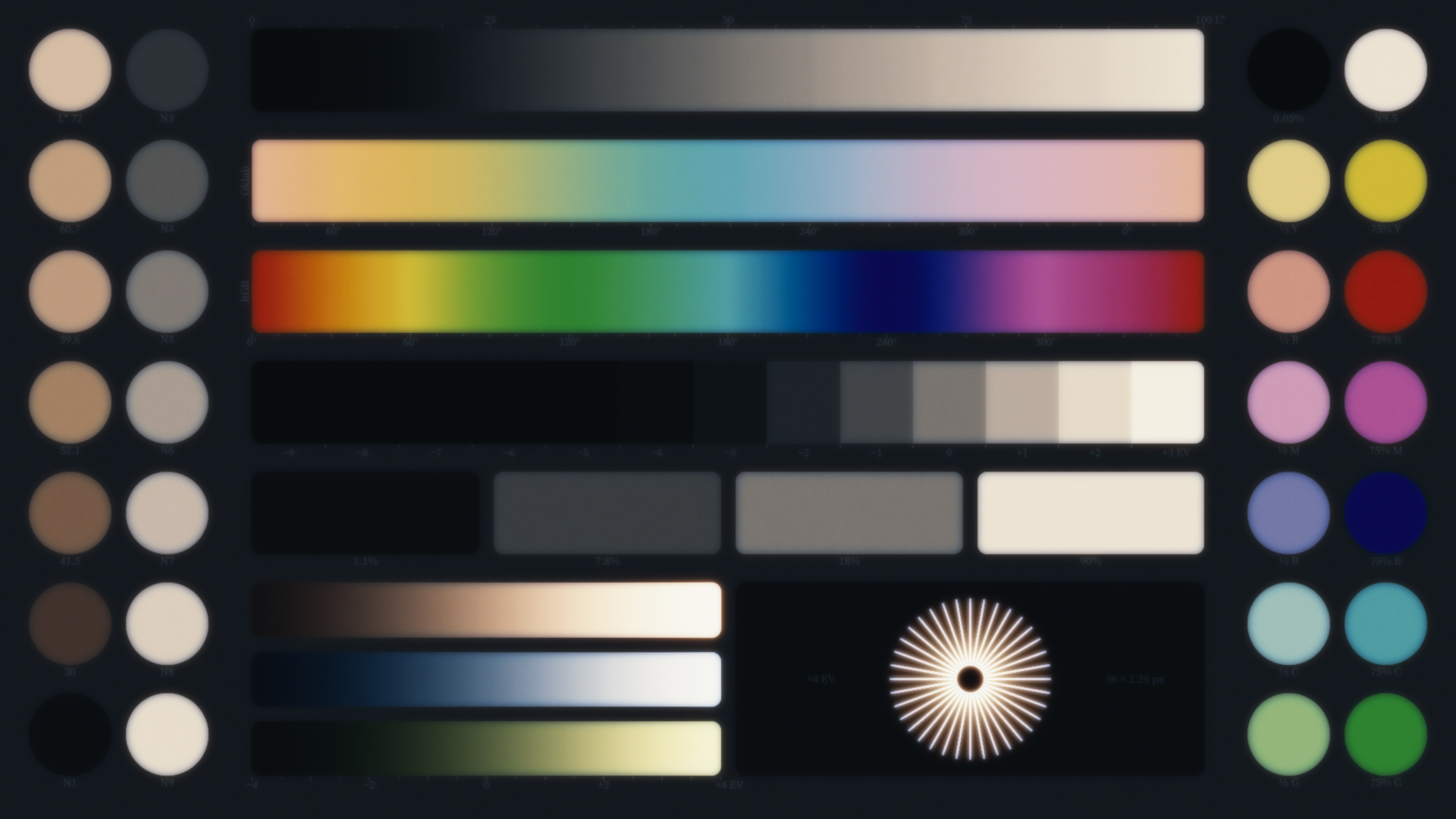
Un modello in tricromia ispirato alla copia del ritorno, non una sua riproduzione, mostrato dopo Kodak Vision3 500T. Condivide le curve ipotizzate, le sensibilità di registrazione e i coloranti del modello Technicolor Process IV, senza immagine chiave e con un gamma della matrice ipotizzato più ripido di 2.7 per la scala tonale estesa rivendicata dal ritorno.
Curve di risposta e basi del modello
Confronta i dati del produttore con la risposta di Ashigrain sugli stessi assi. Queste curve mostrano come il modello è calibrato sulle fonti; non dimostrano una corrispondenza con immagini riprese su pellicola.
Risposta caratteristica
Limiti del modello
Queste immagini mostrano il modello di pellicola in uso. Risposta spettrale, luce e condizioni di visione includono approssimazioni; aloni, bagliore, dimensione della grana, instabilità e sfarfallio non sono misurati completamente per ogni film. Una ripresa reale dipende anche dallo sviluppo e dal bilanciamento della stampa.
- Si tratta di un modello in tricromia ispirato al ritorno del trasferimento di coloranti Technicolor del 1997–2002, non di una riproduzione delle sue copie.
- Nelle fonti non esiste alcuna curva caratteristica, filtro di selezione, gamma della matrice o spettro dei coloranti di una copia del ritorno. Curve, sensibilità di registrazione e coloranti di trasferimento sono quelli del sostituto Technicolor Process IV di Ashigrain, a loro volta ipotesi dichiarate.
- Differisce solo dove lo dice una fonte: non c’è immagine chiave, e il gamma della matrice di 2.7, più ripido del 2.6 del Process IV, è un’ipotesi che rappresenta la scala tonale estesa rivendicata dal ritorno.
- Il supporto in poliestere è registrato ma non modellato.
- La fonte non dà spettri della lampada o dei filtri della stampatrice. La loro risposta spettrale è approssimata.
- Il velo di proiezione modellato solleva i neri sullo schermo. La sua intensità è assunta perché le fonti disponibili non la misurano; non stabilisce quindi un contrasto di proiezione misurato.
Reciprocità: non modellata. Il tempo di esposizione non ha effetto su questa pellicola.
Guida alle pellicole: ipotesi e scelte pratiche
Questa anteprima combina il positivo con il negativo da ripresa indicato. In questo confronto, il positivo non ha un indice di esposizione separato né una propria risposta misurata della grana.
Fonti
- Process: J. A. Ball, The Technicolor Process of Three-Color Cinematography (American WideScreen Museum transcription), widescreenmuseum.com/oldcolor/ball.htm as served 2026-10-28 (transcription; figures ballpic1a.gif, ballpic2.gif not registered), p. 1
- Reconstructed: J. A. Ball, The Technicolor Process of Three-Color Cinematography (American WideScreen Museum transcription), widescreenmuseum.com/oldcolor/ball.htm as served 2026-10-28 (transcription; figures ballpic1a.gif, ballpic2.gif not registered), p. 1
Porta questa pellicola nella tua correzione colore.
Tutte le pellicole in un unico acquisto, senza abbonamento.
€199 + VAT