 Ashigrain
Positiva a colori · Pellicole positive
Gevacolor Print 982
La pellicola da stampa Agfa-Gevaert per i negativi Gevacolor 682.
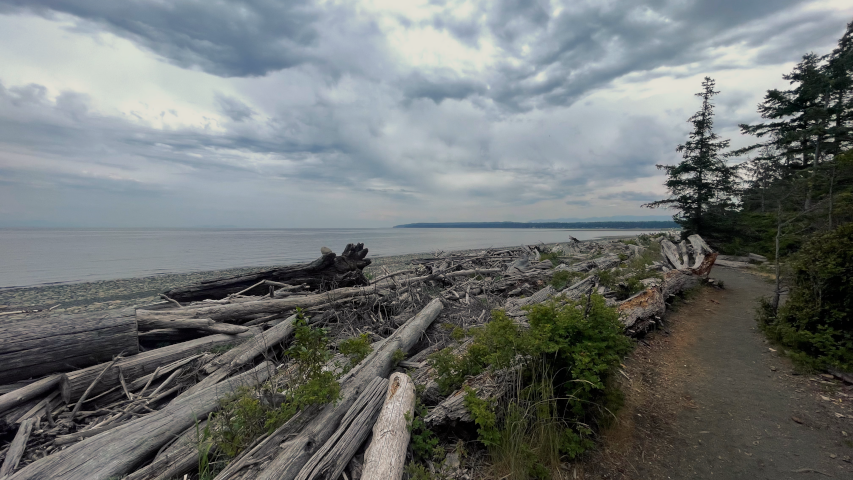
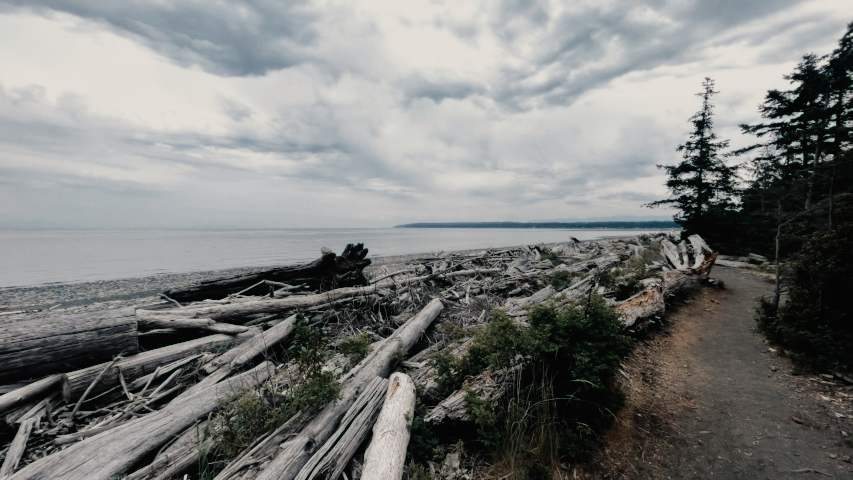
The print the 1980 Gevacolor 682 paper names, as a labelled surrogate on Agfa CP30's curves: a 1980s European cinema look. Original vs Ashigrain.
In sintesi
- Introduzione
- già nel 1980
- Processo
- ECP-2
- Densità massima
- ≈ 4,0
Sulla pellicola
Gevacolor Print Film Type 982 era una pellicola da stampa a colori prodotta da Agfa-Gevaert.
La fonte datata più antica è un articolo del settembre 1980 nel SMPTE Journal di Vervoort e Stappaerts, che presentava Gevacolor Negative Type 682 e usava il Type 982 come pellicola da stampa. Nessuna fonte trovata data il lancio della copia stessa. L’articolo confronta il rapporto segnale/rumore di negativi 682 stampati su 982 in 35 mm e 16 mm. Fornisce anche le correzioni della stampatrice additiva per stampare la 682 sulla 982. Nel 1993 il libro di Henry Wilhelm sulla permanenza delle fotografie a colori elencava ancora Gevacolor Print Film 982 tra le pellicole Agfa-Gevaert, in un tipo originale e uno migliorato. Wilhelm riportava la stima della stessa Agfa-Gevaert secondo cui il colorante ciano, il meno stabile dei tre, sbiadiva del 10 % in circa cinque anni a temperatura ambiente e 40 % di umidità relativa, per entrambi i tipi.
Fonti di questa storia
- A New Gevacolor Negative Film Type 682 (A. Vervoort, H. Stappaerts, SMPTE Journal 89, September 1980), Timeline of Historical Film Colors, University of Zurich
- The Permanence and Care of Color Photographs (1993), chapter 9: The Permanent Preservation of Color Motion Pictures, Henry Wilhelm with Carol Brower
Il look
Gevacolor Print Film Type 982 era la pellicola da stampa Agfa-Gevaert usata con Gevacolor Negative Type 682 in un articolo del 1980. Il libro di Henry Wilhelm del 1993 la elenca ancora, in un tipo originale e uno migliorato. La versione di Ashigrain è un sostituto dichiarato, un modello ispirato alla copia e non una riproduzione.




Ideale per
- Stampa di negativi Gevacolor 682
- Copie europee a colori degli anni Ottanta
- Confronto tra generazioni di copie Gevacolor
Confronta le pellicole positive
The same Vision3 500T night frame on each print film: how deep the blacks go, how the highlights roll off and how the colour separates.
The same Vision3 500T night frame on each print film: how deep the blacks go, how the highlights roll off and how the colour separates.
The same Vision3 500T night frame on each print film: how deep the blacks go, how the highlights roll off and how the colour separates.
The same Vision3 500T night frame on each print film: how deep the blacks go, how the highlights roll off and how the colour separates.
The same Vision3 500T night frame on each print film: how deep the blacks go, how the highlights roll off and how the colour separates.
The same Vision3 500T night frame on each print film: how deep the blacks go, how the highlights roll off and how the colour separates.
The same Vision3 500T night frame on each print film: how deep the blacks go, how the highlights roll off and how the colour separates.
The same Vision3 500T night frame on each print film: how deep the blacks go, how the highlights roll off and how the colour separates.
The same Vision3 500T night frame on each print film: how deep the blacks go, how the highlights roll off and how the colour separates.
The same Vision3 500T night frame on each print film: how deep the blacks go, how the highlights roll off and how the colour separates.
The same Vision3 500T night frame on each print film: how deep the blacks go, how the highlights roll off and how the colour separates.
The same Vision3 500T night frame on each print film: how deep the blacks go, how the highlights roll off and how the colour separates.
The same Vision3 500T night frame on each print film: how deep the blacks go, how the highlights roll off and how the colour separates.
The same Vision3 500T night frame on each print film. On this two-colour print (a labelled surrogate) every colour falls between blue-green and red-orange: how deep the blacks go, how the highlights roll off and which lights keep their hue.
The same Vision3 500T night frame on each print film: how deep the blacks go, how the highlights roll off and how the colour separates.
The same Vision3 500T night frame on each print film: how deep the blacks go, how the highlights roll off and how the colour separates.
The same Vision3 500T night frame on each print film: how deep the blacks go, how the highlights roll off and how the colour separates.
The same Vision3 500T night frame on each print film: how deep the blacks go, how the highlights roll off and how the colour separates.
The same Vision3 500T night frame on each print film: how deep the blacks go, how the highlights roll off and how the colour separates.
The same Vision3 500T night frame on each print film: how deep the blacks go, how the highlights roll off and how the colour separates.
The same Vision3 500T night frame on each print film: how deep the blacks go, how the highlights roll off and how the colour separates.
The same Vision3 500T night frame on each print film: how deep the blacks go, how the highlights roll off and how the colour separates.
The same Vision3 500T night frame on each print film: how deep the blacks go, how the highlights roll off and how the colour separates.
The same Vision3 500T night frame on each print film: how deep the blacks go, how the highlights roll off and how the colour separates.
The same Vision3 500T night frame on each print film. On this blue-sensitive black-and-white print the colour negative turns grey: how deep the blacks go, how the highlights roll off and how dark the reds and greens print.
The same Vision3 500T night frame on each print film: how deep the blacks go, how the highlights roll off and how the colour separates.
The same Vision3 500T night frame on each print film. On this blue-sensitive black-and-white print the colour negative turns grey: how deep the blacks go, how the highlights roll off and how dark the red neon and skin print.
The same Vision3 500T night frame on each print film: how deep the blacks go, how the highlights roll off and how the colour separates.
The same Vision3 500T night frame on each print film. On this black-and-white print the colour negative turns grey: how deep the blacks go, how the highlights roll off and how the coloured lights and skin translate to grey.
The same Vision3 500T night frame on each print film. On this blue-sensitive black-and-white print the colour negative turns grey: how deep the blacks go, how the highlights roll off and how the coloured lights and skin translate to grey.
The same Vision3 500T night frame on each print film: how deep the blacks go, how the highlights roll off and how the colour separates.
The same Vision3 500T night frame on each print film: how deep the blacks go, how the highlights roll off and how the colour separates.
The same Vision3 500T night frame on each print film: how deep the blacks go, how the highlights roll off and how the colour separates.
The same Vision3 500T night frame on each print film: how deep the blacks go, how the highlights roll off and how the colour separates.
The same Vision3 500T night frame on each print film: how deep the blacks go, how the highlights roll off and how the colour separates.
The same Vision3 500T night frame on each print film. On this two-colour print (a labelled surrogate) every colour falls between a blue and a red dye: how deep the blacks go, how the highlights roll off and which lights keep their hue.
The same Vision3 500T night frame on each print film: how deep the blacks go, how the highlights roll off and how the colour separates.
Lo stesso fotogramma notturno su Kodak Vision3 500T, stampato su ogni positivo.
- Kodak Vision Premier Color Print Film 2393
- Eastman Color SP Print Film 5383
- Eastman Color Print Film 5384
- Fujifilm Eterna-CP 3521XD
- Du Pont Color Release Positive Type 275
- Fujifilm Eterna-CP 3523XD
- Kodak Vision Color Print Film 2383
- Fujifilm Eterna-CP 3513DI
- Eastman EXR Color Print Film 5386
- Eastman Color Print Film 5381 (1972)
- Eastman Color Print Film 5385
- Agfa CP30 Colour Print Film
- SuperCinecolor
- Cinecolor (two-colour)
- Gevacolor Positive 953
- Gevacolor Print 9.85
- Gevacolor Print 986
- Gevacolor Print 982
- Ferraniacolor Positive
- 3M Color Positive 650
- Fujicolor Positive F-CP 3510
- Fujicolor Positive F-CP 3519
- Fujifilm Eterna-CP 3512
- Eastman Color Print 5381 (1950)
- Eastman Fine Grain Release Positive 5302
- Ansco Color Print 848
- Kodak B&W Print Film 2302
- Svema TsP-11
- Svema MZ-3
- ORWO PF 2 Positive Print Film
- Technicolor Dye Transfer (1997 revival)
- Svema TsP-8R
- Shostka Colour Positive (1950s)
- Technicolor Dye Transfer (Process IV)
- Gasparcolor Print
- Trucolor Print (two-colour)
- Kodak Vision Color Teleprint Film 2395
Scienza e fonti

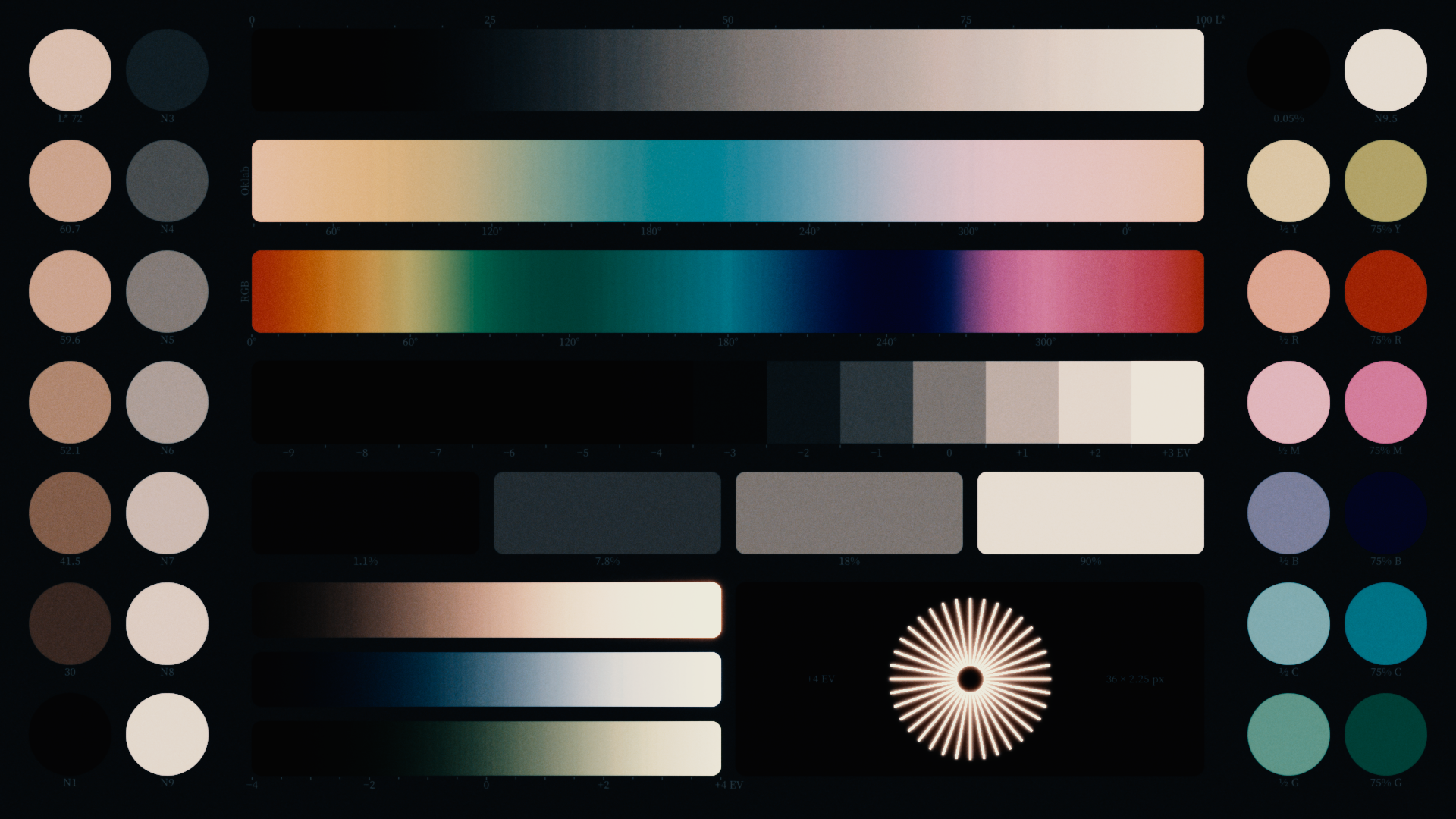
Un sostituto dichiarato ispirato alla copia, non una riproduzione del Type 982, mostrato dopo Gevacolor Negative Type 682. Di questa pellicola non è registrato alcun dato: curve caratteristiche, sensibilità spettrale, MTF e coloranti sono quelli di Agfa Print CP30, un sostituto scelto nella linea Agfa-Gevaert, invariati. Il suo processo ECP-2 è registrato ma non modellato.
Curve di risposta e basi del modello
Confronta i dati del produttore con la risposta di Ashigrain sugli stessi assi. Queste curve mostrano come il modello è calibrato sulle fonti; non dimostrano una corrispondenza con immagini riprese su pellicola.
Risposta caratteristica
Limiti del modello
Queste immagini mostrano il modello di pellicola in uso. Risposta spettrale, luce e condizioni di visione includono approssimazioni; aloni, bagliore, dimensione della grana, instabilità e sfarfallio non sono misurati completamente per ogni film. Una ripresa reale dipende anche dallo sviluppo e dal bilanciamento della stampa.
- È un sostituto dichiarato ispirato a Gevacolor Print Film Type 982, non una sua riproduzione. Non è stato trovato alcun articolo né scheda del Type 982; è noto dall’articolo del 1980 sul negativo Type 682.
- Curve caratteristiche, sensibilità spettrale, MTF e coloranti sono quelli di Agfa Print CP30, un sostituto, invariati. La scelta di un sostituto nella linea Agfa-Gevaert è un’ipotesi.
- Le correzioni della stampatrice additiva dell’articolo del 1980 per il Type 682 sul Type 982 sono registrate ma non usate.
- Il processo ECP-2 è registrato ma non modellato. Lo sbiadimento dei coloranti non è modellato; il modello rende una copia nuova.
- L’obiettivo neutro è un obiettivo ipotizzato bilanciato sul grigio (0.994 / 1.000 / 1.004, Status A); l’obiettivo proprio del sostituto non è usato.
- La fonte non dà spettri della lampada o dei filtri della stampatrice. La loro risposta spettrale è approssimata.
- Il velo di proiezione modellato solleva i neri sullo schermo. La sua intensità è assunta perché le fonti disponibili non la misurano; non stabilisce quindi un contrasto di proiezione misurato.
Reciprocità: non modellata. Il tempo di esposizione non ha effetto su questa pellicola.
Guida alle pellicole: ipotesi e scelte pratiche
Questa anteprima combina il positivo con il negativo da ripresa indicato. In questo confronto, il positivo non ha un indice di esposizione separato né una propria risposta misurata della grana.
Fonti
- Characteristic curves: AGFA PRINT CP30 colour print film product info / technical data, 17/10/2011, p. 5
- Process: Vervoort, A. and Stappaerts, H.: A New Gevacolor Negative Film Type 682. SMPTE Journal 89 (Sept. 1980), pp. 650-652, SMPTE Journal Vol. 89, September 1980, pp. 650-652 (presented 22 October 1979, SMPTE Technical Conference, Los Angeles); filmcolors.org scan uploaded 2014-03, p. 1
Porta questa pellicola nella tua correzione colore.
Tutte le pellicole in un unico acquisto, senza abbonamento.
€199 + VAT