 Ashigrain
Positiva in bianco e nero · Pellicole positive
ORWO PF 2 Positive Print Film
La pellicola da stampa in bianco e nero di ORWO per il lavoro d’archivio.
ORWO's blue-sensitive print for archive work, from its 2014 datasheet: built to hold a negative of extreme contrast with a full grey scale. Original vs Ashigrain.
In sintesi
- Introduzione
- già nel 2014
- Processo
- ORWO instruction 2182 (D-97 / ORWO 27), 21 ± 1 C, development 4-8 min, to an average gradient of 2.8
- Densità massima
- ≈ 3,0
- Supporto
- Poliestere
Sulla pellicola
ORWO Positive Print Film PF 2 è una pellicola da stampa in bianco e nero a grana fine e sensibile al blu, prodotta da FilmoTec nello stabilimento ORWO originale di Wolfen.
ORWO sta per Original Wolfen, e lo stabilimento di Wolfen nacque come parte di Agfa; American Cinematographer riferisce che FilmoTec rilanciò il marchio ORWO nel 1998. La versione modellata, PF 2 V3, è documentata nelle informazioni tecniche di FilmoTec del giugno 2014, che la indicano come succeditrice di PF 2 V2 e PF 2 plus. FilmoTec la descrive per copie in bianco e nero da negativi comuni e soprattutto per le cineteche, dove deve rendere negativi a contrasto estremo con una scala di grigi completa. È stesa su poliestere da 125 µm o triacetato da 135 µm, con uno strato antialone che si schiarisce nel trattamento e uno strato antistatico permanente. Secondo l’istruzione ORWO 2182 si sviluppa in D-97 o ORWO 27 per 4-8 minuti, fino a un gradiente medio di 2.8. FilmoTec specifica una granularità RMS al massimo di 10 e una MTF di almeno 0.70 a 30 cicli per millimetro. American Cinematographer elencava PF2 tra i prodotti ORWO nel febbraio 2017.
Fonti di questa storia
- ORWO Positive Print Film PF 2 V3 Technical Information (TI-PF2 V3-VI/2014), FilmoTec GmbH
- ORWO Instruction no. 2182: processing of ORWO black & white positive print films, FilmoTec GmbH
- Orwo Film Offers Black-and-White Negative, American Society of Cinematographers
Il look
ORWO Positive Print Film PF 2 è una pellicola da stampa in bianco e nero sensibile al blu prodotta a Wolfen, documentata nella versione V3 del 2014. È pensata per rendere negativi a contrasto estremo con una scala di grigi completa, soprattutto nel lavoro degli archivi cinematografici. Curva e sensibilità provengono dalla scheda tecnica del produttore.



Ideale per
- Copie in stile archivio e restauro
- Negativi ad alto contrasto con scala di grigi completa
- Stampare negativi Tasma NK-2
Confronta le pellicole positive
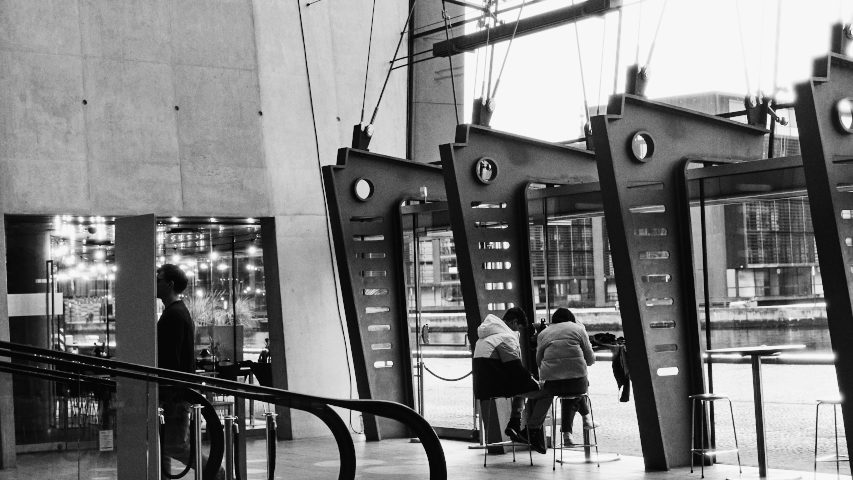
The same Vision3 500T night frame on each print film: how deep the blacks go, how the highlights roll off and how the colour separates.
The same Vision3 500T night frame on each print film: how deep the blacks go, how the highlights roll off and how the colour separates.
The same Vision3 500T night frame on each print film: how deep the blacks go, how the highlights roll off and how the colour separates.
The same Vision3 500T night frame on each print film: how deep the blacks go, how the highlights roll off and how the colour separates.
The same Vision3 500T night frame on each print film: how deep the blacks go, how the highlights roll off and how the colour separates.
The same Vision3 500T night frame on each print film: how deep the blacks go, how the highlights roll off and how the colour separates.
The same Vision3 500T night frame on each print film: how deep the blacks go, how the highlights roll off and how the colour separates.
The same Vision3 500T night frame on each print film: how deep the blacks go, how the highlights roll off and how the colour separates.
The same Vision3 500T night frame on each print film: how deep the blacks go, how the highlights roll off and how the colour separates.
The same Vision3 500T night frame on each print film: how deep the blacks go, how the highlights roll off and how the colour separates.
The same Vision3 500T night frame on each print film: how deep the blacks go, how the highlights roll off and how the colour separates.
The same Vision3 500T night frame on each print film: how deep the blacks go, how the highlights roll off and how the colour separates.
The same Vision3 500T night frame on each print film: how deep the blacks go, how the highlights roll off and how the colour separates.
The same Vision3 500T night frame on each print film. On this two-colour print (a labelled surrogate) every colour falls between blue-green and red-orange: how deep the blacks go, how the highlights roll off and which lights keep their hue.
The same Vision3 500T night frame on each print film: how deep the blacks go, how the highlights roll off and how the colour separates.
The same Vision3 500T night frame on each print film: how deep the blacks go, how the highlights roll off and how the colour separates.
The same Vision3 500T night frame on each print film: how deep the blacks go, how the highlights roll off and how the colour separates.
The same Vision3 500T night frame on each print film: how deep the blacks go, how the highlights roll off and how the colour separates.
The same Vision3 500T night frame on each print film: how deep the blacks go, how the highlights roll off and how the colour separates.
The same Vision3 500T night frame on each print film: how deep the blacks go, how the highlights roll off and how the colour separates.
The same Vision3 500T night frame on each print film: how deep the blacks go, how the highlights roll off and how the colour separates.
The same Vision3 500T night frame on each print film: how deep the blacks go, how the highlights roll off and how the colour separates.
The same Vision3 500T night frame on each print film: how deep the blacks go, how the highlights roll off and how the colour separates.
The same Vision3 500T night frame on each print film: how deep the blacks go, how the highlights roll off and how the colour separates.
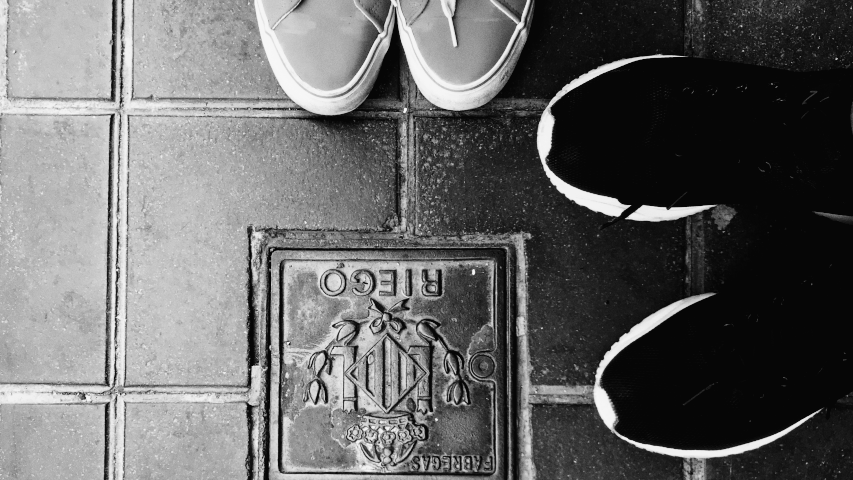
The same Vision3 500T night frame on each print film. On this blue-sensitive black-and-white print the colour negative turns grey: how deep the blacks go, how the highlights roll off and how dark the reds and greens print.
The same Vision3 500T night frame on each print film: how deep the blacks go, how the highlights roll off and how the colour separates.
The same Vision3 500T night frame on each print film. On this blue-sensitive black-and-white print the colour negative turns grey: how deep the blacks go, how the highlights roll off and how dark the red neon and skin print.
The same Vision3 500T night frame on each print film: how deep the blacks go, how the highlights roll off and how the colour separates.
The same Vision3 500T night frame on each print film. On this black-and-white print the colour negative turns grey: how deep the blacks go, how the highlights roll off and how the coloured lights and skin translate to grey.
The same Vision3 500T night frame on each print film. On this blue-sensitive black-and-white print the colour negative turns grey: how deep the blacks go, how the highlights roll off and how the coloured lights and skin translate to grey.
The same Vision3 500T night frame on each print film: how deep the blacks go, how the highlights roll off and how the colour separates.
The same Vision3 500T night frame on each print film: how deep the blacks go, how the highlights roll off and how the colour separates.
The same Vision3 500T night frame on each print film: how deep the blacks go, how the highlights roll off and how the colour separates.
The same Vision3 500T night frame on each print film: how deep the blacks go, how the highlights roll off and how the colour separates.
The same Vision3 500T night frame on each print film: how deep the blacks go, how the highlights roll off and how the colour separates.
The same Vision3 500T night frame on each print film. On this two-colour print (a labelled surrogate) every colour falls between a blue and a red dye: how deep the blacks go, how the highlights roll off and which lights keep their hue.
The same Vision3 500T night frame on each print film: how deep the blacks go, how the highlights roll off and how the colour separates.
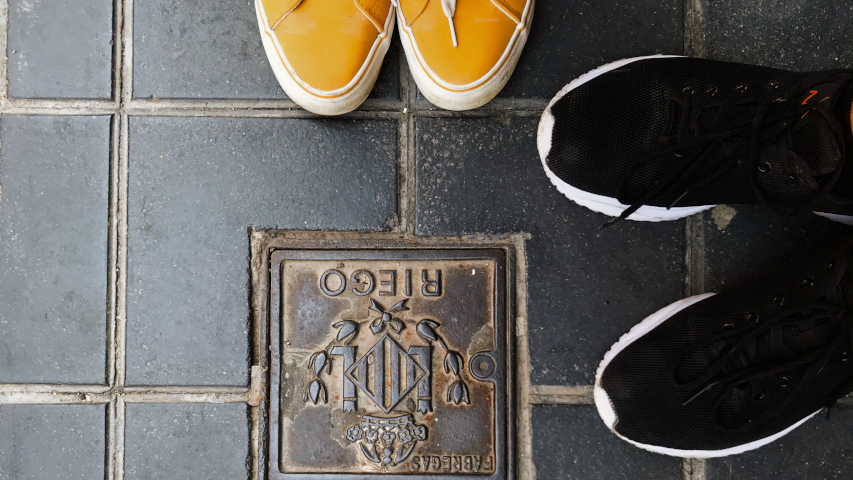
Lo stesso fotogramma notturno su Kodak Vision3 500T, stampato su ogni positivo.
- Kodak Vision Premier Color Print Film 2393
- Eastman Color SP Print Film 5383
- Eastman Color Print Film 5384
- Fujifilm Eterna-CP 3521XD
- Du Pont Color Release Positive Type 275
- Fujifilm Eterna-CP 3523XD
- Kodak Vision Color Print Film 2383
- Fujifilm Eterna-CP 3513DI
- Eastman EXR Color Print Film 5386
- Eastman Color Print Film 5381 (1972)
- Eastman Color Print Film 5385
- Agfa CP30 Colour Print Film
- SuperCinecolor
- Cinecolor (two-colour)
- Gevacolor Positive 953
- Gevacolor Print 9.85
- Gevacolor Print 986
- Gevacolor Print 982
- Ferraniacolor Positive
- 3M Color Positive 650
- Fujicolor Positive F-CP 3510
- Fujicolor Positive F-CP 3519
- Fujifilm Eterna-CP 3512
- Eastman Color Print 5381 (1950)
- Eastman Fine Grain Release Positive 5302
- Ansco Color Print 848
- Kodak B&W Print Film 2302
- Svema TsP-11
- Svema MZ-3
- ORWO PF 2 Positive Print Film
- Technicolor Dye Transfer (1997 revival)
- Svema TsP-8R
- Shostka Colour Positive (1950s)
- Technicolor Dye Transfer (Process IV)
- Gasparcolor Print
- Trucolor Print (two-colour)
- Kodak Vision Color Teleprint Film 2395
Scienza e fonti

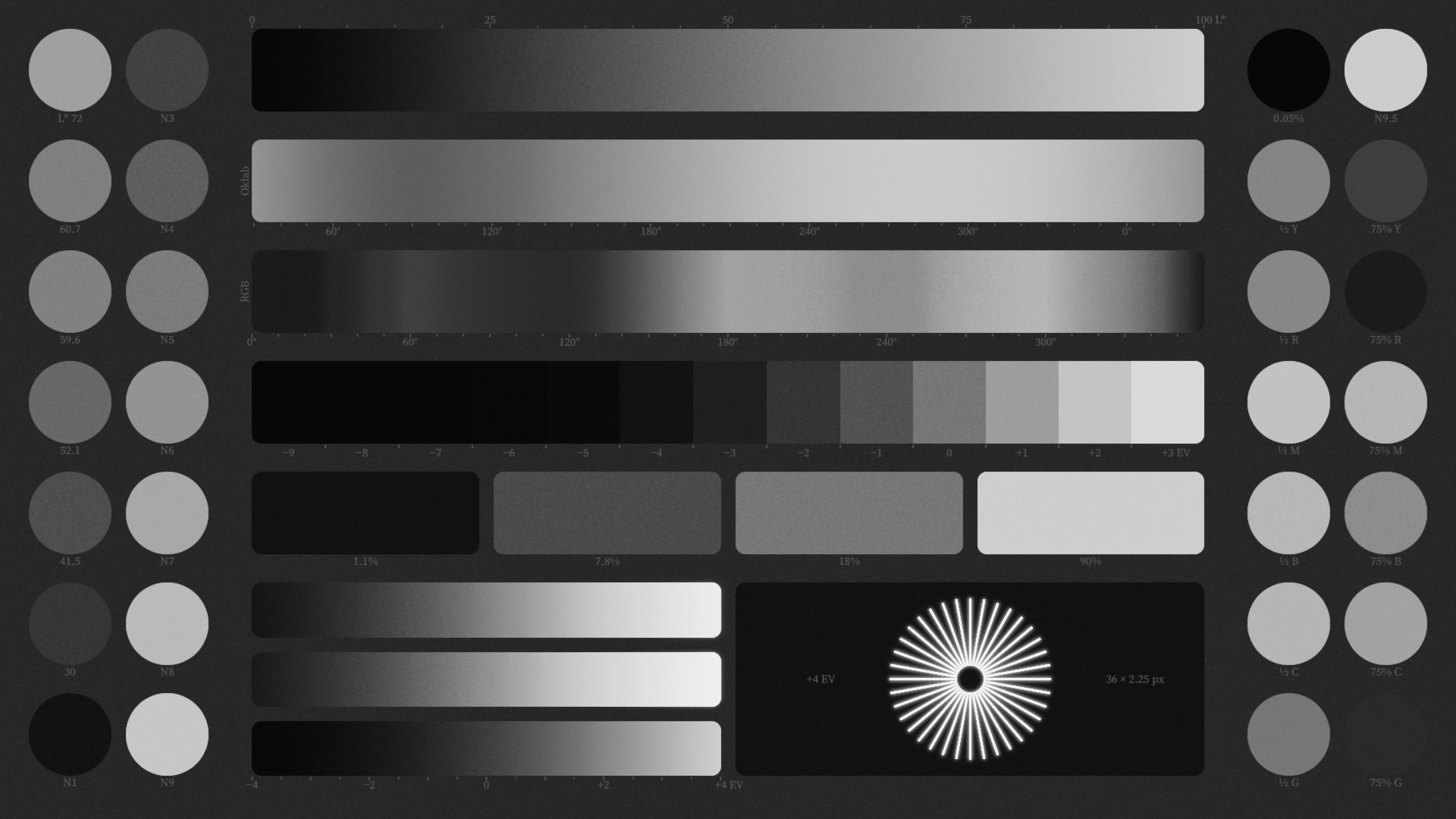
Una pellicola da stampa in bianco e nero sensibile al blu, mostrata dopo Tasma NK-2. Curva caratteristica e sensibilità spettrale sono digitalizzate dalla scheda tecnica V3 del 2014, con la curva di sviluppo da 5 minuti. Il risultato combina negativo e copia.
Curve di risposta e basi del modello
Confronta i dati del produttore con la risposta di Ashigrain sugli stessi assi. Queste curve mostrano come il modello è calibrato sulle fonti; non dimostrano una corrispondenza con immagini riprese su pellicola.
Risposta caratteristica
Limiti del modello
Queste immagini mostrano il modello di pellicola in uso. Risposta spettrale, luce e condizioni di visione includono approssimazioni; aloni, bagliore, dimensione della grana, instabilità e sfarfallio non sono misurati completamente per ogni film. Una ripresa reale dipende anche dallo sviluppo e dal bilanciamento della stampa.
- L’immagine d’argento non ha un grafico dei coloranti ed è considerata spettralmente neutra.
- La pellicola è sensibile al blu (circa 400–520 nm, come riportato); la sua sensibilità fuori da questo intervallo non è tracciata.
- La curva caratteristica è la curva da 5 minuti della scheda (gradiente di circa 2.84), uno dei tre tempi di sviluppo stampati, quindi il contrasto con altri sviluppi non è modellato. La curva si ferma alla densità 3.0, il margine superiore del grafico stampato.
- Granularità e MTF sono indicate solo come limiti (RMS al massimo 10; MTF almeno 0.70 a 30 cicli/mm), non come curve.
- Non è disponibile una seconda edizione con curve, quindi non è misurato alcun errore di digitalizzazione.
- La fonte non fornisce spettri di lampada o filtro della stampatrice. La correzione luci della copia in bianco e nero è modellata.
Reciprocità: non modellata. Il tempo di esposizione non ha effetto su questa pellicola.
Guida alle pellicole: ipotesi e scelte pratiche
Fonti
- Characteristic curves: ORWO Positive Print Film PF 2 V3 Technical Information, TI-PF2 V3-VI/2014, p. 2
- Process: ORWO Positive Print Film PF 2 V3 Technical Information, TI-PF2 V3-VI/2014, p. 2
Porta questa pellicola nella tua correzione colore.
Tutte le pellicole in un unico acquisto, senza abbonamento.
€199 + VAT