 Ashigrain
Positiva a colori · Pellicole positive
SuperCinecolor
La stampa in tricromia di Cinecolor su pellicola a doppia emulsione.
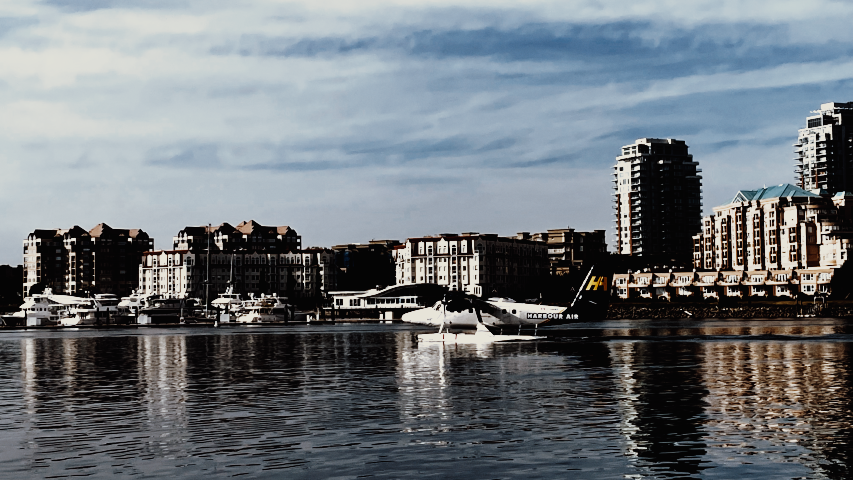
Cinecolor's three-colour print, reconstructed: its dyes, including the Prussian-blue cyan, are traced from Gundelfinger's 1950 paper, with tone borrowed from Agfa CP30. Original vs Ashigrain.
In sintesi
- Introduzione
- fine degli anni 1940
- Fuori produzione
- Processo
- Cinecolor three-colour machine processing (development to silver, then toning and dyeing of the component images)
- Densità massima
- ≈ 4,0
Sulla pellicola
SuperCinecolor estese a tre colori il procedimento bicromo di Cinecolor, stampando da tre negativi di selezione su pellicola positiva duplitizzata, emulsionata su entrambi i lati.
L’American WideScreen Museum ne data l’introduzione al 1948, e l’ingegnere di Cinecolor Alan Gundelfinger lo presentò alla Society of Motion Picture Engineers l’11 ottobre 1949. Le registrazioni ciano e magenta erano stampate per prime su lati opposti della pellicola e il giallo in seguito sul lato del ciano. Il ciano era un’immagine al ferro virata in blu di Prussia, mentre giallo e magenta erano coloranti basici mordenzati su un’immagine di ioduro d’argento, e Gundelfinger definì la densità leggermente più alta del ciano nel verde rispetto al blu il peggior difetto del procedimento. Il suo primo lungometraggio, The Sword of Monte Cristo, uscì nel 1951, seguito da titoli come Jack and the Beanstalk e Abbott and Costello Meet Captain Kidd (entrambi del 1952) e Riders to the Stars (1954). Secondo il Museum, Jack and the Beanstalk fu girato su negativo Eastman Color e stampato in SuperCinecolor, e Cinecolor usava pellicola da stampa a colori Eastman per i giornalieri ma manteneva il proprio procedimento per le copie di distribuzione. Le copie erano valutate con proiezione ad arco, e il procedimento fu usato anche per serie televisive. Secondo il Museum, Cinecolor chiuse l’attività nel 1954 e Technicolor ne acquistò i beni.
Fonti di questa storia
- Cinecolor Three-Color Process (Alan M. Gundelfinger, Journal of the SMPTE 54, January 1950), Society of Motion Picture and Television Engineers
- Supercinecolor / Natural Color, Timeline of Historical Film Colors, University of Zurich
- Cinecolor, American WideScreen Museum
Il look
SuperCinecolor era il procedimento di stampa in tricromia di Cinecolor della fine degli anni Quaranta, stampato da negativi di selezione su pellicola emulsionata su entrambi i lati. Il suo primo lungometraggio, The Sword of Monte Cristo, uscì nel 1951. Ashigrain lo ricostruisce: i coloranti sono ricalcati dall’articolo di Cinecolor del 1950, con resa tonale e sensibilità prese in prestito da Agfa Print CP30.





Ideale per
- Film di cappa e spada e fantasy dei primi anni Cinquanta
- B-movie di fantascienza degli anni Cinquanta
- Confrontare il Cinecolor in tricromia con Technicolor
Confronta le pellicole positive
The same Vision3 500T night frame on each print film: how deep the blacks go, how the highlights roll off and how the colour separates.
The same Vision3 500T night frame on each print film: how deep the blacks go, how the highlights roll off and how the colour separates.
The same Vision3 500T night frame on each print film: how deep the blacks go, how the highlights roll off and how the colour separates.
The same Vision3 500T night frame on each print film: how deep the blacks go, how the highlights roll off and how the colour separates.
The same Vision3 500T night frame on each print film: how deep the blacks go, how the highlights roll off and how the colour separates.
The same Vision3 500T night frame on each print film: how deep the blacks go, how the highlights roll off and how the colour separates.
The same Vision3 500T night frame on each print film: how deep the blacks go, how the highlights roll off and how the colour separates.
The same Vision3 500T night frame on each print film: how deep the blacks go, how the highlights roll off and how the colour separates.
The same Vision3 500T night frame on each print film: how deep the blacks go, how the highlights roll off and how the colour separates.
The same Vision3 500T night frame on each print film: how deep the blacks go, how the highlights roll off and how the colour separates.
The same Vision3 500T night frame on each print film: how deep the blacks go, how the highlights roll off and how the colour separates.
The same Vision3 500T night frame on each print film: how deep the blacks go, how the highlights roll off and how the colour separates.
The same Vision3 500T night frame on each print film: how deep the blacks go, how the highlights roll off and how the colour separates.
The same Vision3 500T night frame on each print film. On this two-colour print (a labelled surrogate) every colour falls between blue-green and red-orange: how deep the blacks go, how the highlights roll off and which lights keep their hue.
The same Vision3 500T night frame on each print film: how deep the blacks go, how the highlights roll off and how the colour separates.
The same Vision3 500T night frame on each print film: how deep the blacks go, how the highlights roll off and how the colour separates.
The same Vision3 500T night frame on each print film: how deep the blacks go, how the highlights roll off and how the colour separates.
The same Vision3 500T night frame on each print film: how deep the blacks go, how the highlights roll off and how the colour separates.
The same Vision3 500T night frame on each print film: how deep the blacks go, how the highlights roll off and how the colour separates.
The same Vision3 500T night frame on each print film: how deep the blacks go, how the highlights roll off and how the colour separates.
The same Vision3 500T night frame on each print film: how deep the blacks go, how the highlights roll off and how the colour separates.
The same Vision3 500T night frame on each print film: how deep the blacks go, how the highlights roll off and how the colour separates.
The same Vision3 500T night frame on each print film: how deep the blacks go, how the highlights roll off and how the colour separates.
The same Vision3 500T night frame on each print film: how deep the blacks go, how the highlights roll off and how the colour separates.
The same Vision3 500T night frame on each print film. On this blue-sensitive black-and-white print the colour negative turns grey: how deep the blacks go, how the highlights roll off and how dark the reds and greens print.
The same Vision3 500T night frame on each print film: how deep the blacks go, how the highlights roll off and how the colour separates.
The same Vision3 500T night frame on each print film. On this blue-sensitive black-and-white print the colour negative turns grey: how deep the blacks go, how the highlights roll off and how dark the red neon and skin print.
The same Vision3 500T night frame on each print film: how deep the blacks go, how the highlights roll off and how the colour separates.
The same Vision3 500T night frame on each print film. On this black-and-white print the colour negative turns grey: how deep the blacks go, how the highlights roll off and how the coloured lights and skin translate to grey.
The same Vision3 500T night frame on each print film. On this blue-sensitive black-and-white print the colour negative turns grey: how deep the blacks go, how the highlights roll off and how the coloured lights and skin translate to grey.
The same Vision3 500T night frame on each print film: how deep the blacks go, how the highlights roll off and how the colour separates.
The same Vision3 500T night frame on each print film: how deep the blacks go, how the highlights roll off and how the colour separates.
The same Vision3 500T night frame on each print film: how deep the blacks go, how the highlights roll off and how the colour separates.
The same Vision3 500T night frame on each print film: how deep the blacks go, how the highlights roll off and how the colour separates.
The same Vision3 500T night frame on each print film: how deep the blacks go, how the highlights roll off and how the colour separates.
The same Vision3 500T night frame on each print film. On this two-colour print (a labelled surrogate) every colour falls between a blue and a red dye: how deep the blacks go, how the highlights roll off and which lights keep their hue.
The same Vision3 500T night frame on each print film: how deep the blacks go, how the highlights roll off and how the colour separates.
Lo stesso fotogramma notturno su Kodak Vision3 500T, stampato su ogni positivo.
- Kodak Vision Premier Color Print Film 2393
- Eastman Color SP Print Film 5383
- Eastman Color Print Film 5384
- Fujifilm Eterna-CP 3521XD
- Du Pont Color Release Positive Type 275
- Fujifilm Eterna-CP 3523XD
- Kodak Vision Color Print Film 2383
- Fujifilm Eterna-CP 3513DI
- Eastman EXR Color Print Film 5386
- Eastman Color Print Film 5381 (1972)
- Eastman Color Print Film 5385
- Agfa CP30 Colour Print Film
- SuperCinecolor
- Cinecolor (two-colour)
- Gevacolor Positive 953
- Gevacolor Print 9.85
- Gevacolor Print 986
- Gevacolor Print 982
- Ferraniacolor Positive
- 3M Color Positive 650
- Fujicolor Positive F-CP 3510
- Fujicolor Positive F-CP 3519
- Fujifilm Eterna-CP 3512
- Eastman Color Print 5381 (1950)
- Eastman Fine Grain Release Positive 5302
- Ansco Color Print 848
- Kodak B&W Print Film 2302
- Svema TsP-11
- Svema MZ-3
- ORWO PF 2 Positive Print Film
- Technicolor Dye Transfer (1997 revival)
- Svema TsP-8R
- Shostka Colour Positive (1950s)
- Technicolor Dye Transfer (Process IV)
- Gasparcolor Print
- Trucolor Print (two-colour)
- Kodak Vision Color Teleprint Film 2395
Scienza e fonti

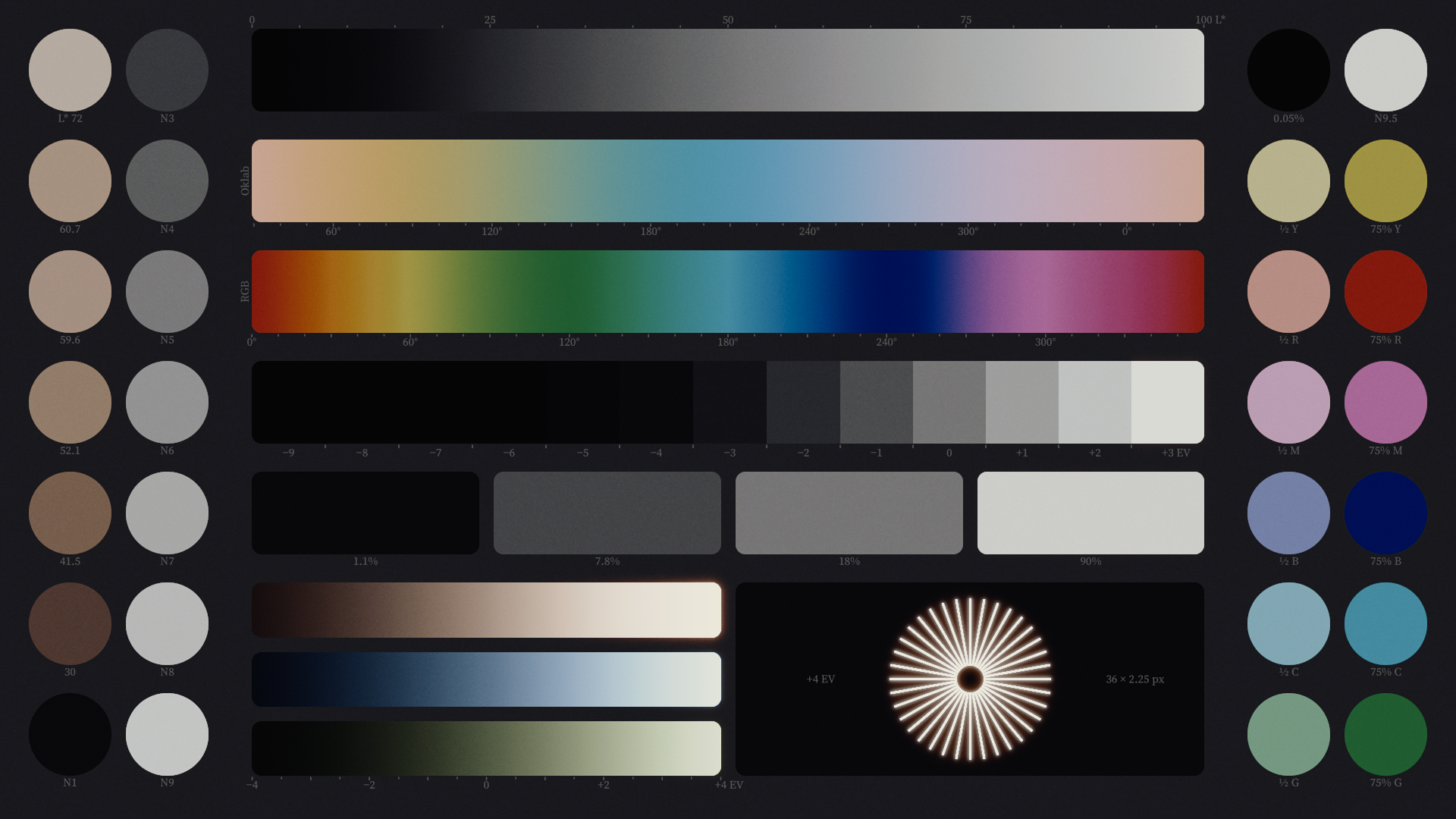
Una stampa in tricromia, mostrata dopo Ansco Color Negative 843. I tre coloranti e il loro neutro sono ricalcati dall’articolo di Gundelfinger del 1950; curve caratteristiche e sensibilità di registrazione sono prese in prestito da Agfa Print CP30, un sostituto, perché l’articolo non stampa né curve né sensibilità.
Curve di risposta e basi del modello
Confronta i dati del produttore con la risposta di Ashigrain sugli stessi assi. Queste curve mostrano come il modello è calibrato sulle fonti; non dimostrano una corrispondenza con immagini riprese su pellicola.
Risposta caratteristica
Limiti del modello
Queste immagini mostrano il modello di pellicola in uso. Risposta spettrale, luce e condizioni di visione includono approssimazioni; aloni, bagliore, dimensione della grana, instabilità e sfarfallio non sono misurati completamente per ogni film. Una ripresa reale dipende anche dallo sviluppo e dal bilanciamento della stampa.
- Di SuperCinecolor non sono stampati né curva caratteristica né gamma di registrazione né sensibilità spettrale. Resa tonale e sensibilità di registrazione sono le curve digitalizzate di Agfa Print CP30, invariate, un sostituto e non i dati di questo procedimento.
- I tre coloranti e il loro neutro sono ricalcati da una figura raster dell’articolo di Gundelfinger del 1950, con un solo passaggio. Le code di giallo e magenta oltre 600 nm corrono insieme lungo il bordo inferiore del grafico e sono mantenute su quel bordo.
- L’articolo fornisce solo la cromaticità dell’arco di proiezione (x 0.3408, y 0.3583), non il suo spettro; si ipotizza uno spettro della serie luce diurna con quella cromaticità.
- Per SuperCinecolor non sono stampate né MTF né granularità.
- La fonte non dà spettri della lampada o dei filtri della stampatrice. La loro risposta spettrale è approssimata.
- Il velo di proiezione modellato solleva i neri sullo schermo. La sua intensità è assunta perché le fonti disponibili non la misurano; non stabilisce quindi un contrasto di proiezione misurato.
Reciprocità: non modellata. Il tempo di esposizione non ha effetto su questa pellicola.
Guida alle pellicole: ipotesi e scelte pratiche
Questa anteprima combina il positivo con il negativo da ripresa indicato. In questo confronto, il positivo non ha un indice di esposizione separato né una propria risposta misurata della grana.
Fonti
- Characteristic curves: AGFA PRINT CP30 colour print film product info / technical data, 17/10/2011, p. 5
Porta questa pellicola nella tua correzione colore.
Tutte le pellicole in un unico acquisto, senza abbonamento.
€199 + VAT