 Ashigrain
Copia en blanco y negro · Película de copia
Svema MZ-3
Свема МЗ-3
Positivo soviético en blanco y negro para copias masivas.
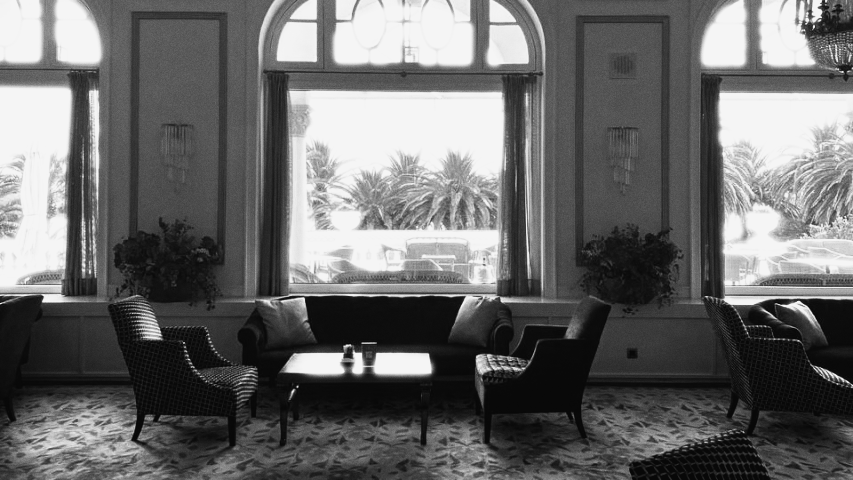
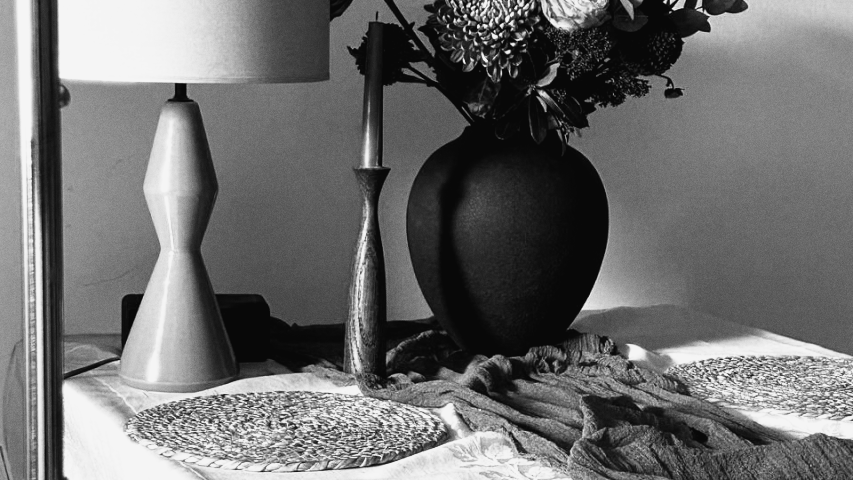
The Soviet mass-release black-and-white positive, reconstructed from handbook figures at a gamma of 2.6: neutral image tone on a ruined-city exterior. Original vs Ashigrain.
De un vistazo
- Lanzamiento
- ya en 1979
- Proceso
- ГОСТ 10691.3-84 developer No. 6, 2-4 min
- Densidad máxima
- ≈ 3,0
Sobre la película
Svema MZ-3 (Свема МЗ-3) fue una película positiva en blanco y negro soviética para el positivado masivo y corriente de copias de largometrajes.
Un manual del director de fotografía de 1979 la describe y destaca su buena nitidez, su grano fino y su tono de imagen neutro. El manual da una sensibilidad de 2.8 a 5.5 unidades GOST, un contraste de 2.6 y un poder de resolución de al menos 108 líneas por milímetro. Se fabricaba en 35 mm y 70 mm y en material de 32 mm con dos tiras de 16 mm o cuatro de 8 mm, y la variante MZ-3M, con perforación panorámica y cuatro pistas de sonido magnéticas, compartía sus propiedades fotográficas. Un libro de texto de 1980 recoge MZ-3 y MZ-3M entre las películas positivas en blanco y negro nacionales. Un manual de 1990 da un velo de como máximo 0.04 y una densidad máxima de al menos 3.0 tras 4 minutos de revelado, con un contraste mayor, de 2.9 a 3.1. No se indica ninguna sensibilización para ella, y el manual de 1990 señala que el haluro de plata sin sensibilizar solo responde a la luz por debajo de unos 500 nm.
Fuentes de esta historia
- Гордийчук И. Б., Пелль В. Г. Справочник кинооператора (1979), Internet Archive
- Иофис Е. А. Кинофотопроцессы и материалы (1980), Internet Archive
- Журба Ю. И. Краткий справочник по фотографическим процессам и материалам (1990), djvu.online
El aspecto
Svema MZ-3 fue una película de copia en blanco y negro soviética para el positivado masivo de copias de largometrajes, documentada desde 1979. Un manual de 1979 destaca su buena nitidez, su grano fino y su tono de imagen neutro. Ashigrain la reconstruye a partir de valores de manuales, con una forma de sensibilidad tomada de Kodak 5302.




Ideal para
- Positivar negativos Tasma NK-2
- Looks de copia de distribución soviética en blanco y negro
- Comparar MZ-3 con Kodak 2302
Compara películas de positivado
The same Vision3 500T night frame on each print film: how deep the blacks go, how the highlights roll off and how the colour separates.
The same Vision3 500T night frame on each print film: how deep the blacks go, how the highlights roll off and how the colour separates.
The same Vision3 500T night frame on each print film: how deep the blacks go, how the highlights roll off and how the colour separates.
The same Vision3 500T night frame on each print film: how deep the blacks go, how the highlights roll off and how the colour separates.
The same Vision3 500T night frame on each print film: how deep the blacks go, how the highlights roll off and how the colour separates.
The same Vision3 500T night frame on each print film: how deep the blacks go, how the highlights roll off and how the colour separates.
The same Vision3 500T night frame on each print film: how deep the blacks go, how the highlights roll off and how the colour separates.
The same Vision3 500T night frame on each print film: how deep the blacks go, how the highlights roll off and how the colour separates.
The same Vision3 500T night frame on each print film: how deep the blacks go, how the highlights roll off and how the colour separates.
The same Vision3 500T night frame on each print film: how deep the blacks go, how the highlights roll off and how the colour separates.
The same Vision3 500T night frame on each print film: how deep the blacks go, how the highlights roll off and how the colour separates.
The same Vision3 500T night frame on each print film: how deep the blacks go, how the highlights roll off and how the colour separates.
The same Vision3 500T night frame on each print film: how deep the blacks go, how the highlights roll off and how the colour separates.
The same Vision3 500T night frame on each print film. On this two-colour print (a labelled surrogate) every colour falls between blue-green and red-orange: how deep the blacks go, how the highlights roll off and which lights keep their hue.
The same Vision3 500T night frame on each print film: how deep the blacks go, how the highlights roll off and how the colour separates.
The same Vision3 500T night frame on each print film: how deep the blacks go, how the highlights roll off and how the colour separates.
The same Vision3 500T night frame on each print film: how deep the blacks go, how the highlights roll off and how the colour separates.
The same Vision3 500T night frame on each print film: how deep the blacks go, how the highlights roll off and how the colour separates.
The same Vision3 500T night frame on each print film: how deep the blacks go, how the highlights roll off and how the colour separates.
The same Vision3 500T night frame on each print film: how deep the blacks go, how the highlights roll off and how the colour separates.
The same Vision3 500T night frame on each print film: how deep the blacks go, how the highlights roll off and how the colour separates.
The same Vision3 500T night frame on each print film: how deep the blacks go, how the highlights roll off and how the colour separates.
The same Vision3 500T night frame on each print film: how deep the blacks go, how the highlights roll off and how the colour separates.
The same Vision3 500T night frame on each print film: how deep the blacks go, how the highlights roll off and how the colour separates.
The same Vision3 500T night frame on each print film. On this blue-sensitive black-and-white print the colour negative turns grey: how deep the blacks go, how the highlights roll off and how dark the reds and greens print.
The same Vision3 500T night frame on each print film: how deep the blacks go, how the highlights roll off and how the colour separates.
The same Vision3 500T night frame on each print film. On this blue-sensitive black-and-white print the colour negative turns grey: how deep the blacks go, how the highlights roll off and how dark the red neon and skin print.
The same Vision3 500T night frame on each print film: how deep the blacks go, how the highlights roll off and how the colour separates.
The same Vision3 500T night frame on each print film. On this black-and-white print the colour negative turns grey: how deep the blacks go, how the highlights roll off and how the coloured lights and skin translate to grey.
The same Vision3 500T night frame on each print film. On this blue-sensitive black-and-white print the colour negative turns grey: how deep the blacks go, how the highlights roll off and how the coloured lights and skin translate to grey.
The same Vision3 500T night frame on each print film: how deep the blacks go, how the highlights roll off and how the colour separates.
The same Vision3 500T night frame on each print film: how deep the blacks go, how the highlights roll off and how the colour separates.
The same Vision3 500T night frame on each print film: how deep the blacks go, how the highlights roll off and how the colour separates.
The same Vision3 500T night frame on each print film: how deep the blacks go, how the highlights roll off and how the colour separates.
The same Vision3 500T night frame on each print film: how deep the blacks go, how the highlights roll off and how the colour separates.
The same Vision3 500T night frame on each print film. On this two-colour print (a labelled surrogate) every colour falls between a blue and a red dye: how deep the blacks go, how the highlights roll off and which lights keep their hue.
The same Vision3 500T night frame on each print film: how deep the blacks go, how the highlights roll off and how the colour separates.
El mismo fotograma nocturno de Kodak Vision3 500T, positivado en cada película.
- Kodak Vision Premier Color Print Film 2393
- Eastman Color SP Print Film 5383
- Eastman Color Print Film 5384
- Fujifilm Eterna-CP 3521XD
- Du Pont Color Release Positive Type 275
- Fujifilm Eterna-CP 3523XD
- Kodak Vision Color Print Film 2383
- Fujifilm Eterna-CP 3513DI
- Eastman EXR Color Print Film 5386
- Eastman Color Print Film 5381 (1972)
- Eastman Color Print Film 5385
- Agfa CP30 Colour Print Film
- SuperCinecolor
- Cinecolor (two-colour)
- Gevacolor Positive 953
- Gevacolor Print 9.85
- Gevacolor Print 986
- Gevacolor Print 982
- Ferraniacolor Positive
- 3M Color Positive 650
- Fujicolor Positive F-CP 3510
- Fujicolor Positive F-CP 3519
- Fujifilm Eterna-CP 3512
- Eastman Color Print 5381 (1950)
- Eastman Fine Grain Release Positive 5302
- Ansco Color Print 848
- Kodak B&W Print Film 2302
- Svema TsP-11
- Svema MZ-3
- ORWO PF 2 Positive Print Film
- Technicolor Dye Transfer (1997 revival)
- Svema TsP-8R
- Shostka Colour Positive (1950s)
- Technicolor Dye Transfer (Process IV)
- Gasparcolor Print
- Trucolor Print (two-colour)
- Kodak Vision Color Teleprint Film 2395
Ciencia y fuentes

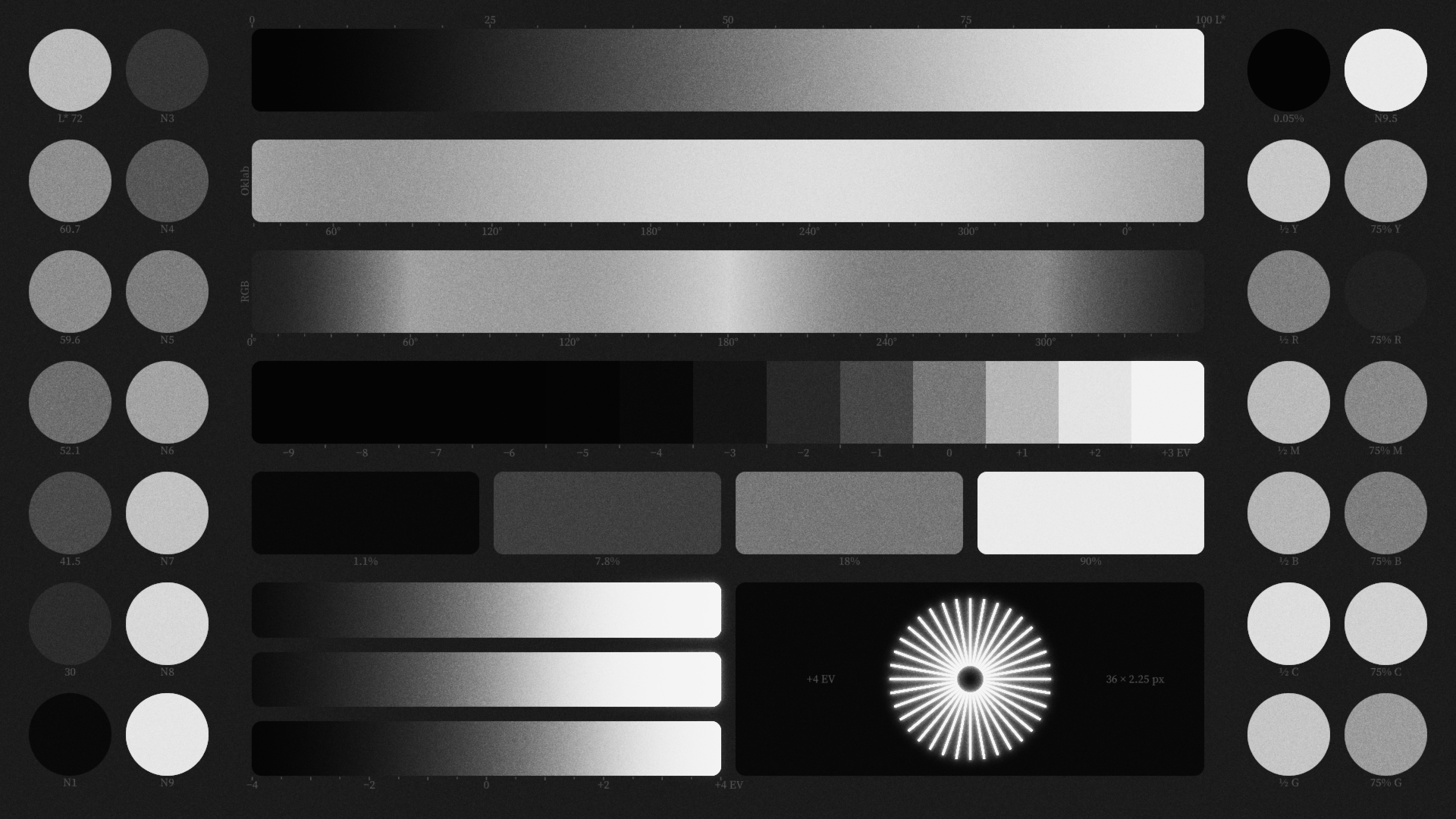
Una película de copia en blanco y negro soviética, mostrada tras Tasma NK-2. No se ha publicado ninguna curva de MZ-3: su curva característica se reconstruye a partir de valores de manuales, y su sensibilidad solo al azul toma su forma de Eastman Fine Grain Release Positive 5302, un sustituto, con un borde supuesto en 480 nm.
El siguiente aviso de marca comercial se ofrece en inglés.
Svema is named only to identify the film; its trademarks belong to their respective owners, whose identity is unknown.
Curvas de respuesta y fundamentos del modelo
Compara los datos del fabricante con la respuesta de Ashigrain sobre los mismos ejes. Estas curvas muestran cómo se calibra el modelo con sus fuentes; no demuestran una coincidencia con imágenes fotografiadas en película.
Respuesta característica
Límites del modelo
Estas imágenes muestran el modelo de película en uso. La respuesta espectral, la iluminación y las condiciones de visualización incluyen aproximaciones; el halo, el resplandor, el tamaño del grano, la inestabilidad y el parpadeo no están medidos por completo para cada película. Una captura real también depende del revelado y del ajuste de positivado.
- Свема МЗ-3 no tiene ninguna curva publicada. Su curva característica se reconstruye a partir de manuales soviéticos (Гордийчук & Пелль 1979; Журба 1990), no se digitaliza de una ficha técnica.
- Las fuentes discrepan en el contraste (2.6 en 1979; 2.9–3.1 con revelado de 4 minutos en 1990); el modelo usa 2.6.
- No se imprime ningún límite de sensibilización. La sensibilidad solo al azul toma su pico de Eastman Fine Grain Release Positive 5302, un sustituto, y su borde de onda larga en 480 nm es una suposición.
- La imagen de plata no tiene gráfico de colorantes y se toma como espectralmente neutra.
- No se imprime ni MTF ni granularidad; solo se registra un poder de resolución de al menos 108 líneas/mm.
- La fuente no da espectros de lámpara ni de filtro de positivadora. Se modela el etalonaje de la copia en blanco y negro.
Reciprocidad: no modelada. El tiempo de exposición no tiene efecto en esta película.
Guía de películas: supuestos y opciones prácticas
Fuentes
- Reconstructed: Гордийчук И. Б., Пелль В. Г. Справочник кинооператора (1979), 1979 edition, p. 192
- Process: Журба Ю. И. Краткий справочник по фотографическим процессам и материалам (1990), 1990 edition, p. 91
Lleva esta película a tu etalonaje.
Todas las películas incluidas en una sola compra, sin suscripción.
€199 + VAT