Copia en color · Película de copia

SuperCinecolor

La copia tricolor de Cinecolor sobre película de doble emulsión.

Contenido multimedia previsto

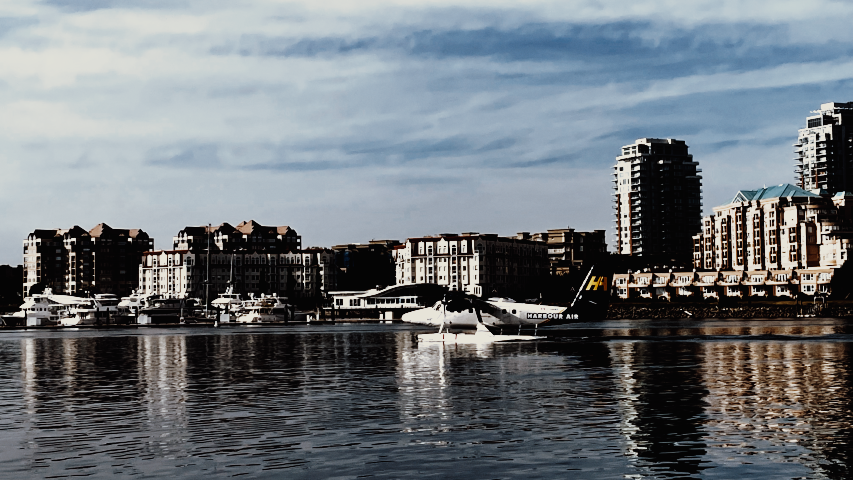
Cinecolor's three-colour print, reconstructed: its dyes, including the Prussian-blue cyan, are traced from Gundelfinger's 1950 paper, with tone borrowed from Agfa CP30. Original vs Ashigrain.

Ansco Color Negative 843, SuperCinecolor

stock
Ansco Color Negative 843
mode
Print
print_film
SuperCinecolor
film_format
Super 35 (4-perf)

De un vistazo

Lanzamiento
finales de la década de 1940
Descatalogada
Proceso
Cinecolor three-colour machine processing (development to silver, then toning and dyeing of the component images)
Densidad máxima
≈ 4,0

Sobre la película

SuperCinecolor amplió a tres colores el proceso bicolor de Cinecolor, copiando desde tres negativos de separación sobre película positiva duplitizada, emulsionada por ambas caras.

El American WideScreen Museum fecha su introducción en 1948, y el ingeniero de Cinecolor Alan Gundelfinger lo presentó a la Society of Motion Picture Engineers el 11 de octubre de 1949. Los registros cian y magenta se copiaban primero en caras opuestas de la película y el amarillo después, en la cara del cian. El cian era una imagen de hierro virada a azul de Prusia, mientras que el amarillo y el magenta eran tintes básicos mordentados sobre una imagen de yoduro de plata, y Gundelfinger calificó la densidad algo mayor del cian en el verde que en el azul como el peor defecto del proceso. Su primer largometraje, The Sword of Monte Cristo, se estrenó en 1951, seguido de títulos como Jack and the Beanstalk y Abbott and Costello Meet Captain Kidd (ambos de 1952) y Riders to the Stars (1954). Según el Museum, Jack and the Beanstalk se rodó en negativo Eastman Color y se copió en SuperCinecolor, y Cinecolor usaba película de copia en color Eastman para los copiones, pero mantenía su propio proceso para las copias de distribución. Las copias se evaluaban con proyección de arco, y el proceso también se usó para series de televisión. Según el Museum, Cinecolor cerró en 1954 y Technicolor compró sus activos.

Fuentes de esta historia
  1. Cinecolor Three-Color Process (Alan M. Gundelfinger, Journal of the SMPTE 54, January 1950), Society of Motion Picture and Television Engineers
  2. Supercinecolor / Natural Color, Timeline of Historical Film Colors, University of Zurich
  3. Cinecolor, American WideScreen Museum

El aspecto

SuperCinecolor fue el proceso de copia tricolor de Cinecolor de finales de los años cuarenta, copiado desde negativos de separación sobre película emulsionada por ambas caras. Su primer largometraje, The Sword of Monte Cristo, se estrenó en 1951. Ashigrain lo reconstruye: sus tintes se calcan del artículo de Cinecolor de 1950, con la tonalidad y la sensibilidad tomadas de Agfa Print CP30.


Fotograma de muestra de SuperCinecolor: OriginalFotograma de muestra de SuperCinecolor: Ashigrain

Ideal para

  1. Películas de capa y espada y de fantasía de principios de los cincuenta
  2. Películas B de ciencia ficción de los años cincuenta
  3. Comparar el Cinecolor tricolor con Technicolor

Compara películas de positivado

Contenido multimedia previsto

The same Vision3 500T night frame on each print film: how deep the blacks go, how the highlights roll off and how the colour separates.

Kodak Vision3 500T, Kodak Vision Premier Color Print Film 2393

stock
Kodak Vision3 500T
mode
Print
print_film
Kodak Vision Premier Color Print Film 2393
film_format
Super 35 (4-perf)
Kodak Vision3 500T → Kodak Vision Premier Color Print Film 2393

Contenido multimedia previsto

The same Vision3 500T night frame on each print film: how deep the blacks go, how the highlights roll off and how the colour separates.

Kodak Vision3 500T, Eastman Color SP Print Film 5383

stock
Kodak Vision3 500T
mode
Print
print_film
Eastman Color SP Print Film 5383
film_format
Super 35 (4-perf)
Kodak Vision3 500T → Eastman Color SP Print Film 5383

Contenido multimedia previsto

The same Vision3 500T night frame on each print film: how deep the blacks go, how the highlights roll off and how the colour separates.

Kodak Vision3 500T, Eastman Color Print Film 5384

stock
Kodak Vision3 500T
mode
Print
print_film
Eastman Color Print Film 5384
film_format
Super 35 (4-perf)
Kodak Vision3 500T → Eastman Color Print Film 5384

Contenido multimedia previsto

The same Vision3 500T night frame on each print film: how deep the blacks go, how the highlights roll off and how the colour separates.

Kodak Vision3 500T, Fujifilm Eterna-CP 3521XD

stock
Kodak Vision3 500T
mode
Print
print_film
Fujifilm Eterna-CP 3521XD
film_format
Super 35 (4-perf)
Kodak Vision3 500T → Fujifilm Eterna-CP 3521XD

Contenido multimedia previsto

The same Vision3 500T night frame on each print film: how deep the blacks go, how the highlights roll off and how the colour separates.

Kodak Vision3 500T, Du Pont Color Release Positive Type 275

stock
Kodak Vision3 500T
mode
Print
print_film
Du Pont Color Release Positive Type 275
film_format
Super 35 (4-perf)
Kodak Vision3 500T → Du Pont Color Release Positive Type 275

Contenido multimedia previsto

The same Vision3 500T night frame on each print film: how deep the blacks go, how the highlights roll off and how the colour separates.

Kodak Vision3 500T, Fujifilm Eterna-CP 3523XD

stock
Kodak Vision3 500T
mode
Print
print_film
Fujifilm Eterna-CP 3523XD
film_format
Super 35 (4-perf)
Kodak Vision3 500T → Fujifilm Eterna-CP 3523XD

Contenido multimedia previsto

The same Vision3 500T night frame on each print film: how deep the blacks go, how the highlights roll off and how the colour separates.

Kodak Vision3 500T, Kodak Vision Color Print Film 2383

stock
Kodak Vision3 500T
mode
Print
print_film
Kodak Vision Color Print Film 2383
film_format
Super 35 (4-perf)
Kodak Vision3 500T → Kodak Vision Color Print Film 2383

Contenido multimedia previsto

The same Vision3 500T night frame on each print film: how deep the blacks go, how the highlights roll off and how the colour separates.

Kodak Vision3 500T, Fujifilm Eterna-CP 3513DI

stock
Kodak Vision3 500T
mode
Print
print_film
Fujifilm Eterna-CP 3513DI
film_format
Super 35 (4-perf)
Kodak Vision3 500T → Fujifilm Eterna-CP 3513DI

Contenido multimedia previsto

The same Vision3 500T night frame on each print film: how deep the blacks go, how the highlights roll off and how the colour separates.

Kodak Vision3 500T, Eastman EXR Color Print Film 5386

stock
Kodak Vision3 500T
mode
Print
print_film
Eastman EXR Color Print Film 5386
film_format
Super 35 (4-perf)
Kodak Vision3 500T → Eastman EXR Color Print Film 5386

Contenido multimedia previsto

The same Vision3 500T night frame on each print film: how deep the blacks go, how the highlights roll off and how the colour separates.

Kodak Vision3 500T, Eastman Color Print Film 5381 (1972)

stock
Kodak Vision3 500T
mode
Print
print_film
Eastman Color Print Film 5381 (1972)
film_format
Super 35 (4-perf)
Kodak Vision3 500T → Eastman Color Print Film 5381 (1972)

Contenido multimedia previsto

The same Vision3 500T night frame on each print film: how deep the blacks go, how the highlights roll off and how the colour separates.

Kodak Vision3 500T, Eastman Color Print Film 5385

stock
Kodak Vision3 500T
mode
Print
print_film
Eastman Color Print Film 5385
film_format
Super 35 (4-perf)
Kodak Vision3 500T → Eastman Color Print Film 5385

Contenido multimedia previsto

The same Vision3 500T night frame on each print film: how deep the blacks go, how the highlights roll off and how the colour separates.

Kodak Vision3 500T, Agfa CP30 Colour Print Film

stock
Kodak Vision3 500T
mode
Print
print_film
Agfa CP30 Colour Print Film
film_format
Super 35 (4-perf)
Kodak Vision3 500T → Agfa CP30 Colour Print Film

Contenido multimedia previsto

The same Vision3 500T night frame on each print film: how deep the blacks go, how the highlights roll off and how the colour separates.

Kodak Vision3 500T, SuperCinecolor

stock
Kodak Vision3 500T
mode
Print
print_film
SuperCinecolor
film_format
Super 35 (4-perf)
Kodak Vision3 500T → SuperCinecolor

Contenido multimedia previsto

The same Vision3 500T night frame on each print film. On this two-colour print (a labelled surrogate) every colour falls between blue-green and red-orange: how deep the blacks go, how the highlights roll off and which lights keep their hue.

Kodak Vision3 500T, Cinecolor (two-colour)

stock
Kodak Vision3 500T
mode
Print
print_film
Cinecolor (two-colour)
film_format
Super 35 (4-perf)
Kodak Vision3 500T → Cinecolor (two-colour)

Contenido multimedia previsto

The same Vision3 500T night frame on each print film: how deep the blacks go, how the highlights roll off and how the colour separates.

Kodak Vision3 500T, Gevacolor Positive 953

stock
Kodak Vision3 500T
mode
Print
print_film
Gevacolor Positive 953
film_format
Super 35 (4-perf)
Kodak Vision3 500T → Gevacolor Positive 953

Contenido multimedia previsto

The same Vision3 500T night frame on each print film: how deep the blacks go, how the highlights roll off and how the colour separates.

Kodak Vision3 500T, Gevacolor Print 9.85

stock
Kodak Vision3 500T
mode
Print
print_film
Gevacolor Print 9.85
film_format
Super 35 (4-perf)
Kodak Vision3 500T → Gevacolor Print 9.85

Contenido multimedia previsto

The same Vision3 500T night frame on each print film: how deep the blacks go, how the highlights roll off and how the colour separates.

Kodak Vision3 500T, Gevacolor Print 986

stock
Kodak Vision3 500T
mode
Print
print_film
Gevacolor Print 986
film_format
Super 35 (4-perf)
Kodak Vision3 500T → Gevacolor Print 986

Contenido multimedia previsto

The same Vision3 500T night frame on each print film: how deep the blacks go, how the highlights roll off and how the colour separates.

Kodak Vision3 500T, Gevacolor Print 982

stock
Kodak Vision3 500T
mode
Print
print_film
Gevacolor Print 982
film_format
Super 35 (4-perf)
Kodak Vision3 500T → Gevacolor Print 982

Contenido multimedia previsto

The same Vision3 500T night frame on each print film: how deep the blacks go, how the highlights roll off and how the colour separates.

Kodak Vision3 500T, Ferraniacolor Positive

stock
Kodak Vision3 500T
mode
Print
print_film
Ferraniacolor Positive
film_format
Super 35 (4-perf)
Kodak Vision3 500T → Ferraniacolor Positive

Contenido multimedia previsto

The same Vision3 500T night frame on each print film: how deep the blacks go, how the highlights roll off and how the colour separates.

Kodak Vision3 500T, 3M Color Positive 650

stock
Kodak Vision3 500T
mode
Print
print_film
3M Color Positive 650
film_format
Super 35 (4-perf)
Kodak Vision3 500T → 3M Color Positive 650

Contenido multimedia previsto

The same Vision3 500T night frame on each print film: how deep the blacks go, how the highlights roll off and how the colour separates.

Kodak Vision3 500T, Fujicolor Positive F-CP 3510

stock
Kodak Vision3 500T
mode
Print
print_film
Fujicolor Positive F-CP 3510
film_format
Super 35 (4-perf)
Kodak Vision3 500T → Fujicolor Positive F-CP 3510

Contenido multimedia previsto

The same Vision3 500T night frame on each print film: how deep the blacks go, how the highlights roll off and how the colour separates.

Kodak Vision3 500T, Fujicolor Positive F-CP 3519

stock
Kodak Vision3 500T
mode
Print
print_film
Fujicolor Positive F-CP 3519
film_format
Super 35 (4-perf)
Kodak Vision3 500T → Fujicolor Positive F-CP 3519

Contenido multimedia previsto

The same Vision3 500T night frame on each print film: how deep the blacks go, how the highlights roll off and how the colour separates.

Kodak Vision3 500T, Fujifilm Eterna-CP 3512

stock
Kodak Vision3 500T
mode
Print
print_film
Fujifilm Eterna-CP 3512
film_format
Super 35 (4-perf)
Kodak Vision3 500T → Fujifilm Eterna-CP 3512

Contenido multimedia previsto

The same Vision3 500T night frame on each print film: how deep the blacks go, how the highlights roll off and how the colour separates.

Kodak Vision3 500T, Eastman Color Print 5381 (1950)

stock
Kodak Vision3 500T
mode
Print
print_film
Eastman Color Print 5381 (1950)
film_format
Super 35 (4-perf)
Kodak Vision3 500T → Eastman Color Print 5381 (1950)

Contenido multimedia previsto

The same Vision3 500T night frame on each print film. On this blue-sensitive black-and-white print the colour negative turns grey: how deep the blacks go, how the highlights roll off and how dark the reds and greens print.

Kodak Vision3 500T, Eastman Fine Grain Release Positive 5302

stock
Kodak Vision3 500T
mode
Print
print_film
Eastman Fine Grain Release Positive 5302
film_format
Super 35 (4-perf)
Kodak Vision3 500T → Eastman Fine Grain Release Positive 5302

Contenido multimedia previsto

The same Vision3 500T night frame on each print film: how deep the blacks go, how the highlights roll off and how the colour separates.

Kodak Vision3 500T, Ansco Color Print 848

stock
Kodak Vision3 500T
mode
Print
print_film
Ansco Color Print 848
film_format
Super 35 (4-perf)
Kodak Vision3 500T → Ansco Color Print 848

Contenido multimedia previsto

The same Vision3 500T night frame on each print film. On this blue-sensitive black-and-white print the colour negative turns grey: how deep the blacks go, how the highlights roll off and how dark the red neon and skin print.

Kodak Vision3 500T, Kodak B&W Print Film 2302

stock
Kodak Vision3 500T
mode
Print
print_film
Kodak B&W Print Film 2302
film_format
Super 35 (4-perf)
Kodak Vision3 500T → Kodak B&W Print Film 2302

Contenido multimedia previsto

The same Vision3 500T night frame on each print film: how deep the blacks go, how the highlights roll off and how the colour separates.

Kodak Vision3 500T, Svema TsP-11

stock
Kodak Vision3 500T
mode
Print
print_film
Svema TsP-11
film_format
Super 35 (4-perf)
Kodak Vision3 500T → Svema TsP-11

Contenido multimedia previsto

The same Vision3 500T night frame on each print film. On this black-and-white print the colour negative turns grey: how deep the blacks go, how the highlights roll off and how the coloured lights and skin translate to grey.

Kodak Vision3 500T, Svema MZ-3

stock
Kodak Vision3 500T
mode
Print
print_film
Svema MZ-3
film_format
Super 35 (4-perf)
Kodak Vision3 500T → Svema MZ-3

Contenido multimedia previsto

The same Vision3 500T night frame on each print film. On this blue-sensitive black-and-white print the colour negative turns grey: how deep the blacks go, how the highlights roll off and how the coloured lights and skin translate to grey.

Kodak Vision3 500T, ORWO PF 2 Positive Print Film

stock
Kodak Vision3 500T
mode
Print
print_film
ORWO PF 2 Positive Print Film
film_format
Super 35 (4-perf)
Kodak Vision3 500T → ORWO PF 2 Positive Print Film

Contenido multimedia previsto

The same Vision3 500T night frame on each print film: how deep the blacks go, how the highlights roll off and how the colour separates.

Kodak Vision3 500T, Technicolor Dye Transfer (1997 revival)

stock
Kodak Vision3 500T
mode
Print
print_film
Technicolor Dye Transfer (1997 revival)
film_format
Super 35 (4-perf)
Kodak Vision3 500T → Technicolor Dye Transfer (1997 revival)

Contenido multimedia previsto

The same Vision3 500T night frame on each print film: how deep the blacks go, how the highlights roll off and how the colour separates.

Kodak Vision3 500T, Svema TsP-8R

stock
Kodak Vision3 500T
mode
Print
print_film
Svema TsP-8R
film_format
Super 35 (4-perf)
Kodak Vision3 500T → Svema TsP-8R

Contenido multimedia previsto

The same Vision3 500T night frame on each print film: how deep the blacks go, how the highlights roll off and how the colour separates.

Kodak Vision3 500T, Shostka Colour Positive (1950s)

stock
Kodak Vision3 500T
mode
Print
print_film
Shostka Colour Positive (1950s)
film_format
Super 35 (4-perf)
Kodak Vision3 500T → Shostka Colour Positive (1950s)

Contenido multimedia previsto

The same Vision3 500T night frame on each print film: how deep the blacks go, how the highlights roll off and how the colour separates.

Kodak Vision3 500T, Technicolor Dye Transfer (Process IV)

stock
Kodak Vision3 500T
mode
Print
print_film
Technicolor Dye Transfer (Process IV)
film_format
Super 35 (4-perf)
Kodak Vision3 500T → Technicolor Dye Transfer (Process IV)

Contenido multimedia previsto

The same Vision3 500T night frame on each print film: how deep the blacks go, how the highlights roll off and how the colour separates.

Kodak Vision3 500T, Gasparcolor Print

stock
Kodak Vision3 500T
mode
Print
print_film
Gasparcolor Print
film_format
Super 35 (4-perf)
Kodak Vision3 500T → Gasparcolor Print

Contenido multimedia previsto

The same Vision3 500T night frame on each print film. On this two-colour print (a labelled surrogate) every colour falls between a blue and a red dye: how deep the blacks go, how the highlights roll off and which lights keep their hue.

Kodak Vision3 500T, Trucolor Print (two-colour)

stock
Kodak Vision3 500T
mode
Print
print_film
Trucolor Print (two-colour)
film_format
Super 35 (4-perf)
Kodak Vision3 500T → Trucolor Print (two-colour)

Contenido multimedia previsto

The same Vision3 500T night frame on each print film: how deep the blacks go, how the highlights roll off and how the colour separates.

Kodak Vision3 500T, Kodak Vision Color Teleprint Film 2395

stock
Kodak Vision3 500T
mode
Print
print_film
Kodak Vision Color Teleprint Film 2395
film_format
Super 35 (4-perf)
Kodak Vision3 500T → Kodak Vision Color Teleprint Film 2395

El mismo fotograma nocturno de Kodak Vision3 500T, positivado en cada película.

Positivo · negros más profundos primeroTipoDensidad máxima, Status A · mayor es negro más profundoAños de fabricación
Kodak Vision Premier Color Print Film 2393Kodak Vision Premier Color Print Film 2393+1.5 más profundo que SuperCinecolorColor5.51998
Eastman Color SP Print Film 5383Eastman Color SP Print Film 5383Fabricada 1974–1983 · +1.0 más profundo que SuperCinecolorColor5.01974–83
Eastman Color Print Film 5384Eastman Color Print Film 5384+0.9 más profundo que SuperCinecolorColor4.91981
Fujifilm Eterna-CP 3521XDFujifilm Eterna-CP 3521XD+0.8 más profundo que SuperCinecolorColor4.82007
Du Pont Color Release Positive Type 275Du Pont Color Release Positive Type 275+0.7 más profundo que SuperCinecolorColor4.71949
Fujifilm Eterna-CP 3523XDFujifilm Eterna-CP 3523XD+0.5 más profundo que SuperCinecolorColor4.52010
Kodak Vision Color Print Film 2383Kodak Vision Color Print Film 2383Fabricada desde 1998, en producción · +0.1 más profundo que SuperCinecolorColor4.11998–
Fujifilm Eterna-CP 3513DIFujifilm Eterna-CP 3513DIigual que SuperCinecolorColor4.02005
Eastman EXR Color Print Film 5386Eastman EXR Color Print Film 5386igual que SuperCinecolorColor4.01993
Eastman Color Print Film 5381 (1972)Eastman Color Print Film 5381 (1972)igual que SuperCinecolorColor4.01972
Eastman Color Print Film 5385Eastman Color Print Film 5385igual que SuperCinecolorColor4.01962
Agfa CP30 Colour Print FilmAgfa CP30 Colour Print Filmigual que SuperCinecolorColor4.02003
SuperCinecolorSuperCinecoloreste positivoColor4.01948
Cinecolor (two-colour)Cinecolor (two-colour)igual que SuperCinecolorColor4.01932
Gevacolor Positive 953Gevacolor Positive 953igual que SuperCinecolorColor4.01958
Gevacolor Print 9.85Gevacolor Print 9.85igual que SuperCinecolorColor4.01971
Gevacolor Print 986Gevacolor Print 986igual que SuperCinecolorColor4.01975
Gevacolor Print 982Gevacolor Print 982igual que SuperCinecolorColor4.01980
Ferraniacolor PositiveFerraniacolor Positiveigual que SuperCinecolorColor4.01949
3M Color Positive 6503M Color Positive 650igual que SuperCinecolorColor4.01970
Fujicolor Positive F-CP 3510Fujicolor Positive F-CP 3510−0.2 más claro que SuperCinecolorColor3.82003
Fujicolor Positive F-CP 3519Fujicolor Positive F-CP 3519−0.2 más claro que SuperCinecolorColor3.82001
Fujifilm Eterna-CP 3512Fujifilm Eterna-CP 3512Fabricada 2010–2013 · −0.3 más claro que SuperCinecolorColor3.72010–13
Eastman Color Print 5381 (1950)Eastman Color Print 5381 (1950)Fabricada 1950–1953 · −0.5 más claro que SuperCinecolorColor3.51950–53
Eastman Fine Grain Release Positive 5302Eastman Fine Grain Release Positive 5302−0.6 más claro que SuperCinecolorB/N3.41950
Ansco Color Print 848Ansco Color Print 848−0.7 más claro que SuperCinecolorColor3.31951
Kodak B&W Print Film 2302Kodak B&W Print Film 2302Fabricada desde 2000, en producción · −0.8 más claro que SuperCinecolorB/N3.22000–
Svema TsP-11Svema TsP-11−1.0 más claro que SuperCinecolorColor3.01979
Svema MZ-3Svema MZ-3−1.0 más claro que SuperCinecolorB/N3.01979
ORWO PF 2 Positive Print FilmORWO PF 2 Positive Print Film−1.0 más claro que SuperCinecolorB/N3.02014
Technicolor Dye Transfer (1997 revival)Technicolor Dye Transfer (1997 revival)−1.2 más claro que SuperCinecolorColor2.81997
Svema TsP-8RSvema TsP-8R−1.2 más claro que SuperCinecolorColor2.81969
Shostka Colour Positive (1950s)Shostka Colour Positive (1950s)−1.2 más claro que SuperCinecolorColor2.81948
Technicolor Dye Transfer (Process IV)Technicolor Dye Transfer (Process IV)−1.2 más claro que SuperCinecolorColor2.81932
Gasparcolor PrintGasparcolor Print−1.3 más claro que SuperCinecolorColor2.71932
Trucolor Print (two-colour)Trucolor Print (two-colour)−1.4 más claro que SuperCinecolorColor2.61945
Kodak Vision Color Teleprint Film 2395Kodak Vision Color Teleprint Film 2395−1.6 más claro que SuperCinecolorColor2.41999

Ciencia y fuentes

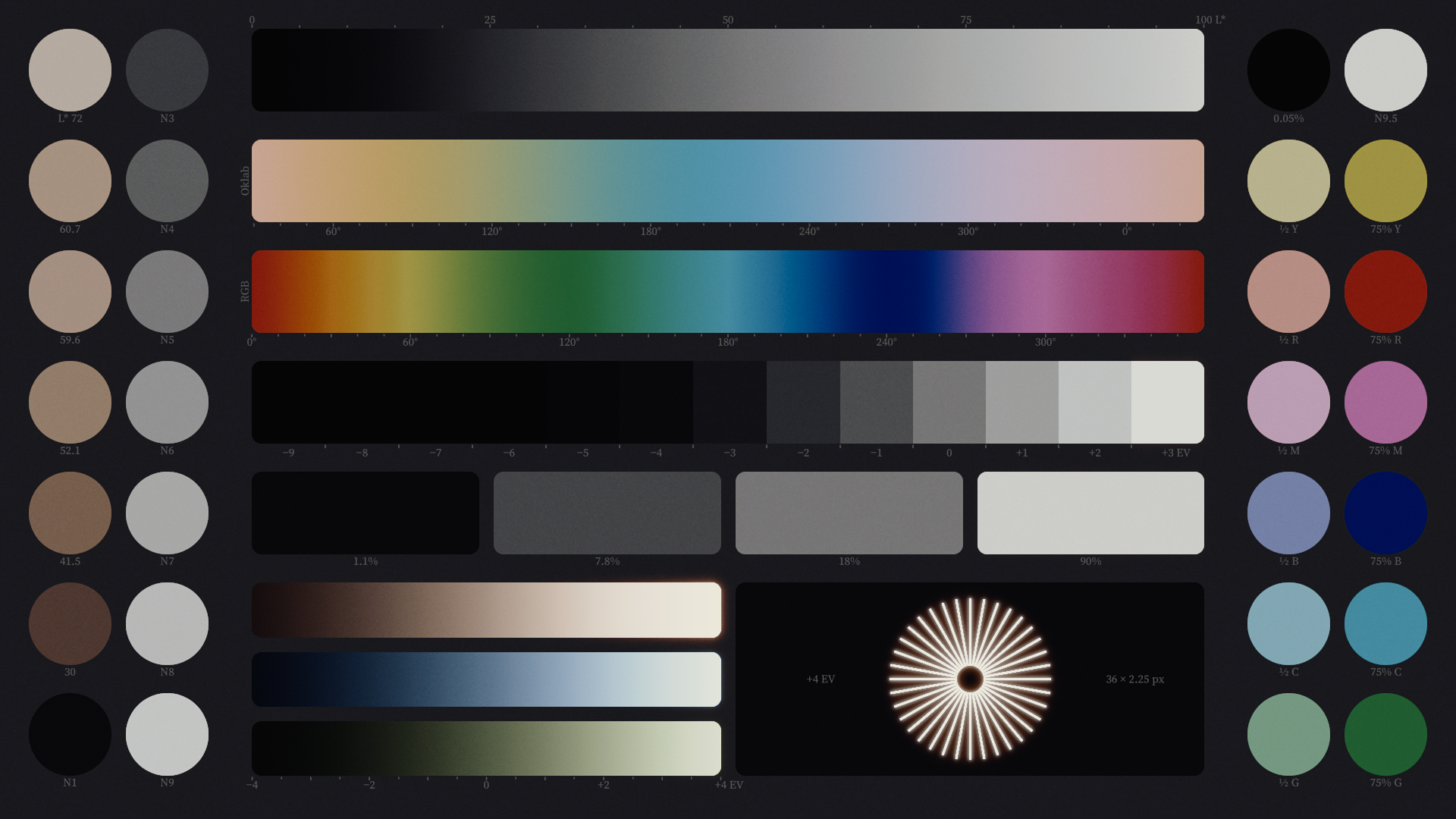
Carta de calibración de SuperCinecolor: OriginalCarta de calibración de SuperCinecolor: Procesada
Carta de prueba sintética (tonos de piel, grises Munsell, barras de color, rampas de grises y de tonos, cuña escalonada, caída de altas luces de los colores de memoria, estrella de halación) antes y después del proceso completo de Ashigrain: Kodak Vision3 50D positivada sobre SuperCinecolor, Super 35 de 4 perforaciones, controles predeterminados, exposición de +0.66 pasos para igualar el gris medio del original, fotograma 0.

Una copia tricolor, mostrada tras Ansco Color Negative 843. Sus tres tintes y su neutro se calcan del artículo de Gundelfinger de 1950; sus curvas características y sus sensibilidades de registro se toman de Agfa Print CP30, un sustituto, porque el artículo no imprime ninguna curva ni sensibilidad.

Curvas de respuesta y fundamentos del modelo

Compara los datos del fabricante con la respuesta de Ashigrain sobre los mismos ejes. Estas curvas muestran cómo se calibra el modelo con sus fuentes; no demuestran una coincidencia con imágenes fotografiadas en película.

Respuesta característica

Densidad frente a log H (lux·segundos) para los canales R, G, B. R círculos, G cuadrados, B triángulos, N rombos; los marcadores rellenos y las líneas continuas son los datos digitalizados, y los marcadores huecos y las líneas discontinuas, los datos simulados: digitalizados y simulados.0.00.51.01.52.0log H (lux·segundos)0.01.02.03.04.0Densidad

Límites del modelo

Estas imágenes muestran el modelo de película en uso. La respuesta espectral, la iluminación y las condiciones de visualización incluyen aproximaciones; el halo, el resplandor, el tamaño del grano, la inestabilidad y el parpadeo no están medidos por completo para cada película. Una captura real también depende del revelado y del ajuste de positivado.

  • No se imprime ninguna curva característica, gamma de registro ni sensibilidad espectral de SuperCinecolor. La tonalidad y las sensibilidades de registro son las curvas digitalizadas de Agfa Print CP30, sin cambios, un sustituto y no los datos de este proceso.
  • Los tres tintes y su neutro se calcan de una figura rasterizada del artículo de Gundelfinger de 1950, en una sola pasada. Las colas del amarillo y del magenta por encima de 600 nm se juntan a lo largo del borde inferior del gráfico y se mantienen en ese borde.
  • El artículo solo da la cromaticidad del arco de proyección (x 0.3408, y 0.3583), no su espectro; se supone un espectro de la serie de luz diurna con esa cromaticidad.
  • No se imprime ni MTF ni granularidad para SuperCinecolor.
  • La fuente no da espectros de la lámpara ni de los filtros de la positivadora. Su respuesta espectral es aproximada.
  • El velo de proyección modelado eleva los negros en pantalla. Su intensidad es un supuesto porque las fuentes disponibles no lo miden; por tanto, no establece un contraste de proyección medido.

Reciprocidad: no modelada. El tiempo de exposición no tiene efecto en esta película.

Guía de películas: supuestos y opciones prácticas

Esta vista previa combina el positivo con el negativo de cámara indicado. En esta comparación, el positivo no tiene un índice de exposición ni una respuesta de grano medida propios.

Fuentes

  1. Characteristic curves: AGFA PRINT CP30 colour print film product info / technical data, 17/10/2011, p. 5

Lleva esta película a tu etalonaje.

Todas las películas incluidas en una sola compra, sin suscripción.