 Ashigrain
Copia en color · Película de copia
Eastman Color Print 5381 (1950)
La primera copia Eastman Color, de 1950.
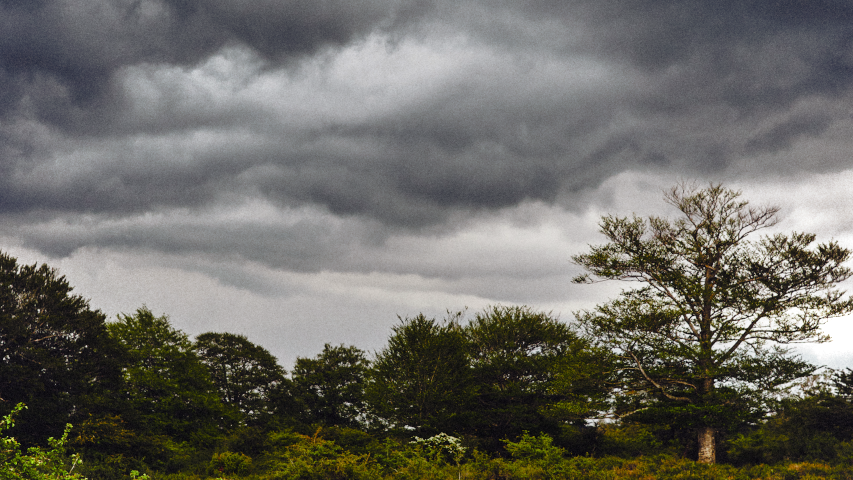
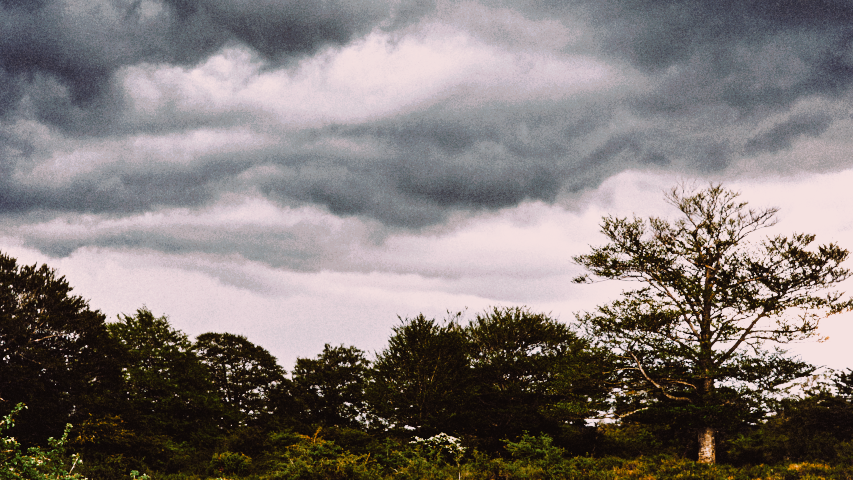
The first Eastman Color print, reconstructed from Hanson's 1952 curves and dyes with an assumed contrast: an early-1950s colour feature look. Original vs Ashigrain.
De un vistazo
- Lanzamiento
- 1950
- Descatalogada en 1953
- Proceso
- Eastman Color Print process of 1950 (Hanson Table II; carbonate prebath, colour development 12-15 min at 70 F, stop, wash, bleach, wash, sound-track development, wash, fix, wash, stabilizer)
- Densidad máxima
- ≈ 3,5
Sobre la película
Eastman Color Print 5381 era la mitad de copia del primer sistema negativo-positivo Eastman Color de Kodak, descrito en un artículo que Hanson, de los Kodak Research Laboratories, presentó el 27 de abril de 1950.
Kodak reutilizó más tarde el código para otra película de copia de 1972, que no es esta. Hanson presentó juntos el negativo en color 5247 y esta copia, en una época en que las películas en color tripack del sector eran Monopack, Ansco Color, Kodachrome de 16 mm y, en Alemania, el negativo-positivo Agfacolor. Se positivaba desde el negativo en color en una positivadora de contacto continua corriente, aunque el equilibrio de color de una escena a otra requería equipos más elaborados, y también podía positivarse desde negativos de separación en blanco y negro. Sus capas se apilaban en un orden inusual, con la capa amarilla sensible al azul abajo, bajo una intercapa teñida de azul, y luego las capas cian y magenta, y sus colorantes estaban equilibrados para una luz de proyección de arco de carbón de 4000 K. La cronología de Kodak nombra Royal Journey, exhibida en diciembre de 1951, como película comercial hecha con el negativo 5247 y la copia 5381 sin intermedios, y The Lion and the Horse (1952) como el primer largometraje que combinó la 5381 con un sistema de duplicado por películas de separación. Kodak recibió un premio de la Academia por las películas negativa y de copia Eastman Color, y en 1953 sustituyó la 5381 por la 5382.
Fuentes de esta historia
- Color Negative and Color Positive Film for Motion Picture Use (Journal of the SMPTE 58(3), March 1952), W. T. Hanson, Jr.
- Chronology of Film, Eastman Kodak Company
- Eastman Color Print Film 5381 (1950), Timeline of Historical Film Colors, University of Zurich
El aspecto
Eastman Color Print 5381 fue la primera película de copia del sistema negativo-positivo Eastman Color de Kodak, fabricada desde 1950 hasta que la 5382 la sustituyó en 1953. Ashigrain la reconstruye a partir de las curvas y los colorantes del artículo de Hanson de 1952, con un contraste supuesto y una sensibilidad espectral tomada de otra película.




Ideal para
- Largometrajes en color de principios de los años cincuenta
- Pastiche del primer Eastman Color
- Comparar 5381 con Kodak 2383
Compara películas de positivado
The same Vision3 500T night frame on each print film: how deep the blacks go, how the highlights roll off and how the colour separates.
The same Vision3 500T night frame on each print film: how deep the blacks go, how the highlights roll off and how the colour separates.
The same Vision3 500T night frame on each print film: how deep the blacks go, how the highlights roll off and how the colour separates.
The same Vision3 500T night frame on each print film: how deep the blacks go, how the highlights roll off and how the colour separates.
The same Vision3 500T night frame on each print film: how deep the blacks go, how the highlights roll off and how the colour separates.
The same Vision3 500T night frame on each print film: how deep the blacks go, how the highlights roll off and how the colour separates.
The same Vision3 500T night frame on each print film: how deep the blacks go, how the highlights roll off and how the colour separates.
The same Vision3 500T night frame on each print film: how deep the blacks go, how the highlights roll off and how the colour separates.
The same Vision3 500T night frame on each print film: how deep the blacks go, how the highlights roll off and how the colour separates.
The same Vision3 500T night frame on each print film: how deep the blacks go, how the highlights roll off and how the colour separates.
The same Vision3 500T night frame on each print film: how deep the blacks go, how the highlights roll off and how the colour separates.
The same Vision3 500T night frame on each print film: how deep the blacks go, how the highlights roll off and how the colour separates.
The same Vision3 500T night frame on each print film: how deep the blacks go, how the highlights roll off and how the colour separates.
The same Vision3 500T night frame on each print film. On this two-colour print (a labelled surrogate) every colour falls between blue-green and red-orange: how deep the blacks go, how the highlights roll off and which lights keep their hue.
The same Vision3 500T night frame on each print film: how deep the blacks go, how the highlights roll off and how the colour separates.
The same Vision3 500T night frame on each print film: how deep the blacks go, how the highlights roll off and how the colour separates.
The same Vision3 500T night frame on each print film: how deep the blacks go, how the highlights roll off and how the colour separates.
The same Vision3 500T night frame on each print film: how deep the blacks go, how the highlights roll off and how the colour separates.
The same Vision3 500T night frame on each print film: how deep the blacks go, how the highlights roll off and how the colour separates.
The same Vision3 500T night frame on each print film: how deep the blacks go, how the highlights roll off and how the colour separates.
The same Vision3 500T night frame on each print film: how deep the blacks go, how the highlights roll off and how the colour separates.
The same Vision3 500T night frame on each print film: how deep the blacks go, how the highlights roll off and how the colour separates.
The same Vision3 500T night frame on each print film: how deep the blacks go, how the highlights roll off and how the colour separates.
The same Vision3 500T night frame on each print film: how deep the blacks go, how the highlights roll off and how the colour separates.
The same Vision3 500T night frame on each print film. On this blue-sensitive black-and-white print the colour negative turns grey: how deep the blacks go, how the highlights roll off and how dark the reds and greens print.
The same Vision3 500T night frame on each print film: how deep the blacks go, how the highlights roll off and how the colour separates.
The same Vision3 500T night frame on each print film. On this blue-sensitive black-and-white print the colour negative turns grey: how deep the blacks go, how the highlights roll off and how dark the red neon and skin print.
The same Vision3 500T night frame on each print film: how deep the blacks go, how the highlights roll off and how the colour separates.
The same Vision3 500T night frame on each print film. On this black-and-white print the colour negative turns grey: how deep the blacks go, how the highlights roll off and how the coloured lights and skin translate to grey.
The same Vision3 500T night frame on each print film. On this blue-sensitive black-and-white print the colour negative turns grey: how deep the blacks go, how the highlights roll off and how the coloured lights and skin translate to grey.
The same Vision3 500T night frame on each print film: how deep the blacks go, how the highlights roll off and how the colour separates.
The same Vision3 500T night frame on each print film: how deep the blacks go, how the highlights roll off and how the colour separates.
The same Vision3 500T night frame on each print film: how deep the blacks go, how the highlights roll off and how the colour separates.
The same Vision3 500T night frame on each print film: how deep the blacks go, how the highlights roll off and how the colour separates.
The same Vision3 500T night frame on each print film: how deep the blacks go, how the highlights roll off and how the colour separates.
The same Vision3 500T night frame on each print film. On this two-colour print (a labelled surrogate) every colour falls between a blue and a red dye: how deep the blacks go, how the highlights roll off and which lights keep their hue.
The same Vision3 500T night frame on each print film: how deep the blacks go, how the highlights roll off and how the colour separates.
El mismo fotograma nocturno de Kodak Vision3 500T, positivado en cada película.
- Kodak Vision Premier Color Print Film 2393
- Eastman Color SP Print Film 5383
- Eastman Color Print Film 5384
- Fujifilm Eterna-CP 3521XD
- Du Pont Color Release Positive Type 275
- Fujifilm Eterna-CP 3523XD
- Kodak Vision Color Print Film 2383
- Fujifilm Eterna-CP 3513DI
- Eastman EXR Color Print Film 5386
- Eastman Color Print Film 5381 (1972)
- Eastman Color Print Film 5385
- Agfa CP30 Colour Print Film
- SuperCinecolor
- Cinecolor (two-colour)
- Gevacolor Positive 953
- Gevacolor Print 9.85
- Gevacolor Print 986
- Gevacolor Print 982
- Ferraniacolor Positive
- 3M Color Positive 650
- Fujicolor Positive F-CP 3510
- Fujicolor Positive F-CP 3519
- Fujifilm Eterna-CP 3512
- Eastman Color Print 5381 (1950)
- Eastman Fine Grain Release Positive 5302
- Ansco Color Print 848
- Kodak B&W Print Film 2302
- Svema TsP-11
- Svema MZ-3
- ORWO PF 2 Positive Print Film
- Technicolor Dye Transfer (1997 revival)
- Svema TsP-8R
- Shostka Colour Positive (1950s)
- Technicolor Dye Transfer (Process IV)
- Gasparcolor Print
- Trucolor Print (two-colour)
- Kodak Vision Color Teleprint Film 2395
Ciencia y fuentes

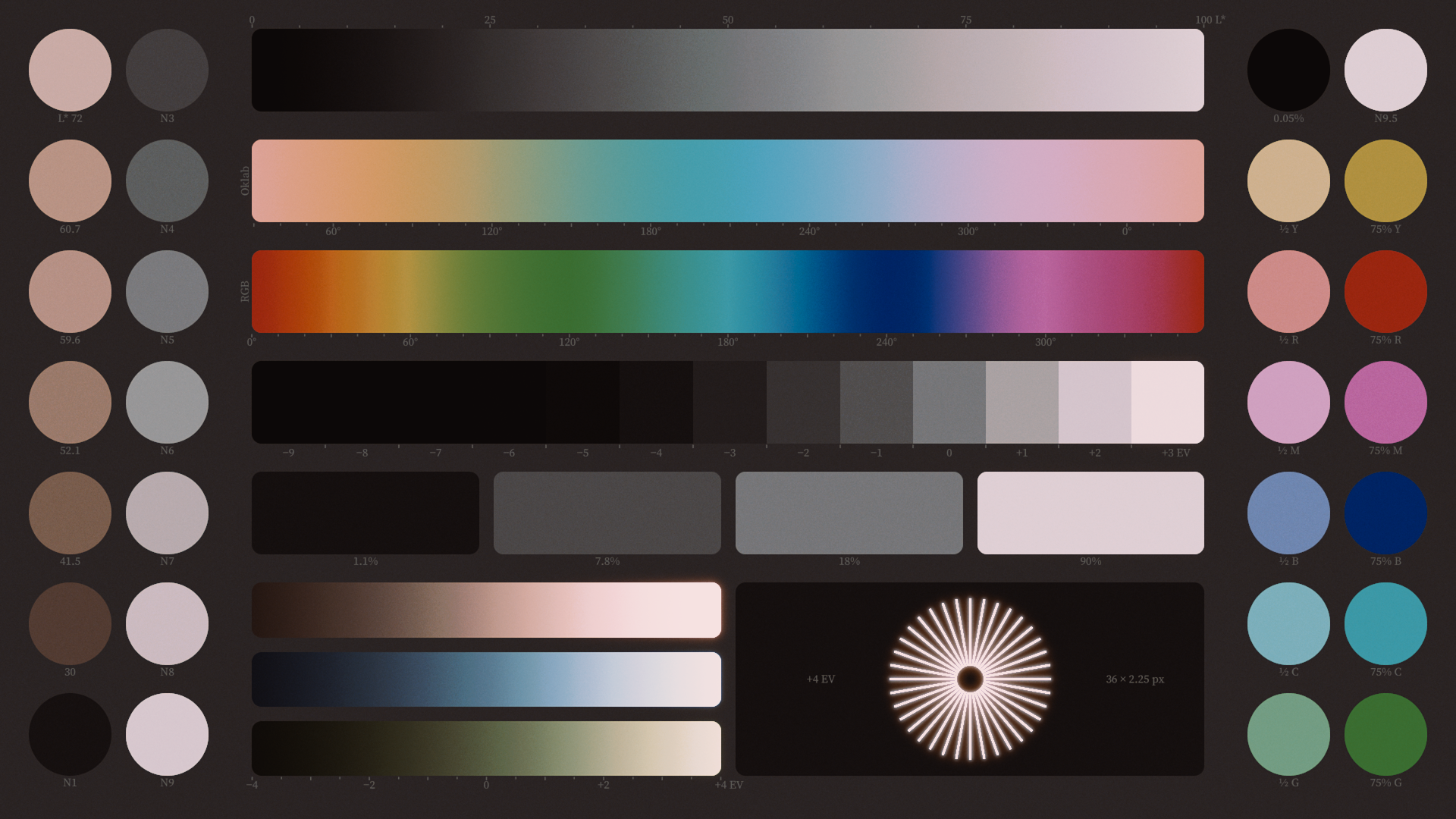
Una película de copia en color, mostrada tras Eastman Color Negative 5247. Sus curvas características y sus colorantes se calcan del artículo de Hanson de 1952 sobre una escala de log de exposición fijada por una gamma supuesta de 3.0, y su sensibilidad espectral se reconstruye a partir de Eastman EXR Color Print Film 5386, un sustituto. Es la película de 1950, no la posterior 5381 de Kodak de 1972.
Curvas de respuesta y fundamentos del modelo
Compara los datos del fabricante con la respuesta de Ashigrain sobre los mismos ejes. Estas curvas muestran cómo se calibra el modelo con sus fuentes; no demuestran una coincidencia con imágenes fotografiadas en película.
Respuesta característica
Límites del modelo
Estas imágenes muestran el modelo de película en uso. La respuesta espectral, la iluminación y las condiciones de visualización incluyen aproximaciones; el halo, el resplandor, el tamaño del grano, la inestabilidad y el parpadeo no están medidos por completo para cada película. Una captura real también depende del revelado y del ajuste de positivado.
- El artículo de Hanson no imprime ninguna escala de log de exposición para las curvas características; la escala se fija con una gamma de copia supuesta de 3.0 en la curva verde, así que el contraste de la película es una suposición.
- Las curvas y los colorantes se calcan de figuras rasterizadas de un escaneo de microfilm, en una sola pasada cada una, por lo que no se mide ningún error de digitalización.
- La sensibilidad espectral no está impresa. Se reconstruye a partir de Eastman EXR Color Print Film 5386, un sustituto y no los datos de esta película.
- Las curvas y el neutro de colorantes del artículo se dan para una luz de arco de carbón de 4000 K; el modelo proyecta con su propia luz de proyector, no con el arco.
- El orden invertido de capas de la película y su respaldo antihalo removible se registran, pero no se modelan.
- No se imprime ni MTF ni granularidad para esta película.
- Es la película de 1950 descrita por Hanson, no la distinta Eastman Color Print 5381 que Kodak lanzó en 1972.
- La fuente no da espectros de la lámpara ni de los filtros de la positivadora. Su respuesta espectral es aproximada.
- El velo de proyección modelado eleva los negros en pantalla. Su intensidad es un supuesto porque las fuentes disponibles no lo miden; por tanto, no establece un contraste de proyección medido.
Reciprocidad: no modelada. El tiempo de exposición no tiene efecto en esta película.
Guía de películas: supuestos y opciones prácticas
Esta vista previa combina el positivo con el negativo de cámara indicado. En esta comparación, el positivo no tiene un índice de exposición ni una respuesta de grano medida propios.
Fuentes
- Process: W. T. Hanson, Jr., 'Color Negative and Color Positive Film for Motion Picture Use', Journal of the SMPTE 58(3), March 1952, pp. 223-238 (whole issue scan), 1952-03 edition, p. 53
- Characteristic curves: W. T. Hanson, Jr., 'Color Negative and Color Positive Film for Motion Picture Use', Journal of the SMPTE 58(3), March 1952, pp. 223-238 (whole issue scan), 1952-03 edition, p. 54
Lleva esta película a tu etalonaje.
Todas las películas incluidas en una sola compra, sin suscripción.
€199 + VAT